
In the realm of modern technology, we often define “cutting-edge” by the limits of our silicon processors or the precision of our quantum sensors. However, the ultimate frontier of technology—and the natural inspiration for much of our high-energy physics research—exists far beyond Earth’s atmosphere. Magnetars, a rare and volatile species of neutron star, represent the most extreme manifestation of magnetism and density in the known universe. To understand what magnetars are is to understand the peak of cosmic engineering, and more importantly, the sophisticated technological infrastructure required to observe and analyze them.
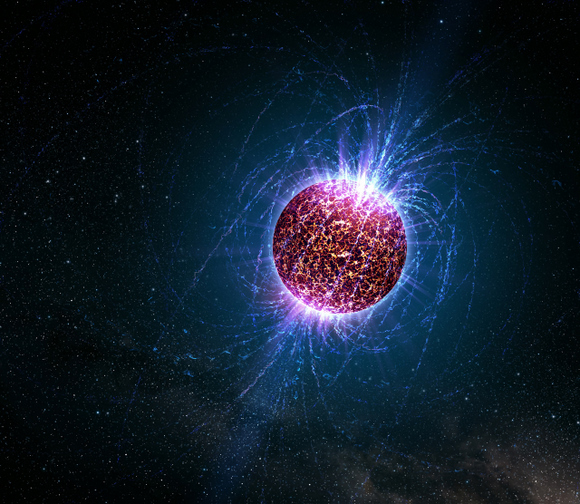
For tech professionals, data scientists, and engineers, magnetars are more than just celestial bodies; they are “natural laboratories.” They provide the stress tests for our theories on electromagnetism and the blueprint for the next generation of high-sensitivity sensors and digital security protocols.
The Infrastructure of Discovery: High-Energy Detection Systems
Observing a magnetar is not as simple as pointing a glass lens at the sky. Because magnetars emit most of their energy in high-frequency X-rays and gamma rays, they are invisible to traditional optical telescopes. Detecting them requires a complex stack of orbital hardware and sophisticated software filtering systems.
X-ray and Gamma-ray Satellite Arrays
The “gadgets” of the astrophysics world are billion-dollar satellite arrays. Since the Earth’s atmosphere blocks high-energy radiation, we rely on orbital tech like NASA’s Chandra X-ray Observatory and the Neil Gehrels Swift Observatory. These machines utilize grazing-incidence mirrors—technology designed to reflect high-energy photons that would otherwise pass straight through a normal mirror. The engineering required to maintain these sensors in the harsh environment of space, while maintaining a precision of a fraction of an arcsecond, is a testament to modern aerospace tech.
The Role of Orbital Observatories like NICER and Fermi
The Neutron star Interior Composition Explorer (NICER), an instrument installed on the International Space Station, represents the pinnacle of specialized sensor technology. It provides high-precision timing of X-ray pulses, allowing tech teams on Earth to map the “hot spots” on a magnetar’s surface. This data is transmitted back to Earth via high-speed digital arrays, where it is processed to understand the structural integrity of matter under extreme pressure. Without these specific hardware advancements, magnetars would remain theoretical phantoms.
Magnetars as Extreme Physical Laboratories for Tech Development
In the tech industry, we often look for “limit cases” to see where a system breaks. Magnetars are the universe’s ultimate limit case. They possess magnetic fields a trillion times stronger than Earth’s, and their density is such that a sugar-cube-sized amount of their material would weigh a billion tons.
Studying Matter Under Unearthly Pressures
The interior of a magnetar is a “superfluid” of neutrons. For material scientists and hardware engineers, understanding how particles behave in these environments provides insights into the future of superconductors. If we can digitally simulate the way matter behaves in a magnetar’s crust—a process requiring massive supercomputing power—we can unlock new methods for creating high-density storage media and more efficient conductive materials here on Earth.
Magnetic Fields and the Limits of Electromagnetism
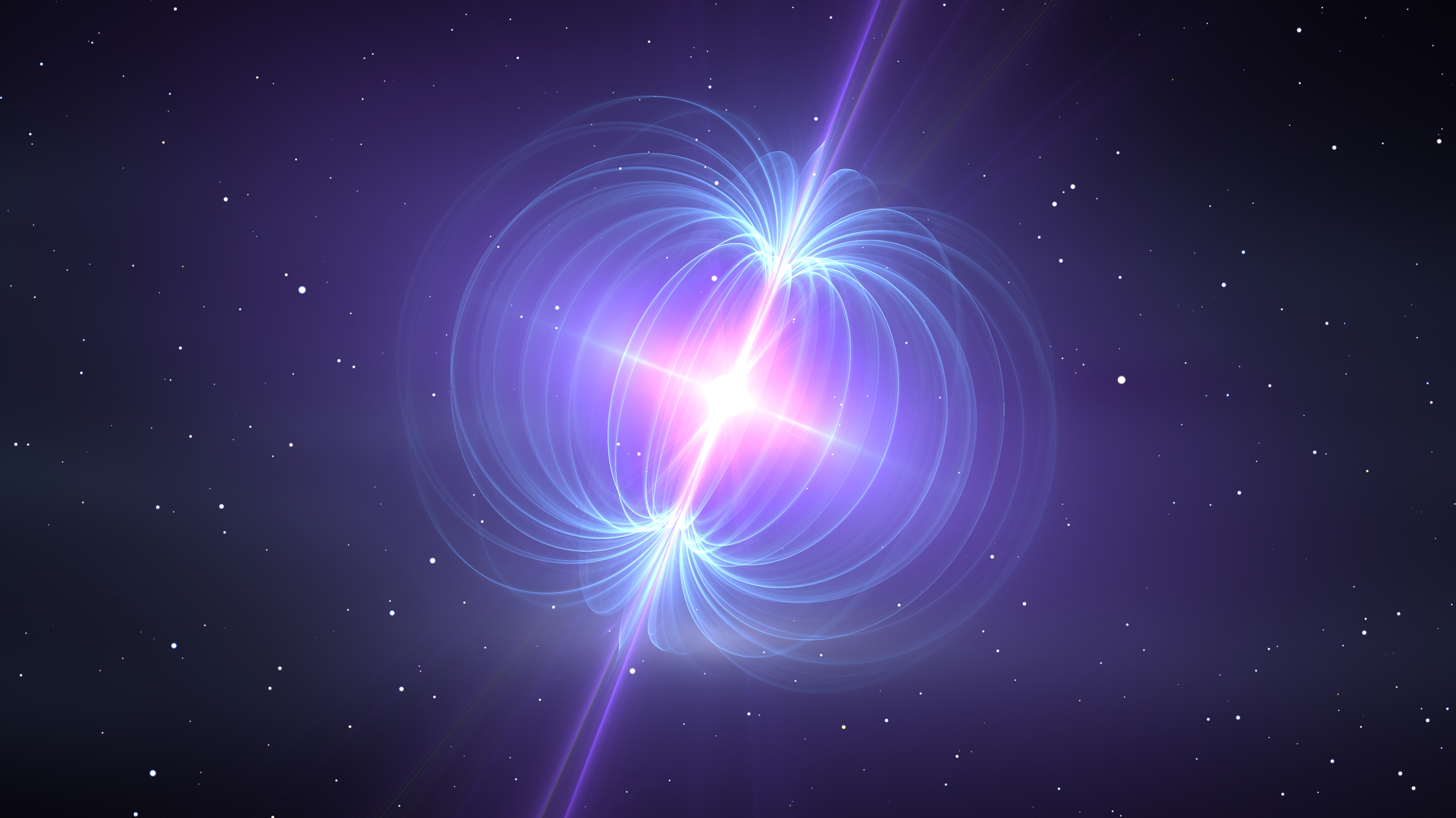
The magnetic field of a magnetar is so powerful that it distorts the very vacuum of space, a phenomenon known as vacuum birefringence. This is of immense interest to the optical tech and telecommunications sectors. By observing how light travels through the magnetized vacuum around a magnetar, researchers can gather data that informs the development of ultra-precise laser technologies and quantum communication channels. We are essentially using these stars to beta-test the laws of physics that will govern the next century of hardware innovation.

Data Processing: From Cosmic Noise to Actionable Intelligence
One of the biggest challenges in identifying magnetars is the sheer volume of “noise” in the universe. A magnetar might remain quiet for years before releasing a “giant flare” that lasts only milliseconds. Capturing and identifying these events requires a robust software stack and advanced AI tools.
Leveraging Machine Learning for Transient Event Detection
The modern hunt for magnetars is driven by AI. High-cadence surveys generate petabytes of data every night. It is impossible for human researchers to sift through this information to find the millisecond-long “glitches” or bursts characteristic of a magnetar. Developers have created neural networks specifically trained on the light curves of known celestial events. These AI tools can filter through background cosmic noise in real-time, flagging anomalies for further investigation. This is the same logic used in digital security for “threat detection”—identifying a single malicious packet of data among billions of benign ones.
High-Speed Signal Processing in Radio Astronomy
While magnetars are primarily X-ray emitters, some have been found to emit radio pulses. Detecting these pulses requires sophisticated digital signal processing (DSP). Fast Fourier Transforms (FFTs) are used to search for periodicities in the data, allowing us to determine how fast a magnetar is spinning. The software optimization required to perform these calculations on massive datasets has led to breakthroughs in how we handle big data in other tech sectors, from fintech to social media algorithms.
Cybersecurity and Cosmic Resilience: The Tech Perspective
It may seem far-fetched, but magnetars have a direct impact on the tech we use every day. In 2004, a giant flare from a magnetar 50,000 light-years away was so powerful that it physically affected the Earth’s ionosphere and partially saturated the sensors of several satellites. This event served as a wake-up call for the digital security and hardware resilience industries.
Hardening Earth-Based Tech Against Stellar Interference
The “Starquakes” on magnetars release bursts of energy that can interfere with global communication networks. This has led to an increased focus on “radiation hardening” for critical infrastructure. Modern gadgets, especially those intended for aviation or space travel, must be designed with shielding that can withstand high-energy particles. The research into magnetars helps us understand the maximum “worst-case scenario” for electromagnetic interference (EMI), leading to better-shielded data centers and more resilient digital architectures.
Lessons in Structural Integrity from Degenerate Matter
The “crust” of a magnetar is thought to be the strongest material in the universe. While we cannot replicate “nuclear pasta” (the theoretical structure of a neutron star’s interior) on Earth, the mathematical models used to describe its structural integrity are being applied to nanotechnology. Engineers are using these models to design carbon nanotubes and other synthetic materials that can withstand incredible stress-to-weight ratios. In a sense, the software we use to model magnetars is helping us build the next generation of physical tech hardware.
The Future of Magnetar Research and Emerging Tech
As we look toward the next decade, the synergy between astrophysics and technology will only grow. Projects like the Square Kilometre Array (SKA) and the upcoming Athena X-ray observatory will rely on next-generation software and AI to push our understanding even further.
For the tech community, magnetars represent the ultimate benchmark. They challenge our software to be faster, our sensors to be more sensitive, and our data storage to be more robust. By asking “what are magnetars,” we aren’t just exploring a distant star; we are exploring the limits of what our technology can achieve. Whether it is through the development of more powerful AI to scan the stars or the creation of hardware that can survive the universe’s most violent environments, the study of magnetars remains at the absolute forefront of technological evolution.
In conclusion, magnetars are not just exotic objects of interest for astronomers. They are the catalysts for innovations in high-energy detection, data science, and material physics. As we continue to refine the tools used to observe these magnetic monsters, we inevitably refine the technology that powers our modern world. The search for magnetars is, in many ways, the search for the next great breakthrough in digital and physical engineering.
aViewFromTheCave is a participant in the Amazon Services LLC Associates Program, an affiliate advertising program designed to provide a means for sites to earn advertising fees by advertising and linking to Amazon.com. Amazon, the Amazon logo, AmazonSupply, and the AmazonSupply logo are trademarks of Amazon.com, Inc. or its affiliates. As an Amazon Associate we earn affiliate commissions from qualifying purchases.