
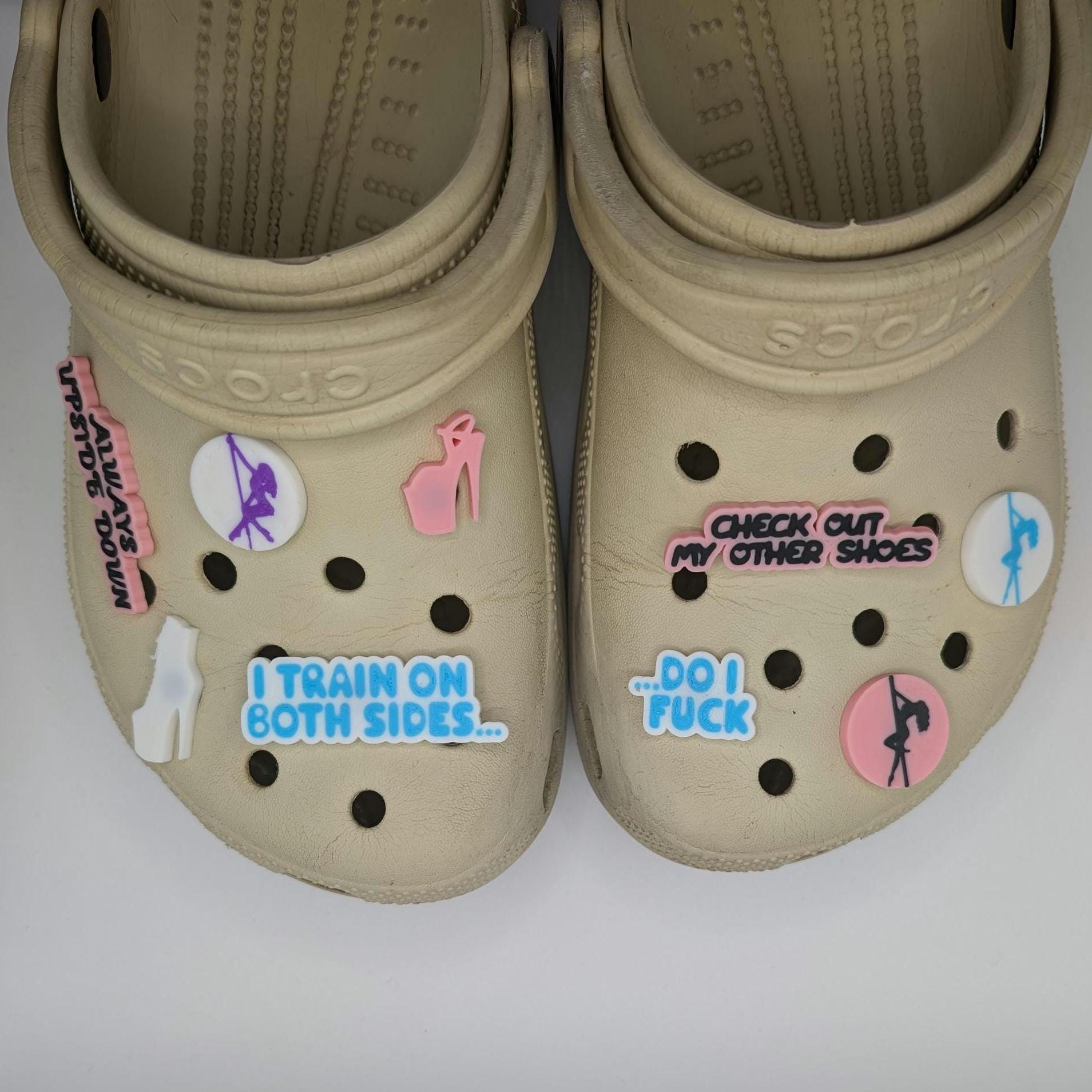
In the landscape of modern retail and corporate strategy, few success stories are as illustrative of the power of brand extension as Jibbitz. While a casual observer might see them simply as small, colorful plastic charms designed to fit into the ventilation holes of Crocs footwear, a brand strategist sees something far more potent: a modular ecosystem that transformed a polarizing utility shoe into a global canvas for self-expression.
Jibbitz represent the pinnacle of “add-on” branding, where the secondary product not only drives significant high-margin revenue but also fundamentally alters the consumer’s relationship with the primary brand. To understand what Jibbitz are is to understand the mechanics of brand loyalty, the psychology of personalization, and the strategic brilliance of turning a product into a platform.

The Genesis of Jibbitz: From Basement Startup to Brand Powerhouse
The story of Jibbitz is a classic case study in identifying a market gap and the subsequent power of strategic acquisition. Created in 2005 by Sheri Schmelzer, a mother of three who began decorating her family’s Crocs with faux flowers and charms, the concept was born out of a simple desire for personalization. What began as a basement hobby quickly scaled into a business that caught the attention of Crocs, Inc.
In 2006, Crocs made the pivotal decision to acquire Jibbitz for $10 million. At the time, Crocs was experiencing rapid growth but faced a looming threat: the “commodity trap.” As a footwear brand focused on a specific material (Croslite) and a unique silhouette, they were vulnerable to knock-offs and market saturation. The acquisition of Jibbitz was a masterstroke in brand defensive strategy. It allowed Crocs to own the “OS” (operating system) of their shoes. By controlling the accessories that fit into their proprietary design, Crocs ensured that even if competitors copied the clog, they couldn’t easily replicate the culture of customization that Jibbitz facilitated.
The Shift from Product to Platform
By integrating Jibbitz into the core brand identity, Crocs transitioned from being a footwear manufacturer to a platform provider. This is a strategy often seen in the tech world—think of the iPhone and the App Store—but it was revolutionary for a mid-market footwear brand. Jibbitz turned every pair of shoes into a potential recurring revenue stream. A consumer might only buy one pair of shoes per year, but they might buy five, ten, or twenty Jibbitz in that same timeframe to reflect changing moods, seasons, or interests.
Protecting Brand Equity Through Proprietary Fit
From a design standpoint, Jibbitz are engineered with a specific circular post that snaps into the 13 holes of a standard Croc. This physical compatibility creates a “moat” around the brand. While third-party charms exist, the “Jibbitz” name has become synonymous with the category, much like Kleenex is to tissues. This brand salience ensures that when consumers think of personalizing their footwear, they think of the official accessory, maintaining the integrity of the brand ecosystem.
The Psychology of Brand Personalization: Driving Loyalty Through Identity
The primary reason Jibbitz have become a cultural phenomenon lies in the psychology of the “Endowment Effect” and the human desire for self-expression. In an era of mass production, consumers crave a sense of individuality. Jibbitz provide a low-friction, high-impact way for consumers to “co-create” their products.
When a customer chooses a specific set of Jibbitz—perhaps a slice of pizza, a favorite cartoon character, and a pride flag—they are no longer just wearing a Crocs product; they are wearing a reflection of their own identity. This shift from “brand-owned” to “user-defined” is the holy grail of brand strategy. It fosters a level of emotional attachment that a standard, unchangeable product simply cannot achieve.
Self-Expression as a Service
In modern marketing, we often discuss “Self-Expression as a Service” (SEaaS). Jibbitz are the physical manifestation of this concept. They allow the brand to step back and let the consumer take the lead. This is particularly effective with Gen Z and Alpha demographics, who prioritize authenticity and niche identification. For these groups, a shoe without Jibbitz is a “blank slate”—it is unfinished. The brand provides the canvas, but the consumer provides the meaning.
The “Little Wins” of Micro-Consumption
Jibbitz also tap into the trend of micro-consumption. In a fluctuating economy, consumers may hesitate to spend $150 on a new pair of designer sneakers, but they will readily spend $5 on a new Jibbitz charm. These “micro-transactions” provide a dopamine hit and a sense of “newness” without the high price tag. Strategically, this keeps the brand top-of-mind and maintains a constant “refresh” cycle for the product in the consumer’s wardrobe.
The Collaboration Flywheel: Jibbitz as a Marketing Canvas
Perhaps the most significant strategic evolution of Jibbitz is their role as a vehicle for high-level brand collaborations. Jibbitz have become a marketing canvas where Crocs can partner with diverse intellectual properties (IP), celebrities, and even luxury fashion houses to expand their market reach.
The “Collaboration Flywheel” works like this: Crocs partners with a cultural icon (e.g., Post Malone, Justin Bieber, or SZA). Instead of just changing the color of the shoe, they create bespoke Jibbitz that represent the artist’s aesthetic. These charms become highly sought-after collectibles, often driving massive traffic to the brand’s digital platforms and creating a “halo effect” that elevates the brand’s perceived value.
Leveraging Global IP and Scarcity
Jibbitz allow Crocs to tap into existing fanbases through licensed IP. By producing charms featuring characters from Disney, Marvel, Star Wars, or popular anime, Crocs leverages the brand equity of these giants to sell their own products. This creates a symbiotic relationship where Jibbitz act as mini-billboards for the partner brand while driving sales for Crocs.
Furthermore, the brand has mastered the art of “drops” and scarcity. Limited-edition Jibbitz sets create a secondary market and a sense of urgency. When a consumer knows a specific charm won’t be available forever, the “Fear of Missing Out” (FOMO) kicks in, a classic tactic in brand management to accelerate the sales cycle.
High-Low Branding and the Luxury Leap
One of the most surprising turns in the Jibbitz story is their entry into high fashion. Through collaborations with brands like Balenciaga and Christopher Kane, Crocs used Jibbitz to bridge the gap between “ugly-chic” utility and luxury. By replacing plastic charms with crystals, high-end metals, or avant-garde sculptures, they proved that the Jibbitz framework was flexible enough to exist at any price point. This solidified the brand’s position as a versatile player in the global fashion industry, capable of pivoting from the playground to the runway.
Designing the Brand Ecosystem: The Economics of Add-Ons
From a corporate finance and business model perspective, Jibbitz are an incredible asset. They represent a high-margin, low-overhead product that solves several traditional retail challenges.
The manufacturing cost of a small injection-molded plastic charm is negligible compared to its retail price, which can range from $5 for a single charm to $25+ for sets. This margin allows the brand to be aggressive with marketing and digital advertising, knowing that the “attach rate”—the frequency with which customers add Jibbitz to a shoe purchase—is high.
Increasing Customer Lifetime Value (LTV)
The ultimate goal of any brand strategy is to increase Customer Lifetime Value (LTV) while decreasing Customer Acquisition Cost (CAC). Jibbitz are the perfect tool for this. Once a customer owns a pair of Crocs, the “cost” to keep them engaged with the brand is significantly lowered by the constant release of new Jibbitz.
Instead of needing the customer to buy a new $50 pair of shoes every three months, the brand can maintain engagement through $5-20 Jibbitz purchases. This keeps the consumer within the brand’s ecosystem, making them much more likely to choose Crocs again when they eventually do need a new pair of shoes.

Visual Marketing and Social Proof
Jibbitz are inherently “Instagrammable.” In the age of social media, products that are visually distinct and customizable perform better because they encourage User-Generated Content (UGC). When a user posts a photo of their uniquely decorated shoes, they are providing authentic social proof for the brand.
This organic marketing is more valuable than any paid advertisement because it shows the product in a real-world, personalized context. Jibbitz effectively turn every customer into a brand ambassador, showcasing the versatility and personality of the brand to their own social circles.
In conclusion, Jibbitz are far more than shoe charms. They are a strategic pillar of the Crocs brand, a masterclass in personalization, and a powerful engine for high-margin revenue and cultural relevance. By understanding that consumers want to be the architects of their own style, the brand has used Jibbitz to build a loyal, global community that sees the product not just as footwear, but as a medium for identity.
aViewFromTheCave is a participant in the Amazon Services LLC Associates Program, an affiliate advertising program designed to provide a means for sites to earn advertising fees by advertising and linking to Amazon.com. Amazon, the Amazon logo, AmazonSupply, and the AmazonSupply logo are trademarks of Amazon.com, Inc. or its affiliates. As an Amazon Associate we earn affiliate commissions from qualifying purchases.