
Navigating the world of real estate finance can feel like tracking a moving target. For anyone asking “what are interest rates for homes right now,” the answer is rarely a single number. Instead, it is a reflection of a complex global economy, individual financial health, and the strategic choices made by lenders. As we move through the current fiscal year, mortgage rates have become the primary pivot point for home buyers, investors, and homeowners considering a refinance.
In the realm of personal finance, understanding interest rates is not just about knowing the monthly payment; it is about understanding the cost of capital. Whether rates are sitting at 6%, 7%, or higher, the implications for long-term wealth building are profound. This guide explores the current state of home interest rates, the macroeconomic forces driving them, and the personal finance strategies you can use to secure the best possible terms.

Understanding the Current Landscape of Mortgage Interest Rates
To understand where interest rates are today, one must first look at where they have been. Following a period of historic lows, the financial landscape shifted dramatically as central banks sought to curb inflation. Today, we are in a “higher-for-longer” environment, where the era of 3% mortgages has been replaced by rates that reflect a more traditional historical average, albeit one that feels high to modern consumers.
The Role of the Federal Reserve and Monetary Policy
While the Federal Reserve does not directly set mortgage rates, its influence is absolute. The federal funds rate—the rate at which banks lend to one another overnight—serves as the floor for consumer interest rates. When the Fed raises rates to cool an overheating economy, the ripple effect moves through the bond market. Mortgage lenders typically track the yield on the 10-year Treasury note. When Treasury yields rise due to Fed policy or inflation fears, mortgage rates follow suit almost immediately.
Market Volatility and Economic Indicators
Interest rates are also sensitive to high-level economic data. Reports on the Consumer Price Index (CPI), employment numbers, and Gross Domestic Product (GDP) growth act as catalysts for rate movement. If inflation data comes in “hotter” than expected, the market anticipates that the Fed will keep rates high, causing mortgage rates to tick upward. Conversely, signs of economic cooling can lead to a “flight to safety” in bonds, which can stabilize or lower the interest rates offered to homebuyers.
The Spread Between Treasury Yields and Mortgages
In a stable economy, the “spread” between the 10-year Treasury yield and a 30-year fixed mortgage is typically around 1.5% to 2%. However, in recent months, this spread has widened significantly. This is often due to increased risk premiums and decreased demand for mortgage-backed securities (MBS). Understanding this spread is crucial for finance-savvy buyers because it explains why mortgage rates might remain high even if the Fed pauses its rate hikes.
Factors That Determine Your Individual Mortgage Rate
The “headline rate” you see in news reports is often an average for borrowers with pristine credit. In the world of personal finance, your actual rate is highly personalized. Lenders use a process called “risk-based pricing” to determine what interest rate to offer you.
Credit Score Impact and Tiered Pricing
Your credit score is perhaps the single most influential factor in the interest rate equation. Lenders view a high credit score (760 or above) as a sign of low risk, granting these borrowers the lowest available rates. If your score sits in the “fair” range (620-680), you may be subject to “Loan Level Price Adjustments” (LLPAs). These are additional fees or interest rate increases that compensate the lender for the increased risk of default. Improving your score by even 20 points before applying can save you thousands of dollars over the life of the loan.
Debt-to-Income (DTI) Ratios and Financial Stability
Lenders don’t just look at what you earn; they look at what you owe. Your Debt-to-Income ratio (DTI) measures your monthly debt obligations against your gross monthly income. A high DTI suggests that you are “house poor” or overleveraged. From a business finance perspective, a borrower with a lower DTI is a safer bet, often qualifying for more competitive rates or more flexible loan products.
Loan-to-Value (LTV) and the Power of the Down Payment
The amount of “skin in the game” you have matters. The Loan-to-Value ratio (LTV) is the percentage of the home’s value that you are borrowing. A borrower putting down 20% (an 80% LTV) represents less risk to a bank than someone putting down 3.5%. Lower LTVs often trigger lower interest rates. Furthermore, reaching the 20% threshold eliminates the need for Private Mortgage Insurance (PMI), which, while not part of the interest rate itself, significantly lowers the effective cost of the loan.
Different Types of Home Loans and Their Rate Structures

Not all home loans are created equal. The structure of the loan you choose will dictate how your interest rate behaves over the next 15 to 30 years.
Fixed-Rate vs. Adjustable-Rate Mortgages (ARMs)
The 30-year fixed-rate mortgage is the gold standard of American home finance, offering predictable payments for three decades. However, in high-interest environments, Adjustable-Rate Mortgages (ARMs) become more popular. An ARM typically offers a lower “teaser” rate for an initial period (5, 7, or 10 years), after which the rate adjusts based on market indices. For a buyer who plans to sell or refinance within a few years, an ARM can be a strategic financial tool to minimize interest expenses in the short term.
Conventional vs. Government-Backed Loans (FHA, VA, USDA)
Government-backed loans often have different interest rate profiles than conventional loans. FHA loans, designed for those with lower credit scores or smaller down payments, often have lower nominal interest rates than conventional loans but come with higher upfront and annual insurance premiums. VA loans for veterans frequently offer some of the most competitive rates on the market with no down payment requirement. Choosing between these requires a deep dive into the “effective interest rate,” which accounts for all fees and insurance costs.
Jumbo Loans and the High-End Market
When a loan amount exceeds the “conforming limits” set by the Federal Housing Finance Agency (FHFA), it is classified as a jumbo loan. Interestingly, jumbo loan rates are not always higher than conventional rates. Because jumbo borrowers often have high net worth and significant assets, banks may offer competitive rates to attract these high-value clients, though the qualification standards are significantly more stringent.
Strategies to Secure the Lowest Possible Rate in Today’s Market
Even when market rates are high, there are proactive financial maneuvers you can take to lower your specific rate and maximize your purchasing power.
Shopping Around and Comparing Lenders
Interest rates are not monolithic. A credit union, a national bank, and an online mortgage broker may offer vastly different rates for the same borrower. Financial experts recommend getting at least three different Loan Estimates. Even a 0.25% difference in your interest rate can result in massive savings. Over a 30-year period on a $400,000 loan, that small fraction can equate to over $20,000 in saved interest.
Buying Down the Rate with Mortgage Points
If you have extra cash at closing, you can “buy down” your interest rate using discount points. One point typically costs 1% of the loan amount and reduces your interest rate by about 0.25%. This is essentially a math problem: you must calculate the “break-even point”—how many months of lower payments it takes to recoup the upfront cost of the points. If you plan on staying in the home for a long duration, buying points is an excellent long-term investment.
Timing the Market and Rate Locks
Because rates fluctuate daily, timing is everything. Once you find a rate you are comfortable with, you can utilize a “rate lock.” This agreement with the lender guarantees your interest rate for a specific period (usually 30 to 60 days) while your loan is processed. Some lenders even offer a “float-down” option, which allows you to lock in a rate but take advantage of a lower rate if market conditions improve before you close.
The Long-Term Financial Impact of Interest Rates on Wealth Building
Ultimately, the interest rate you secure today dictates the trajectory of your personal net worth. Real estate is often the largest asset in a person’s portfolio, and the cost of financing that asset is the largest expense.
Interest vs. Principal: The Cost of Borrowing
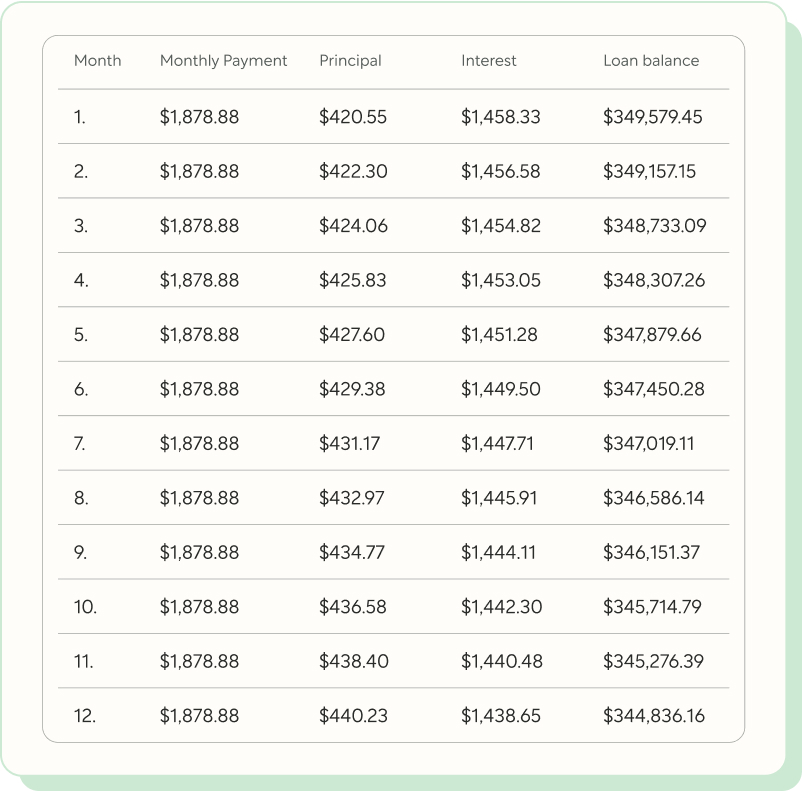
In the early years of a mortgage, the majority of your monthly payment goes toward interest rather than principal. This is known as amortization. At a 7% interest rate, the total interest paid over 30 years can actually exceed the original price of the home. Understanding this reality underscores the importance of seeking lower rates or making additional principal payments when possible to shorten the life of the loan and build equity faster.
The Opportunity of Future Refinancing
In the world of personal finance, a high interest rate today does not have to be a 30-year commitment. Many buyers in the current market are operating under the “marry the house, date the rate” philosophy. This means buying the home now at current rates and planning to refinance when rates eventually drop. However, this strategy requires a stable financial cushion to handle the current payments and the foresight to account for the closing costs associated with a future refinance.
Real Estate as an Inflation Hedge
Despite higher interest rates, homeownership remains a powerful tool against inflation. While your interest rate is fixed, the value of the property and the cost of rent in your area are likely to rise over time. From a wealth-management perspective, locking in a housing payment—even at a higher rate than we saw five years ago—provides a level of fiscal certainty and asset appreciation that is difficult to replicate in other investment vehicles.
In conclusion, while “what are interest rates for homes right now” can be answered with a daily percentage, the true answer lies in how those rates interact with your credit, your choice of loan product, and your long-term financial goals. By staying informed on market trends and optimizing your personal financial profile, you can navigate even a high-rate environment with confidence and precision.
aViewFromTheCave is a participant in the Amazon Services LLC Associates Program, an affiliate advertising program designed to provide a means for sites to earn advertising fees by advertising and linking to Amazon.com. Amazon, the Amazon logo, AmazonSupply, and the AmazonSupply logo are trademarks of Amazon.com, Inc. or its affiliates. As an Amazon Associate we earn affiliate commissions from qualifying purchases.