
In the dynamic landscape of technology, the ability to effectively communicate complex ideas, emerging trends, and innovative solutions is paramount. Whether you are a product manager explaining a new software feature, a cybersecurity expert detailing a sophisticated threat, or a startup founder pitching a groundbreaking gadget, the core skill that underpins successful knowledge transfer is the informative speech. Far from being a mere academic exercise, the informative speech is a powerful tool that drives understanding, fosters adoption, and ultimately shapes how individuals and organizations interact with the ever-evolving world of technology. This article delves into the essence of informative speeches, exploring their purpose, structure, and strategic application within the tech industry.

The Foundational Pillars of Informative Speaking in Tech
At its heart, an informative speech aims to impart knowledge to an audience. In the context of technology, this means demystifying jargon, illuminating the significance of new developments, and providing actionable insights. The success of such a speech hinges on clarity, accuracy, and relevance to the audience’s existing understanding and needs.
Defining the Informative Speech: Beyond Mere Presentation
An informative speech is distinct from persuasive or argumentative speeches. Its primary objective is not to change an audience’s beliefs or compel them to take action, but rather to educate them on a specific topic. In the tech realm, this translates to explaining what a new AI algorithm does, how a particular app streamlines workflows, or the intricate workings of a piece of hardware. The speaker acts as a conduit of knowledge, presenting information in a way that is accessible, comprehensible, and memorable. It’s about building a bridge of understanding between the speaker’s expertise and the audience’s curiosity or need to learn.
The Core Purpose: Enhancing Understanding and Awareness
The fundamental purpose of an informative speech in technology is to enhance the audience’s understanding and awareness of a subject. This could involve explaining the intricacies of blockchain technology to a non-technical management team, detailing the benefits and functionalities of a new cloud computing service, or illuminating the potential societal impacts of advancements in quantum computing. The goal is to move the audience from a state of lesser knowledge to one of greater comprehension. This doesn’t necessarily mean turning them into experts, but equipping them with enough information to make informed decisions, appreciate the significance of a topic, or simply engage in more meaningful conversations about technology.
The Audience-Centric Approach: Tailoring Information for Impact
A critical element of any effective informative speech, especially in technology where topics can be highly specialized, is a profound understanding of the audience. Who are they? What is their existing knowledge base regarding the topic? What are their motivations for attending? A speech explaining the nuances of machine learning to a group of software engineers will look vastly different from one explaining the same concept to a team of marketing professionals. The tech industry is rife with acronyms, complex architectures, and abstract concepts. The informative speaker must act as a translator, bridging the gap between technical intricacies and the audience’s frame of reference. This requires careful consideration of vocabulary, the use of analogies, and the selection of examples that resonate with their specific experiences and interests.
Structuring for Clarity: The Blueprint of an Effective Tech Informative Speech
The effectiveness of an informative speech in the tech sector is directly proportional to its structure. A well-organized presentation ensures that complex information is delivered logically, making it easier for the audience to follow, absorb, and retain.
The Introduction: Hooking the Audience and Setting the Stage
Every effective informative speech begins with a compelling introduction designed to capture the audience’s attention and clearly articulate the speech’s purpose. In tech, this might involve posing a provocative question about a future technological trend, sharing a surprising statistic about software adoption, or presenting a relatable problem that the topic will address. Following the hook, the speaker must clearly state the topic of the speech and provide a preview of the main points that will be covered. This roadmap helps the audience anticipate the flow of information and mentally prepare for the journey ahead. For example, an introduction for a speech on the “Future of Edge Computing” might start with a scenario of instantaneous data processing in remote locations, followed by an outline of what edge computing is, its key benefits, and its emerging applications.
The Body: Developing and Supporting Key Points
The body of the speech is where the bulk of the information is conveyed. For an informative speech in tech, this involves breaking down the topic into distinct, logical main points. Each point should be clearly stated and then thoroughly explained and supported with evidence. This evidence can take many forms: statistics from reputable industry reports, case studies of successful implementation, demonstrations of software or hardware, expert testimonies, or illustrative examples. The key is to present information in a way that builds understanding progressively. For instance, when explaining the benefits of a new cybersecurity framework, the body might be structured around key pillars: enhanced threat detection, improved data encryption, and simplified compliance management, with each pillar supported by concrete examples and data.
The Conclusion: Summarizing and Leaving a Lasting Impression
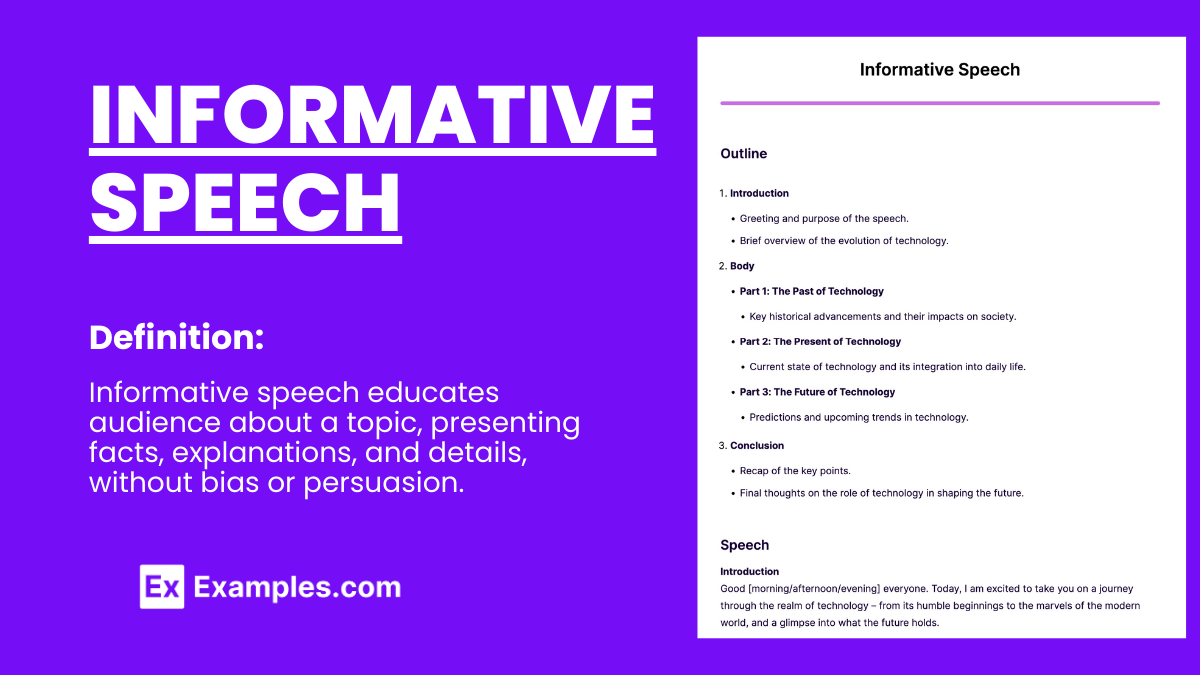
The conclusion of an informative speech in tech serves to reinforce the main points and provide a sense of closure. It’s an opportunity to summarize the key takeaways without simply repeating them verbatim. A strong conclusion might reiterate the significance of the topic, offer a forward-looking statement about its implications, or provide a call to further learning. For example, a speech concluding on the adoption of sustainable tech solutions might summarize the environmental and economic benefits discussed and then encourage the audience to explore further resources or consider implementing one of the discussed practices within their own organizations. It’s crucial that the conclusion provides a sense of completeness and leaves the audience with a clear understanding of what they have learned.
Strategies for Enhancing Informative Delivery in the Tech Sphere
Beyond content and structure, the delivery of an informative speech is critical in the tech industry. The way information is presented can significantly impact its comprehension and retention.
Utilizing Visual Aids: Illuminating Complex Concepts
In technology, abstract concepts and intricate processes often defy simple verbal explanation. This is where visual aids become indispensable. High-quality slides, diagrams, charts, graphs, videos, and live demonstrations can transform complex data into understandable visuals. For instance, explaining a network architecture can be dramatically improved with a clear network diagram. Demonstrating the user interface of a new app live on screen provides immediate context and utility. When discussing performance metrics, charts and graphs are far more effective than a string of numbers. The key is to ensure that visual aids complement, rather than overwhelm, the spoken word. They should clarify, illustrate, and engage, making the information more accessible and memorable.
Employing Clear and Concise Language: Demystifying Jargon
The tech industry is notorious for its specialized vocabulary and acronyms. An effective informative speaker must be a master translator, adept at explaining technical terms in plain language. While it’s important to use accurate terminology, the speaker should also define any jargon that the audience might not be familiar with. Using analogies and metaphors can be incredibly helpful in bridging the gap between technical concepts and everyday understanding. For example, explaining cloud computing by comparing it to a utility service like electricity or water can make a complex idea much more approachable. The goal is to empower the audience with understanding, not to intimidate them with complexity.
Engaging the Audience: Fostering Active Learning
While the primary goal of an informative speech is not persuasion, engagement is crucial for effective learning. This can be achieved through various techniques. Asking rhetorical questions to prompt thought, incorporating interactive elements like polls or quick Q&A sessions during the presentation, and encouraging questions at appropriate junctures can foster a more dynamic and participatory learning environment. When discussing a new development, asking the audience to consider its potential impact on their own work or industry can make the information more personally relevant. The aim is to keep the audience actively involved in the learning process, rather than passively receiving information.
The Strategic Value of Informative Speeches in the Tech Ecosystem
Informative speeches are not just standalone presentations; they are integral components of broader communication strategies within the technology sector. Their effective deployment can lead to significant organizational and industry-wide benefits.
Driving Product Adoption and Understanding
For tech companies, informative speeches are a cornerstone of product launches and ongoing customer education. Whether it’s a webinar explaining the features of a new SaaS platform, a workshop demonstrating the capabilities of a cutting-edge hardware device, or a presentation at an industry conference highlighting a software update, informative speeches are essential for ensuring that potential and existing users understand the value and functionality of the products. This understanding is directly correlated with adoption rates, customer satisfaction, and ultimately, market success. By clearly articulating “what it is,” “what it does,” and “why it matters,” informative speeches pave the way for user engagement and proficiency.
Facilitating Knowledge Sharing and Innovation
Within the rapidly evolving tech industry, the continuous sharing of knowledge is vital for innovation and progress. Informative speeches serve as a powerful vehicle for disseminating new research findings, best practices, and emerging trends. Internal company presentations by R&D teams, technical deep-dives at developer conferences, or panel discussions on future technologies all rely heavily on the principles of informative speaking. This open exchange of information fuels collaboration, sparks new ideas, and helps the entire ecosystem move forward. The ability to clearly and effectively convey complex technical insights is a hallmark of leading organizations and influential individuals in the tech world.

Building Credibility and Thought Leadership
Consistently delivering insightful and well-structured informative speeches on relevant tech topics can significantly enhance an individual’s or an organization’s credibility and establish them as thought leaders in their respective domains. When a speaker can clearly articulate complex subjects, provide valuable insights, and offer a unique perspective, they gain the trust and respect of their audience. This is particularly true in specialized areas of technology where deep understanding is a prized commodity. By sharing knowledge generously and effectively, tech professionals can position themselves and their companies as go-to resources, attracting talent, partnerships, and customers who value expertise and foresight.
In conclusion, informative speeches are a fundamental communication tool in the technology sector. They are the vehicles through which complex ideas are demystified, new solutions are explained, and knowledge is disseminated. By mastering the art of structuring, delivering, and strategizing informative speeches, tech professionals can effectively educate their audiences, drive adoption, foster innovation, and solidify their positions as leaders in this ever-changing landscape.
aViewFromTheCave is a participant in the Amazon Services LLC Associates Program, an affiliate advertising program designed to provide a means for sites to earn advertising fees by advertising and linking to Amazon.com. Amazon, the Amazon logo, AmazonSupply, and the AmazonSupply logo are trademarks of Amazon.com, Inc. or its affiliates. As an Amazon Associate we earn affiliate commissions from qualifying purchases.