
In the intricate world of technology, understanding the fundamental principles that govern physical interactions is paramount. One such principle, often overlooked in popular discourse but critical in engineering and design, is the concept of inelastic collisions. Far from being a mere academic curiosity, inelastic collisions are the bedrock upon which countless technological advancements are built, influencing everything from the structural integrity of autonomous vehicles to the design of advanced robotic systems and the development of next-generation protective materials.
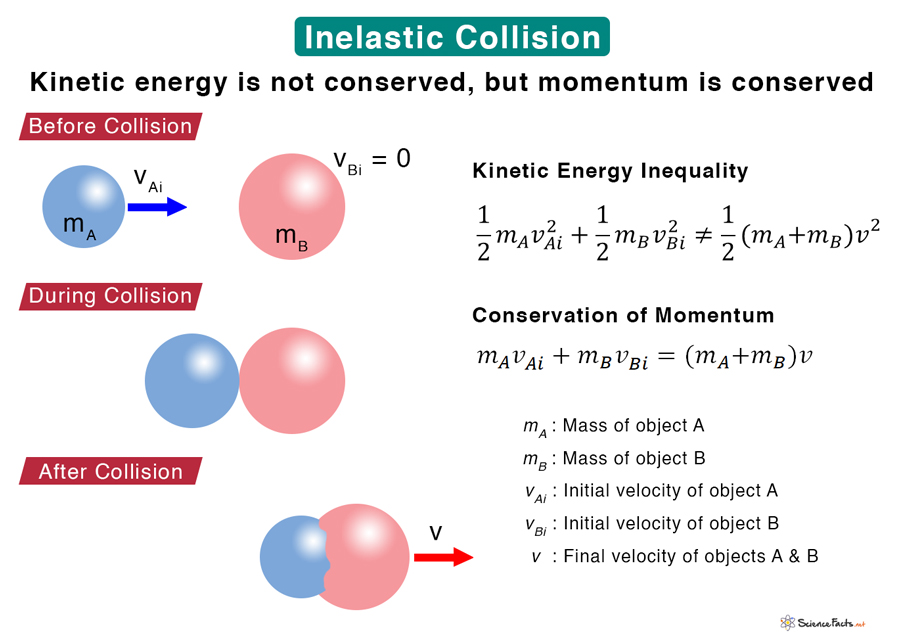
At its core, an inelastic collision is a type of collision where kinetic energy is not conserved. While the total momentum of the system remains constant (a fundamental law of physics), some of the kinetic energy is transformed into other forms, such as heat, sound, or deformation of the colliding objects. Think of a car crash where metal crumples and absorbs impact, or a blob of clay hitting a wall and sticking to it. In both scenarios, the kinetic energy that once propelled the objects forward has been dissipated, resulting in a loss of motion and a change in form or temperature. This energy dissipation, rather than being a loss, is often a crucial design objective in technology, enabling safety, performance, and durability.
The profound implications of inelastic collisions span diverse technological sectors. From ensuring the safety of human-robot interactions to designing resilient spacecraft, engineers and scientists continuously leverage a deep understanding of these physical phenomena. This article will delve into the essence of inelastic collisions, exploring their underlying physics and, more importantly, showcasing their transformative impact across various facets of modern technology.
The Physics Behind the Impact: Understanding Energy Dissipation
To truly grasp the technological significance of inelastic collisions, it’s essential to first appreciate the fundamental physics at play. The distinction between elastic and inelastic collisions hinges on the conservation, or rather the transformation, of kinetic energy.
Kinetic Energy vs. Momentum Conservation: The Key Differentiator
In any isolated system, the total momentum before a collision is equal to the total momentum after the collision. This is the Law of Conservation of Momentum, a universal principle that holds true for both elastic and inelastic collisions. Momentum, a vector quantity, is defined as the product of an object’s mass and its velocity (p = mv). Its conservation means that forces internal to the system do not change the total momentum, only redistribute it among the colliding objects.
However, when it comes to kinetic energy—the energy of motion (KE = ½mv²)—the story changes for inelastic collisions. In a perfectly elastic collision (like two billiard balls colliding without deformation or heat loss), kinetic energy is conserved. But in an inelastic collision, some amount of kinetic energy is always converted into other forms of energy. This conversion is the defining characteristic and the primary reason why inelastic collisions are so pertinent to real-world engineering challenges. The degree of inelasticity can range from partially inelastic (where some kinetic energy is lost) to perfectly inelastic (where the objects stick together after impact, maximizing kinetic energy loss).
Mechanisms of Energy Loss: Heat, Sound, and Deformation
The “lost” kinetic energy doesn’t simply vanish; it transforms into other, often less obvious, forms of energy. Understanding these mechanisms is crucial for engineers designing systems that either mitigate or utilize these transformations.
- Deformation: This is perhaps the most visible mechanism. When objects collide inelastically, their shapes can change permanently or temporarily. This deformation, whether it’s the crumpling of metal in a car crash or the compression of a foam protector, absorbs a significant amount of kinetic energy. The internal work done to deform the material directly converts kinetic energy into potential energy stored in the material’s altered structure, and often into heat due to internal friction.
- Heat: Friction between colliding surfaces, internal friction within deforming materials, and the molecular agitation resulting from impact all contribute to an increase in temperature. This thermal energy is a direct conversion from the initial kinetic energy.
- Sound: The audible “thud,” “bang,” or “crash” accompanying an inelastic collision is another form of energy dissipation. Sound waves are mechanical vibrations that carry energy away from the collision point.
- Internal Energy Changes: Beyond macroscopic deformation, energy can be absorbed at the molecular level, leading to changes in the internal energy state of the materials, which can also manifest as heat or structural alterations.
Practical Implications for Design: Informing Engineering Choices
Engineers capitalize on these energy transformation mechanisms. When designing protective gear, for instance, the goal is to maximize the kinetic energy absorbed through deformation and internal friction, thereby minimizing the energy transferred to the protected object or person. Conversely, in other applications, minimizing energy loss might be desired, leading to materials and designs that behave more elastically. The ability to predict and control these energy transformations is a cornerstone of modern technological design.
Engineering for Reality: Inelastic Collisions in Robotics and Automation
The field of robotics is perhaps one of the most direct applications of understanding inelastic collisions, impacting everything from robot arm design to human-robot interaction safety. As robots become more ubiquitous in manufacturing, logistics, and even service industries, ensuring their resilience and safe operation during inevitable impacts is paramount.
Designing Robust Robotic Systems: Impact Absorption and Safe Interaction
Robots, by their very nature, interact with their environment. These interactions can range from precise manipulation to accidental bumps. Engineers designing robotic systems must account for inelastic collisions to ensure durability and functionality. For industrial robots, this means constructing arms and end-effectors from materials that can withstand repeated impacts without permanent damage, or designing joints with built-in compliance to absorb shocks. In service robotics or collaborative robots (cobots) that work alongside humans, the emphasis shifts to designing systems that can safely absorb energy during accidental collisions, preventing injury to humans. This often involves using soft, compliant materials, or embedding sensors that trigger a safe shutdown or retraction upon contact.
Collision Detection and Avoidance: Software Algorithms and Sensor Integration
While designing for impact resilience is important, preventing unwanted inelastic collisions altogether is often the preferred strategy. This is where advanced software algorithms and sensor integration come into play. Robots are equipped with an array of sensors—LIDAR, cameras, ultrasonic sensors, force-torque sensors—to perceive their environment in real-time. Sophisticated algorithms then process this data to predict potential collisions and dynamically adjust the robot’s trajectory or halt its motion.
For instance, in complex manufacturing environments, predictive collision modeling allows a robot arm to navigate around moving obstacles or human workers without making contact. If an unexpected inelastic collision does occur, force sensors in the robot’s joints or skin can detect the impact force, prompting an immediate safety response, such as emergency braking or a controlled retraction, minimizing damage to both the robot and its surroundings.
Soft Robotics and Deformable Materials: Leveraging Inelasticity for Compliance
A rapidly emerging field, soft robotics, directly leverages the principles of inelasticity and material deformation. Unlike rigid industrial robots, soft robots are constructed from highly compliant and deformable materials, often polymers. These robots are inherently designed to absorb impacts and conform to irregular surfaces. Their bodies can undergo significant inelastic deformation, allowing them to navigate cluttered environments, grasp delicate objects without damage, and interact safely with humans. The “softness” of these robots means that kinetic energy from an impact is largely absorbed through body deformation rather than concentrated at a rigid point, making them incredibly robust and safe.
Autonomous Vehicles and Crashworthiness: Mitigating Real-World Impacts
Perhaps no technological domain confronts the realities of inelastic collisions more directly and critically than the automotive industry, especially with the advent of autonomous vehicles. The safety of passengers and pedestrians hinges on a profound understanding of how vehicles behave during collisions.
Crumple Zones and Passive Safety Systems: Engineering for Energy Absorption
Modern vehicle design is a masterclass in engineered inelasticity. Crumple zones are strategically designed areas in a vehicle’s front and rear that are intended to deform and collapse during a collision. This controlled inelastic deformation absorbs a massive amount of kinetic energy from the impact, preventing it from reaching the passenger compartment. By extending the duration of the impact, crumple zones reduce the deceleration forces experienced by occupants, significantly increasing their chances of survival and minimizing severe injuries. This is a direct application of the principle of impulse-momentum theorem, where force multiplied by time equals change in momentum. By increasing the time of impact (through crumpling), the force exerted on occupants is reduced for the same change in momentum.

Beyond crumple zones, other passive safety systems like airbags and seatbelts also function based on inelastic principles. Airbags rapidly inflate to provide a soft, deformable surface that absorbs the occupant’s kinetic energy over a larger area and longer time, again reducing impact forces. Seatbelts restrain occupants, distributing impact forces across stronger parts of the body and working in conjunction with crumple zones to ensure occupants decelerate with the vehicle.
Advanced Driver-Assistance Systems (ADAS) and Active Safety: Preventing Collisions
While passive safety systems mitigate the consequences of inelastic collisions, Advanced Driver-Assistance Systems (ADAS) aim to prevent them entirely or reduce their severity. Technologies like Automatic Emergency Braking (AEB), Forward Collision Warning (FCW), Lane Keeping Assist (LKA), and Adaptive Cruise Control (ACC) use an array of sensors (radar, LIDAR, cameras) and sophisticated algorithms to detect potential collision scenarios.
These systems analyze factors like relative speed, distance to obstacles, and driver behavior to either warn the driver or autonomously intervene (e.g., applying brakes, steering away) to avoid an impending inelastic collision. For autonomous vehicles, these active safety systems are the core of their operational safety, enabling them to navigate complex road environments and react to unpredictable events with the goal of zero preventable collisions.
Simulation and Predictive Modeling: Digital Twins of Collision Scenarios
Developing and validating these safety features relies heavily on advanced computational tools. Crash simulation software, often employing Finite Element Analysis (FEA), allows engineers to create detailed digital models of vehicles and simulate various collision scenarios long before physical prototypes are built. These simulations accurately predict how different materials and structural designs will deform and absorb energy during inelastic collisions. This virtual testing drastically reduces development time and costs, enabling engineers to optimize crumple zones, airbag deployment strategies, and overall vehicle structures for maximum occupant safety. Machine learning and AI are also increasingly used to analyze vast datasets of simulated and real-world crash data, identifying patterns and optimizing designs for crashworthiness.
Material Science Innovations: Absorbing and Dissipating Energy
The quest for materials that can effectively absorb and dissipate energy during inelastic collisions is a driving force behind innovation in material science. From aerospace to consumer electronics, specialized materials are engineered to perform under extreme impact conditions.
High-Performance Polymers and Composites: Engineered for Energy Absorption
Advanced polymers and composite materials are at the forefront of impact protection. Polymers like polyurethanes and polypropylenes can be engineered to have specific viscoelastic properties, allowing them to deform significantly and absorb large amounts of kinetic energy without fracturing. Foams, which are essentially polymers with trapped gas bubbles, are excellent at energy absorption because their cellular structure collapses during impact, dissipating energy through cell wall deformation and air compression.
Composite materials, such as carbon fiber reinforced polymers, are designed with layers of different materials to provide both strength and energy-absorbing capabilities. For example, in aerospace, these materials are used in aircraft fuselages and wings to withstand bird strikes and other impacts, ensuring structural integrity. In sports equipment, they provide critical protection for athletes, absorbing impact forces from falls or collisions.
Smart Materials and Metamaterials: Future of Tunable Inelasticity
The future holds even more exciting possibilities with smart materials and metamaterials. Smart materials, such as shape memory alloys or electroactive polymers, can change their properties (including stiffness and energy absorption capacity) in response to external stimuli like temperature or electric fields. Imagine a car bumper that can dynamically stiffen or soften just before an anticipated impact, optimizing energy absorption.
Metamaterials, engineered structures with properties not found in nature, offer unprecedented control over how energy propagates through them. By designing their internal architecture at the micro or nano scale, scientists can create materials that exhibit extraordinary impact absorption capabilities, potentially leading to ultra-lightweight yet incredibly strong and protective structures for everything from personal protective equipment to spacecraft.
Impact Protection in Consumer Electronics: Device Durability
Even in the realm of everyday gadgets, the principles of inelastic collisions are vital. The design of smartphones, laptops, and wearables increasingly incorporates materials and structural engineering to withstand drops and impacts. From robust casings made of specialized plastics or alloys to internal shock-absorbing mounts for sensitive components, manufacturers strive to minimize damage from inevitable inelastic encounters. The ubiquitous smartphone case, often made of silicone, TPU, or other compliant polymers, is a prime example of a product designed specifically to absorb the kinetic energy of a fall, protecting the fragile electronics within through deformation.
The Digital Frontier: AI and Simulation in Analyzing Inelasticity
The complexity of inelastic collisions often defies simple analytical solutions. This is where advanced computational tools, including artificial intelligence and sophisticated simulation techniques, become indispensable for analyzing, predicting, and optimizing designs for impact scenarios.
Finite Element Analysis (FEA) for Predicting Deformation
Finite Element Analysis (FEA) is a powerful numerical method that allows engineers to break down complex objects into a mesh of smaller, simpler elements. By applying equations to these elements and their interactions, FEA software can accurately simulate how materials will deform, stress, and fracture under various loads, including dynamic impacts characteristic of inelastic collisions. This enables the precise prediction of crumple zones in vehicles, stress distribution in robotic components, and the behavior of new materials during high-speed impacts. FEA is foundational for modern engineering design where inelasticity plays a role, allowing for rapid iteration and optimization of designs without costly physical prototypes.
Machine Learning for Material Design and Collision Optimization
Artificial intelligence, particularly machine learning (ML), is revolutionizing the approach to inelastic collision problems. ML algorithms can analyze vast datasets of material properties, simulation results, and real-world crash data to identify optimal material compositions or structural geometries for energy absorption. For instance, ML can accelerate the discovery of new impact-resistant polymers or composites by predicting their performance characteristics based on their molecular structure.
Furthermore, AI can be used to optimize collision parameters in real-time for autonomous systems. By continuously learning from sensor data and predictive models, AI-driven systems can make split-second decisions to mitigate impact severity or fine-tune robotic movements to prevent collisions more effectively.
Virtual Reality and Training Simulations: Preparing for Real-World Impacts
Beyond design and analysis, digital technologies are also being used to prepare for inelastic collisions. Virtual Reality (VR) and advanced simulation platforms are increasingly used for training in environments where real-world impacts are a risk, such as automotive racing, aerospace, or even construction. Pilots can experience simulated bird strikes, and drivers can train to react to sudden collision scenarios, honing their skills in a safe, controlled digital environment. These simulations not only help develop human expertise but also provide invaluable data for refining autonomous systems and physical designs.

Conclusion
Inelastic collisions, characterized by the transformation of kinetic energy, are far more than a physics concept; they are a cornerstone of modern technological advancement. From the protective layers of our smartphones to the life-saving crumple zones in our cars, from the robust design of industrial robots to the cutting-edge materials in aerospace, understanding and harnessing the principles of energy dissipation during impact is critical.
The ability to predict, control, and optimize how objects deform, generate heat, and absorb kinetic energy transforms potential destruction into controlled absorption, enhancing safety, improving durability, and enabling revolutionary new designs. As technology continues to evolve, especially in fields like autonomous systems, advanced robotics, and intelligent materials, our understanding and application of inelastic collision principles will remain at the forefront of innovation, ensuring a safer, more resilient, and more efficient technological future. The quiet mechanics of energy transformation will continue to shape the visible landscape of our technological world.
aViewFromTheCave is a participant in the Amazon Services LLC Associates Program, an affiliate advertising program designed to provide a means for sites to earn advertising fees by advertising and linking to Amazon.com. Amazon, the Amazon logo, AmazonSupply, and the AmazonSupply logo are trademarks of Amazon.com, Inc. or its affiliates. As an Amazon Associate we earn affiliate commissions from qualifying purchases.