
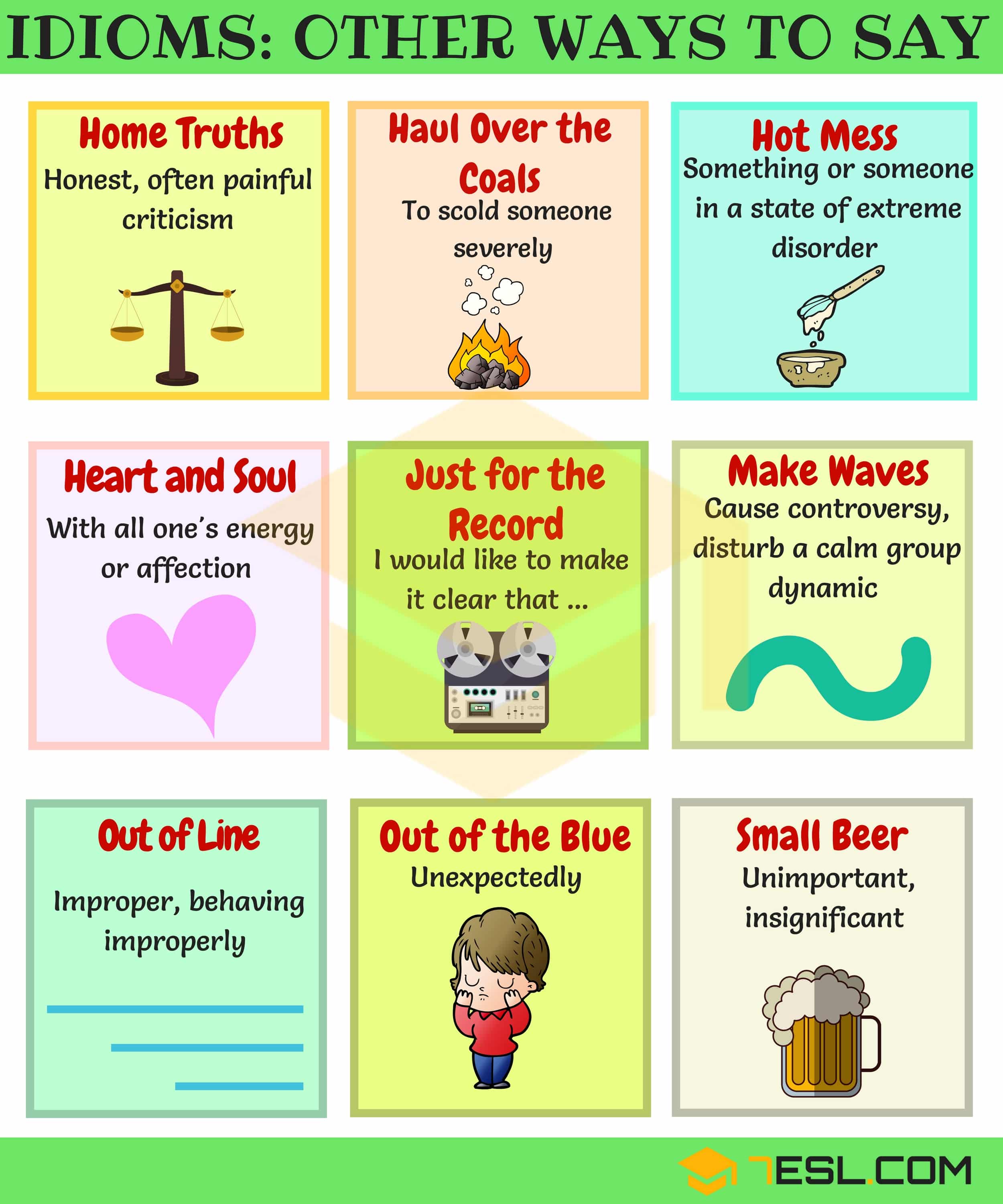
In the rapidly evolving landscape of Natural Language Processing (NLP) and Artificial Intelligence, the definition of communication has shifted from simple data exchange to the mastery of nuance. At the heart of this shift lies a complex linguistic phenomenon: the idiomatic phrase. To a human, “biting the bullet” or “breaking the ice” requires no conscious translation. However, for technology—specifically Large Language Models (LLMs) and automated translation software—idiomatic phrases represent one of the most significant hurdles in achieving true artificial general intelligence.
In a technological context, an idiomatic phrase is defined as a multi-word expression where the meaning cannot be deduced from the individual meanings of its constituent parts. For tech developers and AI researchers, these phrases are not just “colorful language”; they are data anomalies that test the limits of machine learning, context-awareness, and semantic mapping.

The Engineering Challenge: How NLP Processes Idiomatic Phrases
For decades, the primary goal of computational linguistics was to teach machines to parse syntax and identify vocabulary. While modern software can easily define “cloud” and “computing,” the challenge arises when phrases become non-compositional. In the tech world, this is known as the “compositionality problem.”
The Limit of Literal Interpretation
Traditional algorithms function on a principle of compositionality, assuming that the meaning of a complex expression is a function of the meanings of its parts. Idiomatic phrases break this rule entirely. When an AI encounters the phrase “under the hood” in a technical review, a literal parser might search for automotive components. An advanced NLP model, however, must recognize this as a figurative idiom referring to the internal workings of a software architecture. Bridging this gap requires massive datasets and sophisticated “attention mechanisms” that allow the software to weigh the surrounding context more heavily than the dictionary definitions of the words themselves.
Sentiment Analysis and Contextual Weighting
In the field of Big Data and social media monitoring, idiomatic phrases are “noise” that can lead to significant errors in sentiment analysis. If a user tweets that a new smartphone is “the GOAT” (Greatest of All Time), an unsophisticated AI tool might categorize the post as a discussion about livestock. Tech companies investing in brand monitoring tools must develop systems that understand cultural idioms to ensure that data insights are accurate. This requires training models on diverse, ever-changing datasets that reflect real-world slang and professional jargon.
“Idiomatic” in Software Development: Beyond Linguistics
In the world of software engineering, the term “idiomatic” takes on an entirely different, though equally vital, meaning. When developers speak of “idiomatic code,” they are referring to the “idioms” of a specific programming language—the unique, preferred way of writing code that aligns with the language’s philosophy and optimized performance.
Writing Pythonic and Ruby-esque Code
Every programming language has its own set of idiomatic phrases—patterns that are considered the most efficient and readable by the community. For example, in Python, writing “Pythonic” code means using list comprehensions rather than traditional loops. While both methods achieve the same result, the idiomatic approach is more concise and better optimized for the Python interpreter. Technology leaders emphasize idiomatic coding because it reduces “technical debt” and ensures that different developers can transition into a project seamlessly, understanding the “dialect” of the codebase without needing a manual.
Consistency in Frameworks and APIs
Just as human idioms provide shortcuts for complex ideas, idiomatic patterns in API (Application Programming Interface) design provide shortcuts for developers. When a software tool follows “idiomatic” design principles, it behaves in a way that is predictable to the user. If an API uses standard HTTP methods (GET, POST, PUT, DELETE) in a way that matches industry idioms, it lowers the barrier to entry for third-party integrations. For tech companies, mastering these technical idioms is the difference between a product that is “clunky” and one that feels intuitive to the global developer community.
Visual Idioms: The Grammar of User Experience (UX)
The concept of the idiomatic phrase extends beyond text and code into the realm of digital design. In UX/UI design, a “visual idiom” is a symbol or interaction pattern that has a specific meaning not necessarily inherent in the image itself, but learned through repeated exposure across the digital ecosystem.
The Evolution of Digital Signifiers
Consider the “hamburger menu” (the three horizontal lines) or the “floppy disk” save icon. These are visual idioms. The three lines do not literally look like a menu, and most Gen Z users have never seen a physical floppy disk, yet the “idiomatic” meaning is understood instantly. Tech companies must decide when to stick to established visual idioms and when to innovate. Deviating from these idioms can lead to “user friction,” where the technology becomes a barrier rather than a tool.
Cross-Cultural Interface Design
As software scales globally, tech firms must grapple with the fact that visual and verbal idioms are not universal. A “thumbs up” icon may be an idiomatic signifier of approval in the West, but it carries different connotations in parts of the Middle East or West Africa. In the tech sector, “internationalization” (i18n) involves more than just translating strings of text; it involves a deep dive into the idiomatic expectations of different user bases to ensure that the software’s “language”—both visual and verbal—remains functional and respectful.
The Future: Artificial Intelligence and the Mastery of Nuance
The next frontier for AI tools is the transition from recognizing idioms to generating them effectively. As we move toward more sophisticated AI assistants and generative tools, the ability to communicate using idiomatic phrases will be the benchmark for “human-like” interaction.
Hyper-Personalization and Localized AI
Future AI models are being trained to recognize regional idiomatic phrases to provide a more personalized user experience. A virtual assistant used in London should understand different idiomatic cues than one used in New York or Sydney. This level of localization requires “Transfer Learning,” where a base model is fine-tuned on specific cultural datasets. For the tech industry, this represents a massive opportunity in the realm of customer service automation and personalized marketing, where “speaking the customer’s language” includes mastering their local idioms.
Real-Time Translation and Global Collaboration
We are approaching a point where real-time translation tools, powered by neural machine translation (NMT), can handle idiomatic phrases on the fly. This has massive implications for global business and remote work technology. If a developer in Tokyo uses a Japanese idiom during a video call, and a project manager in Berlin hears the German equivalent in real-time, the “tech gap” is effectively closed. The development of “idiom-aware” translation software is currently a high-priority project for giants like Google, Microsoft, and Meta, as it represents the final hurdle in seamless global communication.

Conclusion: The Synthesis of Language and Logic
In conclusion, while the question “what are idiomatic phrases” might seem like a simple linguistic inquiry, in the tech sector, it is a foundational challenge that touches every aspect of the industry. From the way we train Large Language Models to recognize figurative intent, to the way we write “idiomatic” code that maintains our digital infrastructure, and the way we design visual idioms that guide user behavior—these phrases are the connective tissue between human thought and machine execution.
As technology continues to advance, the distinction between “literal” and “idiomatic” will become the primary playground for innovation. For developers, designers, and AI researchers, the goal is clear: to build systems that don’t just process data, but truly understand the rich, complex, and often irrational way that humans express themselves. Mastery of the idiomatic phrase is, quite literally, the key to unlocking the next generation of human-computer interaction.
aViewFromTheCave is a participant in the Amazon Services LLC Associates Program, an affiliate advertising program designed to provide a means for sites to earn advertising fees by advertising and linking to Amazon.com. Amazon, the Amazon logo, AmazonSupply, and the AmazonSupply logo are trademarks of Amazon.com, Inc. or its affiliates. As an Amazon Associate we earn affiliate commissions from qualifying purchases.