
In the rapidly evolving landscape of technology, the difference between a successful product and a costly failure often hinges on a single concept: the hypothesis. Whether you are a software engineer optimizing a backend algorithm, a data scientist training a neural network, or a product manager designing a new user interface, the hypothesis serves as the bridge between raw intuition and empirical evidence. In the tech sector, a hypothesis is not merely an educated guess; it is a structured, testable proposition that drives the iterative cycle of innovation.
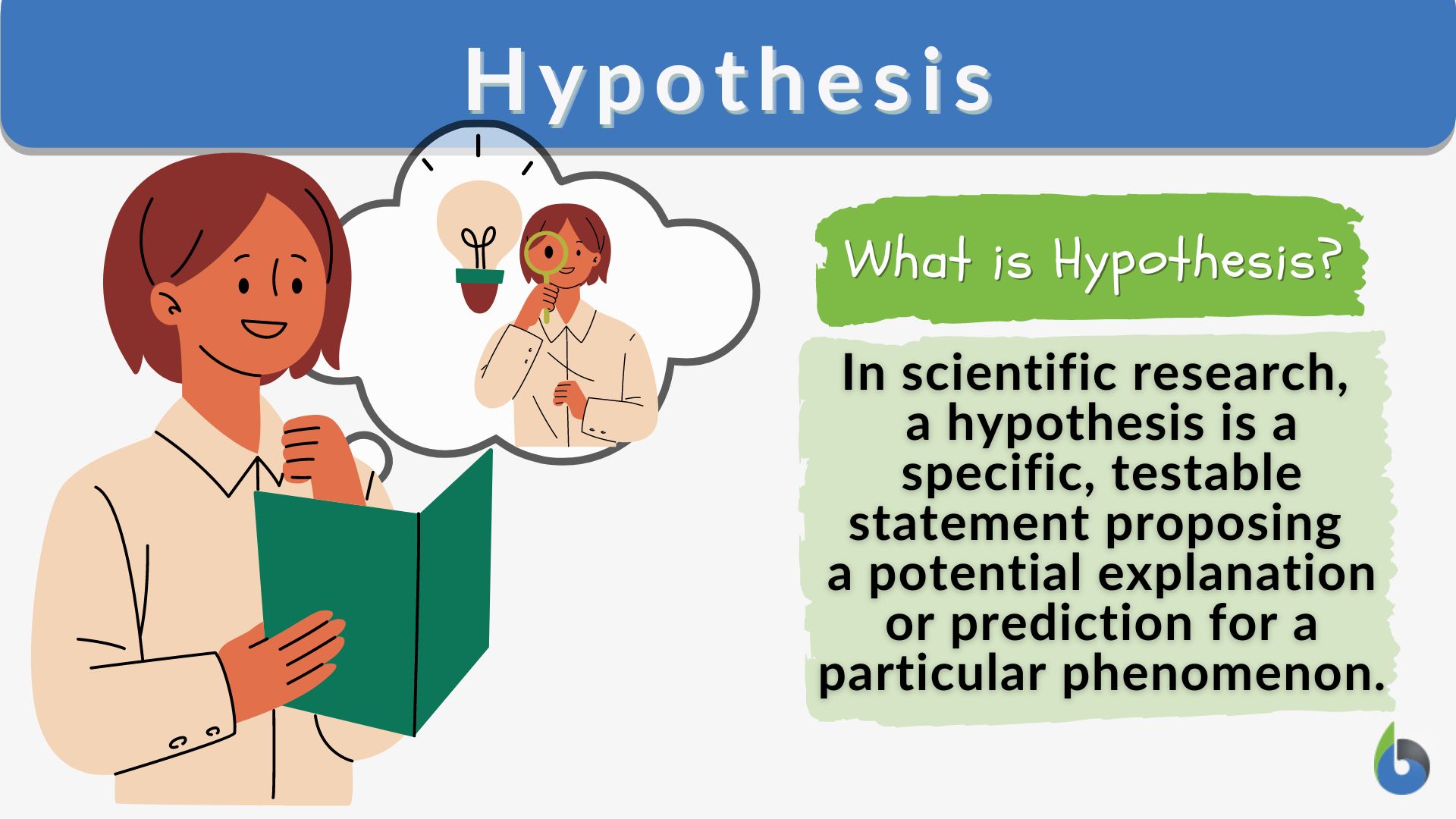
Understanding what hypotheses are—and how to deploy them—allows tech professionals to move away from “feature-building” for its own sake and toward “problem-solving” based on validated data. This article explores the multifaceted role of hypotheses across software development, artificial intelligence, and product strategy, providing a roadmap for turning technical assumptions into scalable solutions.
The Fundamental Role of Hypotheses in Software Development
In modern software engineering, particularly within Agile and DevOps frameworks, the hypothesis is the core of the “fail fast, learn faster” philosophy. Instead of committing months of development time to an unproven architecture, teams use hypotheses to break down complex projects into verifiable units.
From Assumptions to Validated Learning
Every line of code is essentially a manifestation of an assumption. A developer assumes that a specific database schema will handle a certain load, or that a new API endpoint will provide the necessary data for the frontend. A formal hypothesis transforms these passive assumptions into active questions. For example, instead of assuming “microservices will make our app faster,” a technical hypothesis would state: “By migrating the authentication module to a dedicated microservice, we will reduce API response latency by 20% under peak loads of 10,000 concurrent users.”
This structure—identifying a specific change and a measurable outcome—allows development teams to move from subjective opinions to validated learning. It shifts the conversation from “what we think” to “what we can prove.”
Building an Experimentation Framework
To utilize hypotheses effectively, tech teams must build an environment that supports experimentation. This involves setting up staging environments that mirror production, implementing robust logging and monitoring tools, and utilizing feature flags. Feature flags, or toggles, are particularly crucial; they allow developers to roll out a “hypothesis” to a small percentage of users, gather data on its performance, and either expand the rollout or kill the feature based on the results. This technical infrastructure ensures that hypotheses are not just theoretical but are lived experiences within the software lifecycle.
Hypotheses in Modern Data Science and AI
If software development is the engine of tech, data science is the fuel. In the realms of Big Data and Artificial Intelligence (AI), the hypothesis is the primary tool for extracting signal from noise.
Formulating Null and Alternative Hypotheses in Analytics
In data analytics, the “Null Hypothesis” (H0) is the default position that there is no relationship between two measured phenomena. The “Alternative Hypothesis” (H1) is what the researcher or data scientist actually suspects is true. For instance, when analyzing server logs to improve uptime, the Null Hypothesis might be that “Server location has no impact on packet loss.” The Alternative Hypothesis would be “Servers located in Region A experience significantly higher packet loss than those in Region B during high-traffic windows.”
By applying statistical tests to these hypotheses, data scientists can determine the “p-value”—the probability that the observed results happened by chance. In the tech world, making decisions based on statistical significance rather than “gut feeling” is what separates data-driven companies from their competitors.
Iterative Testing in Machine Learning Models
Machine learning (ML) is inherently an experimental discipline. When training a model, a data scientist posits several hypotheses regarding hyperparameter tuning, feature selection, and algorithmic architecture. A hypothesis in ML might look like: “Increasing the depth of this convolutional neural network from 10 to 50 layers will improve image classification accuracy on the validation set by at least 5% without causing overfitting.”
Each training run is an experiment designed to test these hypotheses. By documenting these iterations, teams can build a repository of knowledge that prevents them from repeating failed experiments and helps them converge on the most efficient model architecture.
Product Management: Hypotheses as the Foundation of the MVP
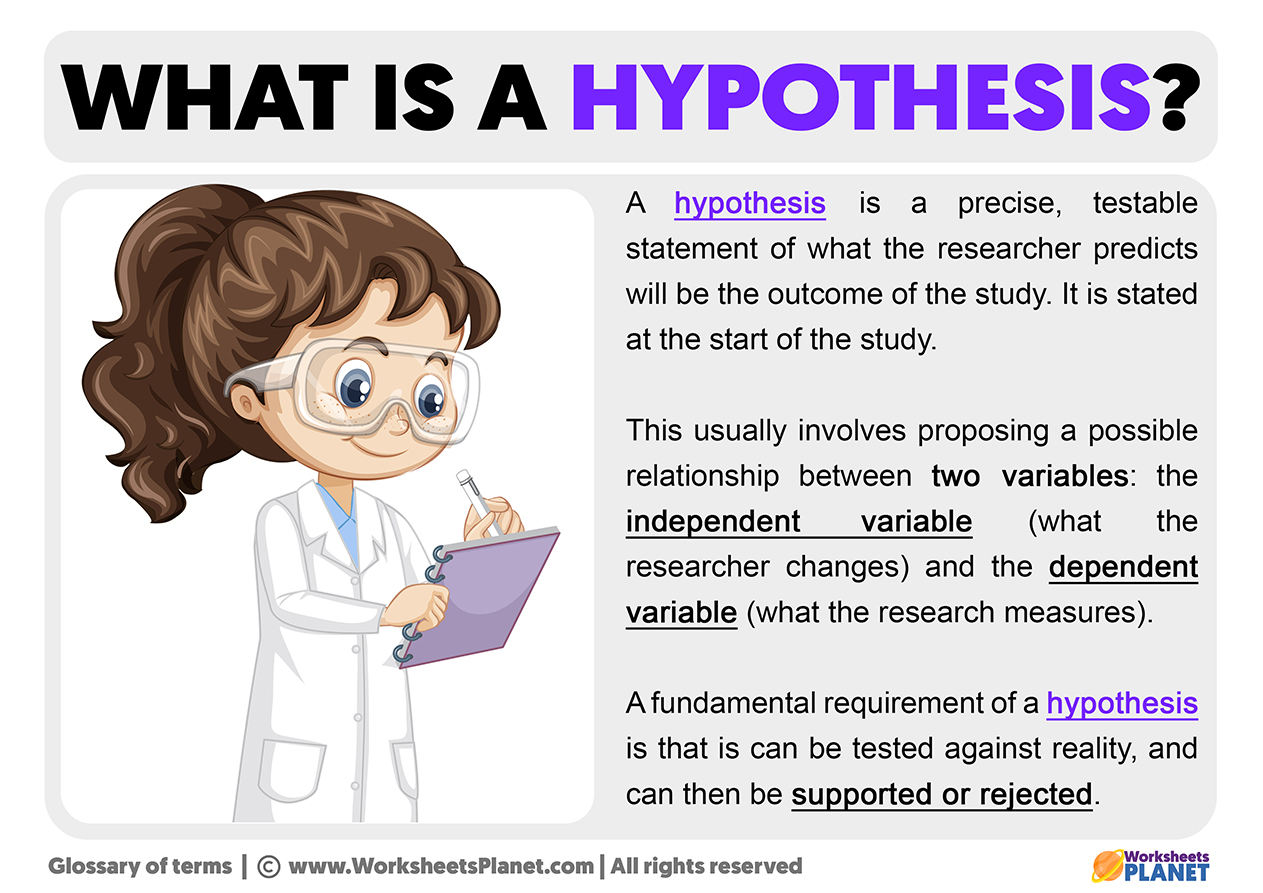
In the world of tech startups and product development, the “Minimum Viable Product” (MVP) is perhaps the most famous application of the hypothesis-driven approach. An MVP is not just a “small version” of a product; it is the smallest thing you can build to test a specific business or technical hypothesis.
Identifying Core Value Propositions
Product managers must identify the riskiest assumptions underlying their product. These are often framed as value hypotheses: “Do users actually need this problem solved?” and growth hypotheses: “How will users discover this product?”
A classic example is the early days of a cloud storage service. The founders might hypothesize that “users are frustrated with emailing files to themselves and want a seamless folder that syncs across devices.” Before building the complex backend architecture to support millions of users, the team might test this hypothesis with a simple video demonstrating the concept to see if it generates significant sign-up interest.
Risk Mitigation through Lean Testing
By focusing on hypotheses, product teams can mitigate the “sunk cost fallacy.” When a team spends a year building a feature without testing it, they are emotionally and financially invested in its success, even if it fails. However, if they frame the feature as a hypothesis to be tested in a two-week sprint, they are much more likely to pivot or abandon the idea if the data shows it isn’t adding value. This lean approach preserves technical resources and directs them toward features that truly resonate with the user base.
A/B Testing and the Engineering of User Experience (UX)
User Experience (UX) design has transitioned from a purely aesthetic discipline to a rigorous, data-driven science. At the heart of this transition is A/B testing, a method of comparing two versions of a webpage or app against each other to determine which one performs better.
Crafting Testable Statements for Conversion Rate Optimization (CRO)
A/B testing is the practical application of a hypothesis in the UI/UX space. A weak hypothesis would be: “Let’s change the color of the ‘Sign Up’ button to see what happens.” A strong, technical hypothesis would be: “By changing the ‘Sign Up’ button from grey to high-contrast orange and moving it above the fold, we will increase the click-through rate (CTR) by 15% because the call-to-action will be more visually prominent in the user’s scanning pattern.”
This level of specificity allows designers to understand why a change worked, not just that it worked. It builds a psychological profile of the user that can be applied to future design decisions.
Analyzing Technical Metrics and Performance Indicators
Beyond simple clicks, technical hypotheses in UX often revolve around performance. A developer might hypothesize that “Reducing the initial JavaScript bundle size by 30% will decrease the ‘Time to Interactive’ (TTI) on mobile devices by 1.5 seconds, leading to a 5% decrease in bounce rate.”
In this scenario, the hypothesis links a technical metric (bundle size) to a performance metric (TTI) and finally to a business metric (bounce rate). This holistic view ensures that engineering efforts are directly contributing to the overall health of the digital product.
Future-Proofing Innovation: Cultivating a Hypothesis-Driven Culture
For a tech organization to remain competitive, the use of hypotheses cannot be restricted to a single department. It must be woven into the cultural fabric of the company.
Overcoming Confirmation Bias in Tech Teams
One of the greatest threats to innovation is confirmation bias—the tendency to search for, interpret, and favor information that confirms one’s pre-existing beliefs. In tech, this often manifests as “falling in love with a solution” before fully understanding the problem.
A hypothesis-driven culture fights this bias by requiring evidence. When a senior leader suggests a radical new direction for the tech stack, the immediate response should be: “What is the hypothesis, and how can we test it with the least amount of effort?” This levels the playing field, allowing the best ideas to win based on data rather than hierarchy.

Scaling Insights across the Organization
The final stage of the hypothesis lifecycle is the documentation and sharing of results. In a sophisticated tech environment, every experiment—whether it succeeds or fails—is a valuable data point. Centralizing these insights in a “knowledge base” or “experimentation repository” allows different teams to learn from each other.
For instance, if the mobile team discovers that a certain onboarding flow increases user retention, the web team can use that validated hypothesis as a starting point for their own optimizations. This cross-pollination of data-driven insights accelerates the entire organization’s growth and ensures that the company is constantly building upon its collective intelligence.
In conclusion, hypotheses are the “logic gates” of the tech world. They provide the structure necessary to navigate the complexity of software, data, and user behavior. By transforming vague ideas into testable, measurable propositions, tech professionals can ensure that every hour of coding and every dollar of investment is moving the needle toward genuine innovation. Whether you are at a startup or a global tech giant, the ability to formulate, test, and learn from hypotheses is the ultimate competitive advantage in the digital age.
aViewFromTheCave is a participant in the Amazon Services LLC Associates Program, an affiliate advertising program designed to provide a means for sites to earn advertising fees by advertising and linking to Amazon.com. Amazon, the Amazon logo, AmazonSupply, and the AmazonSupply logo are trademarks of Amazon.com, Inc. or its affiliates. As an Amazon Associate we earn affiliate commissions from qualifying purchases.