
The modern home and commercial building are intricate ecosystems defined not just by their architecture, but by their internal climate. At the heart of this comfort lies the HVAC unit. An acronym for Heating, Ventilation, and Air Conditioning, HVAC represents a complex intersection of thermodynamics, fluid mechanics, and electrical engineering. Understanding what these systems are, how they function as a cohesive technology, and why they represent the pinnacle of climate control engineering is essential for anyone looking to optimize their built environment.
The Technological Architecture of HVAC Systems
At its core, an HVAC unit is not a single appliance, but a series of interconnected technologies designed to manage the thermal and air quality characteristics of an indoor space. Unlike a simple space heater or a standalone window air conditioner, a true HVAC system is a centralized mechanical solution that integrates the distribution of air throughout an entire structure.

The Physics of Heat Exchange
The foundational technology behind most HVAC units is the refrigeration cycle. This is the same scientific principle that allows a refrigerator to keep food cold, but scaled and reversed to suit the needs of a building. The system utilizes a refrigerant—a chemical compound that shifts between liquid and gaseous states at low temperatures—to absorb heat from one location and release it in another.
In cooling mode, the evaporator coil inside the home absorbs heat from the indoor air, causing the refrigerant to boil and turn into a gas. This gas is then compressed by the outdoor compressor unit, which raises its pressure and temperature, allowing the heat to be expelled into the outside atmosphere. This cyclical process is a marvel of modern mechanical engineering, allowing for the precise removal of thermal energy from interior spaces.
Integrated Ventilation and Air Quality
Ventilation is the “V” in HVAC, and it is perhaps the most critical component for health and safety. While heating and cooling manage temperature, ventilation manages the composition of the air. Modern HVAC systems incorporate air handling units (AHUs) that use blowers to force air through a filtration system. These filters are technologically advanced, ranging from standard fiberglass meshes to high-efficiency particulate air (HEPA) filters capable of capturing microscopic allergens, bacteria, and volatile organic compounds (VOCs).
Technologically, this creates a pressurized environment where indoor air is continuously turned over and cleaned, preventing the accumulation of carbon dioxide and ensuring that the air inhabitants breathe is chemically balanced and particulate-free.
The Evolution of Smart HVAC Technology
The “Gadget” and “Software” aspect of HVAC has seen an unprecedented shift in the last decade. We have moved from simple bi-metallic thermostats to sophisticated IoT (Internet of Things) devices that function as the central brain of the home’s mechanical systems.
Sensors and Predictive Analytics
Modern HVAC units are increasingly equipped with arrays of sensors that monitor everything from static pressure in the ductwork to the moisture content (humidity) of the air. These sensors feed data back to a central controller, which uses algorithms to optimize performance.
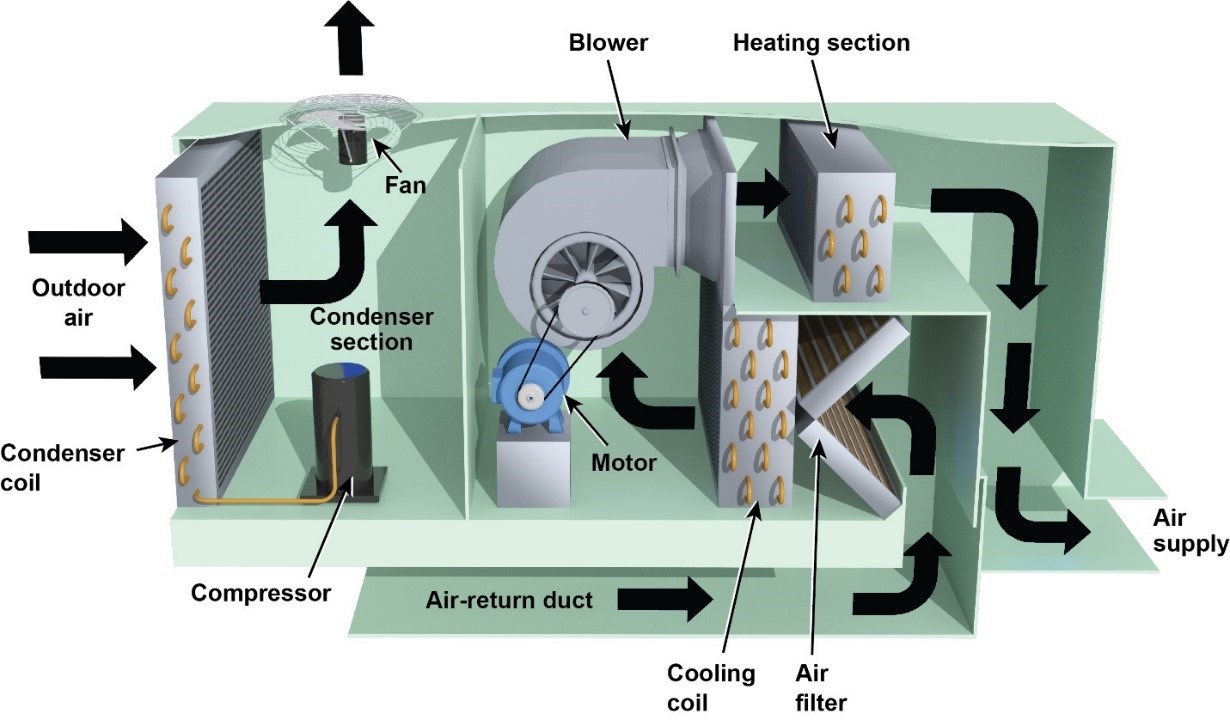
For instance, variable-speed technology allows the compressor and the blower motor to run at partial capacities rather than just “on” or “off.” This technological leap is akin to an automobile’s cruise control; by modulating speed based on real-time sensor data, the HVAC system can maintain a temperature within 0.5 degrees of the setpoint while consuming significantly less electrical energy than older, binary systems.
The Rise of Smart Thermostats and AI Integration
The integration of AI-driven thermostats like Nest or Ecobee has fundamentally changed the HVAC landscape. These devices learn the behavioral patterns of the occupants, automatically adjusting the HVAC unit’s output based on daily routines. When paired with smart home ecosystems, these units can communicate with other tech, such as window sensors that shut down the HVAC if a window is left open, or occupancy sensors that reduce heating in rooms that are not in use. This level of software-hardware integration is the current frontier of residential and commercial climate technology.
Maintenance and Technical Troubleshooting
Despite the sophistication of HVAC units, they are mechanical systems prone to wear and tear. A professional approach to HVAC maintenance is rooted in understanding the digital and mechanical vulnerabilities of the system.
The Role of Diagnostics
Modern HVAC tech includes self-diagnostic software. When a system malfunctions, it often logs an error code. For technicians, these codes act as a roadmap to the fault—whether it is a restricted airflow issue, an electrical short in a relay, or a loss of refrigerant pressure. The ability to interface with these digital diagnostic ports is what separates amateur repair from expert technical maintenance.
Preventive Tech Cycles
Preventive maintenance is effectively a software update for your hardware. Regularly cleaning the condenser coils, replacing high-efficiency filters, and inspecting the electrical capacitors prevents the system from “overclocking.” When a system is clogged with dust, the blower motor must work harder, drawing more amperage and generating excessive heat, which eventually leads to component failure. By treating the HVAC system as a high-performance computer that requires periodic “maintenance cycles,” homeowners can extend the lifespan of these units from the industry-average fifteen years to twenty or more.
Future Trends in Climate Control Technology
As we look toward the future, the HVAC industry is shifting toward more sustainable and intelligent solutions. The technological roadmap is moving away from traditional combustion-based heating toward advanced heat pump technology.
The Heat Pump Revolution
The most significant trend in HVAC tech is the universal adoption of heat pumps. A heat pump is essentially a reversible air conditioner; it can pull heat out of the outdoor air even when it is cold outside, and move that heat into the building. Because heat pumps move heat rather than creating it through the burning of fossil fuels, they are significantly more energy-efficient. As software controls improve, heat pumps are becoming effective in even the harshest northern climates, representing a major shift in how we power our infrastructure.
The Integration of Home Automation Hubs
Future-proofing your HVAC means considering how it interacts with the broader network of home technology. We are currently seeing the emergence of “Universal Climate Controllers” that act as APIs for the entire house. These systems can integrate with solar panel arrays, using excess solar energy to “pre-cool” or “pre-heat” a house during the peak of the day, effectively using the thermal mass of the home as a battery. This is the nexus of green energy and climate control software, where the HVAC unit becomes a load-balancing tool for the power grid itself.

Conclusion
HVAC units are far more than mere boxes that blow hot or cold air. They are sophisticated, software-integrated mechanical systems that rely on the principles of thermodynamics to sustain human comfort in an increasingly volatile climate. By viewing HVAC as a vital piece of technology—akin to a server or a high-end computing rig—one can better appreciate the necessity of regular updates, intelligent sensor management, and the adoption of modern, high-efficiency mechanical solutions. Whether you are managing a commercial enterprise or optimizing a smart home, the HVAC system serves as the foundational utility upon which all other comfort technologies are built.
aViewFromTheCave is a participant in the Amazon Services LLC Associates Program, an affiliate advertising program designed to provide a means for sites to earn advertising fees by advertising and linking to Amazon.com. Amazon, the Amazon logo, AmazonSupply, and the AmazonSupply logo are trademarks of Amazon.com, Inc. or its affiliates. As an Amazon Associate we earn affiliate commissions from qualifying purchases.