
Receiving blood work results can often feel like deciphering a secret code. A long list of abbreviations, numbers, and reference ranges can leave many patients scratching their heads, wondering what “high monocytes” or any other seemingly abstract term truly signifies for their health. In an age dominated by information, the medical field, traditionally cloaked in specialized jargon, is undergoing a profound transformation. Technology is not merely automating processes; it is fundamentally reshaping how we understand, interpret, and interact with complex diagnostic data like monocyte counts, empowering both clinicians and patients with unprecedented clarity and actionable insights. This article explores how technological advancements are demystifying blood work, particularly findings like elevated monocytes, turning raw data into meaningful knowledge.
The Evolution of Blood Diagnostics: From Manual to Automated Precision
The journey of a blood sample through a laboratory has evolved dramatically, moving from labor-intensive manual processes to highly sophisticated, automated systems. This technological leap is foundational to our current understanding and rapid analysis of blood components, including monocytes.
The Foundation: Automated Hematology Analyzers
At the heart of modern blood diagnostics are automated hematology analyzers. These intricate machines represent a cornerstone of laboratory technology, capable of processing hundreds of blood samples per hour with remarkable accuracy and efficiency. Rather than relying on a technician to manually count cells under a microscope – a process prone to human error and time-consuming – these analyzers use advanced principles like flow cytometry, impedance, and light scattering to rapidly identify and quantify different blood cell types, including red blood cells, white blood cells (of which monocytes are a type), and platelets.
For monocytes, these analyzers precisely measure their size, granularity, and nuclear characteristics, comparing them against established parameters. This automation has dramatically reduced turnaround times for results, making it possible for clinicians to receive crucial information much faster than in previous eras. The sheer volume of data points generated by these machines for each sample, including not just the monocyte count but also their relative percentage and distribution, provides a robust baseline for further interpretation. Without this automated precision, understanding the prevalence and significance of findings like “high monocytes” on a population scale, let alone individual patient data, would be significantly more challenging and less consistent.
Digital Pathology and Image Analysis
Beyond numerical counts, the visual examination of blood cells remains critical, especially when automated analyzers flag abnormal results. Here, digital pathology steps in, revolutionizing the traditional microscope. Instead of physical slides being reviewed by pathologists, high-resolution digital scanners create virtual slides that can be viewed and analyzed on computer screens, often remotely.
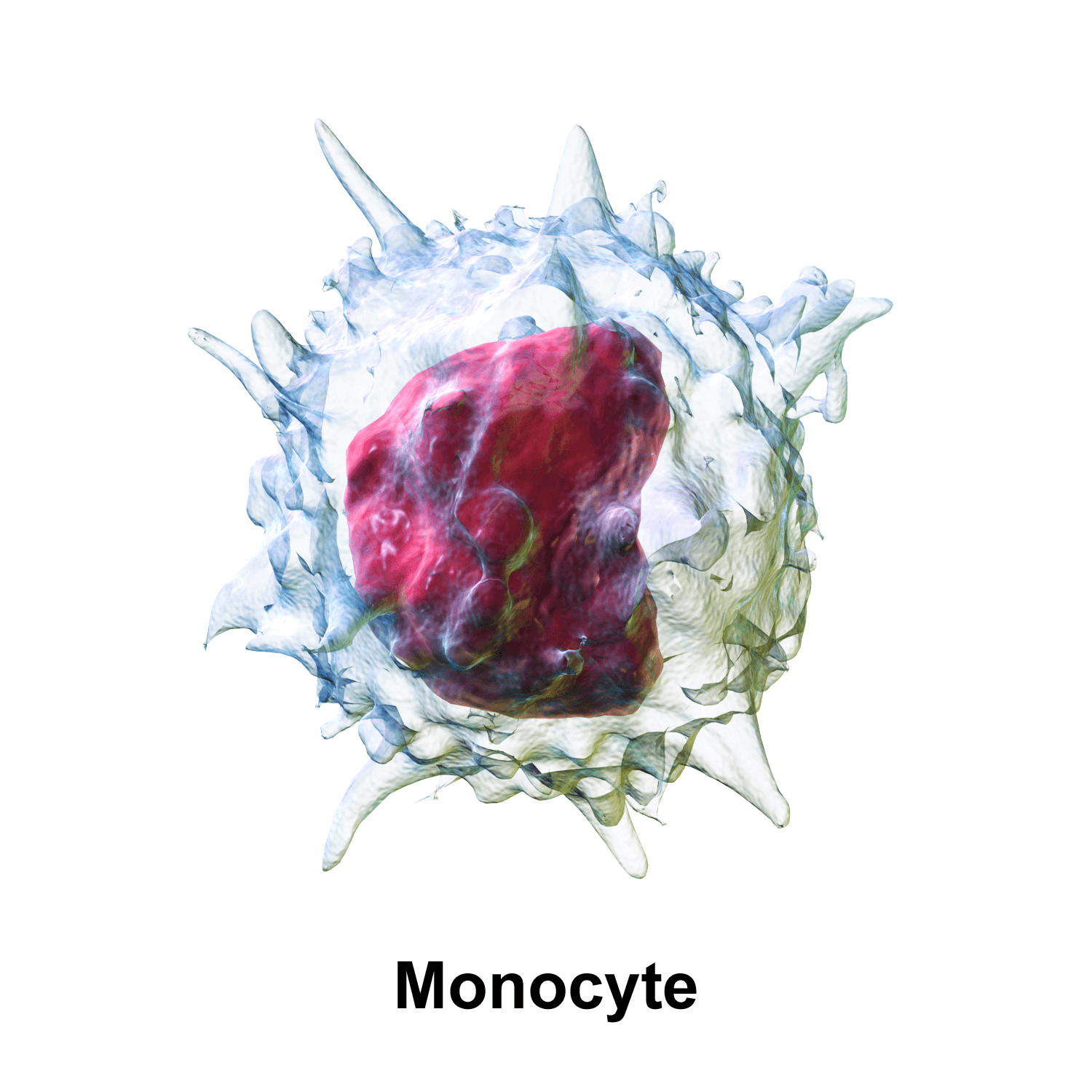
This digitization opens the door to sophisticated image analysis software, frequently powered by artificial intelligence. These algorithms can meticulously examine the morphology of individual cells, including monocytes, detecting subtle variations in shape, size, and internal structure that might indicate specific underlying conditions. For instance, certain infections or inflammatory processes can alter the appearance of monocytes. AI-driven image analysis can identify these characteristic changes with remarkable speed and consistency, potentially assisting pathologists in pinpointing the cause of elevated monocyte counts more precisely. The ability to share these digital slides instantly with specialists worldwide further enhances collaborative diagnostics, ensuring that even rare or challenging cases of high monocytes receive expert review regardless of geographical barriers.
Data Integration and Electronic Health Records (EHRs)
The utility of a single blood test result, such as a monocyte count, is significantly amplified when integrated within a broader digital framework. Electronic Health Records (EHRs) are the central nervous system of modern healthcare data, acting as comprehensive digital repositories for a patient’s entire medical history. Blood work results, including detailed monocyte levels over time, are seamlessly uploaded into EHRs.
This integration allows for longitudinal tracking, enabling healthcare providers to observe trends in monocyte counts, identify acute spikes, or recognize chronic elevations. By comparing current results against previous ones, clinicians can gain a deeper understanding of whether an elevated monocyte count is a new development, a recurring pattern, or a response to an ongoing treatment. Furthermore, EHRs facilitate cross-referencing monocyte data with other patient information—such as medication history, diagnoses, imaging results, and demographic data. This holistic view, enabled by robust digital infrastructure, is crucial for contextualizing an elevated monocyte count, helping clinicians differentiate between various potential causes (e.g., a viral infection versus a chronic inflammatory condition). Secure and centralized data management ensures that this vital information is accessible to the entire care team, fostering better-coordinated and informed patient care.
AI and Machine Learning: Unlocking Deeper Insights from Monocyte Data
While automated analyzers provide the data and EHRs store it, artificial intelligence (AI) and machine learning (ML) are the powerful analytical engines that transform raw blood work data into profound, actionable insights, offering a glimpse into the future of diagnostic understanding.
Predictive Analytics for Early Detection
The true power of AI in diagnostics lies in its ability to identify patterns that might be imperceptible to the human eye, even with extensive training. AI algorithms, fed with vast datasets of anonymized blood work results (including monocyte levels), patient histories, clinical outcomes, and genomic data, can learn to correlate specific markers with the onset or progression of various diseases. For instance, subtle, persistent elevations in monocyte counts, when analyzed alongside other biomarkers and patient demographics, might be identified by an AI as a precursor to certain inflammatory conditions, autoimmune diseases, or even some types of cancer, before overt symptoms manifest.
This capability in predictive analytics holds immense promise for early detection. By identifying individuals at higher risk based on their unique biological footprint, healthcare providers can intervene earlier, potentially leading to more effective treatments and better patient outcomes. The AI doesn’t just tell us what the monocyte count is; it can begin to suggest what it might mean in the broader context of an individual’s health trajectory, significantly augmenting a clinician’s diagnostic capabilities.
Personalized Risk Assessment
Beyond general predictions, AI and machine learning are pivotal in ushering in an era of personalized medicine. Traditional medicine often relies on population averages for interpreting blood work results. However, what constitutes a “normal” or “high” monocyte count can vary based on an individual’s unique genetic makeup, lifestyle, environmental exposures, and existing health conditions.
AI algorithms can contextualize an individual’s monocyte levels against their specific genetic profile (e.g., known genetic predispositions to inflammatory responses), their microbiome data, lifestyle factors (diet, exercise, stress), and a comprehensive history of other biomarkers. This sophisticated analysis moves beyond “one size fits all” reference ranges, allowing for a highly personalized risk assessment. For someone with a genetic predisposition to chronic inflammation, a monocyte count that might be considered borderline in the general population could signal a higher risk, prompting closer monitoring or preventative measures. This granular, individualized interpretation, driven by AI, transforms the understanding of markers like monocytes from a simple number to a deeply personalized health indicator.
AI-Powered Explanations and Patient Education
One of the most significant challenges in healthcare communication is bridging the knowledge gap between medical professionals and patients. Terms like “monocytes” and their implications are often complex and intimidating for the layperson. AI-powered tools are emerging as powerful allies in patient education, designed to demystify these findings.
Natural Language Processing (NLP) and generative AI applications are being developed to translate complex medical jargon into understandable, actionable language. Imagine a patient portal where, upon seeing “high monocytes,” an AI chatbot can explain in simple terms what monocytes are, their role in the immune system, common reasons for elevation (e.g., infections, inflammation), and what questions to ask their doctor. These tools can provide context, suggest reliable sources for further reading, and even generate personalized summaries of findings. By empowering patients with clear, accessible information, AI fosters greater health literacy, encourages proactive engagement in care decisions, and reduces anxiety associated with ambiguous diagnostic results.

Bridging the Gap: Telehealth and Digital Platforms in Communicating Results
The advent of telehealth and integrated digital platforms has revolutionized how healthcare providers and patients interact, especially concerning the communication and interpretation of diagnostic results like blood work.
Virtual Consultations and Remote Monitoring
Telehealth platforms have become indispensable, particularly in the wake of global health events, offering unparalleled accessibility and convenience. Patients can now discuss their blood work results, including any findings related to elevated monocyte counts, with their healthcare providers from the comfort of their homes or any remote location. These virtual consultations allow clinicians to review results collaboratively with the patient, explain what high monocytes might indicate in their specific case, and outline potential next steps without the need for an in-person visit.
Beyond initial discussions, remote monitoring solutions, often integrated into telehealth ecosystems, can track certain health parameters over time. While continuous monocyte monitoring isn’t yet widespread, these platforms enable the regular review of patient-reported symptoms or other related vital signs that might influence the interpretation of monocyte levels, allowing for timely adjustments to care plans and proactive management of conditions associated with these findings.
Patient Portals and Interactive Dashboards
Modern patient portals are far more than just repositories for medical records; they are sophisticated digital interfaces designed to empower patients. When blood work results, including monocyte counts, are uploaded, these portals often present the data in user-friendly, interactive dashboards. Instead of a dense, text-heavy report, patients might see clear graphs showing their monocyte levels over time, indicating whether they are within or outside the normal range.
Crucially, many portals now include embedded educational resources. Clicking on “monocytes” or “high monocytes” might bring up a concise explanation, often accompanied by visual aids, detailing their function, common causes for elevation, and what the patient should discuss with their doctor. Some advanced portals even offer personalized summaries of what their specific results mean in the context of their medical history. This approach transforms a potentially confusing lab report into an engaging and informative experience, enabling patients to understand their health data proactively and prepare informed questions for their healthcare providers.
Secure Data Sharing and Collaborative Care
Effective patient care, especially for complex conditions that might involve sustained elevated monocyte counts, often requires the input and collaboration of multiple specialists. Technology plays a critical role in facilitating this multidisciplinary approach through secure data sharing. Digital platforms ensure that diagnostic results, including detailed blood work reports, can be securely and instantly shared between primary care physicians, hematologists, immunologists, and other relevant specialists.
This seamless and secure exchange of information eliminates delays and ensures that every member of the care team has access to the most current and comprehensive patient data. For instance, if a patient’s high monocyte count is concerning, a primary care doctor can quickly share the full EHR, including all previous blood work and clinical notes, with a specialist for a second opinion or referral. This collaborative framework, underpinned by robust digital security and interoperability, ensures a holistic approach to understanding and managing the implications of elevated monocyte levels, leading to more coordinated and effective patient management.
The Future of Monocyte Monitoring: Wearables, Point-of-Care, and Precision Medicine
The horizon of healthcare technology promises even more profound transformations, moving towards increasingly integrated, personalized, and proactive approaches to health monitoring, which will undoubtedly impact how we understand and manage markers like monocytes.
Non-Invasive and Continuous Monitoring
While current monocyte assessment relies on traditional blood draws, the future may see a shift towards less invasive or even non-invasive monitoring. Researchers are exploring advanced wearable sensors and smart devices capable of detecting subtle physiological changes that might indirectly correlate with inflammatory responses or immune cell activity. Imagine a future where a smart patch or a next-generation smartwatch could provide real-time, continuous insights into inflammatory markers, potentially signaling an uptick in immune activity that could correspond to an elevated monocyte count without a needle stick.
These technologies, still in nascent stages for specific cell counts, could offer early warnings of infection, chronic inflammation flare-ups, or even the initial stages of disease development. By providing a continuous stream of data, they could move healthcare from reactive interventions to proactive management, allowing for immediate identification of significant changes and timely medical consultations.
Point-of-Care Testing (POCT) Innovations
Point-of-Care Testing (POCT) aims to bring diagnostic capabilities closer to the patient, often outside the traditional laboratory setting. Current POCT devices can perform rapid tests for various parameters, and the trend is towards miniaturization and increased sophistication. In the future, we could see highly accurate, portable devices that can quickly and reliably assess monocyte counts from a micro-sample of blood (e.g., a finger prick) directly in a doctor’s office, pharmacy, or even at home.
These innovations would be particularly impactful in settings where immediate results are crucial, such as in rural clinics, emergency rooms, or for patients managing chronic conditions. Rapid POCT for monocyte levels could enable quicker diagnostic decisions for infections, inflammatory exacerbations, or to monitor treatment effectiveness, significantly reducing the waiting time for lab results and improving patient management efficiency.
The Era of Precision Medicine Powered by Tech
Ultimately, all these technological advancements converge towards the realization of precision medicine. By integrating high-fidelity diagnostic data (including detailed monocyte analysis), genomic information, lifestyle metrics from wearables, and environmental data, technology is creating an unprecedentedly detailed “digital twin” of each individual’s health.
In this future, understanding markers like “high monocytes” won’t be a generic interpretation. Instead, sophisticated AI platforms will analyze this data in concert with thousands of other unique biological and contextual factors to predict disease risk, tailor preventative strategies, and select the most effective, individualized treatments. Technology provides the tools to move beyond broad population statistics to truly personalized healthcare, where the nuanced meaning of an elevated monocyte count is understood in the unique context of an individual’s biology, guiding highly targeted and effective interventions that optimize health outcomes.

Conclusion
The phrase “high monocytes in blood work,” once a cryptic notation on a lab report, is being illuminated by the rapid advancements in medical technology. From the precision of automated analyzers and the visual insights of digital pathology to the predictive power of AI and the accessible communication channels of telehealth, technology is transforming every stage of diagnostic understanding. It is demystifying complex biological data, empowering patients with knowledge, and equipping clinicians with unprecedented tools for early detection, personalized risk assessment, and collaborative care. As technology continues to evolve, our ability to interpret and act upon intricate biological signals like monocyte counts will only grow, moving healthcare towards a future that is more informed, proactive, and truly patient-centric.
aViewFromTheCave is a participant in the Amazon Services LLC Associates Program, an affiliate advertising program designed to provide a means for sites to earn advertising fees by advertising and linking to Amazon.com. Amazon, the Amazon logo, AmazonSupply, and the AmazonSupply logo are trademarks of Amazon.com, Inc. or its affiliates. As an Amazon Associate we earn affiliate commissions from qualifying purchases.