
For high school students and their families, the ACT is often viewed as one of the most significant hurdles in the college admissions process. While the rise of test-optional policies has shifted the landscape of higher education, a strong ACT score remains a powerful asset—not just for admission, but for securing merit-based financial aid. Understanding what constitutes a “good” score requires looking beyond the national average and examining the specific financial and institutional goals of your academic career.
Understanding the ACT Scoring Spectrum
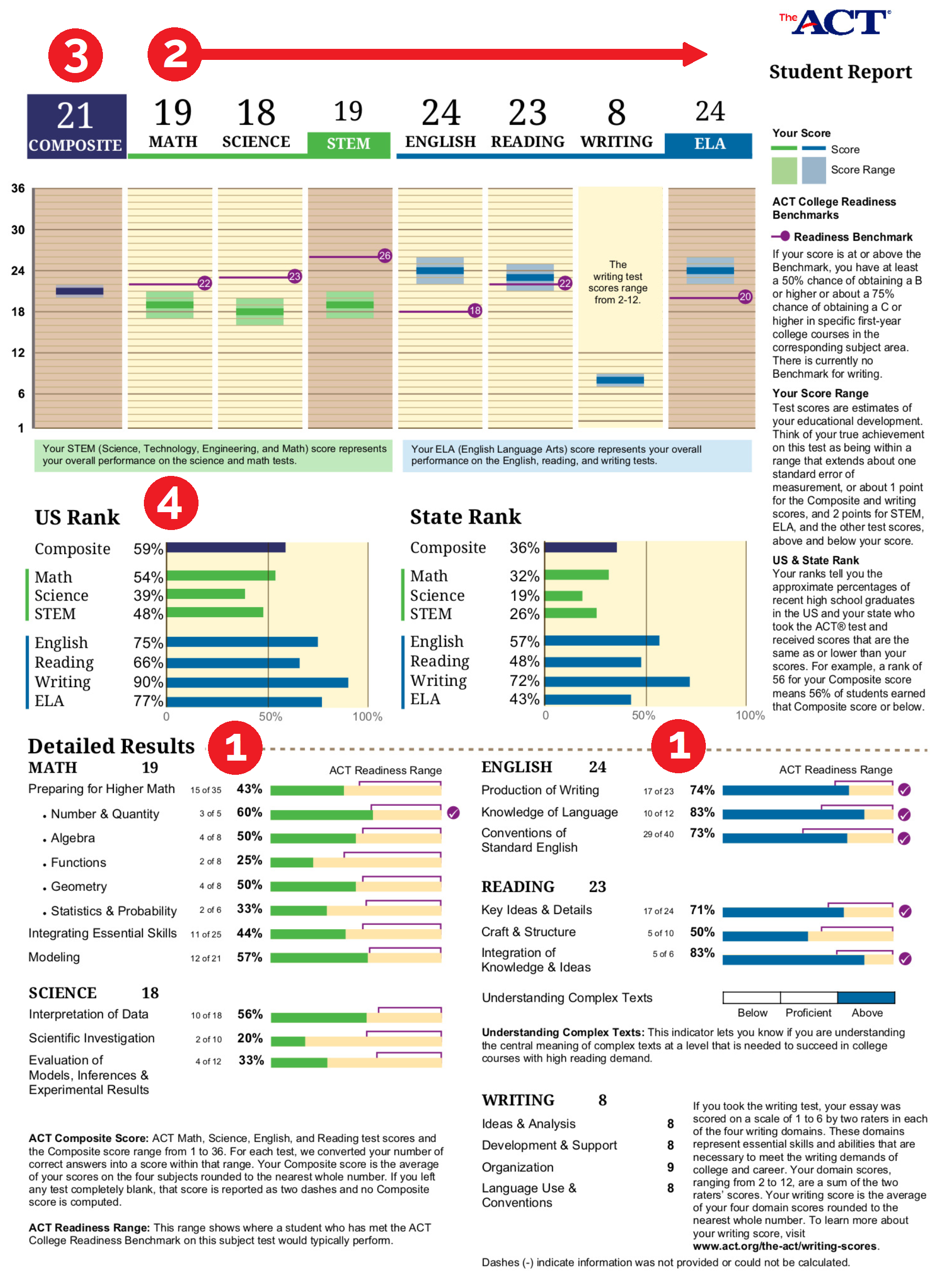
The ACT is scored on a scale of 1 to 36. This composite score is the average of your scores from the four required sections: English, Mathematics, Reading, and Science. Each of these sections is also scored on a 1 to 36 scale. When determining whether your score is “good,” it is helpful to look at how these numbers translate into percentile rankings.

The Statistical Context
Currently, the national average composite score hovers around 19 to 20. If you score at the national average, you are performing at the 50th percentile, meaning you have scored higher than half of the students who took the test. However, “average” is rarely the benchmark for competitive university admissions.
A score of 24 is typically considered “above average,” placing a student in the top 25% of test-takers. A score of 29 or 30 puts a student in the 90th percentile, while a score of 33 or higher places them in the top 1% to 2% of all students. Understanding these percentiles is critical because admissions officers use them to quickly filter through thousands of applications.
Setting Personal Benchmarks
A “good” score is inherently relative to your target institutions. If your goal is a highly selective Ivy League institution, a 30 might be viewed as insufficient, whereas that same score would be exceptionally high for many flagship state universities. To define your target, you must research the “Middle 50%” range for your prospective colleges. This is the range where the middle 50% of accepted students scored. If your composite score falls within or above this range, you are in a strong position for admission.
The Financial Impact of ACT Scores
While many discussions surrounding the ACT focus on the prestige of acceptance letters, the most tangible benefit of a high score is often financial. In the world of personal finance, a high ACT score can be viewed as an investment with an extremely high return on interest.
Merit-Based Scholarships and Institutional Aid
Many universities utilize a “scholarship grid” to determine the amount of merit-based aid awarded to incoming freshmen. These grids often cross-reference a student’s high school GPA with their ACT score. A difference of just two or three points on the ACT can, in some cases, result in a difference of thousands of dollars per year in scholarship money.
For example, a student with a 28 might qualify for a partial tuition waiver, while a student with a 31 might qualify for full tuition. Over the course of four years, those three points—achieved through extra preparation or a retake—can translate into a $20,000 to $40,000 reduction in total student debt. Viewed through a financial lens, the time spent studying for the ACT is effectively a high-yield side hustle, where the “hourly rate” of your study time is exponentially higher than most entry-level jobs.
Protecting Your Educational Investment
Student loan debt is a major concern for modern families. By leveraging a high ACT score to secure merit aid, you are essentially reducing the principal amount of your future debt. This provides greater financial flexibility after graduation, allowing for earlier investment in retirement accounts, real estate, or business ventures. When students treat their ACT preparation as a financial planning exercise, they often find the motivation to improve their scores becomes much stronger than it would be if they were chasing a letter on a transcript.
Maximizing Your Score Through Strategic Preparation
Improving your ACT score is not merely about intelligence; it is about mastering the exam’s specific logic and time management constraints. Since the ACT is a standardized test, it relies on predictable patterns. Recognizing these patterns is the most efficient way to climb from a middle-of-the-pack score to a top-tier result.
The Role of Diagnostic Testing
Before investing time in a prep course or private tutor, take a full-length, timed, official practice exam. This acts as a financial audit of your current academic standing. It identifies your “leakage”—the specific sections where you are losing the most points. Is it a lack of content knowledge in mathematics, or is it a struggle with reading speed? By diagnosing the problem early, you ensure that your study efforts are focused on the areas that yield the highest return on your time.
Time Management as a Competitive Edge
One of the most common reasons students underperform is not a lack of knowledge, but poor time management. The ACT is a fast-paced exam. Many students attempt to answer every question with equal intensity, leading to unfinished sections and rushed mistakes.
Strategic test-takers learn to identify “low-hanging fruit.” If you know you are strong at geometry but struggle with trigonometry, tackle the easier questions first to secure those points. Mastering the art of skipping difficult questions and returning to them later is a vital skill. This approach ensures that you maximize your point total by answering as many questions correctly as possible, rather than getting bogged down on a single, difficult item that prevents you from reaching five easier questions at the end of the section.
The Law of Diminishing Returns
While retaking the test can be beneficial, there is a point of diminishing returns. Most admissions officers prefer to see a student’s best effort represented in one or two sittings. Taking the test five or six times rarely results in significant score jumps and can become a drain on your financial resources—between registration fees and preparation materials. Aim for targeted preparation followed by one or two test dates. If you hit your target score early, focus your remaining energy on your high school GPA and extracurricular activities, which provide more value to a college application than a marginal increase in an already high ACT score.

Strategic Planning for Long-Term Success
Beyond the score itself, the process of preparing for the ACT teaches discipline and strategic planning—skills that are essential in adulthood. Whether you are aiming for a score of 24 to qualify for a specific state program or a 34 to compete for top-tier scholarships, the process remains the same: define your goal, assess your current status, and invest the necessary resources to bridge the gap.
Ultimately, a “good” ACT score is the one that gives you the best financial and academic leverage for your future. Do not let the stress of a single digit define your potential, but do recognize the power that a high score holds in the economy of higher education. By approaching the test with the same rigor you would apply to a major financial or career decision, you can ensure that you are maximizing your opportunities for years to come. Your ACT score is a tool—a piece of intellectual capital—designed to help you minimize the cost of your education and maximize the return on your college experience.
aViewFromTheCave is a participant in the Amazon Services LLC Associates Program, an affiliate advertising program designed to provide a means for sites to earn advertising fees by advertising and linking to Amazon.com. Amazon, the Amazon logo, AmazonSupply, and the AmazonSupply logo are trademarks of Amazon.com, Inc. or its affiliates. As an Amazon Associate we earn affiliate commissions from qualifying purchases.