
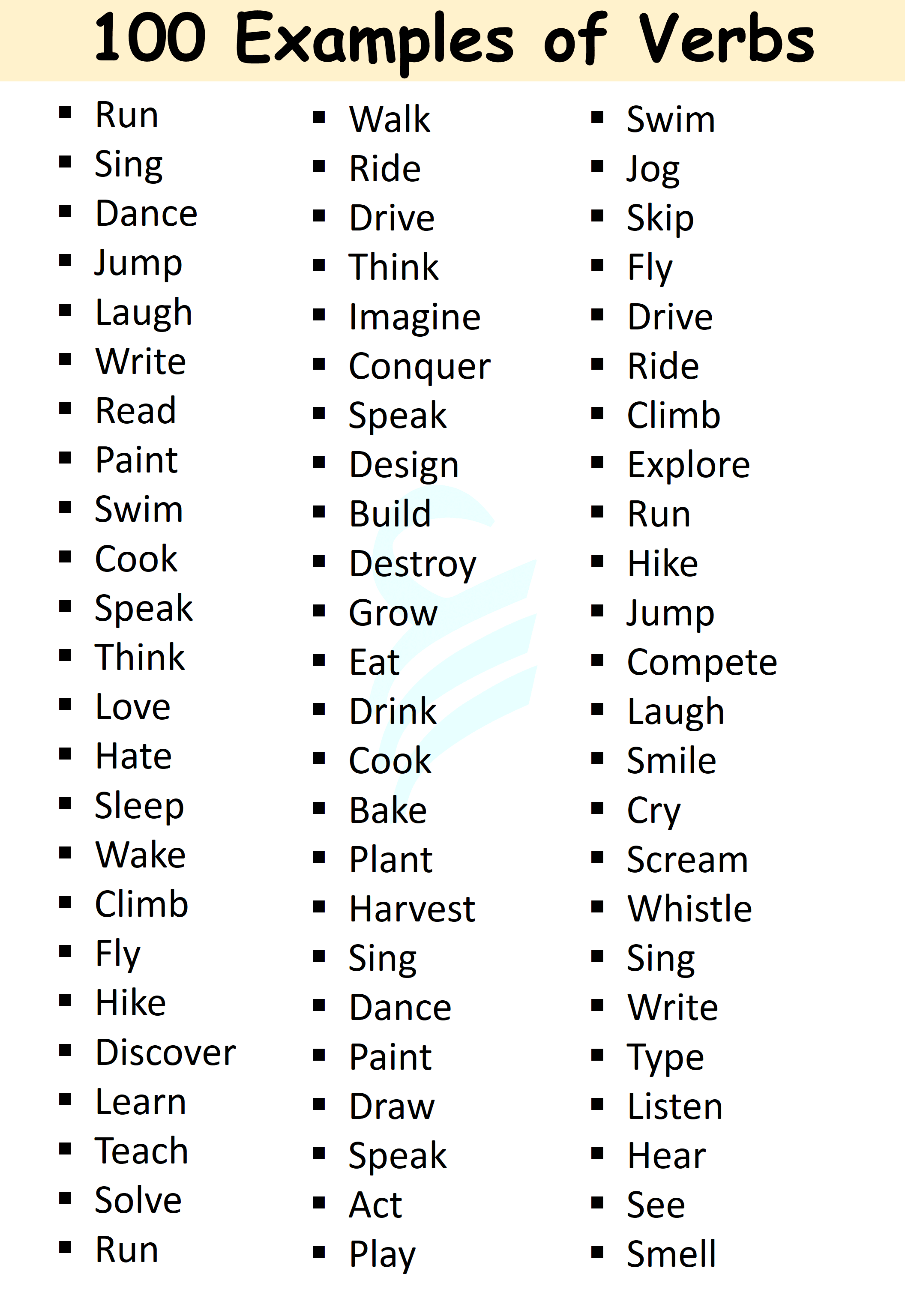
In the realm of linguistics, verbs are the engines of the sentence. They provide motion, describe states of being, and anchor the relationship between subjects and objects. However, when we transition from the world of human grammar to the domain of technology—specifically Natural Language Processing (NLP), Artificial Intelligence (AI), and Software Engineering—the concept of a “verb” takes on a much more complex and structural significance.
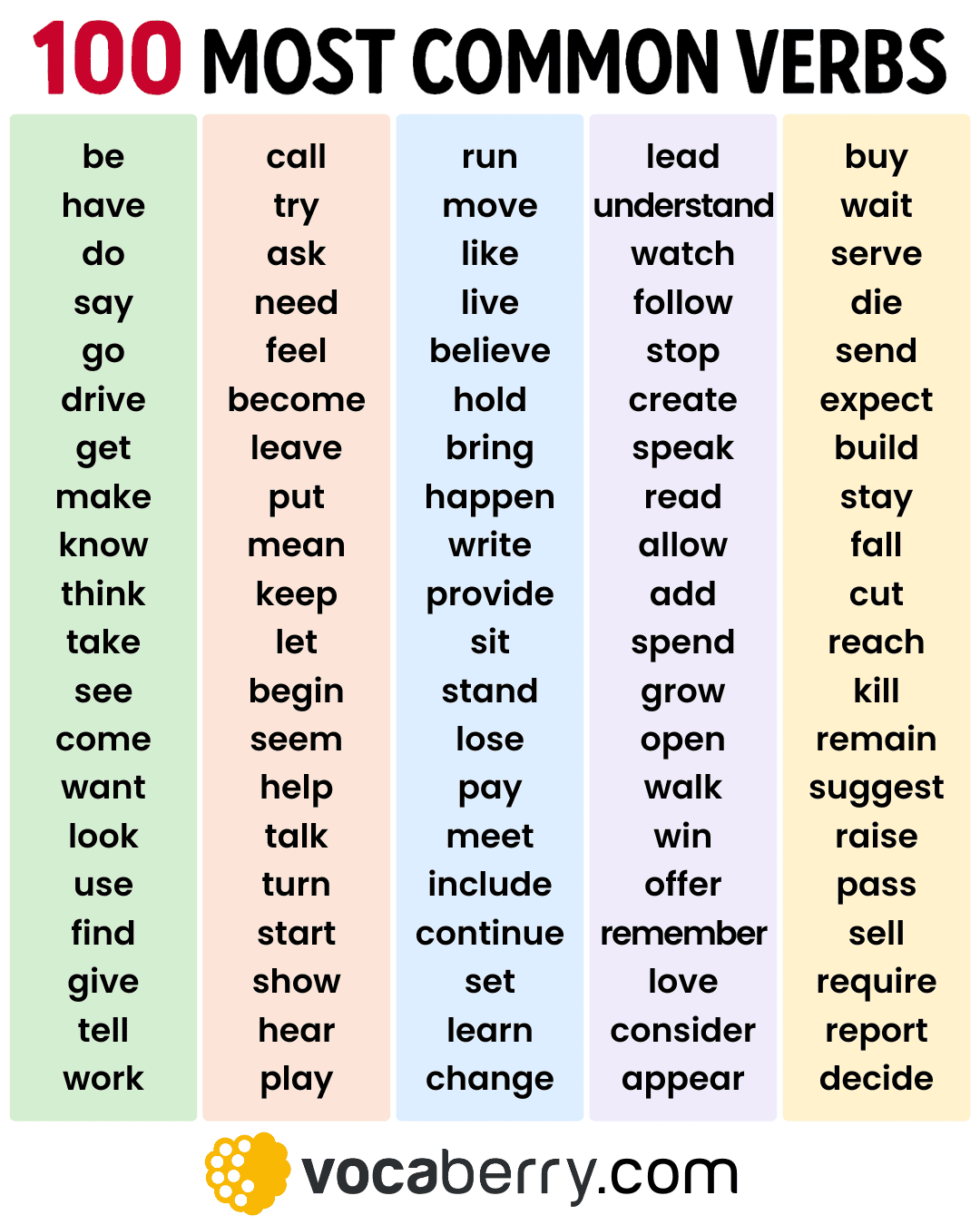
For developers, data scientists, and prompt engineers, understanding examples of verbs is not just about identifying “run,” “write,” or “calculate.” It is about understanding how machines parse human intent, how functions execute logic, and how Large Language Models (LLMs) translate static text into dynamic action. In the modern tech stack, a verb is the bridge between a user’s command and a machine’s execution.
The Role of Verbs in Computational Linguistics
At the core of how software “reads” human language lies the field of computational linguistics. Before an AI can answer a query or summarize a document, it must perform a series of structural analyses to identify the parts of speech within a string of text.
Part-of-Speech (POS) Tagging and Syntactic Parsing
In technology, identifying examples of verbs begins with Part-of-Speech (POS) tagging. This is a process where software—using libraries like NLTK or spaCy—assigns a label to every word in a sentence. A verb is identified not just by its dictionary definition, but by its relationship to surrounding words.
For example, in the sentence “The program runs efficiently,” the word runs is tagged as a verb (VBZ). However, in the sentence “He finished the long run,” the same word is tagged as a noun. For a machine to achieve high accuracy in tasks like sentiment analysis or machine translation, it must distinguish between these nuances. Syntactic parsing takes this further by building a “dependency tree,” mapping how the verb connects the actor (subject) to the goal (object).
Semantic Role Labeling: Who is Doing What?
Beyond simple tagging, tech-driven language analysis uses Semantic Role Labeling (SRL). This is the process of identifying the “predicate-argument” structure. In the tech world, this is crucial for building automated systems. If a user tells a virtual assistant, “Send an email to John,” the software identifies “Send” as the core verb (the action), “email” as the theme, and “John” as the recipient.
Understanding these “action words” allows software to move from passive observation to active participation. By categorizing verbs into classes—such as verbs of communication (tell, ask, report) or verbs of motion (move, upload, transfer)—developers can program more responsive and intuitive applications.
How Large Language Models (LLMs) Interpret Actionable Commands
The rise of Large Language Models, such as GPT-4, Claude, and Gemini, has fundamentally changed our interaction with verbs. Unlike traditional software that follows rigid “if-then” logic, LLMs treat verbs as high-dimensional vectors in a latent space.
From Tokens to Meaning: The Vector Representation of Verbs
In the backend of an AI model, verbs are converted into “tokens” and then into numerical vectors. The word “analyze” exists in a multi-dimensional space near words like “examine,” “scrutinize,” and “evaluate.” When you provide a prompt to an AI, it calculates the mathematical probability of which action-oriented words should follow based on the context of your request.
This is why modern AI is so effective at coding. If you type “Refactor this function,” the AI understands that the verb “refactor” implies a specific set of technical transformations: improving code readability and reducing complexity without changing external behavior. The “verb” here acts as a macro-command for a massive array of learned patterns.
Contextual Nuance in Transformer Architectures
One of the greatest technological breakthroughs in recent years is the “Attention Mechanism” within Transformer models. This allows an AI to look at a verb and determine its specific meaning based on the entire sentence, rather than looking at the word in isolation.
Consider the verb “execute.”
- In a legal tech context: “Execute the contract.” (To sign/make valid)
- In a software context: “Execute the script.” (To run/start)
- In a hardware context: “The CPU will execute the instruction.” (To process)
Modern AI tools use self-attention to weight these meanings differently depending on the surrounding technical vocabulary, ensuring that the output aligns with the user’s specific niche.
Prompt Engineering: Using Verbs to Optimize AI Output
As we move deeper into the age of generative AI, the way we use verbs has birthed a new discipline: Prompt Engineering. The quality of an AI’s output is directly proportional to the precision of the verbs used in the instruction.
The Anatomy of a Perfect Prompt
In the world of tech optimization, vague verbs lead to vague results. For instance, using a generic verb like “Make” (e.g., “Make this text better”) provides the AI with too much latitude, often resulting in generic output. Professional prompt engineers replace “Make” with “distill,” “expand,” “rewrite,” “polish,” or “critique.”
Each of these verbs triggers a different “latent circuit” within the model. “Distill” tells the AI to focus on brevity and core concepts; “Critique” forces the AI to look for flaws. By choosing the right example of a verb, a user can fine-tune the “temperature” and “intent” of the machine’s response.
High-Impact Verbs for Better Coding and Data Analysis
For those using AI for technical workflows, certain verbs yield significantly better results in automated environments:
- “Normalize”: Used in data science to tell the AI to scale a dataset.
- “Sanitize”: Essential in cybersecurity prompts to ensure data inputs are cleaned of malicious code.
- “Iterate”: Used in software development to suggest repetitive processing or version improvement.
- “Parse”: Used when instructing a tool to break down a complex data structure (like JSON or XML) into readable parts.
By mastering this technical vocabulary, users can bridge the gap between human language and machine logic.
The Future of Action-Oriented AI: From Chatbots to Autonomous Agents
The ultimate goal of modern technology is to move beyond AI that simply “talks” to AI that “does.” This shift is defined by the transition from linguistic verbs to functional “tool-use.”
Function Calling and API Integration
The next frontier in tech is “Function Calling.” This is a feature where an LLM identifies a verb in a user’s request and realizes it doesn’t have the internal data to perform the action, so it calls an external software tool.
If a user says, “Book a flight to San Francisco,” the AI identifies “Book” as an actionable verb. In a traditional chatbot, it would just talk about booking. In an AI Agent architecture, the model identifies the “Book” intent, generates the necessary JSON code, and interacts with an airline’s API to actually perform the transaction. Here, the verb is no longer just a word; it is a trigger for a digital sequence.
The Shift from Information Retrieval to Execution
We are witnessing a shift in the digital economy from “search” (finding information) to “execution” (completing tasks). In this context, verbs become the primary interface. Future operating systems will likely be “intent-based,” where the UI disappears, and users interact through “Action Verbs.”
Instead of opening a spreadsheet, selecting cells, and clicking “sum,” a user might simply say, “Aggregate the Q3 expenses.” The tech stack identifies the verb “Aggregate,” locates the data, applies the mathematical function, and presents the result. This evolution turns every verb into a potential software command, making our interaction with technology more seamless and natural.

Conclusion
Understanding “what are examples of verbs” is a foundational requirement for anyone navigating the modern tech landscape. Whether it is a developer using POS tagging to build a translation app, a data scientist utilizing semantic role labeling, or a power user crafting the perfect prompt for an LLM, verbs are the primary tools of intent.
In technology, a verb is more than a part of speech; it is a vector of energy and a directive for computation. As AI continues to evolve into autonomous agents, our ability to choose, define, and program these “action words” will define the efficiency and capability of the next generation of digital tools. By viewing language through the lens of technical execution, we unlock the true potential of the machines we build.
aViewFromTheCave is a participant in the Amazon Services LLC Associates Program, an affiliate advertising program designed to provide a means for sites to earn advertising fees by advertising and linking to Amazon.com. Amazon, the Amazon logo, AmazonSupply, and the AmazonSupply logo are trademarks of Amazon.com, Inc. or its affiliates. As an Amazon Associate we earn affiliate commissions from qualifying purchases.