
In the world of finance, few instruments have the transformative power of equity stocks. For centuries, they have served as the primary engine for wealth creation, allowing individual investors to participate in the growth and success of the world’s most influential companies. But for those just starting their journey into personal finance, the term “equity” can often seem shrouded in jargon and complexity. At its core, an equity stock represents a claim on a portion of a corporation’s assets and earnings. When you buy a stock, you aren’t just trading a ticker symbol on a screen; you are becoming a partial owner of a business.
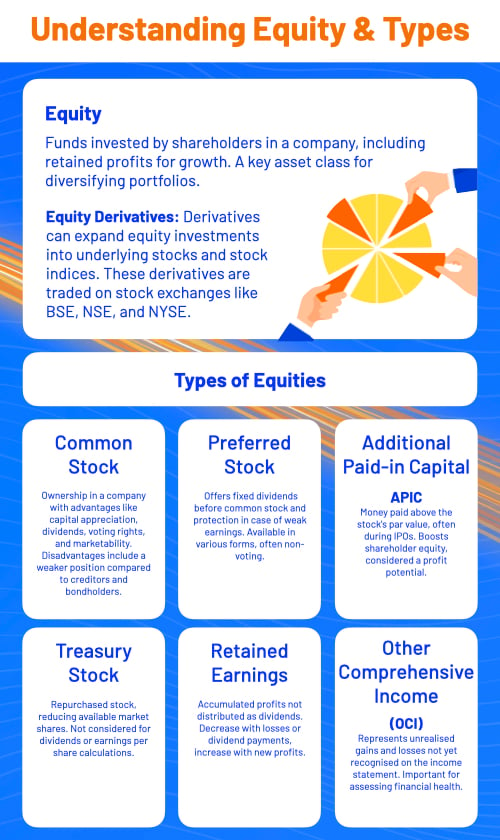
Understanding equity stocks is the cornerstone of a sound investment strategy. Whether you are looking to build a retirement nest egg, save for a major life purchase, or create a stream of passive income, equities provide a level of historical return that few other asset classes can match. This guide will delve deep into the mechanics of equity, the various types of stocks available, and how you can leverage them to achieve your financial goals.
Understanding the Fundamentals of Equity
To understand equity stocks, one must first understand the concept of equity itself. In a financial context, equity refers to the value of an ownership interest in property or a business. For a corporation, equity is what remains after all liabilities are subtracted from total assets. This “residual value” belongs to the shareholders.
What Does it Mean to Own Equity?
When a company decides to go public through an Initial Public Offering (IPO), it divides its ownership into millions of small pieces called shares. By purchasing these shares, you become a shareholder. This status grants you specific rights, including the right to vote on corporate policies and the election of the board of directors. More importantly, it gives you a “right to the residuals.” If the company prospers, the value of your shares increases. If the company pays out a portion of its profits to owners, you receive your share of that profit.
The Distinction Between Common and Preferred Stocks
Not all equity is created equal. Most individual investors deal in Common Stock. Common stockholders have voting rights and the potential for significant capital appreciation. However, they are last in line during a liquidation process; if a company goes bankrupt, creditors and bondholders are paid first, followed by preferred stockholders, leaving common stockholders with whatever is left.
Preferred Stock, on the other hand, functions as a hybrid between a stock and a bond. Preferred shareholders usually do not have voting rights, but they have a higher claim on assets and earnings. They receive dividends at a fixed rate, which must be paid out before any dividends are issued to common stockholders. For investors seeking stability and regular income over explosive growth, preferred stocks can be an attractive niche within the equity market.
How Equity Stocks Generate Wealth
The primary reason individuals flock to the stock market is the potential for wealth accumulation. Unlike a savings account that offers a fixed (and often low) interest rate, equity stocks offer two distinct pathways to increasing your net worth: capital appreciation and dividends.
Capital Appreciation and the Power of Growth
Capital appreciation is the increase in the market price of a stock over time. If you buy a share of a company for $50 and its price rises to $150 over five years, you have achieved a capital gain. This growth is driven by the company’s ability to increase its earnings, expand its market share, and innovate.
In the modern economy, “Growth Stocks” are companies that reinvest their earnings back into the business to fuel rapid expansion rather than paying dividends. While these stocks can be volatile, their potential for exponential returns is what makes them a staple of aggressive investment portfolios. Over the long term, the compounding effect of capital appreciation is the most significant factor in building substantial wealth.
Dividend Yields and Passive Income
The second way equity stocks build wealth is through dividends. Dividends are periodic payments made by a corporation to its shareholders out of its after-tax profits. Usually paid quarterly, these represent a “thank you” to investors for holding the stock.
“Value Stocks” or “Dividend Aristocrats”—companies that have increased their dividends for 25 consecutive years—are highly sought after by those looking for passive income. By reinvesting these dividends to buy more shares, investors can trigger a “snowball effect,” where their ownership stake grows automatically over time, leading to even larger dividend payments in the future.
The Risks and Rewards of Stock Market Participation
While the rewards of equity investing are substantial, they are not without risk. The “equity risk premium” is the extra return that investors demand in exchange for taking on the higher risk of the stock market compared to “risk-free” investments like government bonds.

Market Volatility and Systematic Risk
Equity markets are inherently volatile. Prices fluctuate daily based on economic data, geopolitical events, and investor sentiment. Systematic risk, also known as market risk, refers to the possibility of an entire market or asset class declining. No matter how strong an individual company is, its stock price may fall during a recession or a global financial crisis.
Furthermore, investors face Unsystematic Risk, which is specific to a single company or industry. A poor management decision, a product recall, or a shift in consumer preferences can cause a specific stock to plummet even if the broader market is doing well. Understanding that equity is a “risk asset” is crucial for maintaining the emotional discipline required for long-term investing.
Diversification as a Risk Mitigation Tool
The most effective way to manage the risks associated with equity stocks is through diversification. As the old adage goes, “Don’t put all your eggs in one basket.” By holding a variety of stocks across different sectors (tech, healthcare, energy, consumer goods) and geographies, you reduce the impact of any single company’s failure on your overall portfolio.
Modern financial tools, such as Index Funds and Exchange-Traded Funds (ETFs), allow investors to achieve instant diversification. An ETF that tracks the S&P 500, for example, gives you a tiny slice of the 500 largest companies in the United States. This ensures that while you participate in the general growth of the economy, you aren’t over-exposed to the downfall of a single firm.
How to Evaluate Equity Stocks for Your Portfolio
For those who wish to move beyond broad index funds and select individual stocks, a rigorous evaluation process is necessary. Professional investors generally use two primary schools of thought: fundamental analysis and technical analysis.
Fundamental Analysis: Looking at the Numbers
Fundamental analysis involves examining a company’s financial statements, health, and market position to determine its “intrinsic value.” Key metrics include:
-
Earnings Per Share (EPS): The portion of a company’s profit allocated to each outstanding share.
-
Price-to-Earnings (P/E) Ratio: A valuation ratio of a company’s current share price compared to its per-share earnings. It helps determine if a stock is overvalued or undervalued.
-
Debt-to-Equity Ratio: A measure of a company’s financial leverage, indicating how much the company is funded by debt versus its own funds.
By analyzing these figures, an investor can decide if a stock is a “good buy” at its current price.
Technical Analysis: Market Trends and Timing
Technical analysis focuses less on the business itself and more on the price movement and volume of the stock. Technical analysts use charts and patterns to predict future price movements based on historical data. While fundamental analysis asks “What should I buy?”, technical analysis often tries to answer “When should I buy?” While controversial among some long-term “buy and hold” investors, technical analysis is a popular tool for traders looking to capitalize on short-term market trends.
Practical Steps to Start Investing in Equities
Starting your journey in equity investing has never been easier, thanks to the democratization of financial tools. However, a structured approach is still required to ensure you are investing, not gambling.
Choosing a Brokerage Platform
To buy equity stocks, you need a brokerage account. Modern platforms offer commission-free trading, user-friendly mobile apps, and extensive educational resources. When choosing a broker, consider factors such as the ease of the interface, the availability of research tools, and whether they offer fractional shares—which allow you to buy a portion of an expensive stock (like Amazon or Berkshire Hathaway) for as little as $1.
Individual Stocks vs. ETFs and Mutual Funds
One of the first decisions a new investor must make is whether to pick individual stocks or use “pooled” investment vehicles.
-
Individual Stocks: Offer the highest potential for “beating the market” but require significant time for research and carry higher risk.
-
ETFs and Mutual Funds: Offer a “hands-off” approach. They are managed by professionals or follow an algorithm to maintain a diversified portfolio. For most people, a core portfolio of low-cost ETFs supplemented by a few individual “conviction” stocks is a balanced way to start.

Conclusion: The Long-Term Perspective
Equity stocks are more than just financial instruments; they are a bridge to financial independence. By owning equity, you align your interests with the most productive forces in the global economy. While the market will inevitably face downturns and periods of uncertainty, the historical trajectory of equity has always been upward for those with the patience to stay the course.
The key to success in equity investing is not timing the market perfectly, but “time in the market.” By starting early, diversifying your holdings, and consistently contributing to your portfolio, you can harness the power of compounding to turn modest savings into a significant financial legacy. Understanding what equity stocks are is the first step; the next is taking action and becoming an owner in the future of the global economy.
aViewFromTheCave is a participant in the Amazon Services LLC Associates Program, an affiliate advertising program designed to provide a means for sites to earn advertising fees by advertising and linking to Amazon.com. Amazon, the Amazon logo, AmazonSupply, and the AmazonSupply logo are trademarks of Amazon.com, Inc. or its affiliates. As an Amazon Associate we earn affiliate commissions from qualifying purchases.