
In the dynamic world of finance, few terms are as fundamental yet often misunderstood as “equities.” For anyone looking to build wealth, generate passive income, or simply understand how businesses are financed and valued, grasping the concept of equities is absolutely essential. Far from being a mere financial instrument, an equity represents a direct stake in a company’s future, a piece of its ownership that can offer both significant rewards and inherent risks.
At its core, an equity, often referred to interchangeably as a stock or share, signifies ownership in a company. When you purchase a company’s stock, you become a shareholder, meaning you own a tiny fraction of that business. This ownership comes with certain rights, such as a claim on the company’s assets and earnings, and typically, the right to vote on corporate matters. Understanding equities is the first step toward navigating the stock market effectively, empowering individuals to make informed investment decisions that align with their financial goals and risk tolerance.
The Fundamentals of Equities
To truly appreciate the power and potential of equity investing, it’s crucial to delve into the foundational concepts that define what equities are, why they exist, and how they function within the broader financial ecosystem.
Defining Equities: A Slice of Ownership
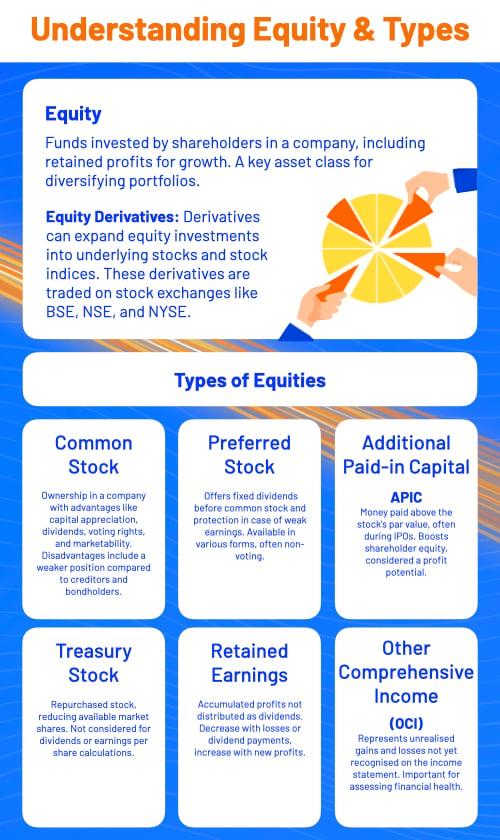
An equity share, or stock, is a unit of ownership in a corporation. When you own a share of stock, you are a part-owner of the company, and your ownership percentage is proportional to the number of shares you hold relative to the total number of shares outstanding. This ownership entitles you to a share of the company’s profits (if distributed as dividends) and a claim on its assets should the company be liquidated.
There are generally two main types of equity:
- Common Stock: This is the most prevalent type of equity. Common stockholders typically have voting rights at shareholder meetings, allowing them to influence corporate policy and elect the board of directors. They also have the potential for greater capital appreciation and receive dividends after preferred shareholders.
- Preferred Stock: Preferred stock usually does not carry voting rights but generally guarantees a fixed dividend payment, which must be paid before common stockholders receive any dividends. In the event of liquidation, preferred stockholders also have a higher claim on the company’s assets than common stockholders.
The total value of all a company’s outstanding shares is known as its market capitalization (market cap), calculated by multiplying the current share price by the total number of shares in circulation. This metric often indicates a company’s size and perceived value in the market.
Why Companies Issue Equities
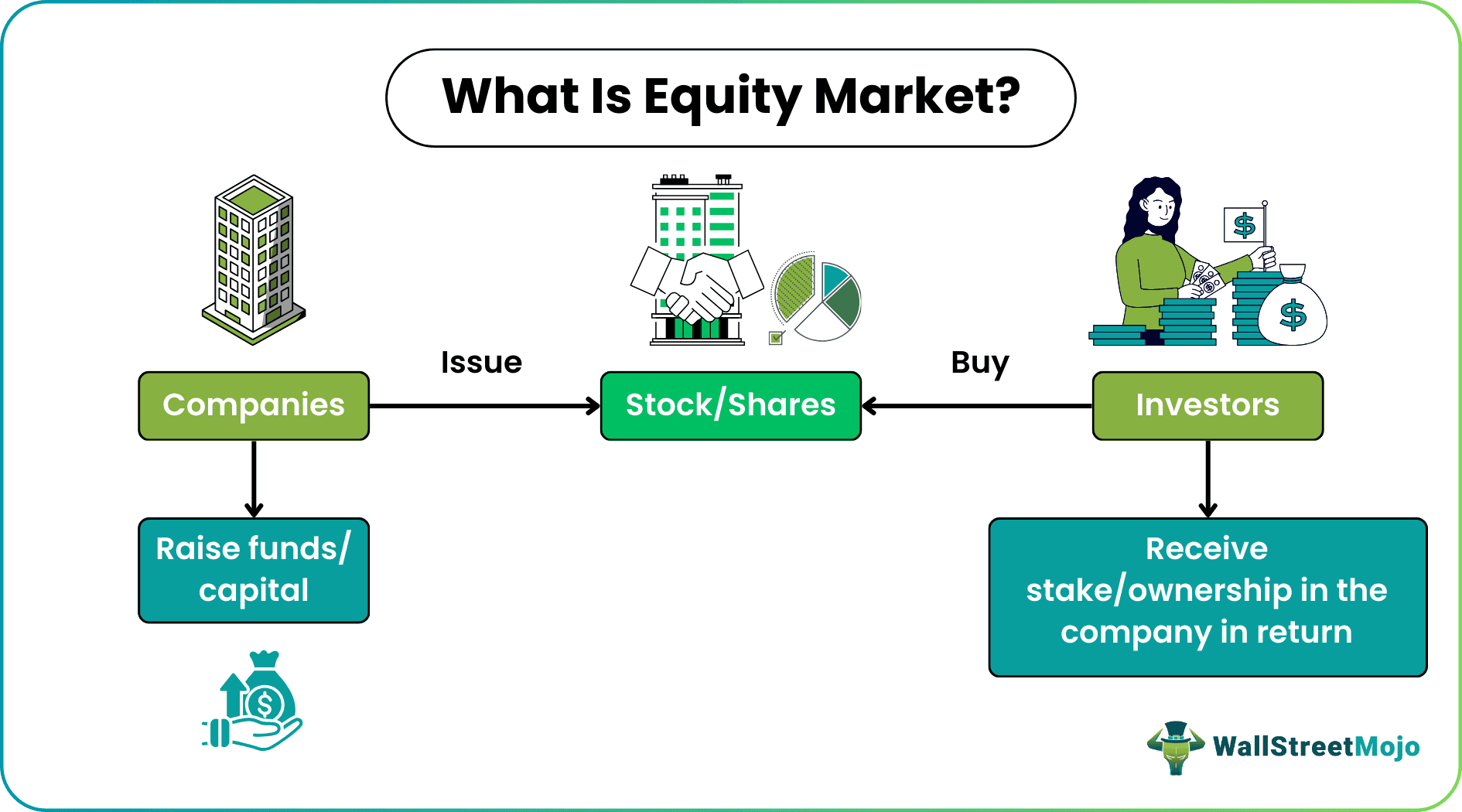
Companies issue equities primarily to raise capital. This capital is vital for various corporate activities, including:
- Funding Growth and Expansion: Companies use funds from equity sales to invest in new projects, expand operations, enter new markets, or acquire other businesses.
- Research and Development: Innovation requires significant investment, and equity financing can provide the necessary capital for R&D initiatives.
- Debt Repayment: Sometimes, companies issue equity to pay down existing debt, which can improve their financial health and reduce interest expenses.
- Liquidity for Founders and Early Investors: An Initial Public Offering (IPO), where a company offers its shares to the public for the first time, provides an exit strategy for founders and early venture capital investors, allowing them to monetize their investments.
By selling shares, companies bring in money without incurring debt, sharing future profits and growth with a broader base of investors.
The Stock Market’s Role
The stock market is the ecosystem where equities are bought and sold. It serves two primary functions:
- Primary Market: This is where new stocks are issued, typically through an IPO. Companies sell shares directly to investors to raise initial capital.
- Secondary Market: This is where existing shares are traded between investors. Major exchanges like the New York Stock Exchange (NYSE) and NASDAQ facilitate these transactions, providing liquidity and price discovery for millions of shares daily. The secondary market allows investors to buy and sell shares without directly involving the issuing company, which is crucial for the attractiveness of equity investing.
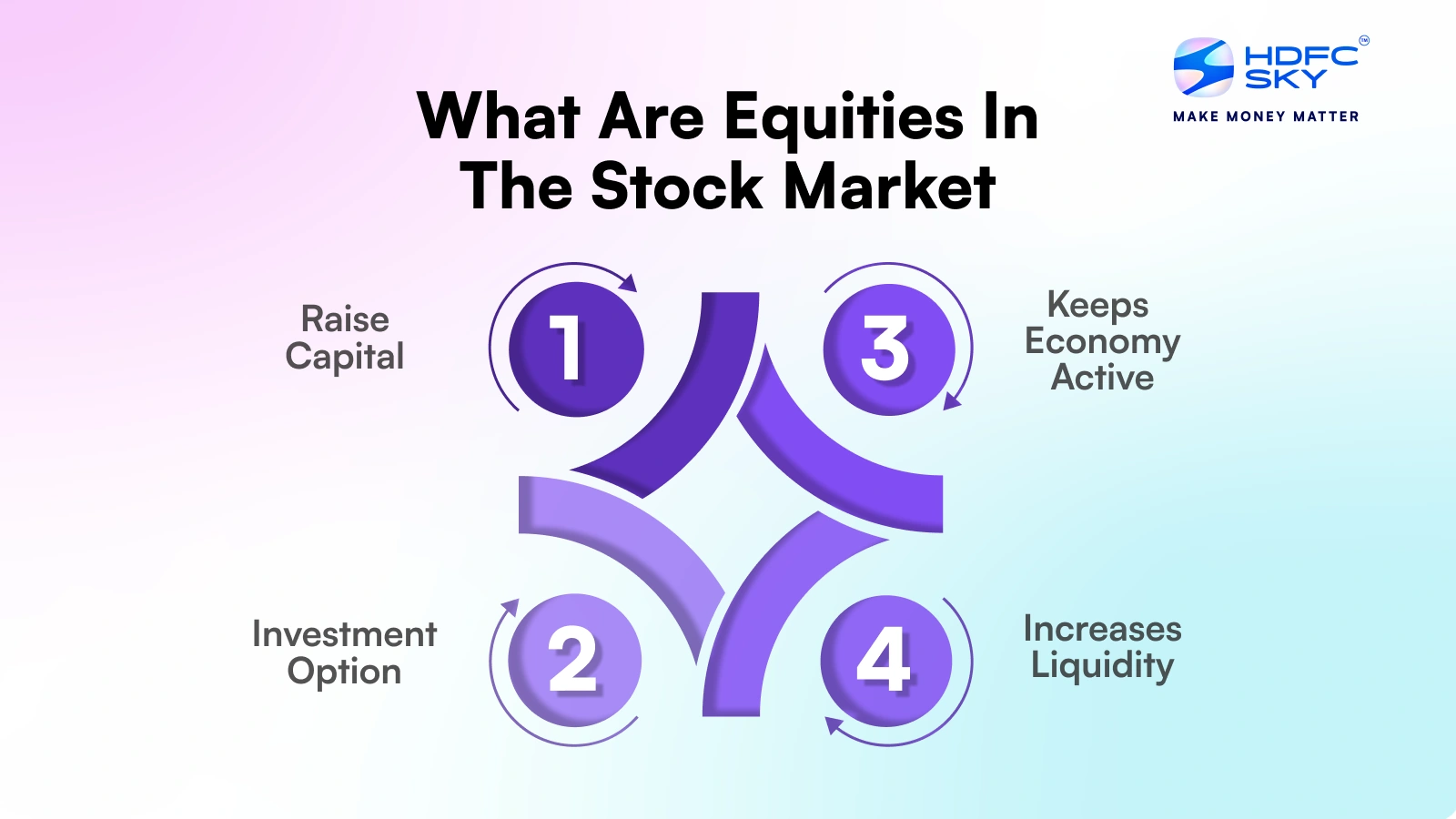
The stock market ensures that there is a continuous, liquid market for equities, making it easier for investors to enter and exit positions, and helping to establish a fair market price based on supply and demand.
The Benefits and Risks of Equity Investing
Investing in equities offers a unique blend of opportunities and challenges. Understanding both sides of this coin is paramount for any aspiring investor.
Potential Benefits: Growth and Income
Equities have historically been one of the most powerful tools for wealth creation over the long term, offering several compelling benefits:
- Capital Appreciation: The most significant draw for many equity investors is the potential for their shares to increase in value. As a company grows, becomes more profitable, and gains market share, its stock price typically rises, allowing investors to sell their shares for a profit.
- Dividends: Many established companies distribute a portion of their profits to shareholders in the form of dividends. These payments, usually quarterly, provide a regular income stream and can be reinvested to purchase more shares, further accelerating wealth accumulation through compounding.
- Inflation Hedge: Historically, equities have proven to be a good hedge against inflation. As the cost of goods and services rises, corporate earnings and asset values tend to increase, which can lead to higher stock prices, preserving or even increasing purchasing power.
- Compounding Returns: Reinvesting dividends and capital gains allows for exponential growth over time. The returns generated by your initial investment also start earning returns, creating a snowball effect that can significantly boost your portfolio’s value over decades.
Inherent Risks: Volatility and Loss
Despite their potential, equities are not without risk. Investors must be prepared for the inherent volatility and potential for loss:
- Market Volatility: Stock prices can fluctuate dramatically due to various factors, including economic data, geopolitical events, company news, and investor sentiment. Short-term price swings can be significant, and periods of market downturns (bear markets) are a normal part of the investing cycle.
- Company-Specific Risks: The performance of individual stocks is tied directly to the success or failure of the underlying company. Poor management decisions, intense competition, technological obsolescence, regulatory changes, or even scandals can severely impact a company’s profitability and, consequently, its stock price. In extreme cases, a company can go bankrupt, leading to a total loss of investment.
- Liquidity Risk: While major stocks are highly liquid, some smaller, less-traded equities might be difficult to sell quickly without significantly impacting their price.
- Lack of Guaranteed Returns: Unlike bonds, which offer fixed interest payments, equity returns are not guaranteed. There’s no assurance of capital appreciation or dividend payments, as companies can reduce or suspend dividends during tough times.
Understanding Equity Valuation and Analysis
Making informed equity investment decisions requires more than just a passing interest; it demands a systematic approach to valuation and analysis.
Key Metrics for Evaluating Equities
Investors use various financial metrics to assess a company’s health and determine if its stock is a worthwhile investment:
- Price-to-Earnings (P/E) Ratio: This ratio compares a company’s share price to its earnings per share (EPS). A high P/E might suggest investors expect higher future growth, while a low P/E might indicate undervaluation or investor concerns.
- Earnings Per Share (EPS): Represents the portion of a company’s profit allocated to each outstanding share of common stock. It’s a key indicator of profitability.
- Dividend Yield: Calculated as the annual dividend per share divided by the share price, it indicates the return on investment from dividends alone.
- Market Capitalization: As discussed, this measures a company’s total value, providing context for its size and market influence.
- Book Value: The net asset value of a company, calculated as its total assets minus its total liabilities. Comparing share price to book value can sometimes indicate if a stock is undervalued.
Fundamental vs. Technical Analysis
Investors employ different analytical frameworks to make decisions:
- Fundamental Analysis: This approach involves evaluating a company’s intrinsic value by examining its financial statements (balance sheet, income statement, cash flow statement), management quality, industry trends, competitive landscape, and economic factors. Fundamental analysts aim to identify stocks whose market price differs significantly from their calculated intrinsic value.
- Technical Analysis: This method focuses on analyzing past market data, primarily price and volume, to forecast future price movements. Technical analysts use charts, patterns, and various indicators to identify trends, support and resistance levels, and potential entry/exit points, largely disregarding a company’s underlying fundamentals.
The Importance of Diversification
One of the most crucial strategies in equity investing is diversification. Spreading your investments across various stocks, sectors, industries, and geographies can significantly mitigate risk. If one investment performs poorly, the impact on your overall portfolio is lessened by the performance of others. This “don’t put all your eggs in one basket” principle is foundational to sound investment practice. Tools like Equity Exchange-Traded Funds (ETFs) and Mutual Funds offer inherent diversification by pooling money from many investors to buy a basket of different stocks.
Different Ways to Invest in Equities
The accessibility of equity markets has expanded significantly, offering various avenues for investors to participate, from hands-on management to passive strategies.
Direct Stock Ownership
This traditional method involves opening a brokerage account and directly purchasing individual shares of companies you research and believe in. This approach offers complete control over your portfolio and allows for potentially higher returns if your chosen stocks outperform, but it also requires significant time, effort, and knowledge for research and ongoing management.
Equity Mutual Funds and ETFs
For investors seeking diversification and professional management without the need for individual stock picking, mutual funds and ETFs are excellent options.
- Mutual Funds: These are professionally managed portfolios that pool money from many investors to buy a diversified collection of stocks, bonds, or other securities. They offer diversification and expert management but typically have management fees and are priced only once per day.
- Exchange-Traded Funds (ETFs): Similar to mutual funds in their diversification, ETFs track an underlying index (like the S&P 500), a specific sector, or a commodity. The key difference is that ETFs trade like individual stocks on exchanges throughout the day, offering greater trading flexibility and generally lower expense ratios than actively managed mutual funds.
Robo-Advisors
Robo-advisors are automated, algorithm-driven financial advisors that manage investment portfolios with minimal human intervention. They typically build diversified portfolios of low-cost ETFs based on an investor’s risk tolerance, financial goals, and time horizon. Robo-advisors are an excellent option for new investors or those who prefer a hands-off, cost-effective approach to equity investing.
Navigating the Equity Market: A Strategic Approach
Successful equity investing is not about getting rich quick; it’s about a disciplined, strategic approach tailored to your personal circumstances.
Setting Clear Investment Goals
Before investing a single dollar, define what you aim to achieve. Are you saving for retirement, a down payment on a house, or a child’s education? Your goals will influence your investment horizon, risk tolerance, and the types of equities you choose. A clear understanding of your objectives will guide your decisions and help you stay disciplined during market fluctuations.
The Role of Long-Term Perspective
One of the most consistent pieces of advice from successful investors is to adopt a long-term perspective. While daily market news can be tempting, trying to time the market (buying low and selling high consistently) is incredibly difficult and often leads to worse returns. A long-term outlook allows you to ride out market downturns, benefit from the power of compounding, and capitalize on the historical upward trend of the stock market. Strategies like dollar-cost averaging, where you invest a fixed amount regularly regardless of market conditions, can help mitigate short-term volatility.
Staying Informed and Continuous Learning
The financial world is constantly evolving. Staying informed about global economic trends, industry developments, and the performance of your investments is crucial. Read financial news, follow reputable analysts, and regularly review the companies in your portfolio. Continuous learning about different investment strategies, risk management techniques, and economic principles will empower you to adapt your approach as market conditions and your personal financial situation change.
Conclusion
Equities are the backbone of modern investing, offering individuals a powerful pathway to wealth creation and a tangible stake in the world’s leading companies. While the allure of potential growth and dividends is significant, a deep understanding of their fundamentals, coupled with an awareness of inherent risks, is essential. By embracing a strategic approach—defining clear goals, diversifying portfolios, maintaining a long-term perspective, and committing to continuous learning—investors can navigate the complexities of the stock market with confidence. Equities are more than just numbers on a screen; they represent innovation, progress, and the potential for financial freedom, making them an indispensable component of any robust financial plan.
aViewFromTheCave is a participant in the Amazon Services LLC Associates Program, an affiliate advertising program designed to provide a means for sites to earn advertising fees by advertising and linking to Amazon.com. Amazon, the Amazon logo, AmazonSupply, and the AmazonSupply logo are trademarks of Amazon.com, Inc. or its affiliates. As an Amazon Associate we earn affiliate commissions from qualifying purchases.