
In the vast and ever-evolving landscape of science and technology, understanding fundamental principles is key to unlocking innovation. Among these principles, the nature of chemical reactions plays a pivotal role, driving processes from the microscopic world of molecular interactions to the macroscopic applications we encounter daily. While exergonic reactions, which release energy, often capture more immediate attention due to their tangible outputs, endergonic reactions represent an equally crucial, albeit distinct, thermodynamic phenomenon. These reactions, characterized by their requirement for energy input to proceed, are not merely theoretical curiosities; they are the engines behind many critical technological advancements, from the synthesis of life-saving pharmaceuticals to the development of advanced energy storage solutions.

Endergonic reactions challenge the intuitive notion that processes naturally tend towards lower energy states. Instead, they highlight the power of directed energy and sophisticated mechanisms to overcome energetic barriers and drive chemical transformations that are essential for progress. In the context of technology, understanding endergonic reactions allows us to design, optimize, and harness chemical processes for specific purposes, pushing the boundaries of what is possible. This exploration delves into the definition, characteristics, and significant technological implications of endergonic reactions, revealing their indispensable role in shaping our modern world.
The Fundamental Nature of Endergonic Reactions
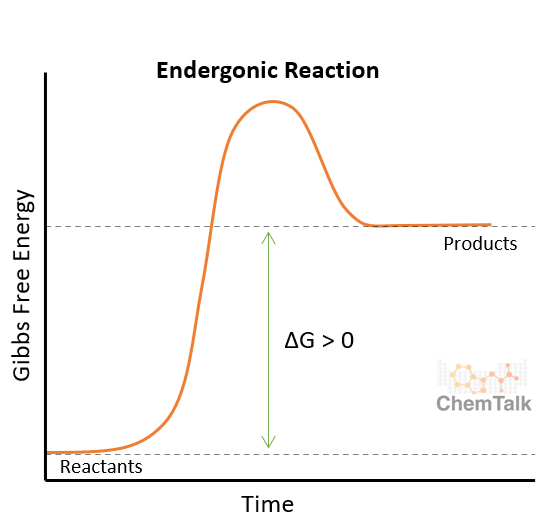
At its core, a reaction is classified as endergonic if it requires an input of free energy from its surroundings to occur. This concept is rooted in thermodynamics, specifically the second law, which suggests that systems tend towards increasing entropy (disorder). However, endergonic reactions represent a temporary, localized increase in order or complexity, facilitated by an external energy source.
Defining Endergonicity: Free Energy and Spontaneity
The spontaneity of a chemical or biological process is determined by its change in Gibbs free energy ($Delta G$). Gibbs free energy combines enthalpy ($Delta H$, the change in heat content) and entropy ($Delta S$, the change in disorder), related by the equation:
$Delta G = Delta H – TDelta S$
where $T$ is the absolute temperature.
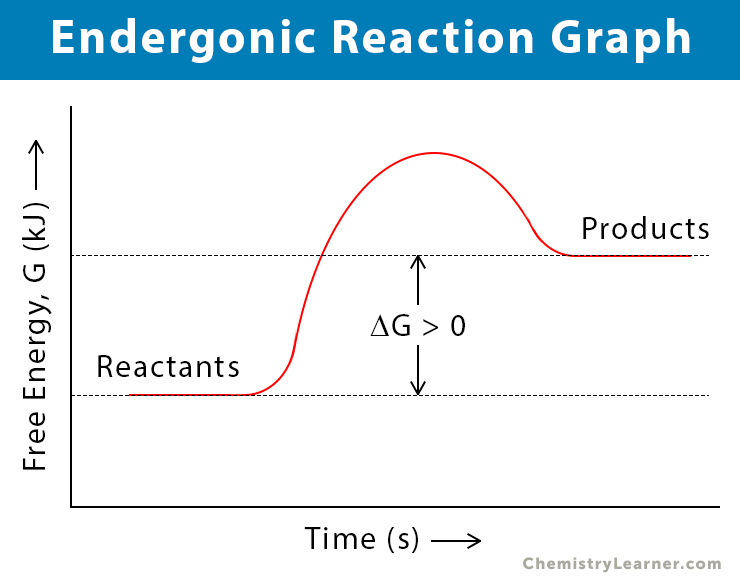
For a process to be spontaneous (exergonic), $Delta G$ must be negative. This means the system releases free energy into the surroundings. Conversely, for an endergonic reaction, $Delta G$ is positive, indicating that the system absorbs free energy from the surroundings for the reaction to proceed. This absorbed energy can come in various forms, including heat, light, or chemical energy from another coupled reaction.
Enthalpy and Entropy Contributions
In endergonic reactions, the positive $Delta G$ can arise from several combinations of enthalpy and entropy changes:
- Positive Enthalpy Change ($Delta H > 0$): The reaction requires energy input to break existing bonds and form new ones, resulting in a net absorption of heat. This is the most common scenario where energy is visibly added to the system.
- Negative Entropy Change ($Delta S < 0$): The reaction leads to a decrease in the disorder of the system, meaning products are more ordered or structured than the reactants. This contribution increases the overall free energy requirement.
- A Combination of Both: Many endergonic reactions involve both an endothermic bond-forming process and an increase in order, making the energy requirement substantial.
The key takeaway is that an endergonic reaction will not occur spontaneously unless energy is supplied. This energy input can be thought of as “paying the energetic toll” to drive the otherwise unfavorable transformation.
Coupling Endergonic Reactions with Exergonic Processes
A crucial aspect of how endergonic reactions are utilized in biological and technological systems is through energetic coupling. This involves linking a thermodynamically unfavorable endergonic reaction with a highly favorable exergonic reaction. The exergonic reaction releases a significant amount of free energy, which is then used to drive the endergonic reaction forward.
- Biological Systems: The most prominent example in biology is the hydrolysis of adenosine triphosphate (ATP). ATP hydrolysis is highly exergonic ($Delta G$ is strongly negative), releasing energy that powers countless endergonic cellular processes, such as muscle contraction, active transport, and biosynthesis of macromolecules.
- Technological Applications: In synthetic chemistry and industrial processes, less direct but equally effective coupling mechanisms are employed. For instance, electrolysis, a process that uses electrical energy (an external energy source) to drive a non-spontaneous chemical reaction, is a form of coupling. Similarly, photochemical reactions, driven by light energy, are endergonic processes that enable the synthesis of complex molecules.
This concept of coupling is fundamental to understanding how nature and technology overcome thermodynamic limitations, enabling the construction of complex structures and the performance of essential functions.
Technological Manifestations and Applications of Endergonic Reactions
While the term “endergonic reaction” might sound abstract, its implications are woven into the fabric of modern technology, impacting diverse fields from energy production to the creation of advanced materials and life-saving medicines. Recognizing and harnessing these energy-requiring transformations is a cornerstone of scientific and engineering progress.
Energy Storage and Conversion Technologies
The quest for efficient and sustainable energy solutions heavily relies on understanding and manipulating endergonic reactions. These reactions are central to storing energy in a usable form and converting it between different types.
Batteries and Fuel Cells
- Charging Batteries: The process of charging a rechargeable battery is inherently endergonic. Electrical energy is supplied to the battery, driving chemical reactions that store potential energy within the battery’s electrodes and electrolyte. For example, in a lithium-ion battery, charging involves the movement of lithium ions and electrons, which requires energy input to overcome the thermodynamic barriers associated with forming these charged states. The reverse process, discharging, is exergonic, releasing stored electrical energy.
- Electrolysis for Hydrogen Production: Water splitting (electrolysis) to produce hydrogen gas ($text{H}2$) and oxygen gas ($text{O}2$) is a classic example of an endergonic reaction. The overall reaction, $2text{H}2text{O} rightarrow 2text{H}2 + text{O}_2$, has a positive $Delta G$. Electrical energy is applied to electrodes submerged in water, forcing the water molecules to break apart into their constituent elements, which are then collected as fuels. This is a critical pathway for producing “green” hydrogen, a key component in future energy systems.
Photosynthesis and Artificial Photosynthesis
- Biological Photosynthesis: This remarkable natural process, carried out by plants and algae, is the ultimate demonstration of harnessing endergonic reactions. Photosynthesis converts light energy into chemical energy stored in glucose molecules. The overall reaction, $6text{CO}2 + 6text{H}2text{O} + text{Light Energy} rightarrow text{C}6text{H}{12}text{O}6 + 6text{O}2$, is strongly endergonic. Light energy absorbed by chlorophyll is used to drive the synthesis of glucose from carbon dioxide and water, forming the basis of most food webs on Earth.
- Artificial Photosynthesis: Mimicking and enhancing this natural process is a major goal in materials science and renewable energy research. Scientists are developing artificial systems that use sunlight to split water into hydrogen and oxygen or to convert carbon dioxide into fuels and valuable chemicals. These technologies aim to create sustainable energy cycles by directly converting solar energy into storable chemical fuels, all powered by endergonic transformations.
Chemical Synthesis and Materials Science
The creation of novel materials and complex chemical compounds, fundamental to many industries, often relies on driving endergonic reactions through carefully controlled processes.
Pharmaceutical Synthesis
The development and manufacturing of pharmaceuticals are rife with examples of endergonic reactions. Many complex drug molecules, with their intricate three-dimensional structures, require multiple synthetic steps, each involving the formation of specific chemical bonds.
- De Novo Synthesis: The process of building a drug molecule from simpler starting materials often involves constructing complex carbon skeletons and introducing specific functional groups. These bond-forming reactions frequently require energy input, either in the form of heat, electrical energy, or coupling with exergonic reagents. The precise stereochemistry required for drug efficacy often adds further thermodynamic challenges that must be overcome through sophisticated synthetic strategies.
- Biocatalysis and Enzyme Engineering: Enzymes, nature’s catalysts, are adept at facilitating both exergonic and endergonic reactions under mild conditions. In pharmaceutical manufacturing, engineered enzymes are increasingly used to catalyze specific, often endergonic, steps in drug synthesis with high selectivity and efficiency. This approach reduces waste and energy consumption compared to traditional chemical synthesis.
Polymerization and Advanced Materials
The creation of polymers, the backbone of plastics and many advanced materials, involves the sequential addition of monomer units. While some polymerization reactions can be exergonic, many require initiation and sustained energy input to proceed efficiently and to achieve the desired molecular weight and properties.
- Controlled Polymerization: Techniques like living polymerization allow for precise control over polymer chain length and architecture. These methods often involve carefully managed initiation steps that can be endergonic, requiring specific catalysts and conditions to start the chain growth.
- Nanomaterial Fabrication: The synthesis of nanoscale materials, such as quantum dots, carbon nanotubes, and advanced composites, frequently involves intricate chemical processes. Building these structures atom by atom or molecule by molecule often requires overcoming significant thermodynamic barriers, making the underlying reactions endergonic. Energy input, in the form of heat, plasma, or other forms, is crucial for driving the assembly and stabilization of these advanced materials.
Overcoming Energetic Barriers: Catalysis and Engineering Strategies
Given that endergonic reactions require energy input to proceed, a significant area of technological development focuses on optimizing this energy input and ensuring the reaction occurs efficiently and selectively. This involves a combination of chemical understanding and clever engineering.
The Role of Catalysis
Catalysts are substances that accelerate the rate of a chemical reaction without being consumed in the process. While catalysts do not change the overall thermodynamics ($Delta G$) of a reaction, they significantly influence its kinetics by providing an alternative reaction pathway with a lower activation energy. For endergonic reactions, this means that the energy barrier to reach the transition state is lowered, allowing the reaction to proceed more readily once sufficient energy is supplied.
Homogeneous and Heterogeneous Catalysis
- Homogeneous Catalysis: In this type, the catalyst exists in the same phase as the reactants (e.g., both are dissolved in a liquid). This often leads to high selectivity and activity, particularly in complex organic synthesis relevant to pharmaceuticals and fine chemicals.
- Heterogeneous Catalysis: Here, the catalyst is in a different phase from the reactants (e.g., a solid catalyst with liquid or gaseous reactants). This is common in large-scale industrial processes like petroleum refining and the production of bulk chemicals. The surface of the heterogeneous catalyst provides sites for reactant adsorption, bond breaking, and product formation, effectively lowering the activation energy for endergonic transformations.
Biocatalysis: Nature’s Engineered Solutions
As mentioned previously, enzymes are highly efficient biological catalysts. They are exquisitely designed to catalyze specific reactions, including many that are endergonic in biological systems.
- Enzyme Engineering: Through techniques like directed evolution and rational design, scientists can modify enzymes to improve their stability, activity, or substrate specificity, or even to catalyze entirely new reactions. This is a powerful approach for developing environmentally friendly and highly efficient processes for chemical synthesis that rely on endergonic steps.
Energy Input and Reaction Control
Beyond catalysis, the precise control over the form and amount of energy supplied is critical for successfully driving endergonic reactions.
Electrochemical Synthesis
Electrolysis, as discussed earlier, is a prime example of using electrical energy to drive non-spontaneous chemical reactions. By precisely controlling the applied voltage and current, chemists and engineers can dictate the specific endergonic reactions that occur. This is increasingly used for the synthesis of chemicals and materials, offering a potentially greener alternative to traditional thermochemical routes.
Photochemical Reactions
Light energy is a powerful tool for initiating and driving endergonic reactions. Photochemical processes are essential in:
- Organic Synthesis: Many complex organic molecules are synthesized using light-induced reactions.
- Photopolymerization: Light is used to initiate the polymerization of monomers, crucial in 3D printing and UV-curing applications.
- Photocatalysis: Light activates a catalyst, which then drives an endergonic reaction, such as pollutant degradation or chemical synthesis.
Thermal Control and Heat Management
While some endergonic reactions are driven by light or electricity, many also rely on thermal energy. Precisely controlling the temperature of a reaction is essential for:
- Providing Sufficient Energy: Ensuring enough heat is supplied to overcome the activation energy and drive the reaction to completion.
- Maintaining Selectivity: Preventing unwanted side reactions that might occur at higher temperatures.
- Managing Exothermicity of Coupled Reactions: In cases where an endergonic reaction is coupled with an exergonic one, careful heat management is required to prevent runaway reactions.
In conclusion, endergonic reactions, far from being passive participants, are active drivers of chemical transformation when provided with the necessary energy. Their study and manipulation are central to advancements in nearly every sector of technology, from the fundamental processes that sustain life to the cutting-edge innovations that promise to reshape our future. By understanding how to supply and control energy, and by leveraging the power of catalysis and smart engineering, we continue to unlock the potential of these energy-requiring reactions to create, store, and convert the building blocks of our world.
aViewFromTheCave is a participant in the Amazon Services LLC Associates Program, an affiliate advertising program designed to provide a means for sites to earn advertising fees by advertising and linking to Amazon.com. Amazon, the Amazon logo, AmazonSupply, and the AmazonSupply logo are trademarks of Amazon.com, Inc. or its affiliates. As an Amazon Associate we earn affiliate commissions from qualifying purchases.