
In the modern digital supply chain, the speed at which information travels is just as critical as the speed at which physical goods move. For decades, Electronic Data Interchange (EDI) has served as the backbone of global commerce, acting as the universal language that allows disparate computer systems to communicate without human intervention. At its core, EDI is the structured transmission of data between organizations by electronic means. It replaces traditional paper-based document exchange—such as purchase orders, invoices, and shipping notices—with a standardized electronic format, enabling faster, more accurate, and highly efficient business operations.
The Mechanics of EDI Transactions
To understand EDI, one must first recognize that it is not merely an email or a file transfer. It is a highly structured process that relies on established standards to ensure that the sender’s system and the receiver’s system understand each other perfectly.
Standardized Data Formats
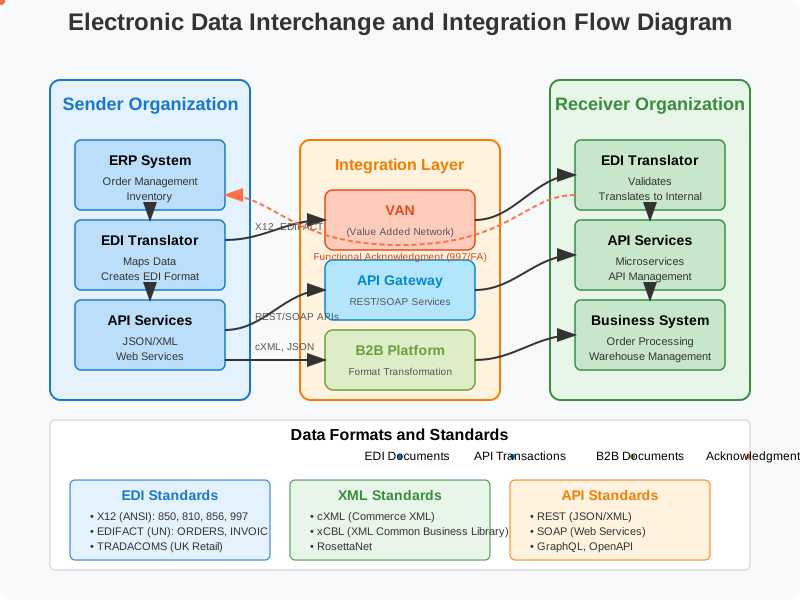
EDI transactions follow strict syntax rules. Because different industries and regions have evolved unique needs, there are several dominant standards in use today. ANSI ASC X12 is the primary standard used in North America, particularly for logistics and retail. Conversely, EDIFACT is the international standard developed by the United Nations, widely adopted across Europe and the rest of the world. By adhering to these standardized formats, companies ensure that their internal ERP (Enterprise Resource Planning) systems can “read” the data coming from a partner’s system regardless of the software architecture being used by either party.
The Translation Process
An EDI transaction typically follows a three-step cycle:
- Preparation: The source system (like an accounting or inventory platform) identifies the data to be sent, such as a customer’s purchase order.
- Translation: The EDI software translates this internal data into the specific EDI document standard (e.g., an 850 Purchase Order).
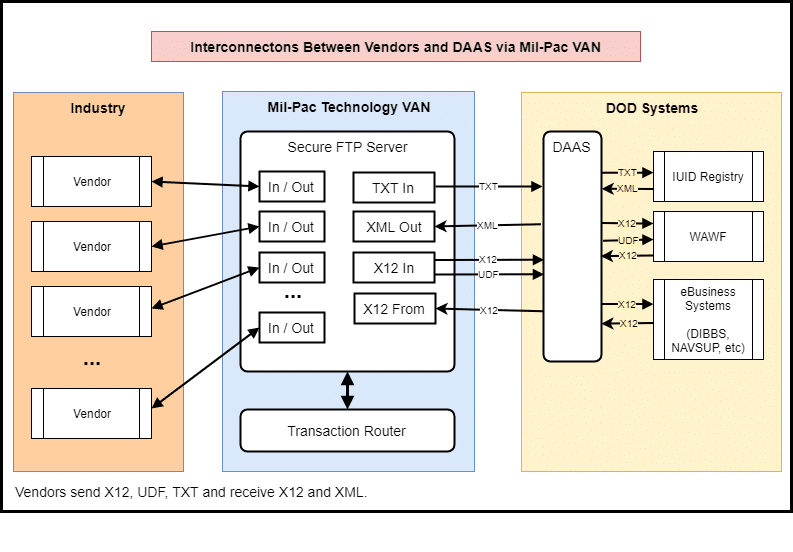
- Transmission: The document is transmitted to the business partner, either through a direct connection or via a Value-Added Network (VAN), which acts as a secure digital mailbox.
Common Types of EDI Transactions
EDI is not a single file type; it is a ecosystem of hundreds of document types that mirror the physical lifecycle of a commercial transaction. Each document type is assigned a specific code, making it easy for systems to categorize and process information.
The Purchase-to-Pay Cycle
The most common EDI transactions facilitate the purchasing process. The 850 Purchase Order is the most widely recognized transaction, where a buyer signals their intent to purchase goods. This is followed by the 855 Purchase Order Acknowledgment, where the supplier confirms receipt and availability. Once the goods are prepared, the 856 Advance Ship Notice (ASN) is sent, providing the buyer with detailed information about the shipment’s contents, including tracking numbers and expected delivery times. Finally, the 810 Invoice is generated, closing the loop on the transaction.
Inventory and Logistics Management
Beyond the basic ordering process, EDI is essential for inventory visibility. Documents such as the 846 Inventory Inquiry/Advice allow suppliers to inform retailers of current stock levels, preventing stockouts and over-ordering. Logistics providers also rely on the 214 Transportation Carrier Shipment Status Message, which provides real-time updates on freight location, essential for complex, multi-modal supply chains. By automating these touchpoints, companies eliminate the “bullwhip effect,” where small inaccuracies in demand data lead to massive inefficiencies in inventory management.
The Business Value of EDI Implementation
Transitioning from manual data entry to EDI transactions provides a profound competitive advantage. While the initial setup requires investment in software and integration, the long-term ROI is found in three primary areas: speed, accuracy, and operational capacity.
Eliminating Human Error
Manual data entry is inherently prone to error. Transcribing a purchase order from a PDF or fax machine into an accounting system is a process rife with potential for typos, transposition errors, and omissions. EDI removes the human element from the data transfer. Because the data flows system-to-system, the information received is exactly the information sent. This reduction in errors prevents costly issues such as incorrect shipments, invoicing disputes, and the associated administrative labor required to fix these mistakes.
Increasing Operational Speed
In a world governed by “just-in-time” manufacturing and same-day delivery expectations, wait times are the enemy of profit. EDI processes happen in near real-time. Where paper-based processing might take days due to physical mail, scanning, and manual entry, EDI transactions are processed in seconds. This allows for faster inventory replenishment, quicker invoice cycles, and ultimately, a faster cash conversion cycle. When a company can process an order the moment it is placed, they gain a distinct advantage in both customer satisfaction and internal efficiency.
Scalability and Compliance
For companies looking to scale, EDI is an absolute necessity. Most major retailers (such as Walmart or Amazon) require their vendors to be EDI-capable. Without the ability to trade via EDI, a business is effectively locked out of large-scale distribution channels. Furthermore, EDI provides a scalable infrastructure. Processing ten orders per day requires the same fundamental EDI architecture as processing ten thousand orders per day. As a company grows, the system absorbs the increased volume without requiring a proportional increase in administrative staff.
Overcoming Integration Challenges
While the benefits are undeniable, the journey to full EDI integration is not without its hurdles. Organizations often face technical and cultural challenges when moving away from traditional, manual workflows.
ERP Integration and Mapping
The most significant technical hurdle is mapping. Because every company’s internal system is customized to their specific business needs, the data fields in a retailer’s ERP will rarely map perfectly to the data fields of a supplier’s ERP. “Mapping” is the process of creating the logic that tells the software which data points from the incoming EDI file belong in which fields within the internal database. This requires a strong understanding of both EDI standards and the company’s internal software architecture.
Managing Partner Relationships
EDI is a collaborative effort. A company cannot implement EDI in a vacuum; it requires their trading partners to use compatible systems. Smaller suppliers may lack the IT resources to support full EDI integration. In these cases, businesses often utilize “Web EDI” portals, which provide a simple web interface for smaller partners to key in their data, which is then converted into an EDI transaction by the platform. This creates a bridge between digital maturity levels, ensuring the entire supply chain remains connected despite disparities in technical capability.
The Shift to Cloud-Based EDI
The traditional model of EDI—often hosted on-premise with expensive server infrastructure—is rapidly shifting. Modern businesses are moving toward cloud-based EDI solutions (EDI-as-a-Service). Cloud platforms remove the burden of maintaining hardware and updates, providing a SaaS-based environment where mapping, translation, and communication happen in the cloud. This democratization of EDI technology has made it accessible to mid-sized and even small businesses, allowing them to compete with larger enterprises on a level playing field.
The Future of EDI in a Digital Economy
As we look toward the future, the role of EDI is evolving rather than disappearing. While newer technologies like APIs (Application Programming Interfaces) are gaining traction, EDI remains the gold standard for high-volume, standardized supply chain communication.
The future of EDI lies in the hybridization of these technologies. Increasingly, businesses are using APIs to handle front-end interactions and real-time customer data, while relying on the robustness of EDI for back-end supply chain logistics. This hybrid approach allows for the flexibility of modern web development while maintaining the rigorous, standardized data integrity that global commerce requires.
Ultimately, EDI transactions are more than just a technical protocol; they are the digital glue holding the global economy together. By prioritizing the accuracy, speed, and standardization that EDI provides, businesses can move beyond the administrative friction of manual processing and focus on what truly matters: delivering value to the end consumer. As global supply chains become more complex and demand for transparency increases, the ability to communicate flawlessly through EDI will remain the defining characteristic of a modern, efficient enterprise.
aViewFromTheCave is a participant in the Amazon Services LLC Associates Program, an affiliate advertising program designed to provide a means for sites to earn advertising fees by advertising and linking to Amazon.com. Amazon, the Amazon logo, AmazonSupply, and the AmazonSupply logo are trademarks of Amazon.com, Inc. or its affiliates. As an Amazon Associate we earn affiliate commissions from qualifying purchases.