
For the uninitiated, a drumstick appears to be a simple wooden implement—a primitive tool used to strike a surface. However, from the perspective of modern engineering and technology, a drumstick is a high-precision instrument designed to withstand thousands of high-velocity impacts while maintaining specific resonant frequencies and ergonomic balance. The question “What are drumsticks made of?” serves as a gateway into a fascinating world of material science, aerospace-grade composites, and digital integration.
As the music industry converges with advanced manufacturing, the materials used to create these tools have evolved from basic timber to sophisticated alloys and smart polymers. This article explores the technological landscape of drumstick composition, analyzing how modern innovations are reshaping the interface between the drummer and the kit.
1. The Engineering of Organic Materials: Beyond Simple Wood
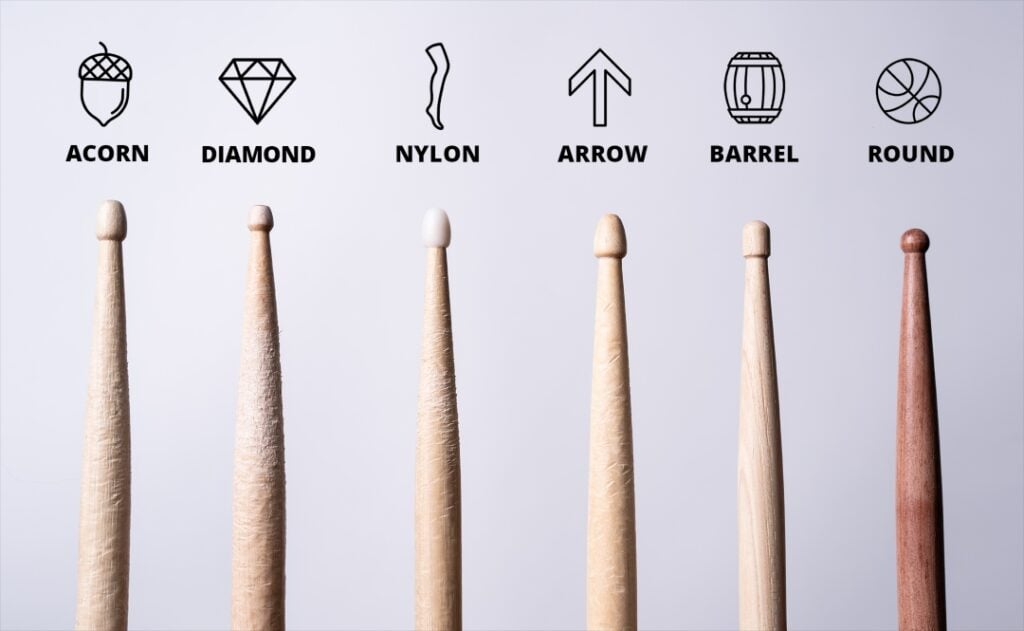
While wood remains the most popular material for drumsticks, the technology used to select, process, and shape it has moved far beyond traditional carpentry. The choice of wood is a study in density, tensile strength, and vibration dampening.
The Physics of Hickory and Oak
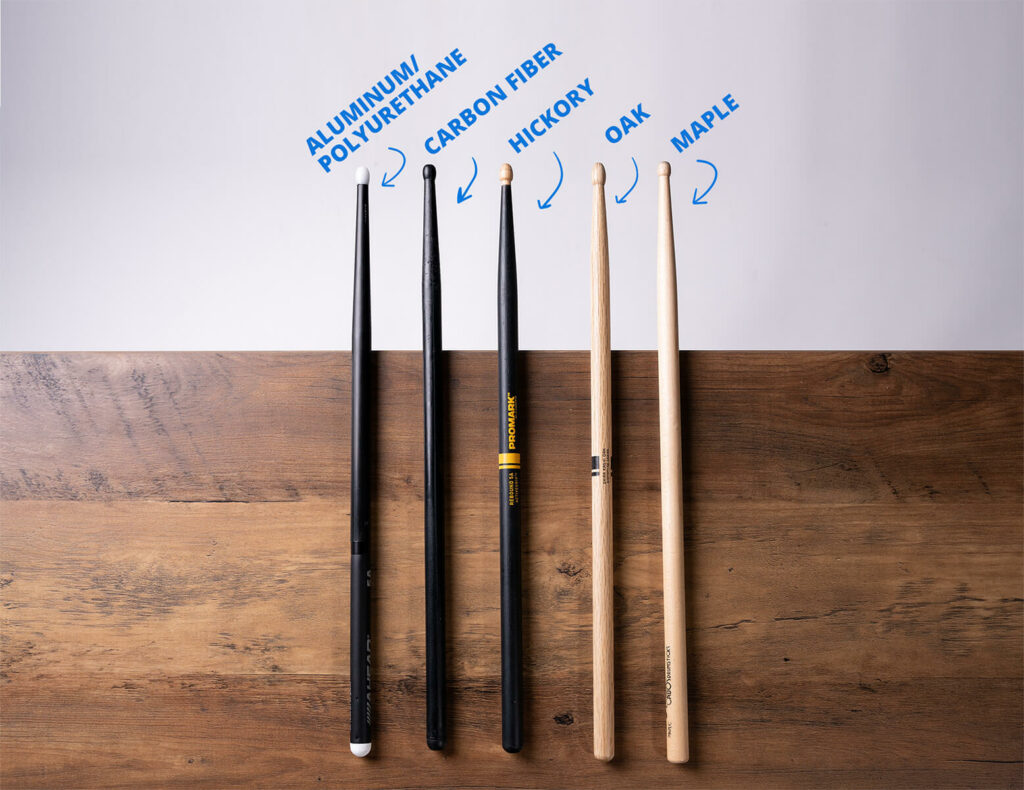
Hickory is the gold standard for drumsticks because of its unique cellular structure. It possesses a high degree of shock absorption, which protects the drummer’s wrists from the kinetic energy of a rimshot. From a tech perspective, manufacturers now use ultrasonic scanning to analyze the internal grain structure of hickory billets. This ensures that every stick produced meets a specific “modulus of elasticity,” providing a consistent flex that synthetic materials often struggle to replicate.
Oak, particularly Japanese Shira Kashi oak, is utilized for its extreme density. The technology behind processing oak involves specialized kiln-drying techniques that prevent the wood from becoming brittle. By controlling the moisture content at a molecular level, engineers can create a stick that is heavier and more durable than hickory, allowing for a different “gadget-like” response when striking cymbals.
Precision Matching and Weight Grading
In the past, two sticks from the same tree could feel vastly different. Today, companies like Vic Firth and Promark employ sophisticated digital scales and pitch-matching software. Every stick is weighed to the milligram and tapped by a robotic arm to analyze its fundamental frequency. The data is processed via an algorithm that pairs sticks with identical acoustic profiles. This digital “twin” approach ensures that the “hardware” in each hand performs with perfect symmetry.
2. The Synthetic Revolution: Carbon Fiber and Aerospace Composites
As drummers sought more durability and consistency than organic materials could provide, manufacturers turned to the world of aerospace and automotive engineering. This led to the development of synthetic drumsticks that offer near-infinite lifespans compared to wood.
Carbon Fiber and Tapered Geometry
Carbon fiber drumsticks are a marvel of material science. By layering carbon filaments in specific orientations, engineers can dictate the stick’s “whip” and “rebound.” Unlike wood, which has natural points of failure (knots or grain deviations), carbon fiber is a homogeneous material.
The tech involved here is “resin transfer molding,” where high-strength polymers are injected into a mold containing the fiber structure. This allows for a hollow-core design in some models, which shifts the center of gravity (the balance point) to a location that would be physically impossible to achieve with a solid piece of wood.
Advanced Thermoplastics and Aluminum Cores
One of the most significant technological leaps in the industry was the introduction of the “Ahead” drumstick system. These are not made of a single material but are a multi-component piece of hardware. They feature an aerospace-grade 7075 aluminum tubing core, which is then covered by a replaceable sleeve made of high-impact polyurethane.
This modular technology solves the “vibration problem.” Pure metal sticks would send painful shockwaves into the player’s hands. However, by using a vibration-dampening polymer sleeve and an integrated “Vibration Reduction System” (VRS) inside the handle, the technology outperforms wood in both durability and safety.
3. High-Tech Surface Science: Coatings and Grip Optimization
What a drumstick is “made of” also includes the chemical engineering applied to its surface. The interface between the hand and the stick is critical for performance, and technology has revolutionized this “grip tech.”
Heat-Activated Polymers
Modern sticks often feature “ActiveGrip” technology. This is a coating made of a heat-activated polymer that is thin and dry at room temperature. As the drummer’s body temperature rises during a performance, the chemical composition of the coating changes, becoming slightly tacky. This provides an automated grip adjustment that reacts to the user’s physiology. It is a prime example of “responsive materials” being used in traditional musical tools.
Acoustic Tip Composition: Nylon vs. Polycarbonate
The “tip” of the drumstick is arguably the most important technological component because it is the primary point of contact. While many tips are wooden, many are made of injection-molded nylon or high-density polycarbonate.
The manufacturing challenge here is “tip-fly-off.” In the past, nylon tips were simply glued on and would often detach. Modern technology uses “injection molding” directly onto the neck of the stick or advanced chemical bonding agents that fuse the plastic to the wood fibers at a molecular level. These materials are engineered to produce specific high-frequency “ping” sounds on cymbals, allowing drummers to choose their “audio output” by selecting the material density of the tip.
4. Smart Sticks: The Integration of Sensors and MIDI
We are currently entering the era of the “Smart Stick,” where the material composition includes electronic components. This transforms the drumstick from a physical tool into a digital input device.
Embedded Inertial Measurement Units (IMUs)
Some modern drumsticks, used primarily for “air drumming” or digital practice, are made of high-impact ABS plastic but contain a suite of sensors. These include 3-axis gyroscopes and accelerometers. The technology allows the stick to track its position in 3D space with millisecond latency.
In this context, the stick is made of a “housing” for a sophisticated computer. Companies like Freedrum or Senstroke have turned the drumstick into a wearable-tech hybrid. The stick communicates via Bluetooth Low Energy (BLE) to a software suite, allowing the user to trigger high-fidelity drum samples without a physical kit.
Haptic Feedback and Biometric Analysis
The future of drumstick tech involves haptic feedback motors embedded in the handle. These sticks, used in “EdTech” (Education Technology), can vibrate to alert a student if their timing is off or if they are gripping the stick with too much tension. The material composition here involves a delicate balance of internal cavities for the motors and enough structural reinforcement to ensure the stick doesn’t shatter upon impact.
5. Sustainability and the Tech of Alternative Bio-Materials
As global timber supplies face pressure, the technology of drumstick manufacturing is pivoting toward sustainable, lab-grown, or recycled materials.
Bamboo and Compressed Grass Tech
Bamboo is technically a grass, not a wood, and its growth rate makes it a highly sustainable option. However, bamboo in its natural state is too light for most drumming. To solve this, manufacturers use “multi-lamination technology.” Hundreds of thin bamboo strips are bonded under high pressure with eco-friendly resins to create a “ply-wood” stick that is denser and more durable than traditional maple. This process requires precision hydraulic presses and specialized adhesives that don’t dampen the stick’s natural resonance.
Additive Manufacturing (3D Printing)
The most cutting-edge sector of drumstick production is 3D printing. Using Selective Laser Sintering (SLS), engineers can create sticks with internal lattice structures that are impossible to machine.
A 3D-printed stick can be designed to have different densities at different points along its length. For instance, the butt end could be solid for weight, while the shoulder could have a honeycomb internal structure to reduce weight without sacrificing strength. This “topological optimization” is the same technology used to design lightweight brackets for SpaceX rockets, proving that even the humble drumstick is becoming a masterpiece of modern tech.
Conclusion: The Drumstick as a High-Tech Interface
What a drumstick is made of depends entirely on the technological era you are examining. While the organic warmth of hickory still dominates the market, it is now supported by digital grading and precision manufacturing. Simultaneously, the rise of carbon fiber, modular aluminum systems, and sensor-embedded “Smart Sticks” has redefined the tool.
The drumstick is no longer just a piece of wood; it is a meticulously engineered gadget. Whether it’s through the use of heat-activated chemical coatings, aerospace-grade composites, or 3D-printed lattice structures, the technology behind drumsticks continues to push the boundaries of what is possible in acoustic and digital performance. For the modern musician, choosing a stick is an exercise in selecting the right “hardware” to interface with their creative “software.”
aViewFromTheCave is a participant in the Amazon Services LLC Associates Program, an affiliate advertising program designed to provide a means for sites to earn advertising fees by advertising and linking to Amazon.com. Amazon, the Amazon logo, AmazonSupply, and the AmazonSupply logo are trademarks of Amazon.com, Inc. or its affiliates. As an Amazon Associate we earn affiliate commissions from qualifying purchases.