
The housing market is currently navigating one of its most complex periods in recent history. For prospective homeowners and seasoned investors alike, the question of “what are current mortgage interest rates” is not just a matter of curiosity—it is the primary factor determining purchasing power, monthly cash flow, and long-term financial stability. After a decade of historically low borrowing costs, the shift toward a higher-rate environment has fundamentally changed the calculus of real estate.
Understanding current mortgage rates requires looking beyond a single percentage point. It involves analyzing the macroeconomic forces that drive these numbers, the personal financial metrics that lenders use to price risk, and the strategic maneuvers borrowers can use to secure the best possible deal.
1. The Macroeconomic Forces Driving Current Mortgage Rates
Mortgage rates do not exist in a vacuum. While many consumers believe that the Federal Reserve directly sets the interest rates for 30-year fixed mortgages, the reality is more nuanced. Understanding these drivers is essential for predicting where rates might head next.
The Influence of the Federal Reserve and Monetary Policy
The Federal Reserve influences mortgage rates through its management of the federal funds rate—the rate at which commercial banks borrow from each other overnight. While this is a short-term rate, it sets the floor for the entire interest rate environment. When the Fed raises rates to combat inflation, the cost of capital increases across the board. Mortgage lenders respond by raising their own rates to maintain profit margins and account for the increased cost of doing business.
The Correlation with 10-Year Treasury Yields
In the United States, the most accurate “real-time” indicator of mortgage rate movement is the 10-year Treasury yield. Mortgage-backed securities (MBS) compete for the same investors as Treasury bonds. When the yield on the 10-year Treasury rises, mortgage rates almost always follow. Investors demand a higher return on mortgages than on government bonds because mortgages carry more risk (such as the risk of default or early payoff). This gap is known as the “spread,” and in volatile economic times, this spread can widen, pushing mortgage rates even higher.
Inflation and the Purchasing Power of Fixed Income
Inflation is the natural enemy of fixed-income investments like mortgages. If a lender issues a 30-year loan at 4% interest, but inflation is running at 5%, the lender is effectively losing purchasing power over time. Therefore, when inflation expectations are high, lenders must charge higher interest rates to compensate for the eroding value of the dollars they will be paid back in the future.
2. Personal Financial Factors That Shape Your Individual Rate
While “national average” rates are a helpful benchmark, very few borrowers actually receive exactly that rate. Your specific interest rate is a reflection of the risk you represent to the lender. By optimizing these factors, you can often secure a rate significantly lower than the market average.
Credit Scores and the Pricing of Risk
Your FICO score is perhaps the single most influential factor in determining your personal mortgage rate. Lenders use tiered pricing models; a borrower with a score of 780 or higher will typically qualify for the “prime” rate, while a borrower with a score of 640 may face a rate that is 1% to 1.5% higher. Over the life of a 30-year loan, this seemingly small difference can result in tens of thousands of dollars in extra interest payments.
The Loan-to-Value (LTV) Ratio
The LTV ratio represents how much of the home’s value you are borrowing versus how much you are providing as a down payment. A 20% down payment (80% LTV) is the traditional benchmark for securing competitive rates and avoiding Private Mortgage Insurance (PMI). However, even higher down payments—such as 25% or 30%—can sometimes trigger additional rate “adjustments” that lower your interest even further, as the lender’s risk of loss in a foreclosure scenario is significantly reduced.
Debt-to-Income (DTI) Ratios
Lenders look at your DTI to ensure you have the cash flow to manage a mortgage payment alongside your existing debts (student loans, car payments, credit cards). A lower DTI suggests financial stability, which can occasionally help you qualify for specialized programs or more aggressive pricing from portfolio lenders who keep loans on their own books rather than selling them to investors.

3. Navigating Different Mortgage Products and Their Rate Structures
Not all mortgages are created equal. The type of loan you choose will dictate how your interest rate behaves over time and how much you will pay upfront versus over the long term.
Fixed-Rate Mortgages: The Standard for Stability
The 30-year fixed-rate mortgage remains the gold standard for American homeowners. It offers the security of a consistent principal and interest payment for three decades. While the rates on 30-year loans are typically higher than shorter-term or adjustable-rate options, they provide a hedge against future inflation. If market rates rise to 10% in the future, your 6.5% or 7% rate remains locked in.
Adjustable-Rate Mortgages (ARMs) in a High-Rate Environment
When current mortgage rates are high, Adjustable-Rate Mortgages (ARMs) often see a surge in popularity. An ARM typically offers a lower “teaser” rate for an initial period (such as 5, 7, or 10 years). After this period, the rate adjusts annually based on a market index. For borrowers who plan to sell or refinance within a few years, an ARM can provide significant monthly savings. However, it carries the risk of the rate adjusting upward if the market doesn’t cool down.
Government-Backed Loans: FHA, VA, and USDA
For many, government-backed loans offer a path to homeownership with lower interest rates or lower down payment requirements.
- FHA Loans: Ideal for those with lower credit scores. While the interest rates are competitive, they require mortgage insurance premiums (MIP) that last for the life of the loan.
- VA Loans: Available to veterans and active-duty service members, these often carry the lowest interest rates on the market and require no down payment.
- USDA Loans: Designed for rural and suburban homebuyers with low-to-moderate incomes, offering 100% financing and competitive fixed rates.
4. Strategic Moves to Secure Lower Rates in Today’s Market
In a high-interest-rate environment, savvy borrowers must be proactive. You do not have to simply accept the first rate a bank offers you. There are several financial maneuvers to lower your effective interest rate.
Buying Down the Rate with Discount Points
A “point” is an upfront fee paid to the lender at closing in exchange for a lower interest rate. One point typically costs 1% of the total loan amount and reduces your interest rate by approximately 0.25%. This is a “prepayment” of interest. To decide if this is a smart move, you must calculate the “break-even point”—how many months of lower payments it will take to recoup the upfront cost of the points.
The Importance of Mortgage Rate Shopping
Rates can vary significantly from one lender to another. A study by Freddie Mac found that borrowers who get at least five quotes can save an average of $3,000 over the life of the loan compared to those who get only one. Online lenders, local credit unions, and national banks all have different “appetites” for risk at different times. Shopping around is the most effective zero-cost way to lower your rate.
Rate Locks and Float-Down Options
Because mortgage rates change daily (and sometimes hourly), a “rate lock” is essential. A rate lock guarantees your quoted interest rate for a specific period, usually 30 to 60 days, while your loan is being processed. Some lenders offer a “float-down” provision, which allows you to lock in a rate but also take advantage of a lower rate if market interest rates drop before you close.

Conclusion: The Long-Term Perspective on Mortgage Interest
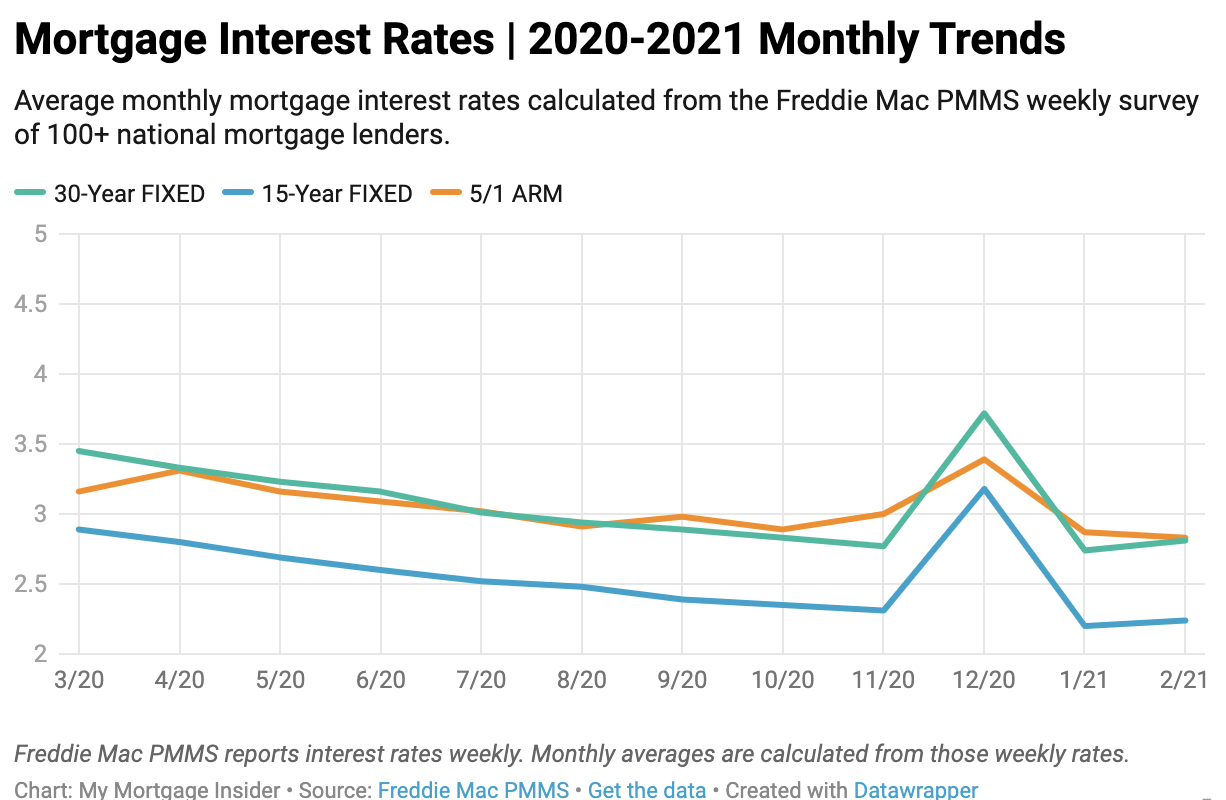
While current mortgage interest rates may seem high compared to the anomaly of the 2% and 3% rates seen in 2020 and 2021, they are historically moderate when viewed over a 50-year horizon. The key to successful homeownership in the current climate is not waiting for a “perfect” rate that may never return, but rather understanding the mechanics of the market.
For the modern borrower, the strategy should be “marry the house, date the rate.” This philosophy suggests that if you find a property that meets your needs and fits your budget, you should proceed with the purchase. If rates drop in the future, you can refinance into a lower-cost loan. If rates continue to rise, you will be glad you locked in today’s rate. By focusing on credit health, choosing the right loan product, and shopping aggressively, you can navigate the complexities of current mortgage rates and build long-term wealth through real estate.
aViewFromTheCave is a participant in the Amazon Services LLC Associates Program, an affiliate advertising program designed to provide a means for sites to earn advertising fees by advertising and linking to Amazon.com. Amazon, the Amazon logo, AmazonSupply, and the AmazonSupply logo are trademarks of Amazon.com, Inc. or its affiliates. As an Amazon Associate we earn affiliate commissions from qualifying purchases.