
Purchasing a car is one of the most significant financial decisions many individuals make, second only to buying a home. While the make, model, and features often grab immediate attention, the actual cost of ownership is heavily influenced by one critical factor: the interest rate on your car loan. Understanding current interest rates for car loans isn’t just about knowing a number; it’s about comprehending the economic forces, personal financial health indicators, and market dynamics that converge to determine how much you’ll ultimately pay for your vehicle.
In today’s dynamic financial landscape, interest rates are constantly in flux, influenced by everything from federal reserve policies to global economic trends. For the savvy consumer, staying informed about these rates and the factors that drive them is paramount to making an intelligent purchasing decision. This guide will delve into the intricacies of car loan interest rates, exploring how they are set, what influences them, and crucially, how you can position yourself to secure the most favorable terms available. Whether you’re a first-time buyer or looking to upgrade, mastering the art of car loan financing is a key step towards financial prudence and long-term savings.

Understanding the Landscape of Car Loan Interest Rates
Car loan interest rates are not arbitrary figures pulled from thin air. They are a complex interplay of macroeconomic forces, lender risk assessment, and specific loan characteristics. Grasping these foundational elements is the first step toward demystifying the financing process and empowering yourself as a borrower.
How Interest Rates are Determined
At its core, an interest rate represents the cost of borrowing money. For car loans, this cost is a reflection of several layers of influence. The Federal Reserve’s monetary policy plays a significant role; when the Fed raises its benchmark interest rate (the federal funds rate), it generally becomes more expensive for banks to borrow money, a cost they then pass on to consumers in the form of higher loan rates. Conversely, a cut in the federal funds rate can lead to lower lending rates. Beyond this, inflation expectations also play a part. Lenders need to ensure that the return on their loan outpaces the erosion of purchasing power due to inflation. Finally, the supply and demand for credit within the market can push rates up or down. If there’s high demand for loans but limited capital, rates tend to rise.
The Impact of Economic Conditions
Broader economic conditions are a powerful determinant of car loan interest rates. During periods of economic growth and stability, lenders may be more willing to offer competitive rates as the risk of default is perceived as lower. Conversely, in times of economic uncertainty or recession, lenders often tighten their lending standards and increase interest rates to compensate for heightened risk. High unemployment rates or a looming recession typically lead to more cautious lending practices. Geopolitical events, shifts in consumer confidence, and even major industry disruptions can all ripple through the financial markets, ultimately affecting what you pay for your car loan. Therefore, keeping an eye on economic headlines isn’t just for investors; it’s vital for anyone considering a significant purchase like a vehicle.
APR vs. Interest Rate: A Crucial Distinction
While often used interchangeably, the interest rate and the Annual Percentage Rate (APR) are distinct and understanding the difference is crucial for comparing loan offers accurately. The interest rate is simply the percentage charged by the lender for borrowing the principal amount. It’s the core cost of the loan. However, the APR is a more comprehensive measure of the total cost of borrowing. It includes the interest rate plus any additional fees associated with the loan, such as origination fees, processing fees, or closing costs.
For example, two lenders might offer the same 5% interest rate. But if Lender A charges no fees, and Lender B charges $500 in fees, Lender B’s APR will be higher than Lender A’s. The APR provides a standardized way to compare the true cost of different loan products, making it an invaluable tool for consumers. Always focus on comparing APRs, not just interest rates, when evaluating car loan offers.
Key Factors Influencing Your Individual Car Loan Rate
While economic forces set the general market trends, your specific interest rate for a car loan will ultimately be a personalized calculation. Lenders assess your individual financial profile and the characteristics of the loan itself to determine the risk involved in lending to you. Understanding these factors allows you to proactively work towards securing a better rate.
Credit Score: Your Financial Report Card
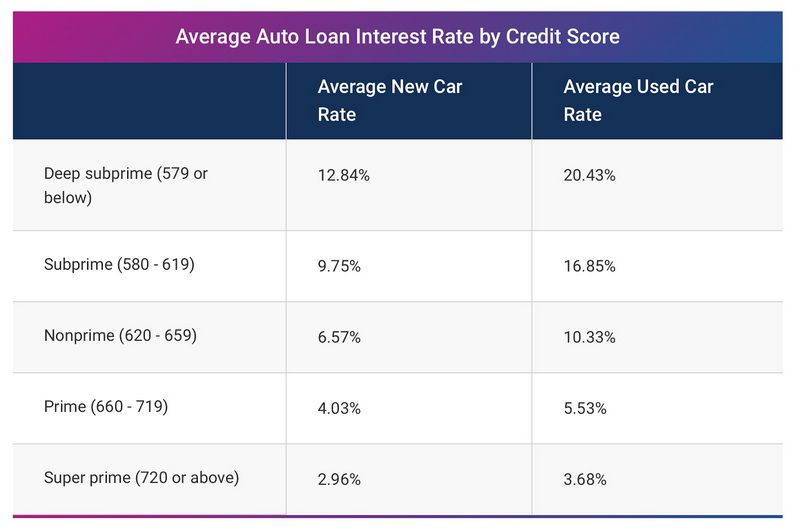
Your credit score is arguably the most significant factor influencing the interest rate you’ll be offered. It serves as a numerical summary of your creditworthiness, reflecting your history of borrowing and repayment. Generally, credit scores range from 300 to 850:
- Excellent (800-850): These borrowers receive the lowest interest rates, as they are considered highly reliable.
- Very Good (740-799): Still qualify for very competitive rates.
- Good (670-739): Will generally receive favorable rates, though perhaps slightly higher than “excellent.”
- Fair (580-669): May qualify for a loan but at significantly higher interest rates due to increased perceived risk.
- Poor (300-579): Will face the highest interest rates, and loan approval might be challenging.
A higher credit score signals to lenders that you are a responsible borrower with a proven track record of repaying debt on time, thereby reducing their risk and allowing them to offer you a more attractive rate.
Loan Term: Short-Term vs. Long-Term Implications
The duration of your loan, known as the loan term, directly impacts both your monthly payment and the total interest you’ll pay over the life of the loan. Common terms range from 36 to 84 months.
- Shorter Loan Terms (e.g., 36 or 48 months): Typically come with lower interest rates because the lender’s risk is spread over a shorter period. While monthly payments will be higher, the total interest paid over the life of the loan will be significantly less.
- Longer Loan Terms (e.g., 60, 72, or 84 months): Often have higher interest rates. Lenders perceive more risk over a longer repayment period. Although longer terms result in lower monthly payments, you’ll end up paying substantially more in total interest. It’s a trade-off: affordability now versus total cost later.
Down Payment Amount: Reducing Risk for Lenders
A down payment is the initial sum of money you pay upfront for the car, reducing the amount you need to borrow. The larger your down payment, the less money you finance, and the lower the risk for the lender.
- Larger Down Payment: Reduces the loan-to-value (LTV) ratio, which is the amount financed relative to the car’s value. A lower LTV means less risk for the lender, often translating to a better interest rate. It also means you’ll pay less interest overall because you’re borrowing less principal.
- No Down Payment or Small Down Payment: Increases the LTV, making the loan riskier for the lender, which can lead to higher interest rates. It also puts you at greater risk of being “upside down” on your loan, meaning you owe more than the car is worth, especially with depreciation.
Vehicle Type and Age
The type of vehicle you choose and whether it’s new or used can also influence your interest rate.
- New Cars: Generally attract lower interest rates compared to used cars. This is because new cars depreciate predictably, and their value is higher, making them less risky collateral for lenders. Manufacturers also often offer promotional financing deals on new vehicles.
- Used Cars: Typically carry higher interest rates. Used cars have already depreciated, and their future value can be less predictable. Lenders perceive a higher risk with used car loans, particularly for older models.
Debt-to-Income Ratio
Lenders also examine your debt-to-income (DTI) ratio, which compares your total monthly debt payments to your gross monthly income. A low DTI ratio (typically below 36%) indicates that you have sufficient income to manage your existing debts and take on a new car loan, making you a more attractive borrower. A high DTI ratio can signal financial strain and higher risk, potentially leading to a higher interest rate or even loan denial.
Navigating the Car Loan Market: Where to Find the Best Rates
With so many variables at play, finding the best car loan interest rate requires diligence and strategic comparison shopping. The market offers a variety of lenders, each with their own strengths and processes.
Pre-Approval: Your Power Play
One of the most effective strategies for securing a favorable car loan rate is to get pre-approved for financing before you step into a dealership.
- Empowerment: Pre-approval provides you with a concrete interest rate and maximum loan amount from a lender, giving you a strong negotiating tool. You’ll know your budget and monthly payment before you even start looking at cars.
- Separating Car Price from Financing: With pre-approval, you can focus solely on negotiating the best price for the vehicle itself, rather than getting entangled in the dealership’s financing offers simultaneously. This reduces complexity and allows for clearer negotiation.
- Multiple Offers: You can get pre-approved by several lenders without impacting your credit score significantly (multiple inquiries within a short window, typically 14-45 days, are often treated as a single inquiry by credit bureaus). This allows you to compare offers side-by-side.
Types of Lenders: Banks, Credit Unions, and Dealerships
Each type of lender offers different advantages:
- Traditional Banks: Offer a wide range of loan products and services. They can be a good option, especially if you have an existing relationship with them. Rates can vary widely based on your credit profile and the bank’s current offerings.
- Credit Unions: Often boast some of the most competitive interest rates because they are non-profit organizations focused on serving their members. If you’re eligible for membership (often based on location, employer, or association), a credit union should be one of your first stops.
- Dealership Financing: While convenient, dealership financing can sometimes be less transparent. Dealerships often work with multiple lenders and can sometimes “mark up” the interest rate they receive from a lender to earn a profit. However, they also sometimes offer promotional rates (e.g., 0% APR) on specific new vehicles, which can be very attractive if you qualify. Always compare their offer to your pre-approved rates.
Leveraging Online Loan Marketplaces
Online loan marketplaces and aggregators have revolutionized car loan shopping. Websites allow you to input your financial information and desired loan parameters, then provide you with multiple loan offers from various lenders.
- Convenience: Compare numerous offers from the comfort of your home.
- Transparency: Clearly see interest rates, APRs, and terms side-by-side.
- Efficiency: Streamlines the application process and reduces the need to visit multiple banks or credit unions.
Negotiation Strategies at the Dealership
When at the dealership, always remember to keep the car price and the financing separate. Negotiate the lowest possible purchase price for the vehicle first. Once you’ve agreed on a price, then you can discuss financing. Present your pre-approved offer and see if the dealership can beat it. If they can, ensure the offer truly is better by comparing the APR and total cost, not just the monthly payment. Be wary of offers that reduce your monthly payment by extending the loan term without a significant reduction in APR.
Strategies to Secure a Lower Car Loan Interest Rate
Even if current market rates are trending upward, there are proactive steps you can take to ensure you get the best possible interest rate for your specific financial situation.
Improving Your Credit Score
Since your credit score is paramount, taking steps to improve it before applying for a car loan can lead to substantial savings.
- Check Your Credit Report: Obtain free copies of your credit reports from Equifax, Experian, and TransUnion. Review them for errors and dispute any inaccuracies.
- Pay Bills on Time: Payment history is the most important factor in your credit score. Set up automatic payments or reminders to ensure you never miss a due date.
- Reduce Outstanding Debt: Lowering your credit card balances and other revolving debts can improve your credit utilization ratio, which positively impacts your score.
- Avoid New Credit Inquiries: Limit applying for new credit cards or loans in the months leading up to your car loan application, as new inquiries can temporarily ding your score.
Increasing Your Down Payment
The more you put down upfront, the less you need to borrow, which often translates to a lower interest rate and less overall interest paid.
- Save Systematically: Start a dedicated savings fund for your car down payment well in advance.
- Consider Trade-in Value: If you have an existing vehicle, leverage its trade-in value to significantly boost your down payment. Research its value beforehand using online tools.
Considering a Co-signer
If your credit score is less than ideal, or if you’re a first-time buyer with a limited credit history, a co-signer with excellent credit can help you secure a better interest rate.
- Shared Responsibility: A co-signer shares equal legal responsibility for the loan. If you miss payments, it negatively impacts both your credit scores, and the lender can pursue the co-signer for payment.
- Discuss Implications: It’s crucial to have a clear understanding with your co-signer about the responsibilities and potential risks involved.
Refinancing Options
If you’ve already financed a car and current market rates have dropped, or if your credit score has significantly improved since you took out the original loan, refinancing could be a smart financial move.
- Lower Interest Rate: Refinancing allows you to replace your existing car loan with a new one, ideally with a lower interest rate, reducing your monthly payment or the total interest paid.
- Shorter/Longer Term: You can also use refinancing to adjust your loan term, either shortening it to pay off the car faster or extending it to lower monthly payments (though the latter usually means more total interest).
- Lender Research: Shop around for refinancing offers from various lenders, just as you would for an initial car loan.
Shortening the Loan Term (If Feasible)
While extending the loan term can lower monthly payments, shortening it can lead to significant savings on total interest. If your budget allows for higher monthly payments, opting for a 36- or 48-month loan instead of a 60- or 72-month one will almost always result in a lower interest rate and substantially less money paid over the life of the loan. Carefully weigh your monthly budget against the long-term cost savings.

Conclusion
Understanding “what are current interest rates for car loans” extends far beyond merely knowing a percentage point. It encompasses a holistic understanding of the macroeconomic forces that shape the lending environment, the personal financial attributes that define your creditworthiness, and the strategic approaches you can employ to navigate the market effectively.
By being informed about how economic conditions influence rates, meticulously evaluating your credit score, and leveraging tools like pre-approval and online marketplaces, you empower yourself to make a financially savvy decision. Remember to focus on the Annual Percentage Rate (APR) for a true comparison of costs and be prepared to negotiate. Whether you improve your credit, save for a larger down payment, or consider refinancing, taking proactive steps can significantly impact the total cost of your vehicle. In the intricate world of personal finance, diligence and knowledge are your most valuable assets, ensuring your car purchase is not just an exciting milestone but also a sound financial investment.
aViewFromTheCave is a participant in the Amazon Services LLC Associates Program, an affiliate advertising program designed to provide a means for sites to earn advertising fees by advertising and linking to Amazon.com. Amazon, the Amazon logo, AmazonSupply, and the AmazonSupply logo are trademarks of Amazon.com, Inc. or its affiliates. As an Amazon Associate we earn affiliate commissions from qualifying purchases.