
The 30-year fixed-rate mortgage has long been the bedrock of the American dream. For decades, it has provided a predictable path to homeownership, allowing individuals to lock in a monthly payment for three decades regardless of how the broader economy fluctuates. However, in recent years, the landscape of mortgage rates has undergone a seismic shift. Borrowers who were once accustomed to the historic lows of the early 2020s are now navigating a market defined by volatility and higher borrowing costs. Understanding what current 30-year mortgage rates are—and, more importantly, what drives them—is essential for anyone looking to enter the real estate market or manage their personal finances effectively.
The Current Landscape of 30-Year Fixed Mortgage Rates
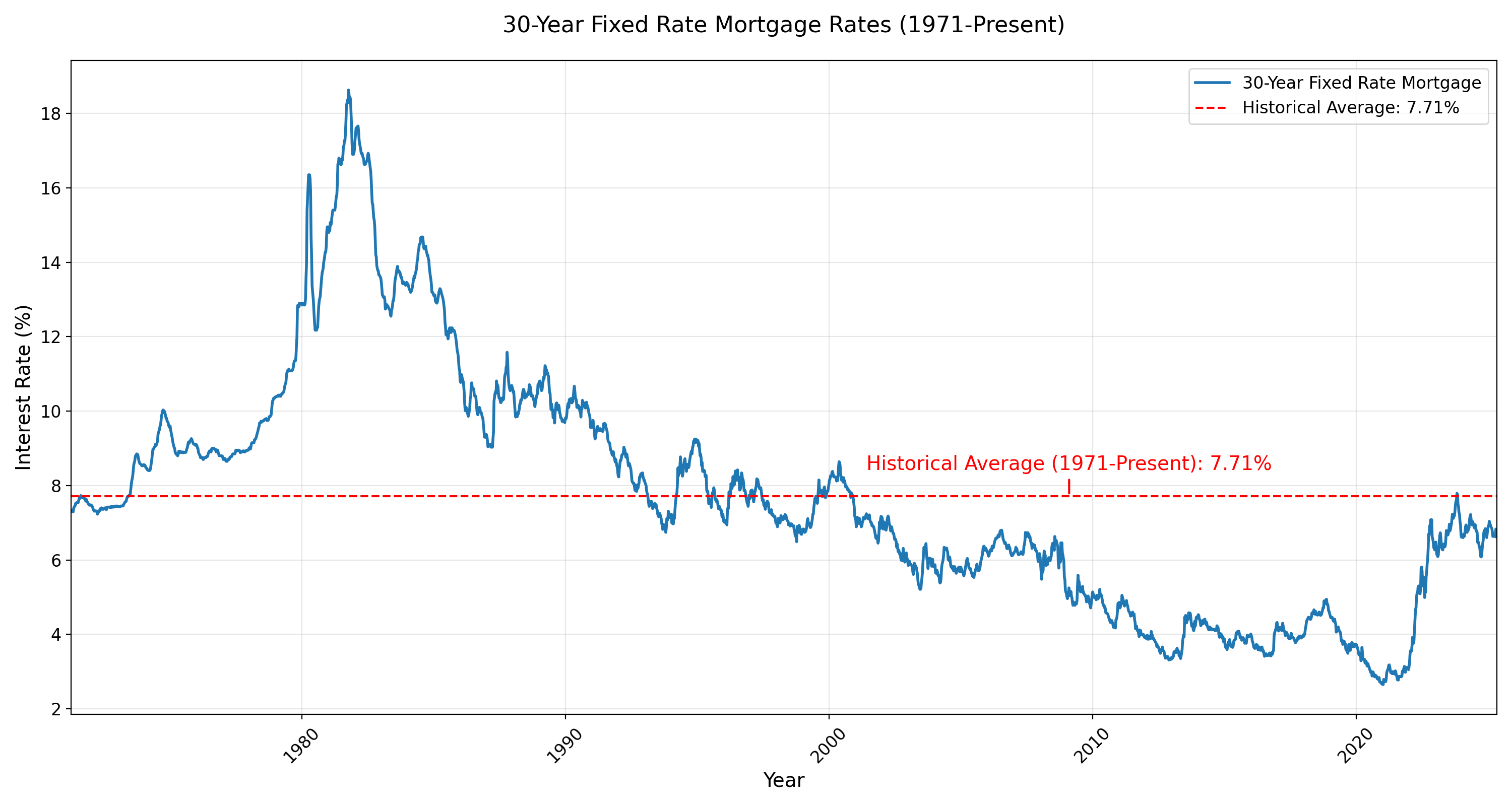
To understand where mortgage rates stand today, one must first look at the trajectory of the last several years. We have moved out of an era of “free money,” where rates hovered between 2.5% and 3.5%, into a more restrictive monetary environment where rates have spent significant time in the 6.5% to 7.5% range. While these figures may seem high compared to 2021, they are actually closer to the long-term historical average when looking back over the last 50 years.
Historical Context vs. Today’s Reality
Looking back at the 1980s, mortgage rates peaked at nearly 18%. In contrast, the 1990s and 2000s saw rates settle into the 6% to 8% range. The ultra-low rates following the 2008 financial crisis and the 2020 pandemic were anomalies driven by aggressive central bank intervention. Today’s rates represent a “return to normalcy,” though the speed at which they rose—climbing several percentage points in a single year—created a significant shock to the housing market. This “rate shock” has led to a “lock-in effect,” where current homeowners are reluctant to sell because they do not want to trade their 3% mortgage for a 7% one.
The Role of the Federal Reserve
A common misconception is that the Federal Reserve sets mortgage rates. In reality, the Fed sets the federal funds rate, which is the interest rate banks charge each other for overnight loans. While the Fed does not dictate mortgage rates, its policy decisions heavily influence them. When the Fed raises interest rates to combat inflation, the cost of borrowing increases across the board. Furthermore, the Fed’s involvement in the secondary mortgage market—specifically its purchase or sale of Mortgage-Backed Securities (MBS)—directly impacts the supply and demand for mortgage debt, which in turn moves the needle on the rates offered to consumers.
Key Factors Influencing Your Individual Rate
While national averages provide a benchmark, the “current” rate you receive is highly personalized. Lenders view mortgage loans through the lens of risk management. The higher the perceived risk that a borrower will default, the higher the interest rate the lender will charge to compensate for that risk.
Credit Score and Debt-to-Income Ratio
Your credit score is perhaps the single most influential factor in determining your specific 30-year mortgage rate. Borrowers with “Excellent” credit (740 and above) generally qualify for the lowest advertised rates. Conversely, a borrower with a score in the 620-660 range might see a rate that is 0.5% to 1.5% higher than the prime rate.
Equally important is the Debt-to-Income (DTI) ratio. Lenders look at your gross monthly income compared to your monthly debt obligations. A DTI below 36% is generally considered ideal. If your DTI is too high, lenders may view you as overextended, leading to higher rates or even loan denial. In a high-rate environment, managing existing debt becomes a critical precursor to applying for a mortgage.
Loan-to-Value (LTV) and Down Payments
The amount of equity you put into the home upfront significantly impacts your rate. The Loan-to-Value (LTV) ratio measures the amount of the loan against the appraised value of the property. A 20% down payment (resulting in an 80% LTV) is the traditional benchmark. When you put down less than 20%, you are often required to pay Private Mortgage Insurance (PMI), and the lender may increase the interest rate to account for the increased risk of a low-equity loan. In the current market, some borrowers choose to put more than 20% down to “buy down” their interest rate or reduce the total amount of interest paid over the life of the 30-year term.
Why the 30-Year Fixed-Rate Mortgage Remains the Gold Standard

Despite the rise in rates, the 30-year fixed-rate mortgage remains the most popular choice for American homebuyers. In an era of economic uncertainty, the primary draw of this product is the elimination of “interest rate risk” for the consumer.
Stability and Predictability
With a 30-year fixed mortgage, your principal and interest payment remains identical from the first month to the 360th month. This allows for precise long-term financial planning. Unlike Adjustable-Rate Mortgages (ARMs), which may offer a lower introductory rate but can reset to much higher levels later, the fixed-rate option protects homeowners from future spikes in inflation. For many families, the peace of mind that comes with knowing their housing cost will never increase (excluding taxes and insurance) is worth the slightly higher initial rate compared to an ARM.
Tax Implications and Long-Term Planning
From a personal finance perspective, the 30-year mortgage offers specific tax advantages. In many jurisdictions, the interest paid on a primary residence mortgage is tax-deductible up to certain limits. In the early years of a 30-year loan, the vast majority of your monthly payment goes toward interest, which can provide a significant shield against taxable income. Furthermore, as inflation devalues currency over time, the “real” cost of a fixed mortgage payment actually decreases. A $2,000 mortgage payment in 2024 will feel significantly less burdensome in 2044, assuming wages rise with inflation while the debt remains static.
Strategies to Secure the Best Rate in a Volatile Market
Navigating today’s mortgage market requires a proactive approach. Gone are the days when you could walk into your local bank and assume you were getting the best deal. Borrowers must be savvy and willing to do the legwork to optimize their financial position.
Rate Locks and Timing
Mortgage rates fluctuate daily, and sometimes hourly, based on bond market activity. Once you find a rate you are comfortable with, it is essential to discuss a “rate lock” with your lender. A rate lock guarantees your interest rate for a specific period, usually 30 to 60 days, while your loan is being processed. In a rising rate environment, failing to lock in a rate can result in a significantly higher monthly payment by the time you reach the closing table. Some lenders also offer “float down” provisions, which allow you to lock in a rate but drop it if market rates decrease before you close.
Shopping Multiple Lenders and Mortgage Brokers
The spread between different lenders can be surprisingly wide. It is highly recommended to get quotes from at least three different sources: a national bank, a local credit union, and an independent mortgage broker. Mortgage brokers are particularly useful in the current climate because they have access to a variety of wholesale lenders and can shop your profile to find the most competitive pricing. Additionally, consider “buying points.” A point is an upfront fee (usually 1% of the loan amount) paid to the lender in exchange for a lower interest rate. If you plan to stay in the home for more than seven to ten years, paying for points can save you tens of thousands of dollars in interest over the life of the loan.
Navigating the Future: Economic Indicators to Watch
For those waiting for rates to drop before buying, it is important to understand the economic signals that will dictate future movements. Mortgage rates are largely forward-looking, meaning they react to expectations of future economic health rather than just current events.
Inflation and the Consumer Price Index (CPI)
Inflation is the natural enemy of fixed-income investments like mortgages. When inflation is high, the purchasing power of the future interest payments a lender receives is eroded. Therefore, lenders demand higher rates to compensate for that loss. The Consumer Price Index (CPI) is the most closely watched metric for inflation. When CPI data comes in lower than expected, mortgage rates often trend downward. Conversely, “hot” inflation reports almost always lead to an immediate spike in 30-year mortgage rates.

The 10-Year Treasury Yield Correlation
While the Federal Reserve influences rates, the 30-year mortgage actually tracks the 10-Year Treasury Yield more closely than any other metric. Investors view the 10-year Treasury as a “risk-free” benchmark. Because a mortgage carries more risk than a government bond, there is always a “spread” between the 10-year yield and mortgage rates—typically around 1.7% to 2%. When the 10-Year Treasury yield rises, mortgage rates follow suit almost instantly. By keeping an eye on the bond market, potential homebuyers can get a “preview” of where mortgage rates are headed in the coming weeks.
In conclusion, while current 30-year mortgage rates are higher than the historic lows of the recent past, they remain a manageable and vital tool for building long-term wealth through real estate. By focusing on credit health, understanding the broader economic drivers, and shopping aggressively for the best terms, borrowers can secure a mortgage that fits within a sound financial plan. Homeownership remains a marathon, not a sprint, and the 30-year fixed-rate mortgage provides the steady pace needed to reach the finish line.
aViewFromTheCave is a participant in the Amazon Services LLC Associates Program, an affiliate advertising program designed to provide a means for sites to earn advertising fees by advertising and linking to Amazon.com. Amazon, the Amazon logo, AmazonSupply, and the AmazonSupply logo are trademarks of Amazon.com, Inc. or its affiliates. As an Amazon Associate we earn affiliate commissions from qualifying purchases.