
In the world of audio, achieving pristine sound quality often feels like a quest for the holy grail. While many consumers are content with the basic speakers that come pre-installed in their vehicles or the soundbars they hook up to their home entertainment systems, audiophiles and car enthusiasts understand that true sonic fidelity lies in the details. This is where the concept of component speakers enters the picture. Far from being a single, monolithic unit, a component speaker system is a meticulously designed ensemble of individual drivers, each optimized to reproduce a specific range of sound frequencies. Understanding what component speakers are, how they differ from their more common counterparts, and the benefits they offer is the first step towards unlocking a superior listening experience, whether you’re cruising down the highway or relaxing in your living room.
The technological landscape surrounding audio is vast and constantly evolving. From the raw mechanics of speaker drivers to the sophisticated digital signal processing that refines sound, advancements continuously push the boundaries of what’s possible. Component speakers represent a pinnacle of this technological pursuit within the realm of speaker design. They are not merely about producing sound; they are about reproducing it with accuracy, clarity, and depth. This article will delve into the essence of component speakers, dissecting their construction, exploring their advantages, and shedding light on why they are the preferred choice for those who demand the best from their audio systems. We’ll also touch upon how understanding this technology can intersect with broader interests in tech gadgets, and how investing in a quality component speaker system can even be considered a smart financial decision in the long run.
The Anatomy of Superior Sound: Deconstructing Component Speakers
At its core, a component speaker system is built on the principle of specialization. Unlike a “full-range” or “coaxial” speaker, which attempts to house all its sound-producing elements within a single frame, a component system breaks down the audio spectrum into distinct segments, assigning each segment to a dedicated driver. This approach allows each driver to be engineered with optimal materials, dimensions, and resonant properties for its specific task, leading to a more accurate and less distorted reproduction of the original sound.
The Individual Drivers: Masters of Their Frequency Domain
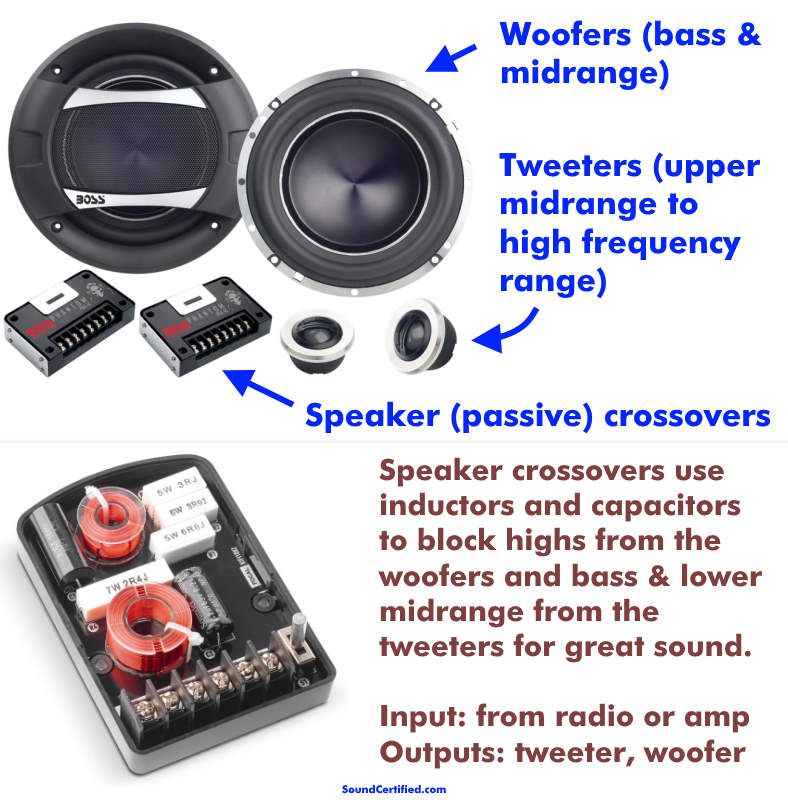
A typical component speaker system will consist of at least three primary types of drivers:
-
Woofers (or Mid-Woofers): These are the largest drivers in the system and are responsible for reproducing the lower frequencies of the audio spectrum. This includes the fundamental tones of vocals, basslines, and the impactful rumble of percussion. Woofers typically range in size from 5.25 inches to 8 inches or more in diameter. Their larger surface area allows them to move more air, which is essential for generating powerful and resonant bass. The material of the woofer cone is crucial, with choices like polypropylene, treated paper, or composite materials offering different balances of stiffness, lightness, and damping characteristics, all of which influence the clarity and accuracy of the low end.
-
Mid-Range Drivers (Optional but Common in 3-Way Systems): In more advanced component systems, a dedicated mid-range driver is included. These drivers are tasked with reproducing the crucial middle frequencies, which encompass the majority of human vocals, guitars, and other instruments. By isolating the mid-range, the system can achieve a more detailed and natural representation of these sounds, preventing them from being masked or distorted by the dominant output of the woofer or tweeter. Mid-range drivers are typically smaller than woofers, often ranging from 2 to 4 inches in diameter.
-
Tweeters: These are the smallest drivers and are responsible for the high frequencies. This includes cymbal crashes, sibilant “s” sounds in vocals, and the delicate nuances that add air and sparkle to music. Tweeters are designed to be highly responsive to rapid vibrations and can reproduce frequencies up to and beyond the range of human hearing, which contributes to the perceived “realism” of the sound. Common tweeter types include dome tweeters (made from silk, aluminum, or titanium) and cone tweeters. The tweeter’s placement is also critical, as high frequencies are highly directional, and their proper angling can significantly impact the soundstage.
The Crossover Network: The Conductor of the Audio Orchestra
Perhaps the most defining element of a component speaker system, and what truly sets it apart, is the crossover network. This is an electronic circuit, typically housed in a separate unit or integrated into the wiring, that acts as the maestro of the audio orchestra. Its primary function is to divide the incoming audio signal into different frequency bands and direct each band to the appropriate driver.
Without a crossover, sending a full-range signal to every driver would be detrimental. A woofer attempting to reproduce high frequencies would struggle, resulting in distortion and a lack of clarity. Likewise, a tweeter trying to handle bass would likely be damaged and would produce no discernible sound. The crossover network uses passive electronic components like capacitors, inductors, and resistors to filter out unwanted frequencies for each driver.
- First-Order Crossover (6dB/octave): The simplest type, offering a gentle roll-off of frequencies.
- Second-Order Crossover (12dB/octave): Provides a steeper roll-off, offering better separation between drivers.
- Third-Order Crossover (18dB/octave): Even steeper roll-off for more precise frequency division.
- Fourth-Order Crossover (24dB/octave): Offers the most aggressive frequency separation.
The order of the crossover significantly impacts how cleanly the frequencies are divided. Higher-order crossovers generally lead to better driver integration and reduced intermodulation distortion, but they can also introduce more phase shift. Many higher-end component systems offer adjustable crossover points or slopes, allowing for fine-tuning to match the acoustics of the listening environment.
The Tangible Benefits of Choosing Component Speakers
The complexity of component speaker systems is not merely for the sake of engineering prowess; it translates directly into a superior listening experience. For those who appreciate nuanced audio, the advantages are undeniable and justify the investment.
Unparalleled Sound Clarity and Detail
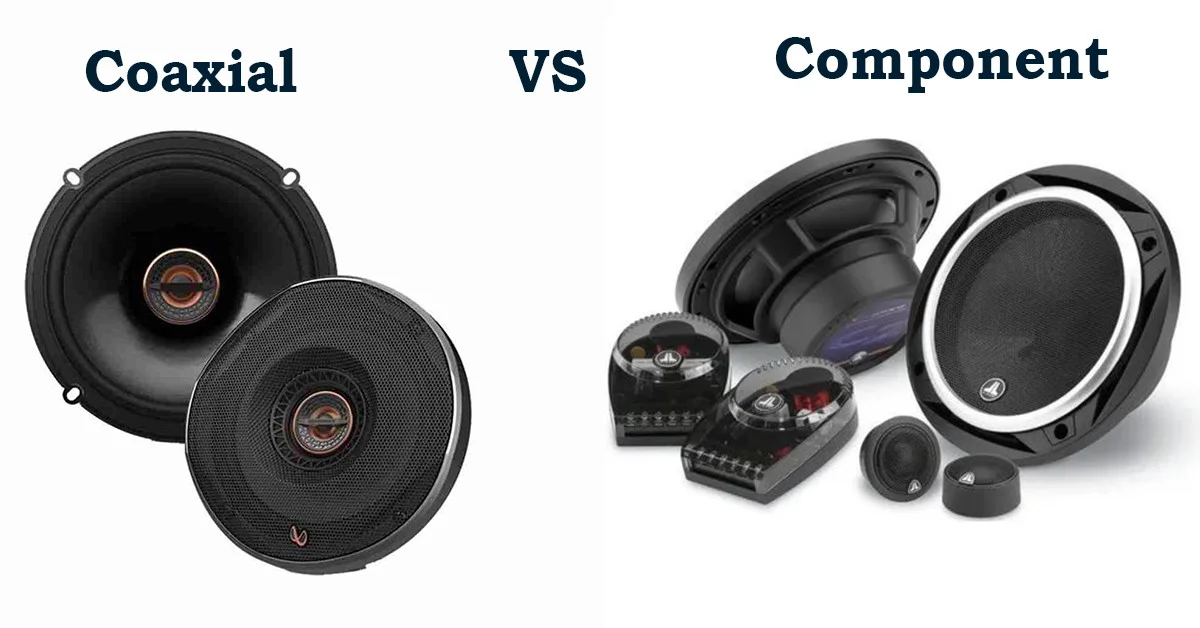
The fundamental benefit of component speakers lies in their ability to reproduce sound with exceptional clarity and detail. By dedicating individual drivers to specific frequency ranges, each component can be optimized for its task. Woofers can be designed to produce tight, articulate bass without sacrificing mid-range presence. Tweeters can deliver sparkling highs with exquisite detail, allowing you to hear nuances in instruments and vocals that are often lost in less sophisticated systems. The mid-range drivers, when present, ensure that vocals and lead instruments sound natural and present, free from the muddiness that can plague full-range speakers. This specialization prevents the drivers from working against each other, minimizing distortion and phase issues that can degrade sound quality.
Superior Soundstage and Imaging
A well-designed component speaker system, particularly when properly installed, can create a remarkably realistic soundstage and precise imaging. The soundstage refers to the perceived width and depth of the audio, making it sound as if the instruments are spread out before you in a three-dimensional space. Imaging refers to the ability of the system to pinpoint the exact location of individual instruments or vocalists within that soundstage. This is largely achieved through the directional nature of tweeters and mid-range drivers, combined with the precise tuning of the crossover network. When component speakers are carefully positioned, the sound waves they produce can converge in a way that tricks your brain into perceiving a vast and detailed sonic environment, making the listening experience far more immersive. This is especially noticeable in car audio, where the limited space can be a challenge to overcome, and the precise placement of component speakers is crucial for creating a convincing soundstage.
Greater Control and Customization
Component speaker systems offer a level of control and customization that is simply not possible with integrated speakers. The separate crossover networks allow for fine-tuning of the frequency balance. This can be invaluable for adapting the sound to the specific acoustics of your car or room, or for tailoring it to your personal preferences. Some high-end systems even offer features like adjustable tweeter output levels or selectable crossover slopes, allowing for even greater precision in achieving the perfect sound. This level of customization empowers the listener to become an active participant in shaping their audio experience, moving beyond a passive reception of sound to a more engaging and personalized journey.
Longevity and Upgradeability
While the initial investment in component speakers might be higher, they often represent a more enduring and upgradeable audio solution. The individual drivers are typically built with higher-quality materials and more robust construction, leading to greater longevity. Furthermore, the modular nature of component systems means that you can upgrade individual components over time. For instance, you might upgrade your tweeters to a newer, more advanced model, or replace your woofers with larger or more powerful ones, without needing to replace the entire system. This can be a significant advantage for those who are passionate about audio and enjoy the process of continuous improvement.
The Investment Aspect: Why Component Speakers are a Smart Choice
Considering the cost of a good component speaker system, it’s natural to think about the financial implications. However, when viewed through the lens of value, longevity, and the potential for enhanced enjoyment, component speakers can be a surprisingly wise investment, especially within the broader context of technology and personal finance.
A Long-Term Value Proposition
Unlike many consumer electronics that depreciate rapidly or become obsolete quickly, a well-chosen and properly installed component speaker system can provide years, even decades, of exceptional sound. The focus on quality materials and engineering means these components are built to last. This longevity contrasts sharply with cheaper, integrated speaker solutions that may degrade in performance over time or fail prematurely. The cost per year of enjoyment for a high-quality component system can therefore be significantly lower than repeatedly replacing inferior alternatives. This aligns with a personal finance principle of investing in quality over quantity for long-term savings and satisfaction.
Enhancing Resale Value
If you’re considering your vehicle as an asset, upgrading the audio system with high-quality component speakers can actually enhance its resale value. Many car buyers are actively seeking vehicles with premium audio systems, and a well-integrated component setup can be a significant selling point. While it might not recoup the full cost of the upgrade, it can certainly command a higher price than a vehicle with a stock, uninspired audio system. This is a tangible example of how a technology investment can positively impact the financial aspect of another asset.
The Joy of Ownership: An Intangible Return on Investment
Beyond the quantifiable financial benefits, there’s the undeniable return on investment in sheer enjoyment. For music lovers, movie buffs, or anyone who spends significant time in their car, the ability to experience audio with clarity, depth, and immersion is a significant quality-of-life improvement. The joy derived from rediscovering favorite music with new detail, or feeling the impact of cinematic sound effects, is an intangible but profound benefit. This aligns with a broader understanding of personal finance that includes investing in experiences and enjoyment that enhance overall well-being. A superior audio system can transform mundane commutes into engaging listening sessions and make home entertainment truly captivating.

Strategic Considerations in Technology Adoption
From a broader tech perspective, choosing component speakers represents a deliberate and informed approach to technology adoption. Instead of simply accepting the default or opting for the most hyped gadget, it’s about understanding the underlying technology and making a choice that prioritizes performance and longevity. This conscious decision-making process can be applied to various tech purchases, from choosing the right AI tools for productivity to selecting software that offers genuine value. Component speakers are a prime example of how investing in a well-engineered, specialized technology can yield superior and lasting results, mirroring the principles of smart technology integration in both personal and professional life.
In conclusion, component speakers are far more than just another type of loudspeaker. They are a testament to the power of specialization and engineering excellence in the pursuit of audio fidelity. By understanding the distinct roles of their individual drivers and the crucial function of the crossover network, consumers can appreciate the significant leap in sound quality they offer. Whether driven by a passion for music, a desire for an immersive cinematic experience, or a strategic approach to technology and personal finance, investing in a component speaker system is a decision that promises not just better sound, but a more profound and enduring audio journey.
aViewFromTheCave is a participant in the Amazon Services LLC Associates Program, an affiliate advertising program designed to provide a means for sites to earn advertising fees by advertising and linking to Amazon.com. Amazon, the Amazon logo, AmazonSupply, and the AmazonSupply logo are trademarks of Amazon.com, Inc. or its affiliates. As an Amazon Associate we earn affiliate commissions from qualifying purchases.