
For the first time in over a decade, the humble Certificate of Deposit (CD) has reclaimed its status as a cornerstone of the prudent investor’s portfolio. After years of near-zero interest rates that left savers with negligible returns, a series of aggressive interest rate hikes by the Federal Reserve has transformed the fixed-income landscape. Today, savvy investors are asking: “What are CD rates right now, and how can I capitalize on them before the cycle shifts?”
Understanding the current state of CD rates requires more than just looking at a single percentage. It involves analyzing the broader economic climate, understanding the mechanics of term-based savings, and strategically positioning your capital to balance liquidity with high-yield returns. This article explores the current environment of the “Money” niche, providing an in-depth analysis of where rates stand, why they are there, and how you can optimize your savings strategy.

Understanding the Current CD Rate Landscape
As of mid-2024, CD rates are hovering at levels not seen since the mid-2000s. While the exact Annual Percentage Yield (APY) varies by institution, top-tier online banks and credit unions are offering rates ranging from 4.50% to well over 5.00% on various terms. This is a dramatic shift from the 0.50% averages seen just a few years ago.
The Impact of Federal Reserve Policy
The primary driver of “what CD rates are right now” is the Federal Open Market Committee (FOMC). To combat post-pandemic inflation, the Federal Reserve raised the federal funds rate significantly. Because banks use these benchmark rates to determine how much they pay for deposits, consumer CD rates followed suit.
However, the market is currently in a state of “plateau.” The Fed has signaled a pause in rate hikes, leading many analysts to believe we are at the “peak” of the cycle. For an investor, this means that the window to lock in these high yields might be closing. If the Fed begins cutting rates later this year or next to stimulate economic growth, new CD offers will likely see a downward trend.
The Phenomenon of the Inverted Yield Curve in CDs
Typically, in a healthy economy, longer-term CDs (like 5-year terms) offer higher rates than short-term CDs (like 6-month or 1-year terms) to compensate the saver for locking their money away for longer. Currently, we are seeing a “yield curve inversion.”
Right now, 6-month and 1-year CDs often offer higher APYs than 5-year CDs. This happens because banks expect interest rates to fall in the long run. They are willing to pay a premium for your cash now, but they don’t want to commit to paying 5% for the next five years if they believe market rates will be 3% by 2026. This creates a unique opportunity for savers to earn maximum returns on shorter durations.
Top CD Options and Where to Find the Best Yields
When searching for the best CD rates right now, where you look is just as important as the term you choose. The disparity between the “Big Banks” and online-only institutions has never been wider.
High-Yield Online Banks vs. Traditional Institutions
If you walk into a traditional “brick-and-mortar” national bank, you might find CD rates as low as 0.01% to 1.50%. These institutions have massive “sticky” deposit bases and don’t feel the need to compete aggressively for your money.
Conversely, online banks—such as Ally, Marcus by Goldman Sachs, and Synchrony—along with various credit unions, are the leaders in the current market. Without the overhead of physical branches, these entities pass the savings to the consumer. Currently, the most competitive rates are found in the 6-month to 18-month range at these digital-first institutions, frequently exceeding the 5% APY mark.
Navigating Specialty CD Varieties
Beyond the standard fixed-term CD, several specialty products have gained popularity in this high-rate environment:
- No-Penalty CDs: These are particularly attractive right now. They allow you to lock in a high rate but offer the flexibility to withdraw your full balance (including interest earned) before the term ends without paying a fee. This is an excellent hedge against the possibility that rates might rise even further.
- Bump-Up CDs: If you are worried about “rate FOMO” (fear of missing out), a bump-up CD allows you to request a one-time increase in your rate if the bank’s standard offers go up during your term.
- Brokered CDs: Available through brokerage firms like Vanguard, Fidelity, or Charles Schwab, these CDs often offer slightly higher rates than bank CDs and can be traded on the secondary market, though they come with different liquidity risks.
Strategies to Maximize Your Returns
Simply picking the highest rate available today might not be the most effective long-term strategy. To truly master the “Money” niche, one must apply strategic asset allocation to their cash reserves.
The Power of the CD Ladder
One of the most effective strategies in a peak-rate environment is “laddering.” A CD ladder involves splitting your total investment into equal parts and placing them into CDs with different maturity dates. For example, if you have $50,000, you might put $10,000 each into a 1-year, 2-year, 3-year, 4-year, and 5-year CD.
This strategy provides two main benefits:
- Liquidity: A portion of your money becomes available every year.
- Rate Averaging: If rates go up, you can reinvest your maturing 1-year CD into a new, higher-paying 5-year CD. If rates go down, you have already locked in high rates for the portions of your ladder that haven’t matured yet.
Calculating Your Real Rate of Return
When looking at a 5% CD rate, it is essential to consider the “real” rate of return, which is the APY minus the rate of inflation. If inflation is running at 3%, a 5% CD gives you a real return of 2%. In the “Money” niche, the goal is always to maintain purchasing power.
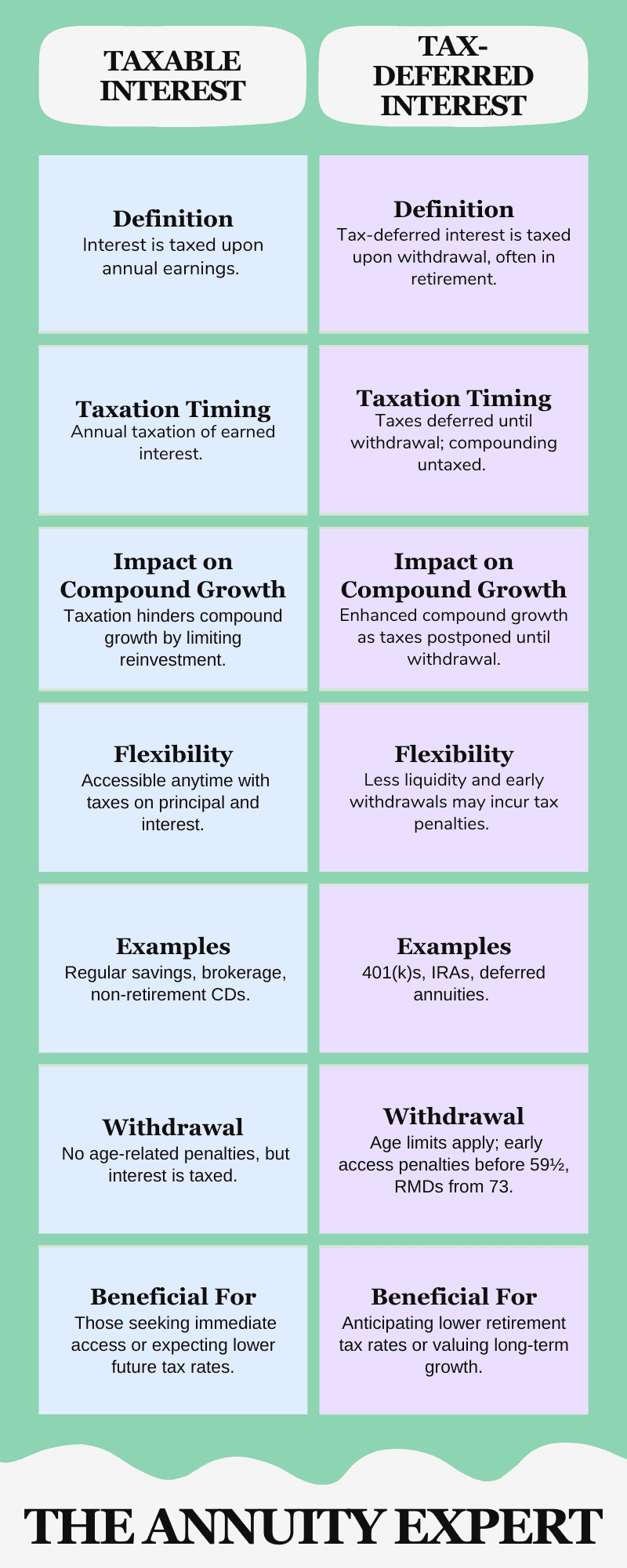
Additionally, remember that interest earned on CDs is taxable as ordinary income. For those in high tax brackets, it may be worth comparing the after-tax yield of a CD against tax-advantaged vehicles like Municipal Bonds or Treasury Bills, which are currently offering competitive yields with the added benefit of being exempt from state and local taxes.
Risks and Considerations in a Changing Market
While CDs are among the safest investments available, they are not without risks—specifically liquidity risk and opportunity cost.
Early Withdrawal Penalties (EWP)
The most significant “gotcha” with CDs is the early withdrawal penalty. Unlike a High-Yield Savings Account (HYSA), where you can move money freely, a CD is a contract. If you need your money before the maturity date, banks will often charge a penalty equal to several months of interest—sometimes even eating into your principal. Before committing, ensure your emergency fund is fully funded in a liquid account so you aren’t forced to break a CD prematurely.
CDs vs. High-Yield Savings Accounts (HYSAs)
A common question in personal finance right now is whether to choose a CD or an HYSA. The answer depends on your outlook on interest rates.
- HYSA: Offers flexibility and currently high rates, but the rate is variable. If the Fed cuts rates tomorrow, your HYSA rate will drop immediately.
- CD: Offers less flexibility but guarantees your rate for the duration of the term.
If you believe rates have peaked, the CD is the superior choice because it “locks in” today’s high yield for the future. If you believe rates will continue to climb, keeping money in an HYSA allows you to pivot to a higher-rate CD later.
FDIC and NCUA Insurance: The Safety Net
The primary reason CDs are a staple of the “Money” niche is their safety. As long as you stay within an FDIC-insured bank or an NCUA-insured credit union, your deposits are protected up to $250,000 per depositor, per institution. In a volatile market where stocks and crypto can swing wildly, the peace of mind offered by a guaranteed return of principal is invaluable.
Conclusion: Seizing the Opportunity
The current CD rate environment represents a rare “sweet spot” for savers. With rates at multi-decade highs and the potential for a downward shift in the coming year, the time to evaluate your cash positions is now.
By understanding the interplay between Federal Reserve policy and bank competition, and by employing strategies like laddering and choosing online-only institutions, you can ensure your money is working as hard as possible. Whether you are saving for a down payment, padding your retirement reserves, or simply looking for a safe harbor for your emergency fund, CDs currently offer one of the most compelling risk-adjusted returns in the financial market. Keep a close eye on the 1-year and 18-month terms, as these currently represent the peak of the yield curve, and don’t be afraid to lock in these rates while they last.
aViewFromTheCave is a participant in the Amazon Services LLC Associates Program, an affiliate advertising program designed to provide a means for sites to earn advertising fees by advertising and linking to Amazon.com. Amazon, the Amazon logo, AmazonSupply, and the AmazonSupply logo are trademarks of Amazon.com, Inc. or its affiliates. As an Amazon Associate we earn affiliate commissions from qualifying purchases.