
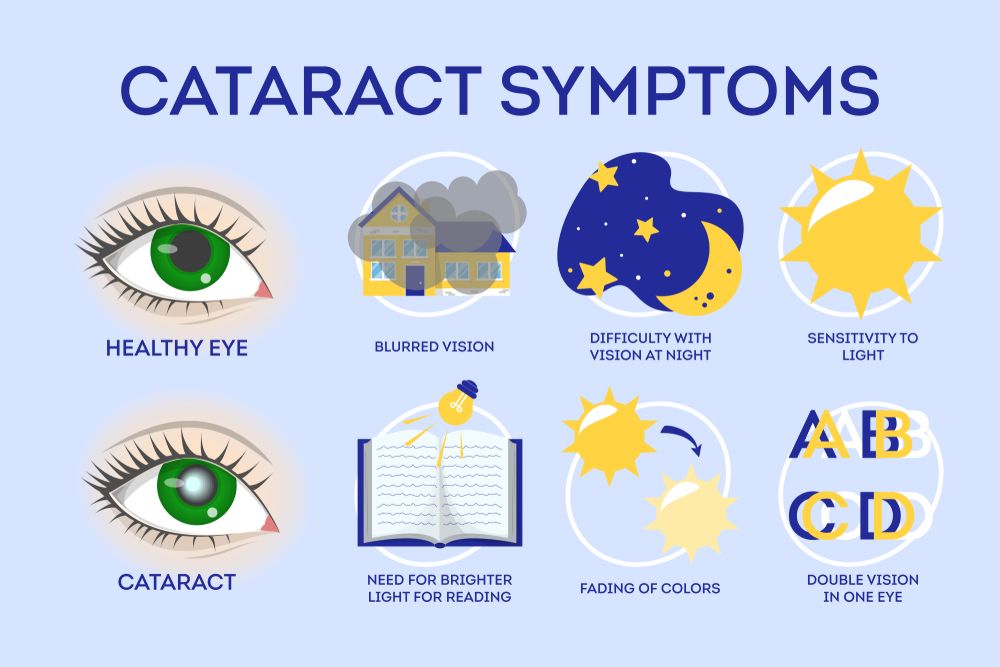
The traditional approach to identifying cataract symptoms has long been reactive. For decades, patients waited for the tell-tale signs—cloudy vision, sensitivity to glare, or fading colors—before seeking professional intervention. However, we are currently witnessing a paradigm shift. In the intersection of healthcare and information technology, the way we define, detect, and monitor cataract symptoms is being revolutionized by Artificial Intelligence (AI), sophisticated software algorithms, and cutting-edge hardware.
As we move deeper into the 2020s, the “wait and see” method is being replaced by “detect and analyze.” This article explores how technology is transforming the diagnostic landscape, moving cataract identification from subjective patient reports to objective, data-driven insights.

The Digital Revolution in Diagnostic Ophthalmology
The first point of contact for many patients experiencing vision changes is no longer just the doctor’s office; it is increasingly a digital interface. The integration of software into the early detection phase is changing the very definition of what it means to monitor eye health.
AI-Powered Screening Algorithms
Artificial Intelligence, specifically deep learning and convolutional neural networks (CNNs), is now at the forefront of identifying cataract symptoms. Traditionally, a clinician would look for lens opacification using a slit-lamp. Today, AI software can analyze thousands of high-resolution ocular images in seconds, identifying minute changes in lens density that the human eye might miss. These algorithms are trained on massive datasets, allowing them to categorize the severity of a cataract based on subtle visual data points. This tech doesn’t just “see” the blur; it quantifies it, providing a digital score that helps practitioners track progression with mathematical precision.
Smartphone Apps and Home-Based Monitoring
The ubiquity of smartphones has birthed a new era of “pocket diagnostics.” Software developers are creating apps that utilize the high-definition cameras and sophisticated light sensors in modern phones to conduct basic vision screenings. While not a replacement for a surgeon, these tools use software to track “contrast sensitivity”—often the first symptom of a cataract to degrade. By regularly testing a user’s ability to distinguish objects from their background under varying digital light conditions, these apps can alert users to a decline in visual quality long before they notice a “cloud” in their vision.
Advanced Imaging Technologies: Seeing the Unseen
While software provides the “brain” for detection, new hardware provides the “eyes.” The hardware used to identify cataract symptoms has evolved from simple magnification to complex light-physics platforms.
Optical Coherence Tomography (OCT) Innovations
Originally used primarily for retinal health, OCT technology has been adapted to provide high-resolution, cross-sectional views of the anterior segment of the eye. This allows tech-forward clinics to map the internal structure of the lens. When a patient complains of “halos” or “glare,” OCT hardware can visualize the specific protein aggregations within the lens causing the light scattering. This moves the symptom from a subjective complaint (“I see rings around lights”) to a visible, digital map of the lens’s internal topography.
Digital Slit-Lamp Photography and Cloud Integration
Modern slit-lamps are no longer just analog microscopes. They are now integrated digital imaging stations. These devices capture high-dynamic-range (HDR) images of the lens, which are then instantly uploaded to cloud-based Electronic Health Records (EHR). The tech trend here is “longitudinal data tracking.” By comparing digital images taken over several years using image-subtraction software, clinicians can see the exact millimetric growth of a cataract. This provides a level of symptom tracking that was physically impossible in the analog era.
Wearable Tech and Smart Sensors for Early Warning
The frontier of cataract detection is moving toward “passive monitoring” through wearable technology. This represents a significant shift in how we approach the “symptoms” of aging eyes.
The Rise of Smart Intraocular Lenses (IOLs)
While traditional IOLs are used to replace a cataractous lens, the next generation of “Smart IOLs” is being developed with embedded sensors. These micro-devices can monitor intraocular pressure and fluid changes. However, even before surgery, research is being conducted into smart contact lenses equipped with sensors that can detect changes in the chemical composition of the eye’s aqueous humor, which may correlate with early cataract formation. This is “Biotech” at its finest—using hardware to detect physiological symptoms before they manifest as visual impairment.
Augmented Reality (AR) and Vision Simulation Tools
One of the challenges in diagnosing cataracts is the patient’s inability to describe their symptoms accurately. Tech companies are solving this with AR and VR (Virtual Reality). By using “Vision Simulators,” doctors can show a patient a digital rendering of what their current lens opacification looks like compared to a clear lens. Conversely, patients can use AR interfaces to “point” to where they see distortions, which the software then translates into a diagnostic map. This tech bridges the communication gap, turning a vague symptom into a collaborative digital model.
The Role of Telemedicine in Identifying Progressive Vision Loss
The “Tech-Symptom” pipeline is most visible in the rise of tele-ophthalmology. As rural and underserved populations gain better internet access, the hardware/software stack is filling the gap in specialist care.
Remote Triage and Virtual Consultations
Software platforms designed for tele-health now include specialized modules for eye care. Patients can upload photos taken with specialized macro-lens attachments for smartphones. These images are processed through automated triage software that flags “urgent” symptoms of fast-developing cataracts (such as those caused by trauma or medication) versus slower, age-related progressions. This ensures that the technology prioritizes those most at risk, optimizing the workflow for surgical centers.
Data Security in Digital Eye Care
As we move toward digital symptom tracking, the “Tech” category must address digital security. Identifying cataract symptoms involves the collection of sensitive biometric data. The implementation of blockchain for secure medical data transfer and end-to-end encryption in diagnostic apps is becoming a standard. For the tech-savvy patient, the “symptom” is now a data point that must be protected with the same rigor as financial information.
Future Horizons: Predictive Analytics and Personalized Eye Health
The future of identifying cataract symptoms lies in the transition from “what is happening” to “what will happen.”
Big Data and Predictive Modeling
By aggregating anonymized data from millions of digital eye exams, tech companies are building predictive models. In the near future, a 40-year-old might have their eye scanned, and an AI model—considering their digital health history, UV exposure data from their smartwatch, and current lens density—could predict exactly when cataract symptoms are likely to become lifestyle-limiting. This moves the “symptom” into the realm of the preventable or, at the very least, the perfectly planned for.

The Integration of IoT (Internet of Things)
We are approaching an era where our environment adapts to our symptoms. Smart home technology can already adjust lighting levels based on time of day. Future integrations could see “smart lighting” systems that sync with a user’s diagnostic eye-health data. If the software detects a decrease in contrast sensitivity (a key cataract symptom), the home’s IoT network could automatically increase lumens and shift color temperatures to compensate, mitigating the impact of the symptom through environmental technology.
In conclusion, the question “what are cataract symptoms?” is no longer answered solely by a list of physical ailments. In the modern tech landscape, the answer involves AI-driven analysis, digital imaging, wearable sensors, and predictive software. Technology hasn’t just improved the way we treat cataracts; it has fundamentally re-engineered the way we identify, monitor, and understand the symptoms of one of the world’s most common vision conditions. As these tools become more accessible and powerful, the goal of “perfect vision for life” moves from a digital dream to a technological reality.
aViewFromTheCave is a participant in the Amazon Services LLC Associates Program, an affiliate advertising program designed to provide a means for sites to earn advertising fees by advertising and linking to Amazon.com. Amazon, the Amazon logo, AmazonSupply, and the AmazonSupply logo are trademarks of Amazon.com, Inc. or its affiliates. As an Amazon Associate we earn affiliate commissions from qualifying purchases.