
Purchasing a vehicle is often the second-largest financial commitment a person makes, surpassed only by the purchase of a home. Central to this transaction is the car loan rate—a percentage that dictates the cost of borrowing money to bridge the gap between your savings and the vehicle’s sticker price. Understanding car loan rates is not merely about finding a monthly payment that fits your budget; it is about comprehending the mechanics of interest, the influence of the broader economy, and the personal financial metrics that lenders use to evaluate your risk. In an era of fluctuating interest rates and evolving lending standards, being an informed consumer is the most effective way to save thousands of dollars over the life of a loan.
Understanding the Fundamentals of Car Loan Rates
At its core, a car loan rate represents the price of “renting” capital from a financial institution. However, many consumers conflate two distinct terms: the interest rate and the Annual Percentage Rate (APR). To master the “Money” aspect of car buying, one must distinguish between these two figures.
Interest Rate vs. APR: Knowing the Difference
The interest rate is the base percentage charged on the principal amount of your loan. It is the cost of the money itself. The APR, however, is a more comprehensive figure. It includes the interest rate plus any additional fees or costs associated with the loan, such as origination fees, documentation fees, or prepaid interest. When comparing offers from different lenders, the APR is the most accurate metric for comparison because it reflects the true total cost of the credit.
How Amortization Works in Auto Loans
Most car loans are “simple interest” loans that follow an amortization schedule. This means that at the beginning of your loan term, a larger portion of your monthly payment goes toward the interest, while a smaller portion goes toward the principal. As the balance decreases, the amount of interest charged each month also drops, allowing more of your payment to chip away at the principal. Understanding this structure reveals why making extra payments early in the loan term can drastically reduce the total interest paid over time.
Key Factors That Influence Your Personal Interest Rate
While national averages provide a benchmark, your specific car loan rate is a highly personalized figure. Lenders use a risk-based pricing model to determine what rate to offer you. If you are perceived as a low-risk borrower, you are rewarded with a lower rate; if you are high-risk, you are charged more to compensate the lender for the possibility of default.
The Impact of Your Credit Score
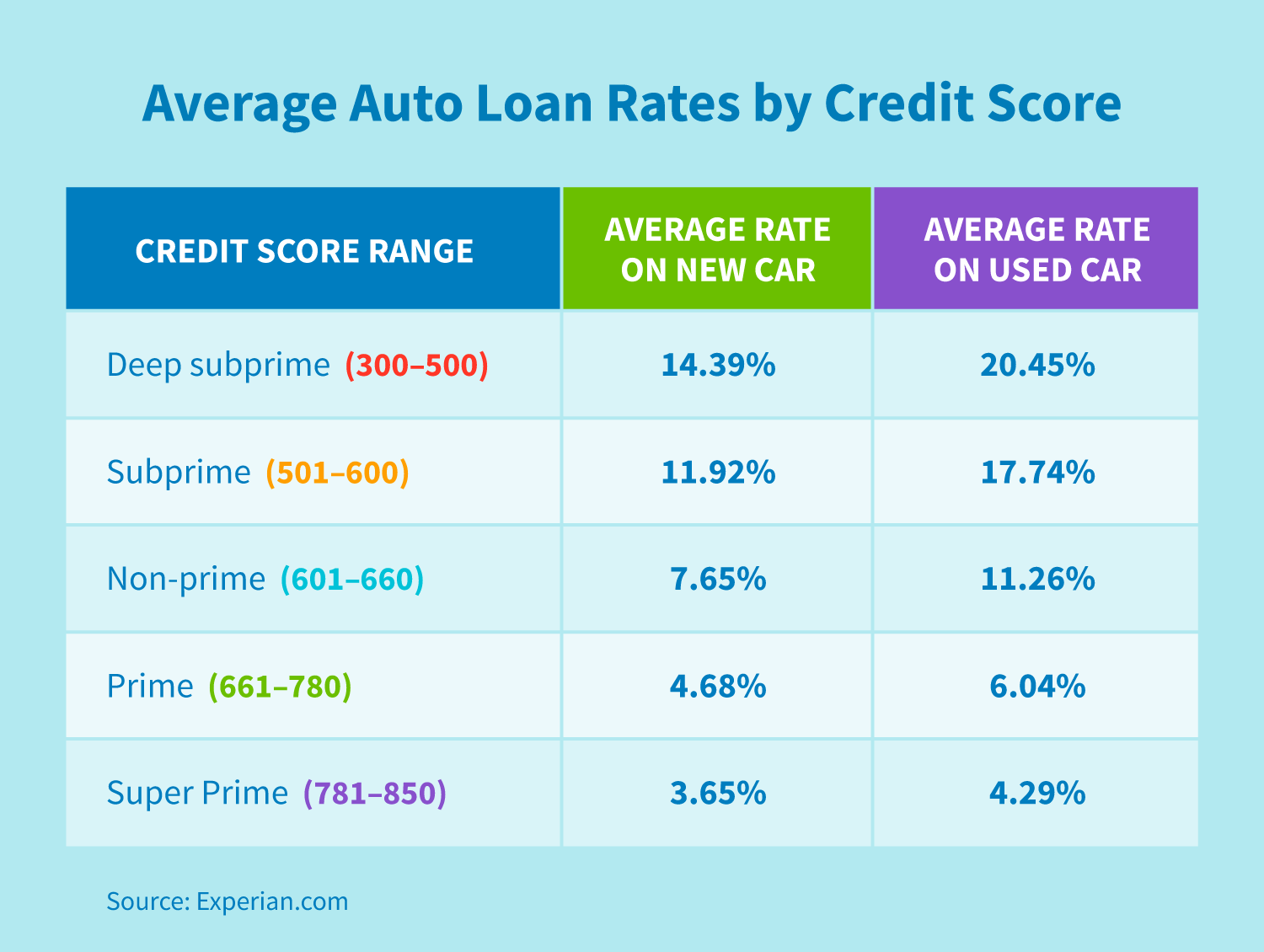
Your credit score is the single most significant factor in determining your car loan rate. Lenders typically categorize borrowers into tiers:
- Super-prime (780–850): These borrowers receive the lowest “advertised” rates.
- Prime (660–779): These borrowers still receive competitive rates and have a wide choice of lenders.
- Subprime (501–600) and Deep Subprime (300–500): Borrowers in these categories face significantly higher rates and may be limited to specialized “non-prime” lenders.
Even a 50-point difference in a credit score can result in a rate difference of several percentage points, which could translate into thousands of dollars in interest over a five-year loan.
Loan Term Length and Its Effect on Rates
The duration of the loan—often referred to as the “term”—also dictates the rate. Traditionally, shorter terms (36 to 48 months) carry lower interest rates than longer terms (72 to 84 months). From a lender’s perspective, a longer term increases the likelihood of default and extends the period during which the collateral (the car) depreciates. While a longer term offers lower monthly payments, it almost always results in a higher total interest cost and increases the risk of being “underwater”—owing more on the car than it is worth.
New vs. Used Vehicles: The Rate Gap
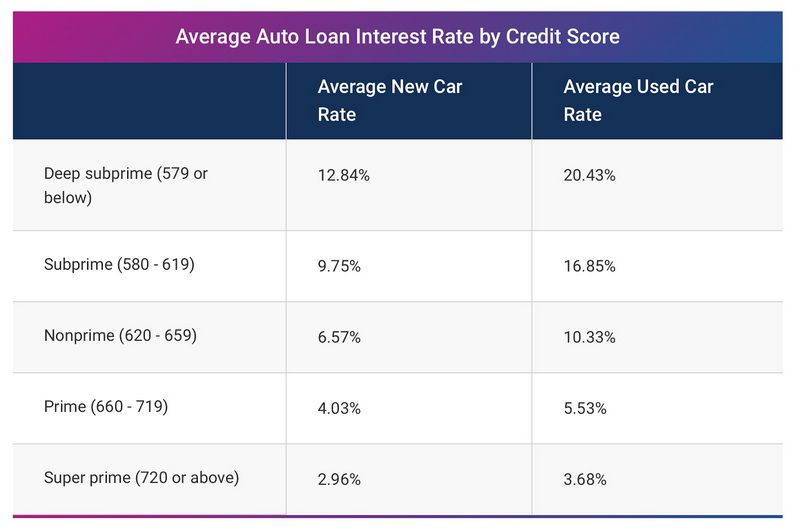
Generally, new car loans carry lower interest rates than used car loans. This is because new cars have a higher resale value and are easier for a lender to value and liquidate if the borrower defaults. Used cars carry more uncertainty regarding their mechanical longevity and actual market value, leading lenders to charge a premium for the increased risk. However, some “Certified Pre-Owned” (CPO) programs offered by manufacturers may provide subsidized rates that rival those of new vehicles.
Navigating the Current Economic Landscape of Auto Finance
Car loan rates do not exist in a vacuum; they are heavily influenced by macroeconomic factors and the policies of the Federal Reserve. When the central bank adjusts the federal funds rate to combat inflation or stimulate the economy, auto lenders adjust their prime rates accordingly.
The Role of the Federal Reserve and Inflation
The Federal Reserve sets the baseline for the cost of borrowing across the United States. When the Fed raises rates to curb inflation, the “cost of funds” for banks increases. These banks then pass those costs on to consumers in the form of higher APRs on car loans. For the savvy investor or personal finance enthusiast, monitoring the Fed’s commentary can provide a “heads up” on whether to buy a car now or wait for a potential cooling of the rate environment.
Why Dealership Financing Isn’t Always the Best Deal
When you finance through a dealership, you are often participating in “indirect lending.” The dealer sends your application to several banks and returns with an offer. However, dealerships are often allowed to “mark up” the interest rate—adding 1% or 2% to the rate the bank actually approved—as a commission for facilitating the loan. This is why it is essential to have a “Money” strategy that includes checking with independent sources before stepping onto the lot.
Strategies to Secure the Lowest Possible Rate
Securing a favorable car loan rate requires preparation and a proactive approach. It is a negotiation where your strongest leverage is your financial health and your willingness to walk away.
The Power of a Substantial Down Payment
A down payment reduces the “Loan-to-Value” (LTV) ratio. Lenders are much more comfortable lending 80% of a car’s value than 100% or more (which happens when people roll old debt into a new loan). A larger down payment can move you into a lower risk bracket, potentially unlocking a lower interest rate and ensuring you start the loan with positive equity in the asset.
Shopping Around: Credit Unions, Online Lenders, and Big Banks
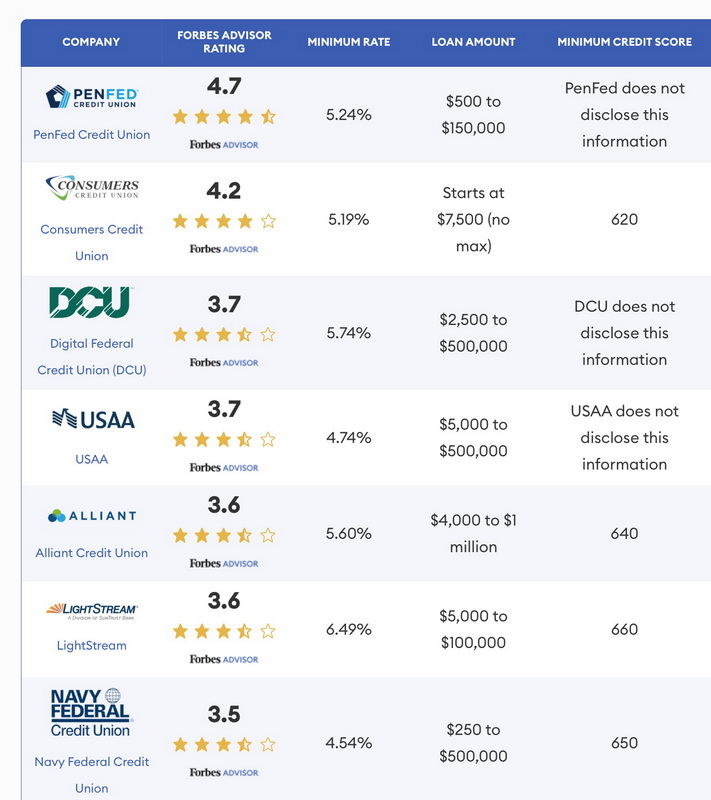
The market for auto loans is highly competitive. Credit unions, in particular, are often able to offer rates that are 1% to 1.5% lower than commercial banks because they are member-owned non-profits. Online lenders have also disrupted the space by offering streamlined applications and highly competitive rates due to lower overhead costs. Personal finance experts recommend getting at least three different quotes to ensure you are seeing the full spectrum of the market.
The Benefits of Loan Pre-approval
Obtaining a pre-approval from a bank or credit union before visiting a dealership is a game-changer. A pre-approval gives you a “floor” for your interest rate. If the dealership wants to provide the financing, they must beat your pre-approved rate. This shifts the dynamic from the dealer telling you what you qualify for to the dealer competing for your business.
Beyond the Rate: Evaluating the Total Cost of Ownership
While the interest rate is a critical metric, it is only one piece of the personal finance puzzle. A low rate on a bad loan is still a bad financial move. One must look at the loan holistically to ensure it aligns with long-term wealth-building goals.
Avoiding “Predatory” Lending and Hidden Fees
In the world of car finance, certain practices can erode your net worth even if the interest rate seems manageable. Be wary of “add-ons” like extended warranties, gap insurance, or VIN etching that are often folded into the loan amount. While some of these products have value, they are often overpriced when purchased through the finance office. Furthermore, ensure your loan has no “pre-payment penalties,” allowing you the flexibility to pay off the debt early and save on interest.
When Does Refinancing Make Sense?
Car loan rates are not permanent. If you took out a loan when your credit score was lower, or if the overall market rates have dropped significantly, refinancing your auto loan can be a brilliant financial move. By moving your remaining balance to a new lender at a lower rate, you can reduce your monthly payment or shorten your term, freeing up cash flow for other investments or savings goals.
In conclusion, understanding car loan rates is an exercise in financial literacy. By recognizing the difference between APR and interest, managing your credit score, and shopping around for the best terms, you transform a potentially stressful debt obligation into a controlled and strategic financial decision. In the realm of personal finance, the goal is always to minimize the cost of liabilities so you can maximize the growth of your assets. Mastering the car loan rate is a vital step in that journey.
aViewFromTheCave is a participant in the Amazon Services LLC Associates Program, an affiliate advertising program designed to provide a means for sites to earn advertising fees by advertising and linking to Amazon.com. Amazon, the Amazon logo, AmazonSupply, and the AmazonSupply logo are trademarks of Amazon.com, Inc. or its affiliates. As an Amazon Associate we earn affiliate commissions from qualifying purchases.