
Navigating the landscape of auto financing has become increasingly complex in a shifting economic environment. For many consumers, the question of “what are car interest rates today” is not just a matter of curiosity, but a critical factor in determining the affordability of their next vehicle. Interest rates serve as the cost of borrowing money, and in the current financial climate, these rates are influenced by a convergence of Federal Reserve policies, inflationary pressures, and the individual credit profiles of borrowers. Understanding the nuances of these rates is essential for making an informed financial decision that aligns with long-term wealth management goals.
The Current Landscape of Car Interest Rates
As of mid-2024, car interest rates remain at historically elevated levels compared to the ultra-low rates seen during the previous decade. The primary driver of this shift has been the Federal Reserve’s aggressive stance on interest rate hikes intended to curb inflation. When the federal funds rate rises, the cost for banks to borrow money increases, a cost that is invariably passed down to the consumer in the form of higher Annual Percentage Rates (APR) on auto loans.
Average Rates for New vs. Used Vehicles
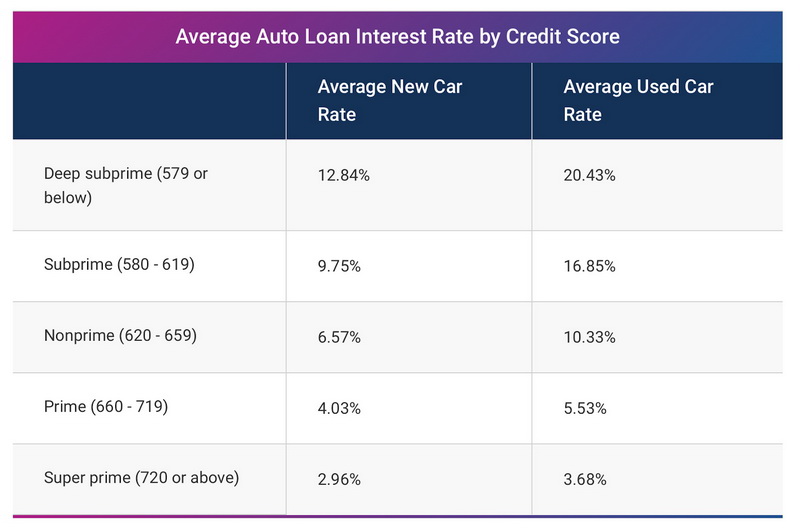
Current data suggests a significant disparity between rates for new and used vehicles. For borrowers with excellent credit (typically a FICO score of 750 or higher), interest rates for new cars generally hover between 5.5% and 7.5%. Conversely, used car rates for the same credit tier often start around 7% and can climb significantly higher.
The rationale for higher rates on used vehicles is rooted in risk management. Used cars are more difficult to value accurately, and they depreciate differently than new vehicles. Furthermore, the collateral—the car itself—carries more inherent risk of mechanical failure, which could lead to a borrower defaulting on the loan. For those in the prime or subprime categories, rates can range anywhere from 10% to over 20%, making the total cost of ownership substantially higher over the life of the loan.
The Role of the Federal Reserve and the Prime Rate
To understand where car interest rates are today, one must look at the “Prime Rate.” This is the interest rate that commercial banks charge their most creditworthy corporate customers. Most consumer loan products, including auto loans, are pegged to this rate. When the Federal Open Market Committee (FOMC) adjusts the target range for the federal funds rate, the Prime Rate moves in tandem. While there have been signals of a potential stabilization or “pivot” in central bank policy, the market remains in a “higher for longer” posture. This means that while rates may not be climbing as rapidly as they were in 2023, they are unlikely to return to the 2% or 3% range in the immediate future.
Key Factors Determining Your Personal Interest Rate
While national averages provide a benchmark, your personal interest rate is tailored to your unique financial profile. Lenders utilize sophisticated algorithms to assess the risk of lending to a specific individual, and several key variables dictate the final APR offered on a loan contract.
The Credit Score Threshold
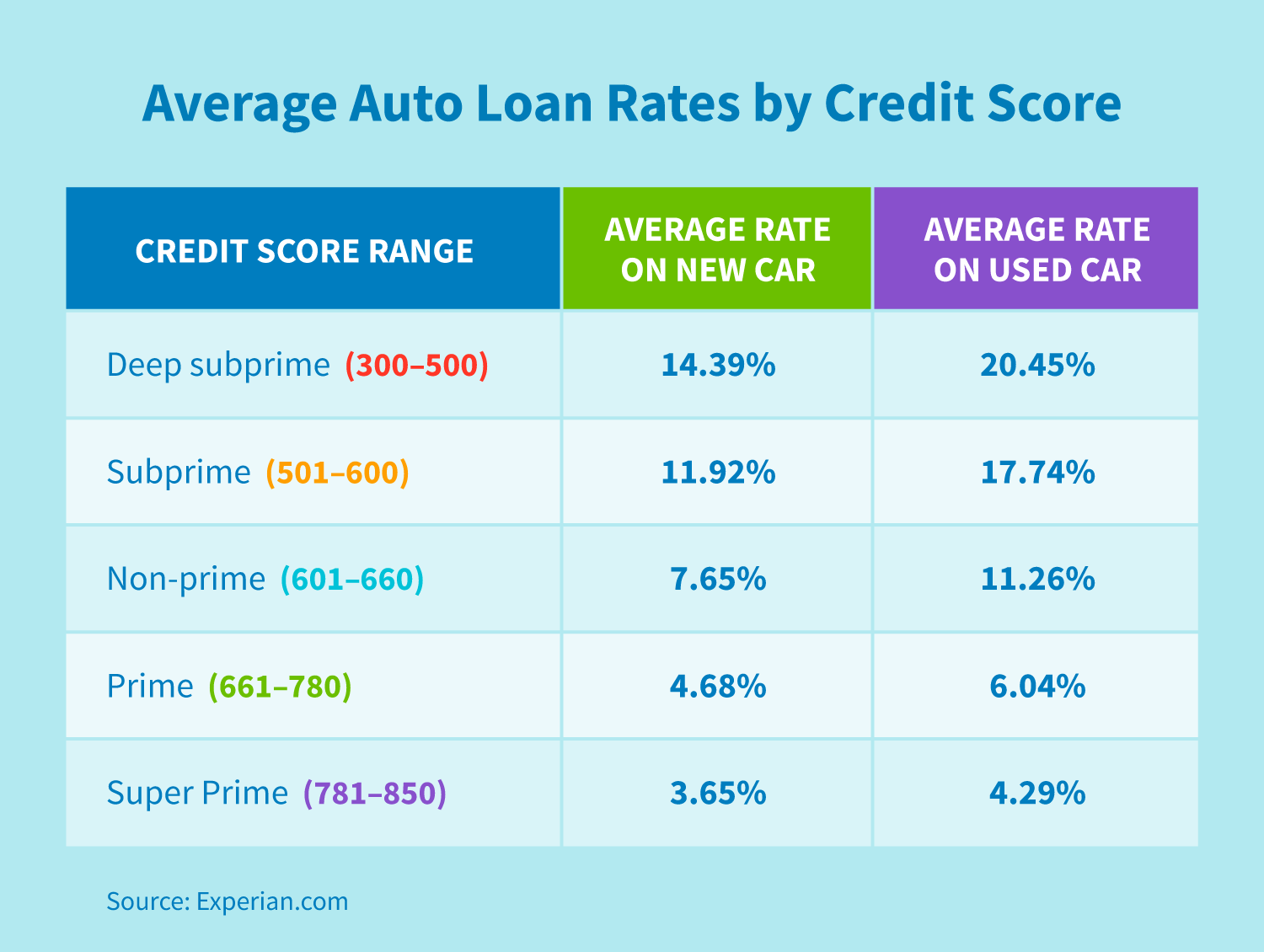
Your credit score is arguably the most influential factor in the rate-setting process. Lenders categorize borrowers into “tiers,” ranging from Super Prime to Deep Subprime.
-
Super Prime (781-850): These borrowers receive the lowest possible market rates and are often eligible for promotional 0% or 1.9% APR offers from manufacturer-backed financing.
-
Prime (661-780): Borrowers in this range still see competitive rates, though they may miss out on the most exclusive promotional deals.
-
Nonprime and Subprime (501-660): These tiers face significantly higher interest rates, as lenders hedge against the increased statistical likelihood of delinquency.
-
Deep Subprime (300-500): Rates in this category can exceed 20%, often requiring substantial down payments or co-signers to secure approval.
Debt-to-Income (DTI) Ratios and Financial Health
Beyond the credit score, lenders examine your Debt-to-Income (DTI) ratio. This figure represents the percentage of your gross monthly income that goes toward paying debts. A high DTI suggests that you may be overleveraged, even if your credit score is high. In today’s market, a DTI below 36% is generally considered healthy. If your DTI is too high, a lender might offer a higher interest rate to compensate for the perceived risk that a sudden financial shock could prevent you from making your car payments.
Loan Term Length and Depreciation
The length of the loan—often referred to as the “term”—also impacts the interest rate. In recent years, 72-month and 84-month loans have become increasingly common as consumers attempt to lower their monthly payments in the face of rising vehicle prices. However, longer terms almost always carry higher interest rates. From a personal finance perspective, long-term loans are risky because vehicles are depreciating assets. A borrower with an 84-month loan is at a high risk of becoming “upside down” or having “negative equity,” where the amount owed on the loan exceeds the actual cash value of the vehicle.
Navigating Lenders: Where to Find the Best Deals
Finding the most competitive car interest rates today requires shopping across different types of lending institutions. Not all lenders are created equal, and their rate structures vary based on their business models and cost of capital.
Traditional Banks vs. Credit Unions

Traditional commercial banks offer convenience, especially if you already have a checking or savings account with them. However, credit unions are often the champions of lower interest rates. Because credit unions are member-owned, not-for-profit organizations, they return their “profits” to members in the form of lower loan rates and higher savings yields. It is not uncommon to find a credit union offering a rate 1% to 2% lower than a major national bank for the same vehicle and borrower profile.
Online Lenders and Fintech Solutions
The rise of financial technology (Fintech) has introduced a new layer of competition to the auto loan market. Online lenders often have lower overhead costs than brick-and-mortar institutions, allowing them to pass those savings to the consumer. Many of these platforms provide “soft pull” pre-approvals, allowing you to see your estimated rate without impacting your credit score. This transparency is vital for consumers who want to compare multiple offers before stepping onto a dealership lot.
Captive Financing and Dealer Incentives
Captive finance companies are the lending arms of vehicle manufacturers (e.g., Ford Credit, Toyota Financial Services, GM Financial). These entities often provide the most aggressive interest rates, including the elusive 0% APR, but these deals are usually restricted to new vehicles and borrowers with top-tier credit. In a high-interest environment, manufacturers use these subsidized rates as a marketing tool to move inventory. If you are in the market for a new car, checking for “Manufacturer Incentives” should be your first step, as these rates are often far below the standard market average.
Strategies to Secure a Lower Rate in a High-Interest Market
While you cannot control the Federal Reserve, you can control several variables that influence the specific rate you are offered. Strategic financial planning can save you thousands of dollars in interest charges over the life of an auto loan.
The Power of a Substantial Down Payment
In the current market, “putting skin in the game” matters more than ever. A substantial down payment—ideally 20% for a new car and 10% for a used car—reduces the Loan-to-Value (LTV) ratio. A lower LTV reduces the lender’s risk; if you default, they are more likely to recoup their investment by selling the vehicle. Consequently, a lower LTV often triggers a lower interest rate offer. Furthermore, a larger down payment reduces the principal balance, which means you pay interest on a smaller amount of money.
Improving Your Credit Mix and Profile
If you are not in a rush to purchase, spending six months improving your credit profile can yield significant dividends. Paying down credit card balances to lower your credit utilization ratio is the fastest way to see a score increase. Additionally, ensuring that no late payments are recorded and disputing any inaccuracies on your credit report can move you from one credit tier to the next, potentially shaving 2% or 3% off your offered APR.
The Utility of Pre-Approval
Walking into a dealership with a pre-approval letter in hand is one of the strongest leverage points a consumer can have. It sets a “ceiling” on the interest rate. When the dealer’s finance office attempts to arrange a loan, they know they must beat your pre-approved rate to earn your business. This prevents “rate markup,” a common practice where dealerships add a percentage point or two to the lender’s wholesale rate as a commission for themselves.
The Long-Term Financial Impact of Your Interest Rate
The difference between a 4% interest rate and an 8% interest rate might seem negligible on a monthly basis, but the cumulative effect is profound. On a $40,000 loan with a 60-month term, the difference between these two rates is roughly $4,400 in total interest paid.
Total Cost of Ownership
When evaluating car interest rates today, it is vital to look at the Total Cost of Ownership (TCO). This includes the principal, interest, insurance, maintenance, and depreciation. A high interest rate increases the TCO and reduces the amount of capital you have available for other financial goals, such as retirement contributions or emergency savings.
Refinancing as a Contingency Plan
If you are forced to take a high interest rate today due to a lower credit score or immediate need for a vehicle, remember that you are not necessarily locked into that rate for the duration of the loan. As your credit score improves or if market rates eventually decline, refinancing your auto loan can be a savvy move. Many lenders allow you to refinance after six to twelve months of consistent, on-time payments. By replacing a high-interest loan with a lower-interest one, you can reduce your monthly obligation and the total interest paid over the remaining life of the vehicle.
In conclusion, understanding car interest rates today requires a blend of macroeconomic awareness and personal financial discipline. By monitoring the Federal Reserve’s direction, maximizing your credit score, and shopping across various lending institutions, you can secure a rate that minimizes your costs and protects your financial future. Whether you choose the path of credit union financing or take advantage of manufacturer incentives, being an informed borrower is your greatest asset in the modern automotive market.
aViewFromTheCave is a participant in the Amazon Services LLC Associates Program, an affiliate advertising program designed to provide a means for sites to earn advertising fees by advertising and linking to Amazon.com. Amazon, the Amazon logo, AmazonSupply, and the AmazonSupply logo are trademarks of Amazon.com, Inc. or its affiliates. As an Amazon Associate we earn affiliate commissions from qualifying purchases.