
The term “bulletproof” is a common misnomer, as no material is entirely impervious to all ballistic threats. More accurately described as “ballistic-resistant” or “bullet-resistant,” these specialized windows are engineered marvels designed to withstand the impact of projectiles, absorbing and dispersing their energy to prevent penetration. Far from being a single material, these windows are complex, multi-layered composites, leveraging advanced material science and manufacturing processes to deliver robust physical security. Understanding their composition involves delving into the specific polymers, glasses, and bonding agents that collaborate to create a formidable barrier against diverse threats.

The Engineering Behind Ballistic Resistance
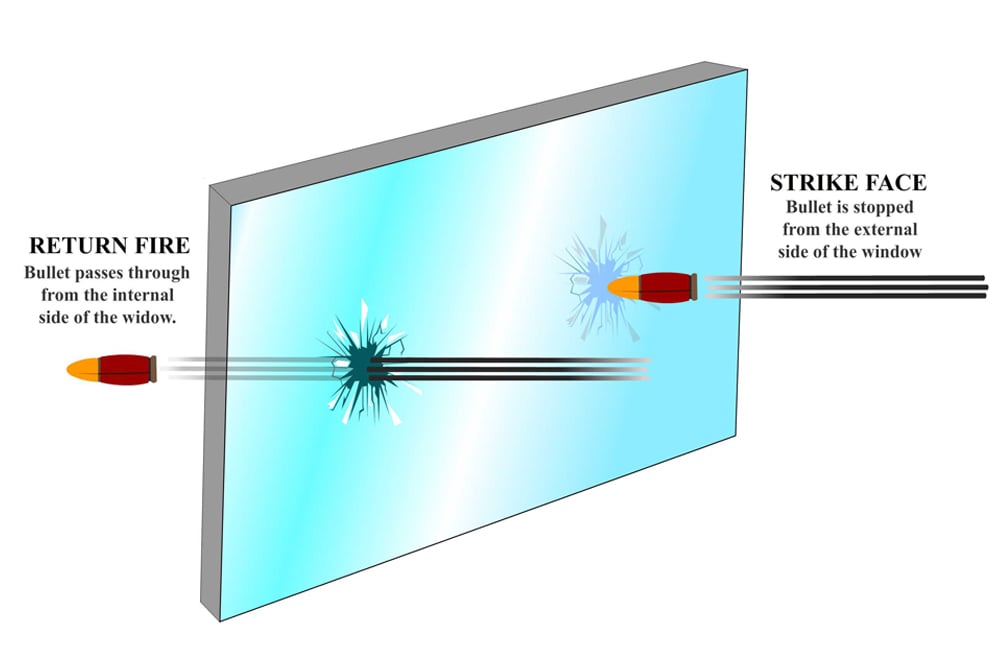
At its core, a ballistic-resistant window operates on a principle of energy absorption and delamination. When a projectile strikes, the outermost layer is designed to be tough, deforming the bullet and beginning to dissipate its kinetic energy. Subsequent layers then work in concert, progressively slowing down the projectile while absorbing its remaining energy through a process of controlled fracturing and deformation. This multi-layered approach ensures that the impact energy is spread across a wider area and over a longer duration, preventing any single point from experiencing the full force necessary for penetration. The effectiveness of this design hinges on the strategic combination of materials, each playing a critical role in the overall defense mechanism. The goal is not just to stop the bullet, but to do so without shattering into dangerous shards (a phenomenon known as spalling) on the protected side, which could injure occupants.
Key Materials and Their Layered Construction
The formidable strength of ballistic-resistant windows stems from their sophisticated layered construction, a sandwich of diverse materials meticulously chosen for their specific properties. The exact composition varies significantly based on the desired level of protection, ranging from handgun threats to high-velocity rifle rounds.
Polycarbonate
Polycarbonate is perhaps the most critical component in modern ballistic glazing. This transparent thermoplastic polymer is renowned for its exceptional impact strength, being many times stronger than glass and significantly lighter. It can absorb substantial kinetic energy without fracturing, deforming instead to dissipate force. Polycarbonate is often used as an inner layer, sometimes combined with a “spall shield” layer on the protected side, which is designed to catch any fragments or secondary projectiles that might break off from the outer layers during an impact, preventing injury to individuals on the safe side. Its inherent flexibility allows it to flex and absorb energy, preventing brittle failure.
Acrylic (Polymethyl Methacrylate – PMMA)
Acrylic, another transparent thermoplastic, is known for its excellent optical clarity and scratch resistance, often surpassing that of polycarbonate. While not as impact-resistant as polycarbonate on its own, it can be used in multi-layer systems, particularly in applications where optical clarity is paramount and the ballistic threat level is moderate. It might form an outer or intermediate layer, often bonded with interlayers to enhance its overall performance and contribute to the system’s rigidity and scratch resistance.
Glass Substrates
Traditional glass plays a vital role, often forming the outermost layers of ballistic-resistant windows. While glass itself is brittle, when used in conjunction with other materials and processing techniques, it provides several advantages. It offers superior scratch resistance and maintains excellent optical clarity, crucial for visibility. Common types of glass used include annealed, heat-strengthened, or tempered glass, chosen for their specific mechanical properties. The outer glass layers are designed to be sacrificial, initiating the deformation and fragmentation of the incoming projectile, thereby reducing its energy before it reaches the tougher inner layers.
Interlayers: The Unsung Heroes
The bonding agents, or interlayers, are crucial to the integrity and performance of ballistic-resistant windows. These specialized films adhere the various layers of glass and plastics together, creating a monolithic structure that acts as a single unit. Their primary functions include:
- Adhesion: They securely bond the layers, preventing delamination upon impact.
- Energy Dissipation: They possess viscoelastic properties, meaning they can stretch and absorb a significant portion of the projectile’s kinetic energy, preventing it from transferring fully to subsequent layers.
- Structural Integrity: They hold fractured glass in place, preventing spalling and maintaining the overall structural integrity of the window even after multiple impacts.
Common interlayer materials include Polyvinyl Butyral (PVB), Ethylene Vinyl Acetate (EVA), and advanced proprietary polymer films like SentryGlas Plus (SGP). The thickness and number of these interlayers are critical factors in determining the window’s ballistic rating, as thicker and more numerous interlayers generally correspond to higher levels of protection.
Manufacturing Processes and Performance Standards
The creation of ballistic-resistant windows is a precise engineering feat involving specialized manufacturing processes and rigorous testing to meet established performance standards. The quality of the bond between layers is paramount, as any defect can compromise the window’s ability to withstand an impact.
Lamination and Autoclaving
The primary manufacturing process is lamination, where multiple layers of glass and plastic are stacked with interlayers in between. This assembly is then subjected to a combination of heat and pressure in an autoclave. The heat melts the interlayer material, and the pressure forces out any trapped air, ensuring a complete and bubble-free bond between all components. This process creates a single, incredibly strong composite that can resist delamination even under extreme stress. Precise control over temperature and pressure cycles is essential to achieve optimal optical clarity and structural integrity.
Edge Sealing
After lamination, the edges of ballistic-resistant windows are typically sealed. This step is crucial for preventing moisture ingress, which can lead to delamination, fogging, and degradation of the interlayers over time. Edge sealing ensures the longevity and continued performance of the window, particularly in outdoor or humid environments.
Ballistic Testing Standards
The performance of ballistic-resistant windows is quantified and verified through stringent testing against internationally recognized standards. These standards specify the types of firearms, projectile calibers, bullet weights, velocities, and angles of impact that a window must withstand. Key standards include:
- UL 752 (Underwriters Laboratories): Widely used in North America, with various levels (Level 1 to Level 10) specifying resistance to everything from small handguns to high-powered rifles and shotguns.
- NIJ 0108.01 (National Institute of Justice): Primarily for law enforcement applications, categorizing resistance based on handgun, shotgun, and rifle threats.
- EN 1063 (European Standard): A European standard with ratings from BR1 to BR7 for ballistic resistance and SG1/SG2 for shotguns.
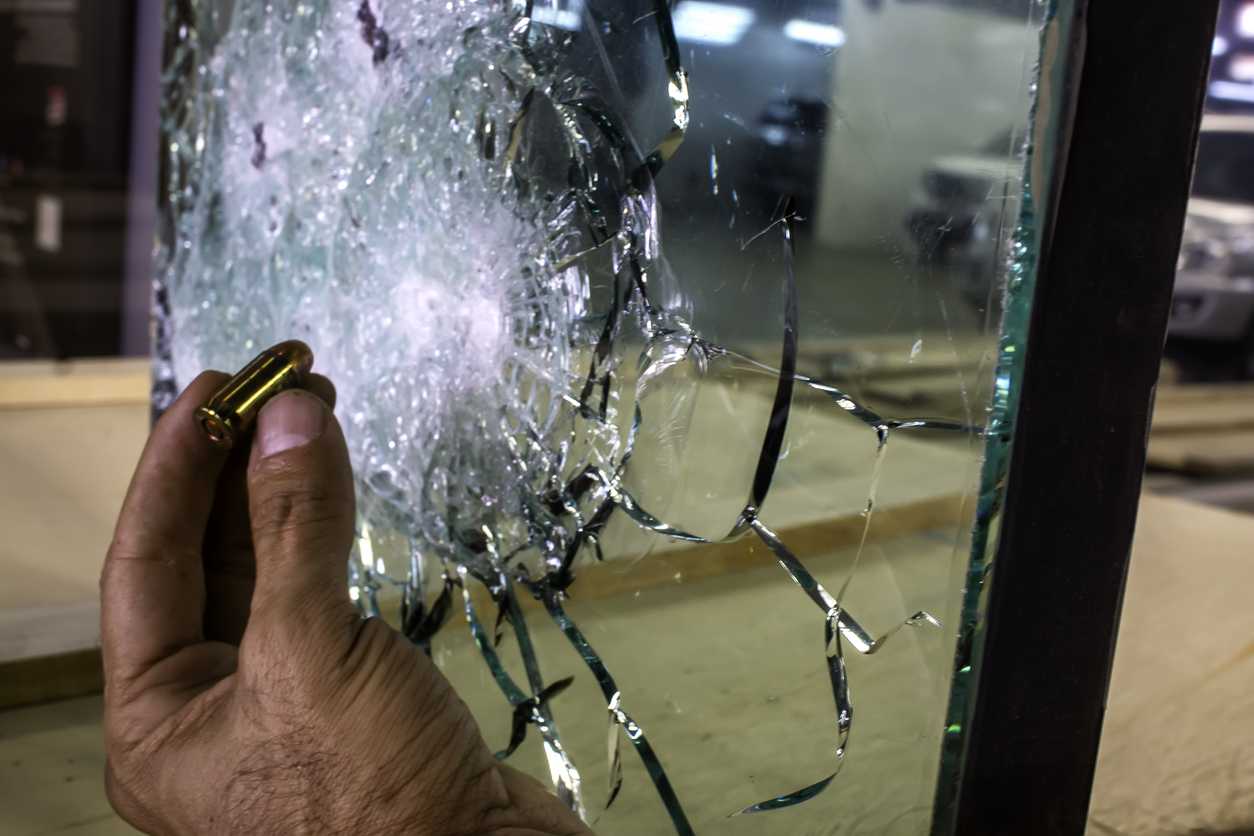
During testing, windows are subjected to multiple shots at specific points, and engineers assess whether the projectiles penetrate and whether there is any dangerous spalling on the protected side. These certifications ensure that a window designed for a specific threat level will perform as expected in a real-world scenario.
Beyond the Bullet: Advanced Applications and Future Trends
The technology behind ballistic-resistant windows continues to evolve, pushing boundaries beyond just stopping bullets to address a broader spectrum of threats and integrate new functionalities. This ongoing innovation positions these advanced glazing solutions at the forefront of physical security technology.
Multi-Threat Protection
Modern security demands often extend beyond ballistic threats. Consequently, advancements in window design now incorporate resistance against other hazards. This includes blast resistance, where windows are engineered to withstand the force of explosions, and forced entry resistance, designed to deter manual or mechanical breaches. These multi-threat windows often involve even thicker glass-plastic laminates, sometimes incorporating structural elements or advanced framing systems to absorb and distribute shockwaves and physical impacts. The synergy between materials is refined to provide comprehensive protection without excessive bulk.
Smart Window Integration
The convergence of physical security with digital intelligence is an exciting frontier. Ballistic-resistant windows are beginning to integrate “smart” functionalities. This can include electrochromic technology, allowing the windows to change opacity on demand, providing privacy or reducing solar glare. Transparent displays, which can project information or video feeds directly onto the window surface, are also emerging. Such integration enhances usability and functionality, transforming a passive security barrier into an active, intelligent component of a building’s or vehicle’s ecosystem.
Lightweighting and Thinness
One of the persistent challenges in ballistic glazing is the inherent weight and thickness of highly protective systems. Researchers are continuously exploring new materials and layering configurations to achieve equivalent or superior ballistic performance with reduced weight and a slimmer profile. This is particularly crucial for applications like armored vehicles, where weight directly impacts fuel efficiency and maneuverability. Advances in high-strength polymers, thinner glass-ceramic composites, and novel interlayer materials are driving this trend, aiming for a future where high-level ballistic protection is less cumbersome and more aesthetically integrated.
Advanced Coatings and Environmental Considerations
Future developments also focus on enhanced coatings for improved scratch resistance, UV protection, and even self-cleaning properties, further extending the lifespan and reducing maintenance requirements of ballistic windows. Moreover, as sustainability becomes a global imperative, efforts are underway to develop more environmentally friendly manufacturing processes and explore recyclable components for ballistic-resistant glazing, ensuring that high security does not come at an excessive ecological cost. These innovations underscore the dynamic nature of security technology, constantly adapting to new threats and incorporating cutting-edge materials science.
aViewFromTheCave is a participant in the Amazon Services LLC Associates Program, an affiliate advertising program designed to provide a means for sites to earn advertising fees by advertising and linking to Amazon.com. Amazon, the Amazon logo, AmazonSupply, and the AmazonSupply logo are trademarks of Amazon.com, Inc. or its affiliates. As an Amazon Associate we earn affiliate commissions from qualifying purchases.