
In the history of computing, few technologies have been met with as much polarized fervor as the blockchain. Often overshadowed by the volatile price fluctuations of the cryptocurrencies that run atop them, blockchains represent a fundamental shift in how we think about data, trust, and digital architecture. At its core, a blockchain is not a coin or a market; it is a distributed ledger technology (DLT) designed to provide a secure, transparent, and immutable record of transactions or data exchanges across a decentralized network.
To understand the technological significance of blockchains, one must look past the financial headlines and examine the software architecture itself. We are moving from an era of “centralized silos”—where data is owned and managed by singular entities—to an era of “distributed protocols,” where the network itself acts as the ultimate source of truth.
The Anatomy of a Blockchain: How the Technology Functions
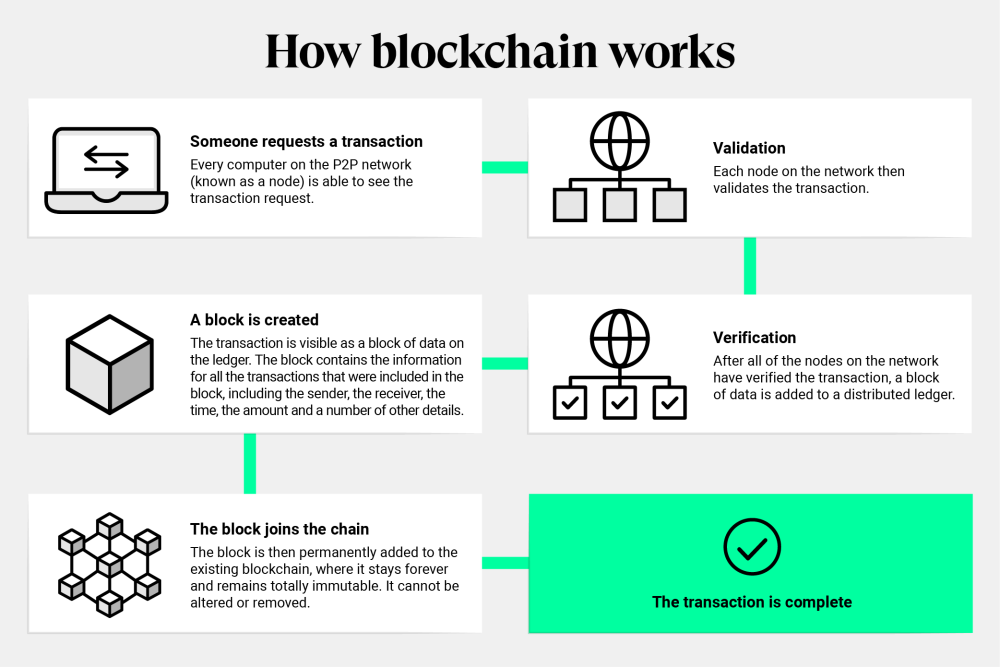
To grasp what a blockchain is, we must first deconstruct its name. It is quite literally a chain of digital blocks, where each block contains a list of data or transactions. However, the brilliance of the technology lies in how these blocks are linked and secured.
Decentralization and Distributed Ledgers
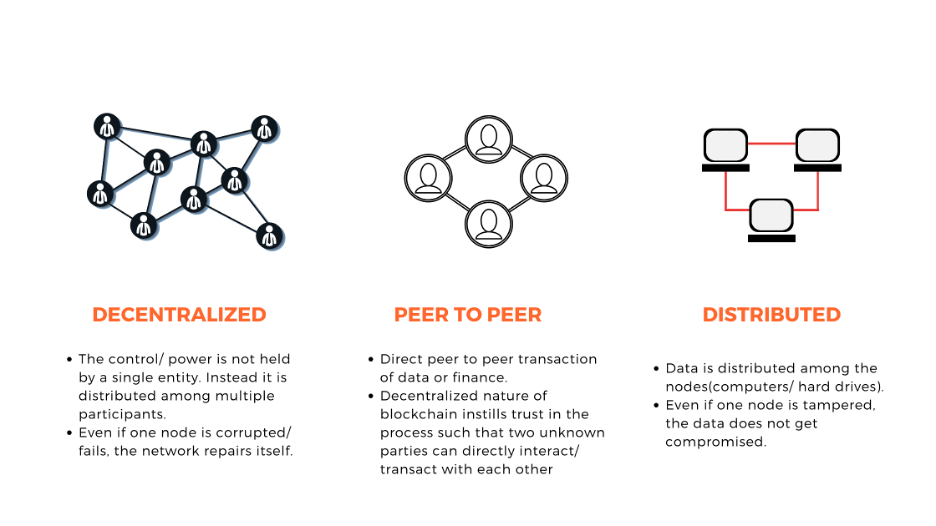
In traditional software systems, a central server (owned by a bank, a social media company, or a government) holds the “master copy” of all data. This creates a single point of failure and a single point of control. A blockchain, conversely, operates on a peer-to-peer (P2P) network. Every participant (or “node”) in the network maintains a copy of the entire ledger. When a change is made, it is not updated on one central server; it is synchronized across thousands of nodes simultaneously. This redundancy ensures that the data is resilient against hacking and outages.
Cryptographic Hashing and Integrity
Each block in the chain is assigned a unique digital fingerprint called a “hash.” This hash is generated using complex mathematical algorithms (such as SHA-256). Crucially, each block also contains the hash of the block that preceded it. This creates a chronological and mathematical link. If a malicious actor attempts to change a single piece of data in an old block, that block’s hash changes. This breaks the link to every subsequent block, alerting the entire network to the attempted fraud. This makes the data effectively “immutable”—once it is written, it cannot be changed without consensus from the network.
Consensus Mechanisms: Reaching Agreement
Since there is no central authority to validate data, the network must use a “consensus mechanism” to decide which new blocks are legitimate. The two most common methods are Proof of Work (PoW) and Proof of Stake (PoS). PoW requires nodes to solve complex computational puzzles to earn the right to add a block, ensuring security through physical energy expenditure. PoS, used by modern networks like Ethereum, relies on participants who “stake” their own resources to validate the network, offering a more energy-efficient and scalable alternative.
Beyond Cryptocurrency: Software and Enterprise Applications
While Bitcoin was the first “killer app” for blockchain, the tech community has since realized that the underlying framework can be applied to almost any industry requiring verifiable data. The shift from “Currency” to “Utility” is the defining trend of the current technological landscape.
Smart Contracts and Programmable Trust
Perhaps the most significant evolution in blockchain technology was the introduction of “smart contracts.” These are self-executing contracts with the terms of the agreement written directly into lines of code. They live on the blockchain and execute automatically when certain conditions are met. For example, a smart contract could automate an insurance payout the moment a flight is officially logged as canceled, removing the need for a middleman to process the claim. This turns the blockchain into a “World Computer” rather than just a ledger.
Supply Chain Transparency and Provenance
In global logistics, tracking the origin and journey of a product is notoriously difficult. Blockchains provide a transparent, unalterable record of a product’s lifecycle. From the raw materials in a mine to the finished gadget in a consumer’s hand, every handoff can be recorded on a blockchain. This prevents counterfeiting and allows companies to prove the ethical sourcing of their materials with absolute certainty.
Decentralized Identity (DID)
Our current digital identity system is fragmented and insecure, relying on dozens of passwords and third-party platforms like Google or Facebook. Blockchain enables “Self-Sovereign Identity,” where individuals own their own identity data in an encrypted digital wallet. They can prove their age, citizenship, or creditworthiness to a service provider without actually revealing their private data, using a cryptographic technique known as “zero-knowledge proofs.”
Digital Security and the Immutable Nature of Data
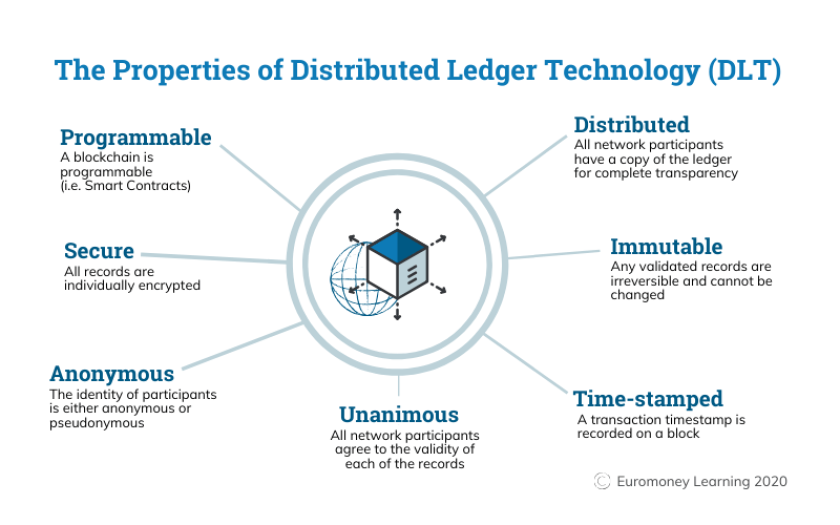
In an era of deepfakes, data breaches, and misinformation, the security implications of blockchain technology cannot be overstated. By shifting the security model from “perimeter defense” (protecting a central server) to “cryptographic verification,” blockchains offer a new paradigm for digital safety.
Resisting Censorship and Manipulation
Because a blockchain is distributed across thousands of nodes globally, it is virtually impossible for a single entity—be it a corporation or a government—to shut it down or censor the information it contains. This makes blockchain an essential tool for maintaining the integrity of public records, legal documents, and historical archives. Once a record is “on-chain,” it belongs to the network, not a gatekeeper.
Solving the “Double-Spend” Problem
Before blockchain, digital files were infinitely reproducible. If you sent someone a PDF, you still had a copy of that PDF. This made “digital money” impossible without a central bank to verify that you didn’t spend the same dollar twice. Blockchain solved the “double-spend” problem mathematically. By requiring network consensus for every transfer, it ensures that if you send a digital asset to someone, you no longer possess it. This created “digital scarcity” for the first time in history.
Transparency vs. Privacy in Public Chains
A common misconception is that blockchains are completely anonymous. In reality, most public blockchains are “pseudonymous.” All transactions are transparent and viewable by anyone on the network, but they are linked to alphanumeric addresses rather than names. This transparency is a powerful tool for auditing and security, but it has led to the development of “Privacy Layers.” New software tools are currently being integrated into the blockchain tech stack that allow for the verification of data without exposing the underlying details, balancing the need for public trust with the right to individual privacy.
Current Trends and the Evolution of the Tech Stack
The blockchain industry is currently moving out of its “dial-up” phase. The early limitations of the technology—high energy consumption and slow transaction speeds—are being solved by a new generation of software innovations.
Layer 2 Scaling Solutions
Just as the internet developed layers (like HTTP and TCP/IP), blockchains are developing “Layer 2” protocols. These are secondary frameworks built on top of a main blockchain (Layer 1) to handle transactions more quickly and cheaply. By processing thousands of transactions off-chain and then “rolling them up” into a single summary on the main chain, these technologies allow blockchains to compete with the speed of traditional payment processors like Visa.
The Integration of AI and Blockchain
We are seeing a growing convergence between Artificial Intelligence and Blockchain. AI requires massive amounts of data and compute power, while blockchain provides a way to verify the authenticity of that data. Blockchains can be used to track the training sets of AI models, ensuring that the data used was not biased or stolen. Furthermore, blockchain-based marketplaces allow for the decentralized sharing of GPU power, democratizing the resources needed to build AI.
Interoperability: Connecting Isolated Networks
Historically, different blockchains (like Bitcoin and Ethereum) were like “walled gardens”—they couldn’t talk to one another. The current tech trend is “interoperability,” or the creation of “cross-chain bridges.” These protocols allow data and assets to move seamlessly between different blockchain networks. This is the foundation of the “Web3” vision: a fully interconnected decentralized internet where users can move through different apps and platforms with a single digital identity and wallet.
Challenges and the Path Toward Mass Adoption
Despite its potential, blockchain technology still faces significant hurdles before it can achieve the ubiquity of the modern web browser.
User Experience and Technical Complexity
For the average person, using a blockchain is still too difficult. Managing private keys (long strings of characters that act as passwords) is nerve-wracking; if you lose your key, you lose access to your data forever. The tech industry is currently focused on “Account Abstraction,” a software update that allows blockchain accounts to function more like traditional email accounts, with recovery options and simplified interfaces, without sacrificing the underlying security.
Scalability and Resource Demands
While Layer 2 solutions are helping, the “Blockchain Trilemma” remains a core engineering challenge. The trilemma states that it is difficult to achieve decentralization, security, and scalability all at once; usually, a network must sacrifice one to maximize the others. Engineers are currently experimenting with “Sharding”—breaking the blockchain into smaller, more manageable pieces—to solve this bottleneck once and for all.
The evolution of the blockchain is following a similar path to the early internet. It began as a niche tool for researchers and enthusiasts, moved into a period of wild speculation and experimentation, and is now settling into its role as a foundational layer of the global tech stack. By providing a way to secure data without a central authority, blockchains are not just changing how we move money—they are changing the very architecture of trust in the digital world.
aViewFromTheCave is a participant in the Amazon Services LLC Associates Program, an affiliate advertising program designed to provide a means for sites to earn advertising fees by advertising and linking to Amazon.com. Amazon, the Amazon logo, AmazonSupply, and the AmazonSupply logo are trademarks of Amazon.com, Inc. or its affiliates. As an Amazon Associate we earn affiliate commissions from qualifying purchases.