
In the landscape of modern personal finance, savvy consumers are increasingly looking beyond traditional savings accounts and stock portfolios to optimize their “lifestyle spend.” As the cost of experiential entertainment continues to outpace general inflation, the search for value-driven loopholes has led many to the AMC Black Ticket. Often misunderstood as a mere coupon or a relic of the physical-ticket era, the AMC Black Ticket is, in reality, a sophisticated financial instrument for the budget-conscious cinephile.
For those looking to master their discretionary spending, understanding the mechanics of these tickets is essential. They represent a hedge against rising ticket prices and a strategic way to manage a household’s entertainment budget. This guide explores the AMC Black Ticket through the lens of personal finance, corporate incentives, and strategic value optimization.

Understanding the AMC Black Ticket Ecosystem
At its core, an AMC Black Ticket is a pre-paid movie admission voucher. Unlike “Yellow Tickets,” which are restricted by geography (notably unusable in high-cost markets like California, New York, and New Jersey), Black Tickets are considered the “gold standard” of the AMC voucher system because they are valid at any AMC location nationwide.
Pricing Structure and Initial Investment
The financial appeal of the Black Ticket lies in the “bulk-buy” discount. While a standard evening ticket at a flagship AMC in a major metropolitan area can cost anywhere from $15 to $22, Black Tickets are typically procured through corporate benefit programs, warehouse clubs like Costco, or authorized resellers at a significant discount—often ranging from $10.50 to $12.50 per unit.
From a liquidity perspective, this is a pre-paid expense. By locking in a lower rate today, the consumer is effectively prepaying for future entertainment. Because these tickets do not have an expiration date, they act as a stable store of value for cinema admission, regardless of how high the box office “door price” climbs in the future.
Terms and Conditions: Navigating the Fine Print for Maximum Value
To maximize the Return on Investment (ROI) of a Black Ticket, one must understand the “upcharge” architecture. A Black Ticket covers the cost of one “standard” 2D movie. However, AMC’s business model relies on premium formats like IMAX, Dolby Cinema, and RealD 3D.
When a Black Ticket is applied to these premium formats, the user must pay the difference between the standard admission and the premium price. Financially, the “win” occurs when the base value of the Black Ticket is applied to a high-demand standard screening where the “walk-up” price is at its peak. Using a Black Ticket for a Tuesday matinee (when prices are already low) is a poor financial move; using it for a Friday night blockbuster is where the value is truly realized.
The Personal Finance Angle: Why Pre-Paid Tickets Are a Smart Budgeting Tool
Effective personal finance is rarely about total deprivation; it is about the intentional allocation of resources. The AMC Black Ticket fits into a “sinking fund” strategy, where a consumer sets aside money for a specific future expense.
Hedging Against Inflation in the Entertainment Sector
Inflation is not just a concept for the grocery store or the gas station; it affects the “fun” sector as well. Movie theaters frequently adjust prices based on labor costs, utility increases, and studio demands. Because AMC Black Tickets have no expiration date, they serve as a perfect hedge against “fun-flation.”
If you purchase a bundle of ten Black Tickets today at $11 each, you have effectively locked in a decade of movie-going (if you go once a year) at that price point. Even if ticket prices rise to $30 by the year 2030, your pre-paid voucher remains a valid admission. In financial terms, this is a “fixed-cost asset” in a variable-cost market.
Sunk Cost Fallacy vs. Intentional Spending
There is a psychological component to using pre-paid vouchers. Many people struggle with “guilt” when spending on entertainment during tight months. By purchasing Black Tickets during months of high cash flow (or during a bonus period), the cost of the movie is already “sunk.”
When the actual movie night arrives, the out-of-pocket cost is zero. This decouples the “pain of paying” from the enjoyment of the experience. For families on a strict monthly budget, having a “bank” of Black Tickets ensures that movie nights can happen even when the discretionary budget for that specific month is thin.
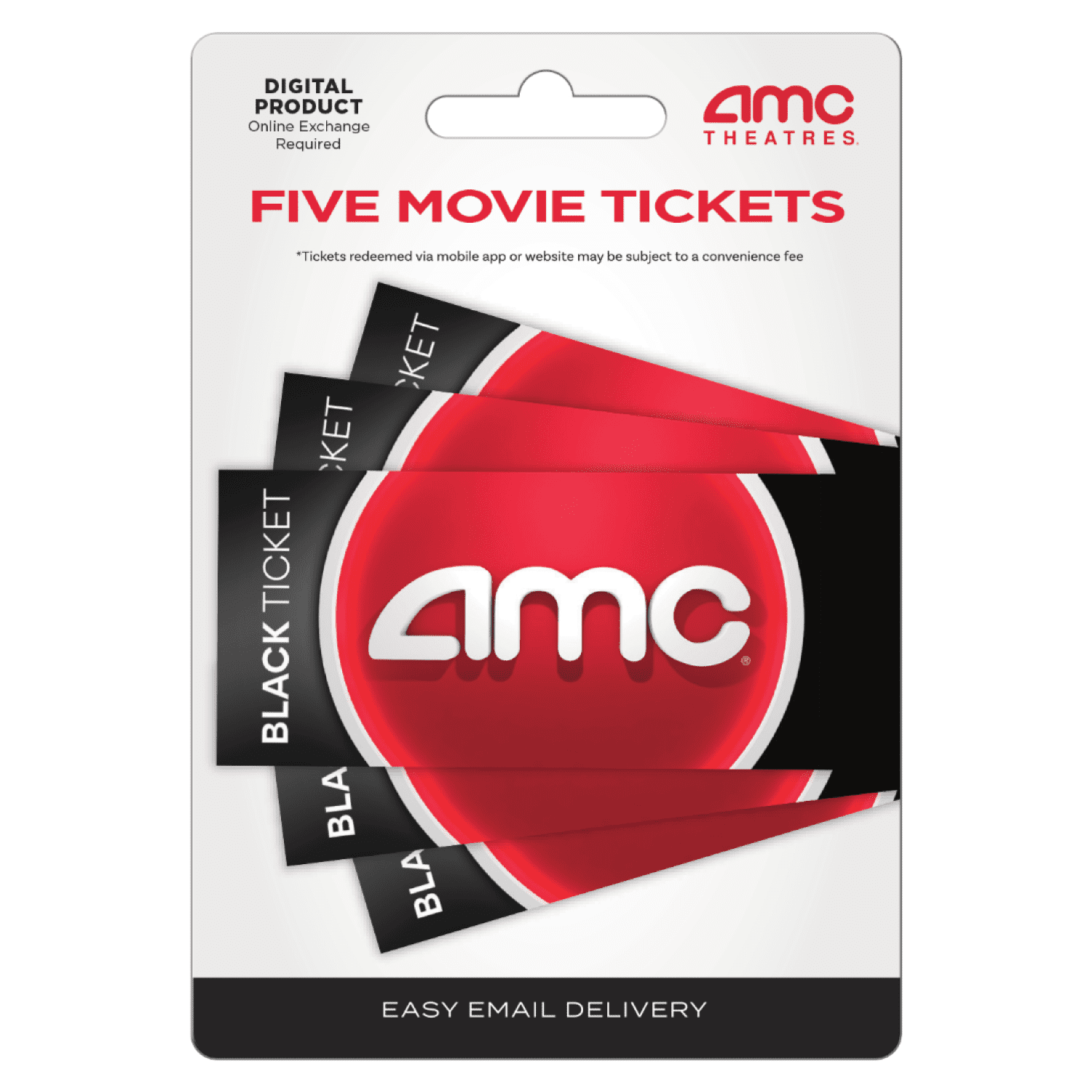
Corporate Branding and Bulk Purchasing: The Business Finance Perspective
The existence of the Black Ticket is driven largely by the B2B (Business-to-Business) market. AMC utilizes these tickets to generate massive upfront cash flow, which they can then use for capital expenditures, theater renovations, or debt servicing.
B2B Procurement and Employee Incentive Programs
Many large corporations buy Black Tickets by the thousands. These are then used as employee rewards, performance incentives, or client gifts. From a business finance perspective, these are highly efficient. They carry a high “perceived value” (the recipient sees a $20 movie ticket) but a lower “actual cost” to the company due to bulk discounts.
For the employee, this is a tax-advantageous perk. While a $20 cash bonus would be taxed, a movie ticket is often categorized as a de minimis fringe benefit, meaning it is often not reported as taxable income. It is a small but effective way to increase total compensation value without increasing the tax burden on either side.
Resale Markets and “Side Hustle” Opportunities
While AMC’s terms generally prohibit the unauthorized commercial resale of tickets, a secondary market exists within the “Side Hustle” economy. Savvy shoppers often look for liquidation sales at warehouse clubs or utilize credit card reward portals (like Chase or Amex) to buy Black Ticket bundles using points.
The financial “arb” (arbitrage) involves using points that might be valued at 1 cent each to buy a ticket that provides 2 cents of value per point. By optimizing how these tickets are acquired—such as using a credit card that offers 5% back on “office supply stores” where gift cards are sold—the actual cost-per-ticket can be driven down even further, representing a masterclass in consumer financial engineering.
Comparison of AMC Ticket Tiers: Yellow vs. Black
Investors and budgeters must distinguish between the different colors of AMC vouchers, as choosing the wrong one can result in a total loss of value depending on your location.
Geographic Restrictions and Market Value
The “Yellow Ticket” is the cheaper sibling of the Black Ticket. It is typically sold for $1 to $2 less than the Black version. However, it is invalid in states with high real estate and operational costs (NY, NJ, CA). From a financial planning perspective, if you live in a “Yellow-eligible” state but travel frequently to Los Angeles or New York, the Black Ticket is the safer investment. The extra dollar spent upfront acts as an “insurance policy” on the ticket’s liquidity, ensuring it can be used regardless of where you are in the United States.
The Hidden Costs of Premium Formats
When calculating the true cost of a movie night, the “Black Ticket” is only one part of the equation. One must factor in the “convenience fee” for online booking. AMC Stubs members (the loyalty program) can sometimes get these fees waived, but for the average user, booking a seat online with a Black Ticket still incurs a small digital transaction fee.
Savvy financial planners will use the Black Ticket in person at the box office to avoid this fee entirely, though they risk the show being sold out. The trade-off between “certainty” (booking ahead with a fee) and “savings” (booking at the theater for free) is a classic micro-economic dilemma.
Strategic Implementation: Integrating Black Tickets into Your Financial Plan
To truly benefit from AMC Black Tickets, one should treat them as a component of their broader financial strategy rather than an impulse buy at the checkout counter.

Best Practices for Purchasing and Redemption
- Check Your Benefit Portals: Before buying at retail, check portals like “WorkAdvantage” or “PerkSpot.” Many employers offer deep discounts on Black Tickets that are not available to the general public.
- Use High-Value Credit Cards: If purchasing through a site like Sam’s Club or Costco, use a card that maximizes “Wholesale Club” rewards.
- Target High-Value Showtimes: Use your Black Tickets for Friday/Saturday evening screenings or “opening weekend” events when ticket prices are at their maximum. This maximizes the delta between what you paid and the value you receive.
- Audit Your Inventory: Since they don’t expire, it’s easy to forget about them. Keep digital copies or photos of the barcodes in a secure folder so you always have your “movie fund” available on your phone.
In conclusion, the AMC Black Ticket is more than just a piece of paper or a digital code; it is a strategic tool for managing entertainment expenses. By understanding the pricing tiers, geographic restrictions, and the math of premium surcharges, a consumer can significantly lower their “cost of living” while maintaining a high quality of life. In the world of personal finance, it’s not just about how much you save, but how intelligently you spend. The Black Ticket is a prime example of how a little bit of financial literacy can turn a standard night at the movies into a calculated win for your wallet.
aViewFromTheCave is a participant in the Amazon Services LLC Associates Program, an affiliate advertising program designed to provide a means for sites to earn advertising fees by advertising and linking to Amazon.com. Amazon, the Amazon logo, AmazonSupply, and the AmazonSupply logo are trademarks of Amazon.com, Inc. or its affiliates. As an Amazon Associate we earn affiliate commissions from qualifying purchases.