
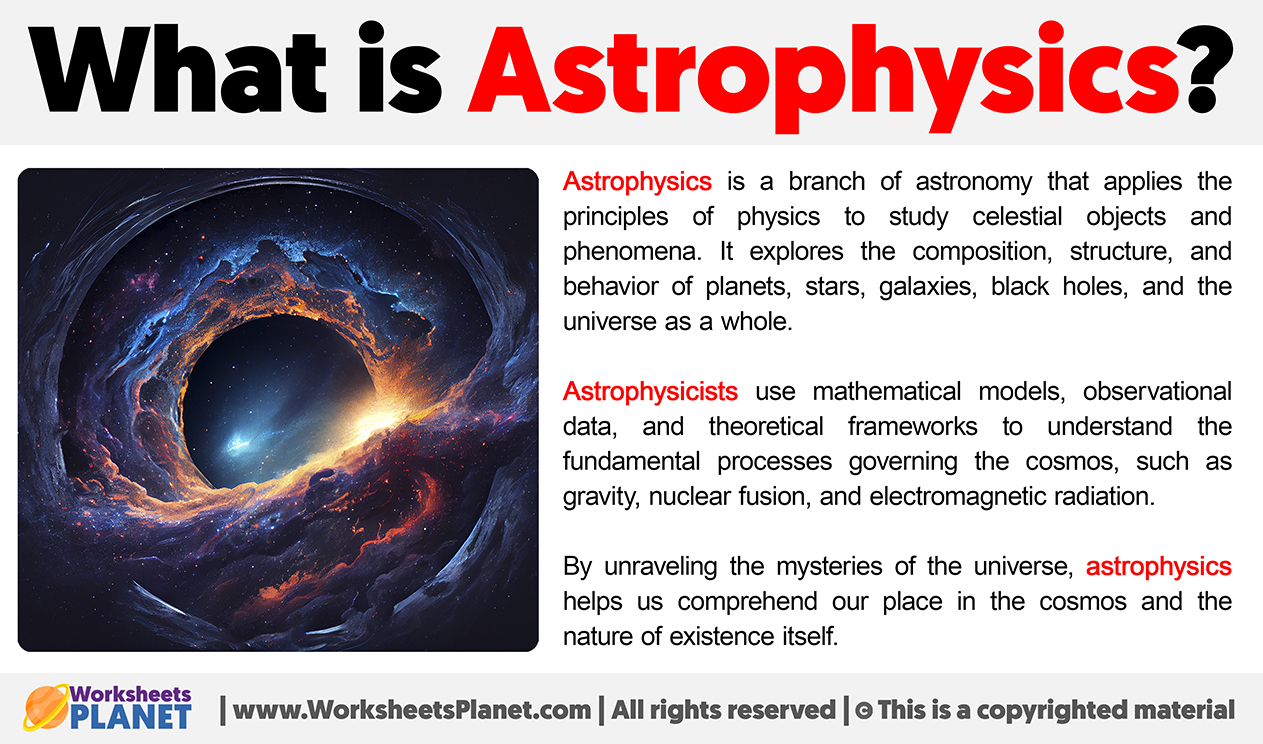
When we think of astrophysicists, the image that often comes to mind is an individual staring through a glass lens at a distant star. However, in the modern technological landscape, this image is largely obsolete. Today, astrophysicists are high-level data scientists, software engineers, and hardware innovators who operate at the absolute bleeding edge of what is possible in tech. They are the professionals who apply the laws of physics to the universe, but they do so through the lens of advanced computation, massive data sets, and revolutionary instrumentation.
To understand what an astrophysicist is in the 21st century is to understand the vanguard of technology. They are the bridge between theoretical mathematics and the physical reality of the cosmos, using some of the most sophisticated tools ever built by humanity to solve problems that are, quite literally, universal.
The Intersection of Astrophysics and Cutting-Edge Hardware
At its core, modern astrophysics is a hardware-driven discipline. The “eyes” that astrophysicists use are no longer simple telescopes; they are complex technological marvels that require extreme engineering and precise digital synchronization.
Next-Generation Observatories and Sensor Technology
The tools of a modern astrophysicist, such as the James Webb Space Telescope (JWST) or the Vera C. Rubin Observatory, represent the pinnacle of optical and infrared engineering. These machines utilize cryogenically cooled sensors and mirrors aligned to a fraction of a wavelength of light. Astrophysicists working in this niche are essentially high-end hardware testers and optical engineers. They must understand the limits of CCD (Charge-Coupled Device) and CMOS technology, pushing these sensors to detect individual photons from billions of light-years away. This pursuit of sensitivity drives innovation in imaging technology that eventually trickles down into consumer electronics and medical imaging.
Space-Based Hardware and Robotics
Astrophysicists often collaborate with aerospace engineers to design satellites that can survive the harsh environment of space. This involves developing radiation-hardened circuitry and autonomous systems capable of performing complex maneuvers without real-time human intervention. Because the “lag” in communication across the solar system is significant, these professionals are at the forefront of developing edge computing solutions—processing data on the device itself before sending the most relevant bits back to Earth. This necessity for efficiency is a primary driver in the development of low-power, high-performance computing hardware.
Computational Astrophysics: Turning the Universe into Data
While hardware captures the light, it is software that turns that light into knowledge. Modern astrophysics is synonymous with Big Data. A single survey telescope can generate petabytes of data every night, far more than any human could ever hope to analyze manually.
High-Performance Computing (HPC) and Supermodeling
An astrophysicist is often a master of simulation. Since we cannot “run an experiment” on a galaxy, astrophysicists build digital universes inside supercomputers. These simulations use High-Performance Computing (HPC) clusters to track the movements of millions of particles under the influence of gravity, dark matter, and gas dynamics. Writing code for these simulations requires an intimate knowledge of parallel processing, C++, Python, and Fortran. These professionals are essentially software architects who optimize algorithms to run across thousands of CPU and GPU cores simultaneously, pushing the boundaries of what modern processors can handle.
Big Data Challenges in Modern Astronomy
The “Data Deluge” is a well-known problem in tech, but astrophysicists were among the first to grapple with it. Handling the data from the Square Kilometre Array (SKA), for instance, requires data pipelines that exceed the current total internet traffic of the planet. Astrophysicists must design sophisticated database structures and cloud computing environments to store, index, and retrieve this information. This makes them experts in data architecture, often moving into roles in the private tech sector to manage massive datasets for global corporations.
The AI Revolution in Astrophysical Research
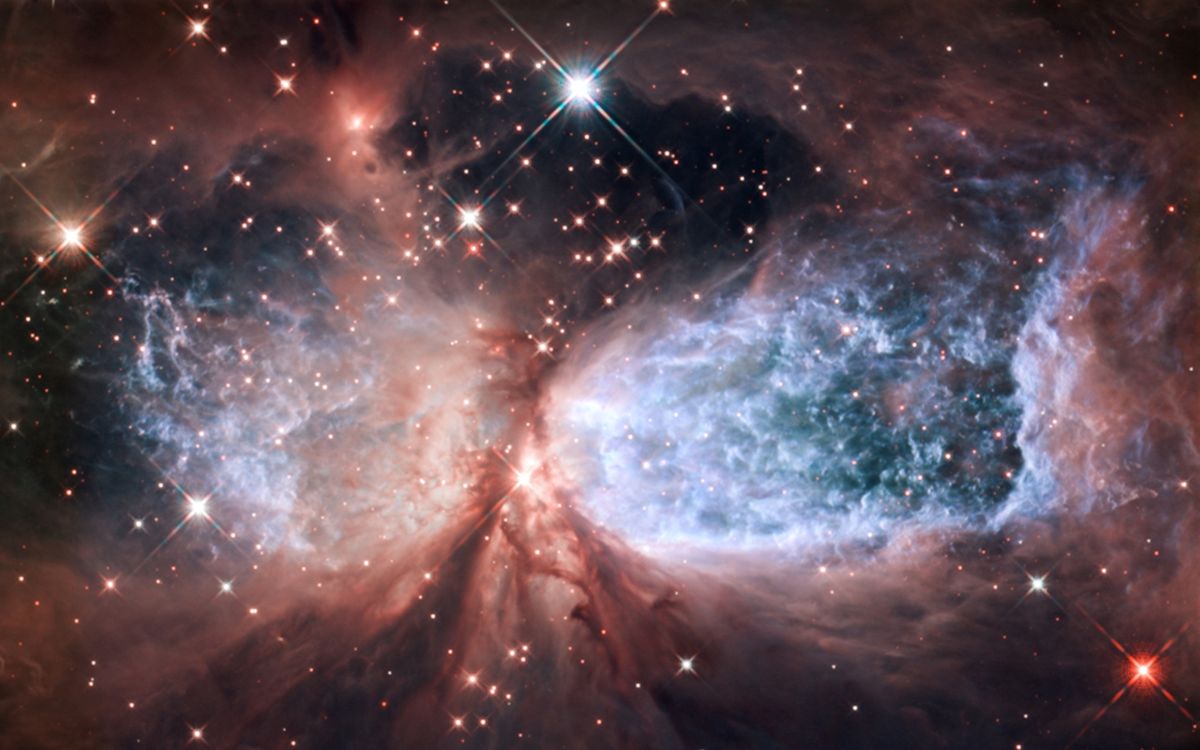
As datasets have grown beyond human capacity, the field has turned heavily toward Artificial Intelligence and Machine Learning. An astrophysicist today is frequently an AI practitioner, training models to do the “heavy lifting” of discovery.
Machine Learning for Pattern Recognition
One of the primary roles of an astrophysicist now involves designing and training Convolutional Neural Networks (CNNs) to identify celestial objects. Whether it is distinguishing a distant galaxy from a cosmic ray hit on a sensor or identifying the subtle “dip” in a star’s light that indicates an orbiting exoplanet, AI is the tool of choice. These scientists are experts in feature extraction and signal processing, using ML libraries like TensorFlow and PyTorch to automate the classification of millions of objects in seconds—a task that would have previously taken a generation of researchers.
Automating Discovery: The Role of Neural Networks
Beyond classification, astrophysicists use AI for “generative” modeling and anomaly detection. By training a system on what a “normal” part of the sky looks like, they can program AI to alert them when something unexpected happens, such as a supernova explosion or a fast radio burst. This transition toward “autonomous science” is a trend mirrored in the tech industry’s move toward autonomous vehicles and automated cybersecurity. The astrophysicist provides the domain expertise to ensure the AI’s “logic” aligns with the laws of physics.
From Outer Space to Your Pocket: The Tech Spinoffs of Astrophysics
The work of an astrophysicist does not remain confined to the stars. The technological requirements of their research have led to some of the most important digital tools we use today.
Imaging Technology and Medical Applications
The algorithms developed by astrophysicists to sharpen blurry images of distant nebulae are the exact same mathematical foundations used in modern MRI and CT scans. When an astrophysicist develops a new way to de-noise an image or reconstruct a 3D object from 2D data slices, that technology often finds its way into the med-tech industry. This cross-pollination of tech is a hallmark of the profession; they are the “test pilots” for imaging software that requires the highest possible fidelity.
Wireless Communication and GPS Optimization
Interestingly, the roots of modern Wi-Fi technology can be traced back to Australian astrophysicists trying to detect faint radio waves from black holes. The techniques they developed for “un-smearing” radio signals in a cluttered environment became a foundational patent for high-speed wireless networking. Furthermore, the GPS on our smartphones would fail within minutes if it didn’t account for General Relativity—a concept that astrophysicists must master. They are the guardians of the precision timing and synchronization protocols that keep our global digital infrastructure running.
The Future of the Profession in a Digitally Transformed World
As we look toward the future, the role of the astrophysicist is becoming increasingly indistinguishable from that of a top-tier tech innovator. The skill set required—mathematical modeling, advanced programming, hardware engineering, and AI expertise—is the most sought-after “stack” in the modern economy.
The Rise of Citizen Science and Open Source
Astrophysicists are also leaders in the “Open Tech” movement. Because of the scale of their data, they often build open-source platforms (like AstroPy) that allow developers around the world to contribute to scientific discovery. This collaborative, transparent approach to software development has set a standard for how large-scale tech projects should be managed. By democratizing access to data through web-based portals and APIs, they are creating a global network of “citizen scientists” empowered by technology.

The Path Forward: Quantum Computing and Beyond
The next frontier for astrophysicists is Quantum Computing. The complex, non-linear equations required to understand the early universe or the interior of a neutron star are perfect candidates for quantum speedup. As quantum hardware matures, astrophysicists will likely be the first to develop the algorithms that prove the utility of this new era of computation.
In summary, an astrophysicist is far more than a stargazer. They are high-level technologists who build the sensors that see the invisible, write the code that simulates the infinite, and refine the AI that interprets the unknown. In a world increasingly defined by data and digital infrastructure, the astrophysicist remains the ultimate pioneer, pushing the limits of what technology can achieve for the sake of human understanding.
aViewFromTheCave is a participant in the Amazon Services LLC Associates Program, an affiliate advertising program designed to provide a means for sites to earn advertising fees by advertising and linking to Amazon.com. Amazon, the Amazon logo, AmazonSupply, and the AmazonSupply logo are trademarks of Amazon.com, Inc. or its affiliates. As an Amazon Associate we earn affiliate commissions from qualifying purchases.