
In the landscape of modern technology, we often focus on the software, the sleek glass of our smartphones, or the complex algorithms of artificial intelligence. However, the hardware that powers our digital world is governed by the fundamental laws of nuclear physics. One of the most significant, yet often overlooked, players in this field is the alpha ray. To understand the challenges of semiconductor reliability, the mechanics of specialized sensors, and the future of deep-space energy, we must first answer a fundamental question: What are alpha rays made of, and how does their composition influence the tech industry?
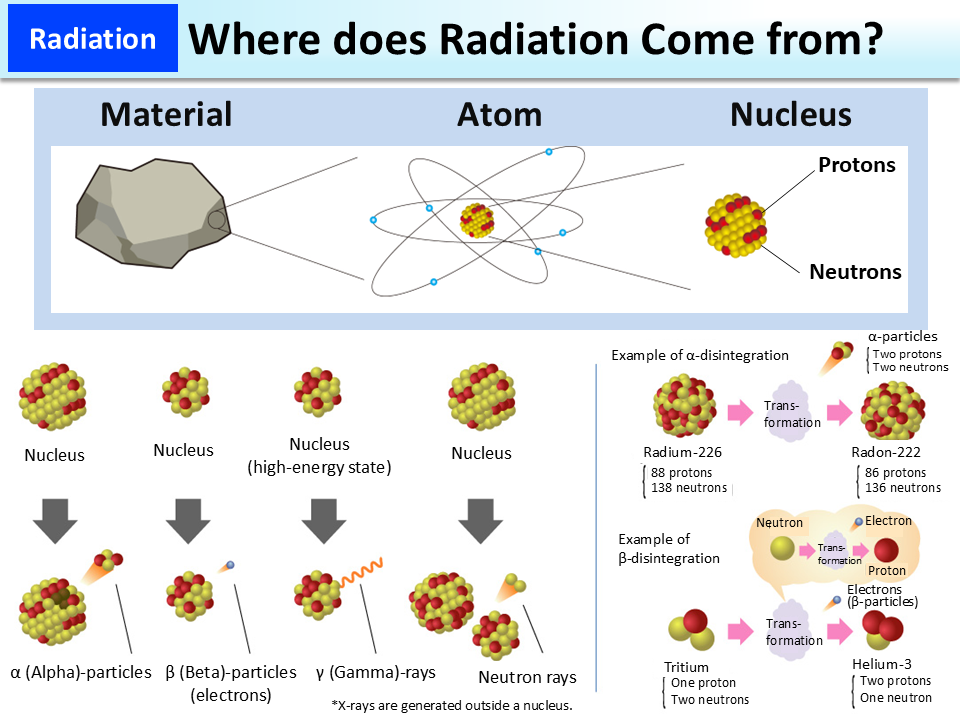
While the term “ray” might suggest a beam of light or electromagnetic radiation, alpha rays are actually streams of high-energy particles. Their unique physical makeup makes them both a vital tool for technological advancement and a persistent hurdle for hardware engineers.
1. The Anatomy of an Alpha Ray: Protons, Neutrons, and Charge
To understand the technological implications of alpha radiation, we must look at the subatomic level. Alpha rays are not waves (like X-rays or Gamma rays); they are physical clusters of matter.
The Helium Nucleus Structure
An alpha ray consists of alpha particles. Each alpha particle is identical to the nucleus of a helium-4 atom. This means every particle is composed of exactly two protons and two neutrons bound together. Because they lack electrons, alpha particles carry a powerful positive charge of +2. This specific combination makes them relatively heavy and highly stable compared to other forms of radiation.
Mass, Velocity, and Ionization Potential
Because of their composition, alpha particles are significantly more massive than beta particles (which are electrons or positrons). Their mass is approximately 7,000 times that of an electron. When emitted from a radioactive source, these particles travel at incredible speeds—often between 5% and 7% of the speed of light. However, their large size and high charge mean they interact strongly with other matter. They are “highly ionizing,” meaning they easily strip electrons from atoms they encounter, a physical property that tech developers both exploit and defend against.
2. Alpha Rays in Semiconductor Manufacturing and Tech Integrity
In the tech sector, the composition of alpha rays is a double-edged sword. While their predictability is useful, their ability to disrupt electronic circuits is a major concern for manufacturers of high-performance computing (HPC) systems and mobile devices.
The Problem of “Soft Errors” in Microchips
As transistors shrink to the nanometer scale, they become increasingly sensitive to external interference. Because alpha particles are made of heavy, charged protons and neutrons, they can cause what is known as a “Soft Error” or a Single Event Upset (SEU). When an alpha particle strikes the silicon of a microchip, its high ionization potential creates a trail of electron-hole pairs. This sudden burst of charge can flip a bit in the memory (changing a 0 to a 1), leading to system crashes, data corruption, or “blue screens.”
High-Purity Materials: Eliminating Alpha Emitters
The tech industry invests billions of dollars into mitigating the effects of alpha rays. Interestingly, the source of these rays is often the very materials used to build the chips. Trace amounts of uranium or thorium in the lead solder or packaging materials can emit alpha particles directly into the circuitry. To combat this, tech giants utilize “Low Alpha” or “Ultra-Low Alpha” (ULA) materials. These are high-purity metals and polymers processed to ensure that alpha emission is kept to a minimum, ensuring the long-term reliability of servers and consumer electronics.
3. Technological Applications: From Sensors to Energy
Beyond being a challenge for chip designers, the specific makeup of alpha rays—two protons and two neutrons—allows them to be harnessed for specific technological functions that other forms of radiation cannot fulfill.

Smoke Detection Tech: Americium-241
One of the most common applications of alpha rays in consumer tech is the ionization smoke detector. These devices contain a tiny amount of Americium-241, an isotope that emits alpha particles. Because alpha particles are made of heavy nuclei, they easily ionize the air between two electrodes, creating a steady electric current. When smoke enters the chamber, the heavy particles are blocked, the current drops, and the alarm is triggered. This “blockability” is a direct result of the alpha particle’s large size compared to other radiation types.
Radioisotope Thermoelectric Generators (RTGs) in Space Tech
In the realm of aerospace technology, alpha-emitting isotopes like Plutonium-238 are used to power deep-space probes. Because alpha particles are heavy and carry significant kinetic energy, they generate substantial heat when they collide with surrounding material. RTGs convert this heat into electricity. This tech powers the Mars Perseverance Rover and the Voyager probes, providing a reliable energy source that can last for decades where solar power is non-existent.
4. Detection and Safety Hardware: Monitoring the Invisible
The tech industry also focuses heavily on the development of hardware designed to detect and quantify alpha radiation. Because alpha rays are easily stopped (even by a sheet of paper or the outer layer of human skin), the sensors required to detect them must be incredibly precise.
Geiger-Müller Counters and Scintillation Detectors
Traditional radiation tech, like the Geiger counter, has been miniaturized into digital modules for modern safety equipment. However, for alpha detection, specialized “thin-window” tubes are required so the heavy particles don’t get stuck in the detector’s housing. More advanced tech uses scintillation detectors, where alpha particles strike a chemical coating (like zinc sulfide), producing a flash of light that a digital photo-sensor then converts into a data point.
Digital Shielding and Cybersecurity for Hardware
In critical infrastructure tech—such as financial servers or medical equipment—hardware-level “shielding” is a major area of digital security. Engineers use a combination of physical barriers and Error-Correcting Code (ECC) memory to ensure that if an alpha particle does strike a system, the software can detect the change and correct the bit flip in real-time. This “silicon-hardening” is essential for the reliability of the cloud infrastructure we use every day.
5. The Future of Alpha-Particle Research in Quantum and Nanotech
As we move toward the next generation of computing, the interaction between alpha rays and matter is being re-examined through the lens of nanotechnology and quantum research.
Alpha Emitters in Targeted Tech-Medicine
The “tech” in MedTech is increasingly using alpha-emitting isotopes for Targeted Alpha Therapy (TAT). Because alpha particles have a short range but high energy, they can be delivered via nanobots or targeted molecules to destroy specific cells (like cancer) without damaging the surrounding healthy tissue. The precise engineering of these delivery systems represents the pinnacle of modern bio-technology.
Next-Gen Thin-Film Transistors
Researchers are currently exploring how the high ionization of alpha particles can be used in the manufacturing of specialized thin-film transistors. By using controlled alpha-particle irradiation, engineers can modify the electrical properties of certain materials at the atomic level, potentially leading to faster and more energy-efficient semiconductors that are immune to the very radiation that used to disrupt them.

Conclusion
Understanding what alpha rays are made of—two protons and two neutrons bound in a high-energy package—is more than a lesson in basic physics. It is a fundamental requirement for anyone navigating the high-tech world of hardware engineering, aerospace, and digital security. These heavy, charged particles are responsible for the “soft errors” that challenge our most advanced CPUs, yet they also provide the power for our most ambitious space missions and the precision for life-saving medical tech.
As we continue to push the boundaries of miniaturization and enter the era of quantum and nanotechnology, the alpha particle will remain at the center of the conversation. Whether we are purifying materials to block their interference or engineering new sensors to harness their energy, the “helium nucleus” continues to be a cornerstone of technological evolution. By mastering the behavior of these tiny, powerful clusters of matter, the tech industry ensures that our digital future remains stable, powerful, and safe.
aViewFromTheCave is a participant in the Amazon Services LLC Associates Program, an affiliate advertising program designed to provide a means for sites to earn advertising fees by advertising and linking to Amazon.com. Amazon, the Amazon logo, AmazonSupply, and the AmazonSupply logo are trademarks of Amazon.com, Inc. or its affiliates. As an Amazon Associate we earn affiliate commissions from qualifying purchases.