
In the landscape of modern technology, where binary code and hexadecimal systems reign supreme, the ancient Roman numeral system might seem like an archaic relic. However, from the “iPhone X” to the copyright metadata in high-definition digital media, Roman numerals remain a surprisingly persistent component of our digital vocabulary. Understanding “what all the Roman numerals are” is not merely a history lesson; for the developer, data scientist, or UI/UX designer, it is an exercise in understanding character encoding, algorithmic logic, and the intersection of legacy systems with modern software architecture.
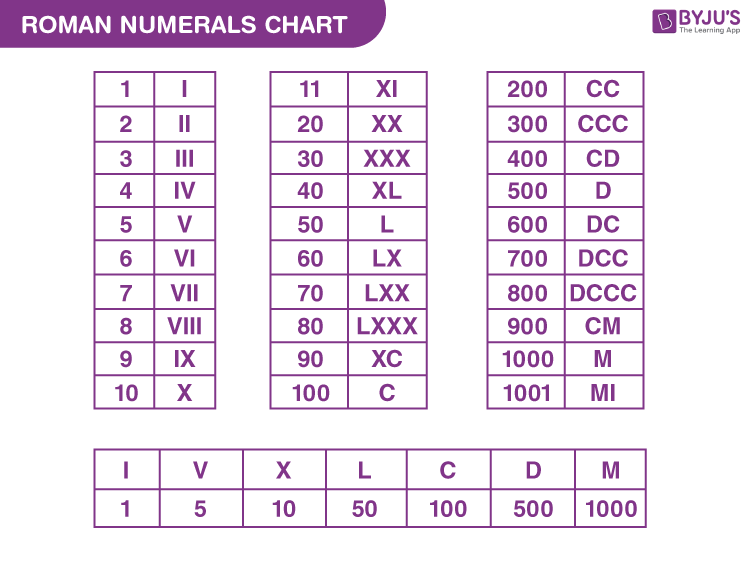
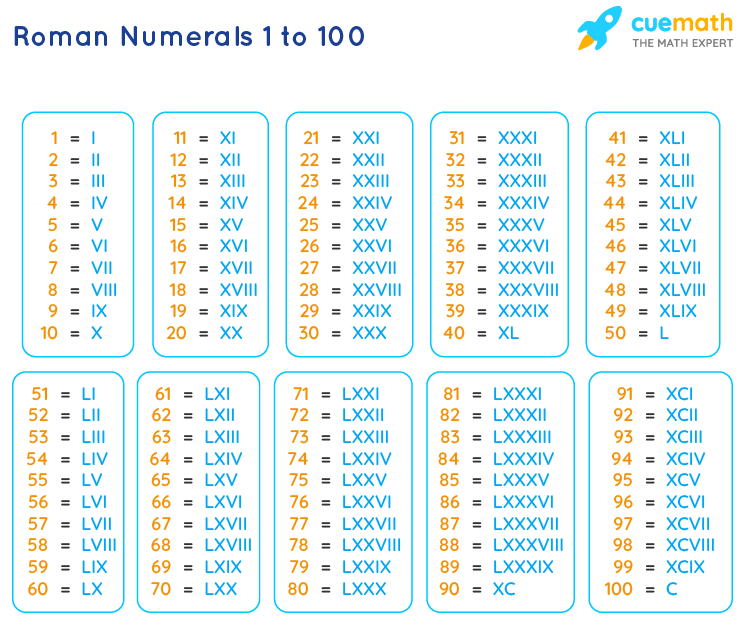
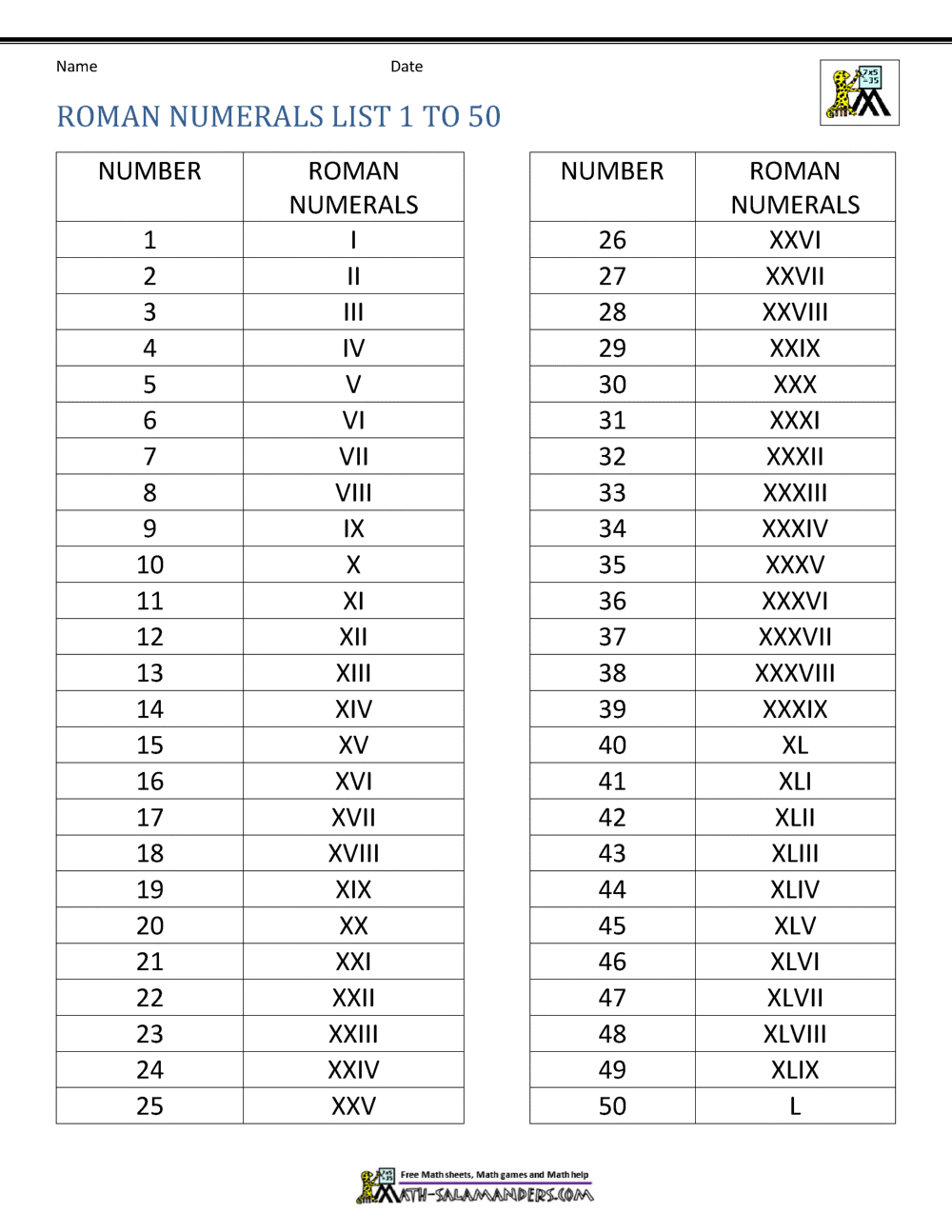
This guide provides a comprehensive technical breakdown of the Roman numeral system, its translation into computational logic, and its application within the contemporary tech ecosystem.
The Architecture of Roman Numerals: Understanding the Character Set
At its core, the Roman numeral system is a quasi-additive and subtractive system based on seven specific Latin characters. In a technical context, these characters function as the “bits” of the system, though they lack the positional value found in the Hindu-Arabic decimal system.
The Seven Primary Symbols
To understand the full scope of Roman numerals, one must first master the seven fundamental constants:
- I: 1
- V: 5
- X: 10
- L: 50
- C: 100
- D: 500
- M: 1,000
In software development, these are often stored in a hash map or a dictionary object for quick lookup during conversion processes. While these seven symbols form the base, the system relies on specific syntax rules to represent all other integers.
The Logic of Construction: Additive vs. Subtractive
In a purely additive system, the number 4 would be “IIII.” However, modern standardized Roman numerals (the kind recognized by Unicode and most software libraries) utilize a subtractive notation to ensure brevity and readability.
- Additive Rule: When a symbol of equal or lesser value follows another, the values are added (e.g., VIII = 5 + 1 + 1 + 1 = 8).
- Subtractive Rule: To prevent a symbol from appearing more than three times in a row, a smaller symbol is placed before a larger one to denote subtraction. There are only six standard subtractive pairs:
- IV: 4
- IX: 9
- XL: 40
- XC: 90
- CD: 400
- CM: 900
The Vinculum and Large-Scale Data Handling
A common challenge in tech—specifically in database architecture—is representing values over 3,999. In standard notation, 3,999 is “MMMCMXCIX.” To go higher, ancient systems used the Vinculum, a horizontal line over a symbol to multiply it by 1,000. While rare in standard UI, this is a critical “edge case” for developers building comprehensive conversion tools. Modern software often circumvents this by using bracketed notation or simply transitioning back to decimal for values exceeding 4,000 to avoid rendering issues with overlines in standard text editors.
Implementing Roman Numerals in Modern Software Development
For programmers, the Roman numeral system is a classic case study in algorithm design. Whether you are building an app for legal documentation or a historical simulation game, converting between Arabic and Roman systems requires a firm grasp of iterative logic.
The Conversion Algorithm: Integer to Roman
The most efficient way to convert a decimal integer to a Roman numeral is the “greedy algorithm” approach. By iterating through a sorted list of Roman values (from largest to smallest), the software “consumes” the largest possible value from the integer and appends the corresponding symbol to a string.
A typical tech implementation (Python pseudocode):
val = [1000, 900, 500, 400, 100, 90, 50, 40, 10, 9, 5, 4, 1]
syb = ["M", "CM", "D", "CD", "C", "XC", "L", "XL", "X", "IX", "V", "IV", "I"]
roman_num = ''
i = 0
while  number > 0:
    for _ in range(number // val[i]):
        roman_num += syb[i]
        number -= val[i]
    i += 1
This logic is fundamental for developers working on digital security timestamps or copyright watermarking tools where Roman numerals are often used to obfuscate year data slightly.
Handling Roman to Integer Parsing
Parsing Roman numerals (String to Integer) is slightly more complex due to the subtractive rules. A robust parser must look ahead to the next character to determine if it should add or subtract the current value. From a data integrity standpoint, this requires rigorous validation—ensuring, for example, that a user doesn’t input “IL” for 49 (the correct form being “XLIX”).
Debugging Common Technical Pitfalls
One of the primary issues in legacy software integration is “Standard vs. Non-Standard” Roman numerals. Some older databases might use “IIII” instead of “IV.” When building API connectors or data scrapers, engineers must include “normalization” layers to convert varied inputs into a standardized format to prevent data corruption.
Unicode and Typography: The Tech Behind Digital Rendering
In the realm of digital security and typography, Roman numerals are more than just a sequence of Latin letters (I, V, X). They are officially recognized in the Unicode Standard, which has significant implications for how they are indexed and searched.
The Number Forms Unicode Block
Unicode provides a specific block for Roman numerals: U+2160 to U+218F. While most web developers simply type capital letters (like “X” and “I”), using the specific Unicode Roman characters offers several tech advantages:
- Accessibility: Screen readers can identify “Ⅸ” (U+2168) specifically as the number nine, rather than reading the letters “I” and “X” individually.
- Text Processing: It allows algorithms to distinguish between the word “I” (the pronoun) and the numeral “Ⅰ” (the number one) without complex natural language processing.
- Formatting: These characters often have specific widths to ensure vertical alignment in list views or tables.
Font Support and CSS Rendering
For front-end developers, Roman numerals are often generated dynamically using CSS. The list-style-type: upper-roman; property allows browsers to automatically convert list items into Roman numerals. This is essential for legal-tech applications where hierarchical documentation (e.g., Section I, Subsection ii) is the industry standard. Understanding the limitations of browser rendering for these numerals is crucial for cross-platform compatibility.
OCR and Machine Learning Challenges
Optical Character Recognition (OCR) systems often struggle with Roman numerals in scanned documents. Because they look identical to Latin alphabetic characters, tech firms specializing in document digitization use context-aware AI models to determine if a string like “CIV” refers to the Roman numeral 104 or the abbreviation for “Civil.”
Use Cases in UI/UX and Digital Product Strategy
Beyond the backend logic, Roman numerals serve a specific purpose in user interface (UI) design and product naming. They carry a “brand weight” that Arabic numerals do not.
The “Prestige” Effect in Digital Branding
Apple’s release of the “iPhone X” is perhaps the most famous modern tech use of Roman numerals. By choosing “X” over “10,” Apple utilized the visual symmetry and historical prestige associated with Roman notation to signal a “premium” leap in technology. For UX designers, Roman numerals are a tool for creating “Visual Hierarchy.” They are frequently used in:
- Version Control: High-level versioning in software suites.
- Game Design: Level numbering or sequel notation (e.g., Final Fantasy VII) to denote epic scale.
- Digital Credits: Movie and software credits use Roman numerals for dates to maintain a classic, authoritative aesthetic.
Navigation and Hierarchical Structures
In complex software documentation and “Table of Contents” UI components, Roman numerals are used to separate major “Parts” from “Chapters.” This helps users navigate dense information by providing a clear visual distinction between different levels of data. For a SaaS platform’s technical manual, using Roman numerals for sections and Arabic numerals for pages reduces cognitive load for the reader.
Temporal Data and Digital Security
Interestingly, some digital security systems and secure printing technologies use Roman numerals as a secondary verification layer. In high-security document watermarking, the date of issuance might be encoded in Roman numerals within the metadata. This serves as a “security through obscurity” tactic, albeit a minor one, making it slightly more difficult for automated bots to scrape and exploit date-based vulnerabilities without specific parsing logic.
Conclusion: The Future of Ancient Symbols in Tech
While we live in a world of high-speed computation, Roman numerals remain a vital thread in the fabric of modern technology. From the way Unicode treats these symbols as distinct data points to the greedy algorithms we use to convert them, “knowing all the Roman numerals” is a prerequisite for comprehensive technical literacy.
For the developer, they represent a unique logic puzzle; for the UI/UX designer, they are a tool for prestige and hierarchy; and for the software architect, they are a legacy system that must be handled with precision. As tech continues to evolve, the Roman numeral system will likely persist—not because it is the most efficient way to count, but because it provides a bridge between our digital future and our structured, historical past. Whether you are coding a simple converter or designing the next flagship smartphone UI, the Seven Symbols remain as relevant today as they were in the forum of Rome.
aViewFromTheCave is a participant in the Amazon Services LLC Associates Program, an affiliate advertising program designed to provide a means for sites to earn advertising fees by advertising and linking to Amazon.com. Amazon, the Amazon logo, AmazonSupply, and the AmazonSupply logo are trademarks of Amazon.com, Inc. or its affiliates. As an Amazon Associate we earn affiliate commissions from qualifying purchases.