
The question “what are all of the perfect squares?” might seem deceptively simple, a throwback to elementary school math lessons. Yet, the concept of perfect squares, and indeed numbers themselves, has profound implications that ripple through the very fabric of our technological world. From the intricate algorithms powering AI to the robust security of our digital lives, and even the strategic branding of online ventures, a deep understanding of numerical foundations is more relevant than ever. This article will delve into the essence of perfect squares, exploring their definition, how to identify them, and crucially, how this seemingly abstract mathematical idea intersects with the dynamic realms of tech, brand, and money in our modern, interconnected society.
The Elegant Simplicity of Perfect Squares
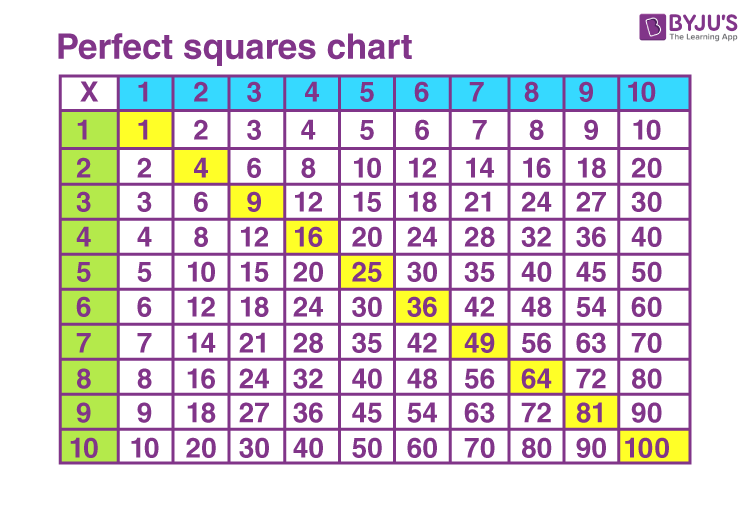
At its core, a perfect square is a number that can be obtained by squaring an integer. In simpler terms, it’s a number that results from multiplying an integer by itself. For instance, 9 is a perfect square because 3 multiplied by 3 (3²) equals 9. Similarly, 25 is a perfect square as 5 multiplied by 5 (5²) gives us 25.
Understanding the Mathematical Definition
Formally, a number n is a perfect square if there exists an integer k such that n = k². The integers k can be positive, negative, or zero.
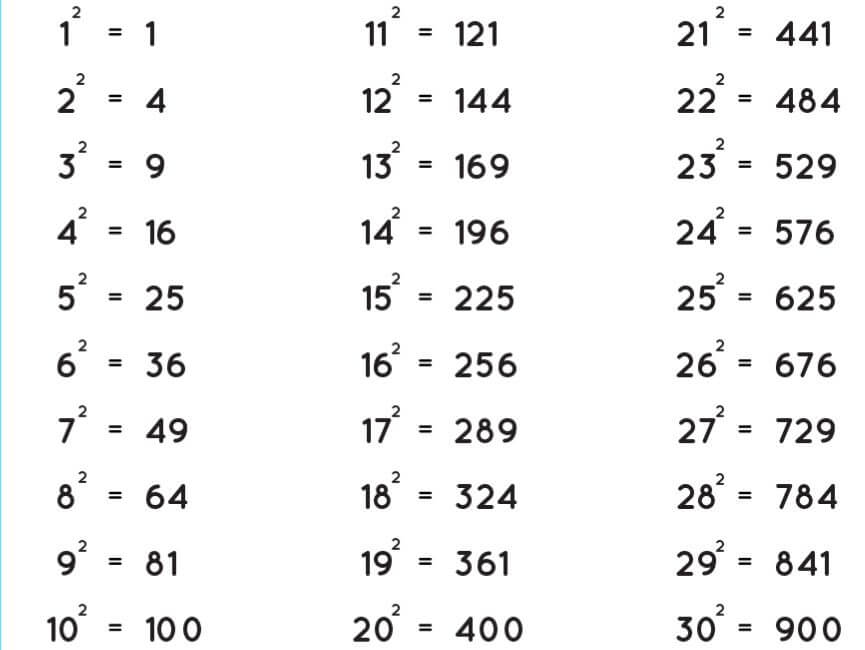
- Positive Integers: 1² = 1, 2² = 4, 3² = 9, 4² = 16, and so on. These are the most commonly recognized perfect squares.
- Zero: 0² = 0. Zero is indeed a perfect square.
- Negative Integers: While squaring a negative integer also results in a positive number (e.g., (-3)² = 9), the resulting perfect square is the same as if we had squared its positive counterpart. Therefore, when we talk about perfect squares, we usually focus on the non-negative results.
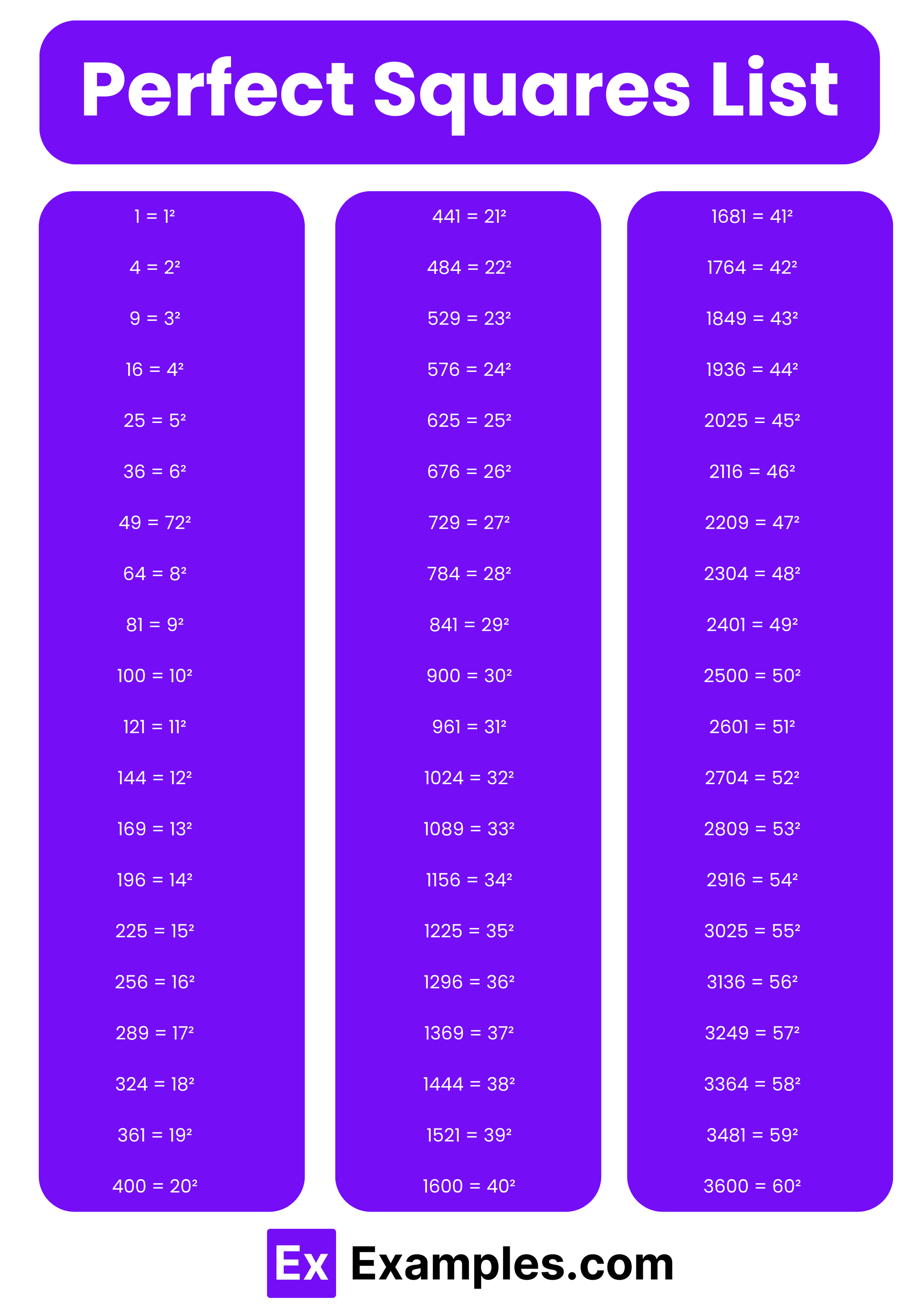
The sequence of perfect squares begins: 0, 1, 4, 9, 16, 25, 36, 49, 64, 81, 100, 121, 144, and so on, continuing infinitely.
Identifying Perfect Squares: Practical Approaches
While the definition is straightforward, how do we efficiently determine if a given number is a perfect square?
The Square Root Method
The most direct method is to calculate the square root of the number. If the square root is an integer (a whole number with no fractional part), then the original number is a perfect square.
- Example: To check if 144 is a perfect square, we calculate its square root: √144 = 12. Since 12 is an integer, 144 is a perfect square.
- Example: To check if 50 is a perfect square, we calculate its square root: √50 ≈ 7.071. Since the result is not an integer, 50 is not a perfect square.
This method is fundamental and forms the basis for many computational approaches.
Prime Factorization
Another insightful method, particularly for understanding the structure of numbers, is prime factorization. A number is a perfect square if and only if, in its prime factorization, every prime factor appears an even number of times.
- Example: Let’s take 36. Its prime factorization is 2 x 2 x 3 x 3, or 2² x 3². Both prime factors (2 and 3) appear an even number of times (twice each). Therefore, 36 is a perfect square (6²).
- Example: Let’s take 72. Its prime factorization is 2 x 2 x 2 x 3 x 3, or 2³ x 3². The prime factor 2 appears an odd number of times (three times). Therefore, 72 is not a perfect square.
This method provides a deeper understanding of why certain numbers are perfect squares and helps in simplifying fractions involving square roots.
Perfect Squares in the Realm of Technology
The concept of perfect squares, though seemingly abstract, is foundational to numerous technological advancements and applications that shape our daily lives. From the digital representations of data to the intricate workings of algorithms, numerical properties play a crucial role.
Data Representation and Storage
In computing, data is often organized and processed in blocks or chunks. The size of these blocks can sometimes relate to perfect squares, influencing efficiency. For instance, in memory management, data structures might be optimized to align with power-of-two sizes, and powers of two (2, 4, 8, 16, 32, 64, 128, 256, 512, 1024…) are intimately linked with perfect squares (which are squares of integers, not necessarily powers of two themselves, but the concept of structured sizes is relevant).
More directly, when dealing with multi-dimensional arrays or grids in graphics and scientific computing, the dimensions can be influenced by square arrangements. For example, a square image of 1024×1024 pixels has dimensions that are squares of 32 (32² = 1024). This can simplify calculations for transformations and processing.
Algorithms and Computational Efficiency
Many algorithms rely on dividing problems into smaller, manageable parts. In computer science, recursive algorithms, for example, often exhibit behavior related to powers of two in their complexity. While not always directly perfect squares, the underlying mathematical structures of efficiency and scalability can be influenced by the ease with which certain operations can be performed on numbers with specific properties, including those that are squares.
Consider sorting algorithms or search algorithms. While their direct relationship to perfect squares might be indirect, the efficiency of certain operations, especially when dealing with data structures that might be optimized for square or power-of-two dimensions, can be subtly influenced. For example, in image processing, applying a filter to a square region of an image might involve operations that are more straightforward if the dimensions of the image or the filter kernel are related to squares.
Digital Security and Cryptography
The strength of modern encryption relies heavily on complex mathematical problems that are computationally difficult to solve. While not directly about perfect squares, number theory, which governs the properties of integers and their relationships, is the bedrock of cryptography. Concepts like modular arithmetic, prime numbers, and their distributions are essential.
The underlying principles of primality testing and the generation of large prime numbers, which are crucial for algorithms like RSA encryption, stem from our understanding of the fundamental properties of integers. The security of online transactions, secure communication channels, and digital signatures all depend on the robust application of number theory, where the relationships and behaviors of numbers, including perfect squares and their absence, are implicitly understood and utilized.
The Role of Perfect Squares in Branding and Marketing
While the immediate connection between perfect squares and branding might not be obvious, the underlying principles of structure, balance, and visual harmony, often rooted in mathematical concepts, are fundamental to effective brand building.
Visual Design and Aesthetics
The principle of the Golden Ratio, often approximated, suggests that visually pleasing proportions can be found in rectangles where the ratio of the longer side to the shorter side is approximately 1.618. While not directly a perfect square, the concept of pleasing proportions often resonates with the sense of order and completeness found in perfect squares.
In logo design, layout, and user interface (UI) design, designers often strive for balance and symmetry. Square elements, or layouts that are based on grids with equal divisions, can evoke a sense of stability, reliability, and perfection – qualities that many brands aim to project. A perfectly symmetrical logo or a well-balanced webpage layout can subconsciously communicate professionalism and trustworthiness.
Brand Identity and Storytelling
The concept of “perfect” can be a powerful narrative tool in branding. Brands that aim to convey a sense of flawlessness, precision, or completeness might subtly draw on the inherent meaning of perfect squares. Think of brands that emphasize craftsmanship, engineering excellence, or ultimate solutions. The idea of a “perfect fit” or a “perfect outcome” can be linked, metaphorically, to the exactitude of a perfect square.
A brand’s identity is built on consistent messaging and visual cues. If a brand’s aesthetic leans towards clean lines, geometric shapes, and a sense of order, the implicit understanding of perfect squares as symbols of completeness can reinforce this message.
Marketing Metrics and Performance
In digital marketing, performance is often measured and analyzed using metrics that involve ratios and percentages. While not directly perfect squares, the ability to analyze data and derive meaningful insights often relies on understanding numerical relationships. For instance, a marketing campaign that achieves a perfect conversion rate (though rare) would represent a perfect outcome in that specific metric.
More practically, when segmenting audiences or analyzing campaign performance, businesses often look for patterns and efficiencies. The desire to find the “perfect” strategy or the “optimal” allocation of resources can be seen as a pursuit of perfection, mirrored in the mathematical certainty of a perfect square.
Perfect Squares in the World of Money and Finance
The financial world is inherently numerical, and the properties of numbers, including perfect squares, play a role in various aspects, from investment strategies to the valuation of assets.
Investment and Portfolio Management
In finance, the concept of risk and return is paramount. While not directly a perfect square, the mathematical models used to assess risk often involve statistical measures like variance and standard deviation. Variance, in particular, is the average of the squared differences from the mean. While not about identifying perfect squares themselves, it highlights how squaring is used to quantify dispersion and risk.
The idea of a “perfect portfolio” – one that optimally balances risk and return – is a constant pursuit. While achieving theoretical perfection might be elusive, the quantitative methods used to approach this goal rely on a deep understanding of numerical relationships.
Online Income and Side Hustles
For individuals looking to generate online income or build side hustles, understanding numerical targets and growth is crucial. Setting income goals, tracking expenses, and analyzing profitability all involve numerical operations. The pursuit of a “perfect” income stream or a “perfectly” efficient business model can be seen as an aspiration that, in its ideal form, represents a flawless outcome.
When developing online businesses, particularly those involving e-commerce or subscription services, understanding concepts like customer acquisition cost (CAC) and lifetime value (LTV) requires careful numerical analysis. Aiming for a “perfect” ratio of LTV to CAC, for example, signifies a highly efficient and successful business.
Financial Tools and Budgeting
Many personal finance tools and budgeting apps rely on numerical calculations to help users manage their money. The concept of having a “perfectly” balanced budget, where income equals expenses and savings goals are met, is a common aspiration.
Furthermore, in areas like loan amortization or compound interest calculations, understanding how numbers grow and interact is essential. While perfect squares themselves might not be the direct focus, the underlying mathematical principles that govern financial growth and planning are deeply intertwined with number theory. The idea of a “perfect” financial state – free from debt, with ample savings, and achieving all financial goals – is the ultimate aspiration for many, mirroring the completeness associated with perfect squares.
Conclusion: The Enduring Relevance of Numerical Foundations
The question “what are all of the perfect squares?” serves as a gateway to understanding fundamental mathematical concepts that are far more pervasive than one might initially imagine. From the intricate algorithms that drive our technology and the strategic decisions that build powerful brands, to the careful management of our finances, numbers and their properties are the invisible threads weaving through our modern world.
Perfect squares, with their elegant simplicity and inherent sense of completeness, offer a foundational understanding of numerical order and precision. By grasping their definition and how to identify them, we gain a deeper appreciation for the mathematical underpinnings of the digital age. Whether you’re a tech enthusiast exploring the latest AI tools, a marketer strategizing a new campaign, or an individual seeking financial freedom, a solid understanding of numerical principles, including the humble perfect square, empowers you to navigate these complex domains with greater insight and effectiveness. The pursuit of “perfect” outcomes in technology, brand, and money is, in many ways, a reflection of the enduring elegance and practical power of mathematics itself.
aViewFromTheCave is a participant in the Amazon Services LLC Associates Program, an affiliate advertising program designed to provide a means for sites to earn advertising fees by advertising and linking to Amazon.com. Amazon, the Amazon logo, AmazonSupply, and the AmazonSupply logo are trademarks of Amazon.com, Inc. or its affiliates. As an Amazon Associate we earn affiliate commissions from qualifying purchases.