
Aerospace engineering stands as one of the most dynamic and intellectually stimulating fields within the realm of technology. It is a discipline that pushes the boundaries of human innovation, venturing into the vast expanse of the atmosphere and beyond. At its core, aerospace engineering is concerned with the design, development, manufacturing, and testing of aircraft, spacecraft, satellites, and related systems. These professionals are the architects and builders of our aerial and cosmic future, meticulously crafting machines that defy gravity and explore the unknown. The field is a sophisticated blend of physics, mathematics, materials science, computer science, and cutting-edge technology, demanding a profound understanding of complex principles and an unwavering commitment to precision and safety.

The scope of aerospace engineering is incredibly broad, encompassing everything from the sleek, high-performance fighter jets that patrol our skies to the colossal rockets that launch satellites into orbit, and the intricate life-support systems that enable astronauts to survive in the unforgiving vacuum of space. It is a field that thrives on constant evolution, driven by the insatiable human desire to travel faster, higher, and further than ever before. The technological advancements born from aerospace research often have profound spillover effects, influencing innovations in other sectors and improving the quality of life on Earth. Understanding what aerospace engineers do requires delving into the fundamental principles that govern their work, the diverse applications of their expertise, and the future trajectory of this vital technological domain.
The Fundamental Pillars of Aerospace Engineering
Aerospace engineering is not a singular entity but rather a multifaceted discipline built upon a foundation of core scientific and engineering principles. These principles are applied to the unique challenges presented by designing and operating vehicles that function in atmospheric and extra-atmospheric environments. The complexity of these challenges necessitates a deep understanding of various interconnected fields.
Aerodynamics: The Science of Air in Motion
Aerodynamics is perhaps the most immediately recognizable aspect of aerospace engineering, particularly concerning aircraft. It is the study of how air interacts with solid objects moving through it. Aerospace engineers must master the principles of lift, drag, thrust, and weight to design aircraft that can fly efficiently and safely. This involves understanding airflow patterns, compressibility effects at high speeds, and the generation of aerodynamic forces.
Principles of Lift and Drag
Lift is the upward force that counteracts gravity, allowing an aircraft to fly. It is primarily generated by the shape of the wings, known as airfoils, which are designed to create a pressure difference between their upper and lower surfaces. As air flows over the curved upper surface, it travels a longer distance and therefore moves faster than the air flowing under the flatter lower surface. According to Bernoulli’s principle, faster-moving air exerts less pressure, resulting in lower pressure on top of the wing and higher pressure underneath, thus generating upward lift.
Drag, on the other hand, is the force that opposes an aircraft’s motion through the air. It arises from air resistance and is influenced by the shape of the aircraft, its speed, and the properties of the air. Aerospace engineers strive to minimize drag to improve fuel efficiency and performance. This involves meticulous shaping of fuselages, wings, and other components to ensure smooth airflow and reduce turbulence.
Supersonic and Hypersonic Flight
As aircraft speeds approach and exceed the speed of sound (Mach 1), the principles of aerodynamics become significantly more complex. Supersonic and hypersonic flight involve phenomena like shock waves, which are abrupt changes in air pressure and density. Designing vehicles for these regimes requires specialized knowledge of compressible flow and advanced computational fluid dynamics (CFD) techniques to predict and manage the extreme forces involved. This is crucial for everything from high-speed passenger jets to advanced military aircraft and reentry vehicles.
Propulsion Systems: The Heart of Flight
Propulsion systems are the engines that provide the thrust necessary to overcome drag and propel aircraft and spacecraft. The type of propulsion system employed is heavily dependent on the intended application and operating environment.
Jet Engines and Turbines
For atmospheric flight, jet engines are the dominant technology. These engines work by taking in air, compressing it, mixing it with fuel, and igniting the mixture. The resulting hot, high-pressure gas is expelled at high velocity, generating thrust. Aerospace engineers are involved in the design, optimization, and maintenance of various types of jet engines, including turbojets, turbofans, and turboprops, each offering different performance characteristics for various aircraft types.
Rocket Propulsion
For spaceflight, rocket engines are indispensable. Unlike air-breathing jet engines, rockets carry their own oxidizer, allowing them to operate in the vacuum of space. They work by expelling mass at high speed in one direction to produce thrust in the opposite direction, based on Newton’s third law of motion. Aerospace engineers design and develop different types of rocket engines, including chemical rockets (solid and liquid propellant) and emerging technologies like electric and nuclear propulsion. The efficiency and thrust generated by these systems are critical for achieving orbital velocities and interplanetary travel.
Structures and Materials: Building for Extremes
The structural integrity of aerospace vehicles is paramount, as they are subjected to immense forces, extreme temperatures, and the harsh conditions of atmospheric and space environments. Aerospace engineers must select and utilize materials that are both strong and lightweight, ensuring the vehicle can withstand these stresses without failing.
Advanced Materials and Composites
Traditional materials like aluminum alloys and titanium have been supplanted or augmented by advanced materials, particularly composite materials. Composites, such as carbon fiber reinforced polymers (CFRPs), offer exceptional strength-to-weight ratios, corrosion resistance, and fatigue life. Aerospace engineers are responsible for understanding the properties of these materials, designing structures that effectively utilize their capabilities, and developing manufacturing processes to create these complex components.
Stress Analysis and Fatigue
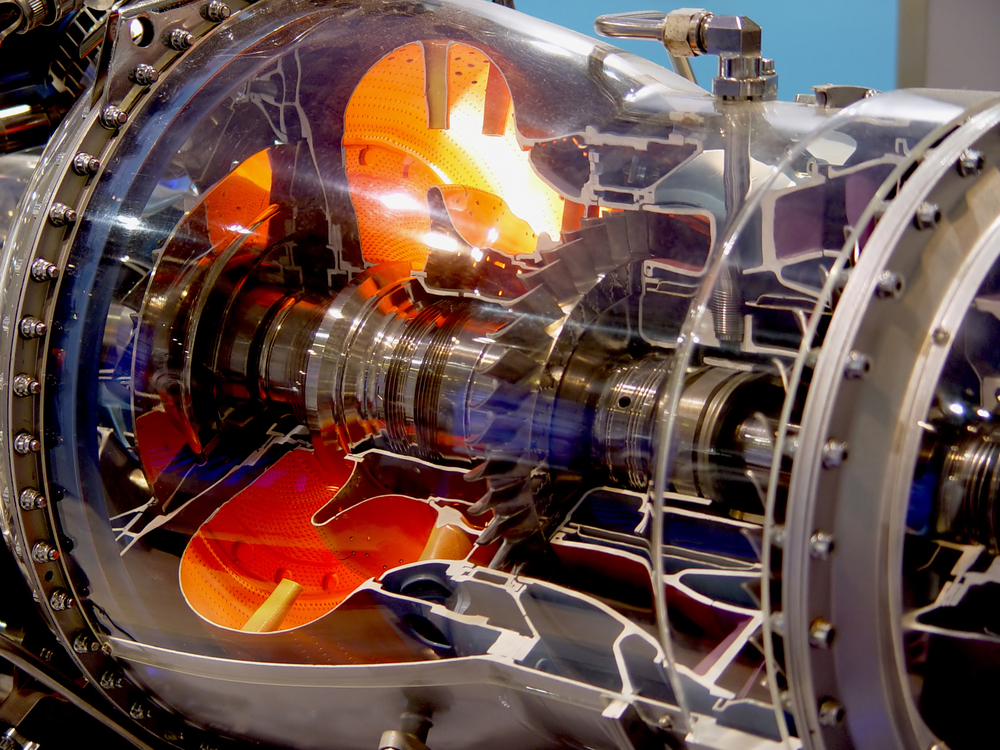
A critical aspect of structural design is ensuring that the vehicle can withstand repeated cycles of stress without fracturing. This involves sophisticated stress analysis, often employing finite element analysis (FEA) software, to identify areas of high stress concentration. Understanding material fatigue, the phenomenon where materials weaken and fail after repeated loading, is essential for designing components with predictable and safe lifespans. This is particularly crucial for components that experience dynamic loads, such as wings and control surfaces.
The Diverse Applications of Aerospace Engineering
The principles and technologies developed by aerospace engineers find application in a remarkably wide array of fields, extending far beyond the obvious realms of aviation and space exploration.
Aircraft Design and Manufacturing
This is the most direct application, involving the creation of all types of aircraft. This includes commercial airliners, military aircraft (fighters, bombers, transport planes), general aviation aircraft (small private planes), helicopters, and drones (unmanned aerial vehicles or UAVs). Engineers work on every aspect, from the overall configuration and performance to the intricate details of control systems, navigation, and cabin design.
Commercial and Military Aviation
For commercial aviation, the focus is on efficiency, passenger comfort, safety, and cost-effectiveness. This involves designing fuel-efficient engines, aerodynamic airframes, and reliable avionics. In military aviation, the priorities shift towards speed, maneuverability, stealth capabilities, and the integration of advanced weapons systems. Aerospace engineers play a vital role in balancing these often-competing design requirements to meet the specific needs of each sector.
Unmanned Aerial Vehicles (UAVs)
The rise of drones, or UAVs, represents a significant area of growth within aerospace engineering. These vehicles, ranging from small hobbyist quadcopters to large, sophisticated military surveillance drones, require specialized design considerations for power sources, flight control systems, payload integration, and communication links. Aerospace engineers are at the forefront of developing increasingly autonomous and capable UAVs for a multitude of purposes.
Spacecraft and Satellite Systems
The exploration of space and the utilization of its resources are heavily reliant on the expertise of aerospace engineers. This involves the design, construction, and operation of everything that ventures beyond Earth’s atmosphere.
Satellites for Communication, Navigation, and Earth Observation
Satellites are instrumental in modern life, providing global communication networks, precise navigation (GPS), and invaluable data for weather forecasting, environmental monitoring, and scientific research. Aerospace engineers are responsible for designing the satellites themselves, ensuring their orbital stability, and integrating the complex systems that enable their functionality. This includes power generation, thermal control, attitude control, and communication subsystems.
Human Spaceflight and Exploration
The dream of venturing to other planets and exploring the cosmos falls squarely within the domain of aerospace engineering. This involves designing spacecraft capable of supporting human life for extended periods, such as the International Space Station (ISS) and future lunar and Martian habitats. Engineers develop life support systems, radiation shielding, reentry vehicles, and the propulsion systems necessary for interplanetary journeys. The challenges of ensuring astronaut safety and survival in the hostile environment of space are immense and require ingenious engineering solutions.
Advanced Technologies and Future Frontiers
The field of aerospace engineering is inherently forward-looking, constantly pushing the boundaries of what is technologically possible.
Reusable Launch Systems
A major trend in space exploration is the development of reusable launch vehicles. Companies like SpaceX have revolutionized the industry with rockets that can land themselves after delivering their payload, significantly reducing the cost of space access. Aerospace engineers are at the forefront of designing these complex systems, focusing on robust landing mechanisms, advanced control systems for autonomous descent, and materials that can withstand the stresses of multiple launches and landings.
Hypersonic Technologies and Advanced Air Mobility
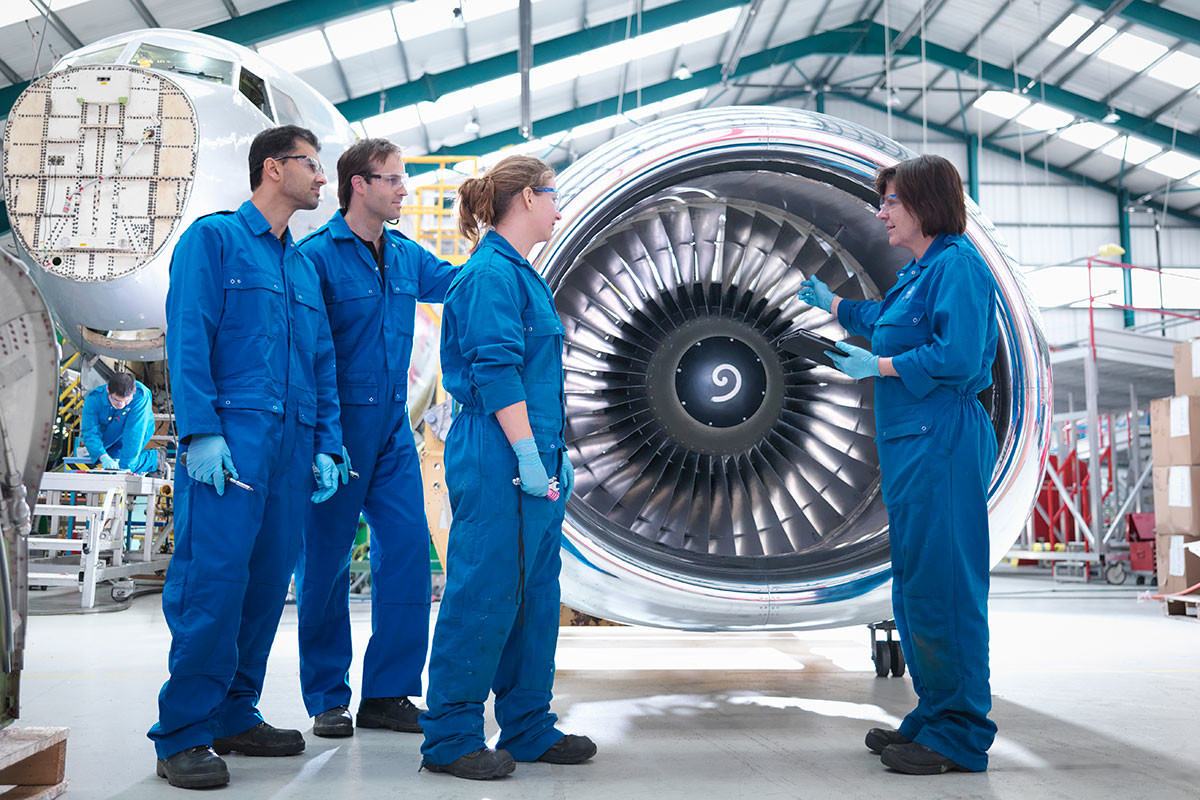
Beyond current capabilities, aerospace engineers are actively researching and developing hypersonic technologies, which aim to achieve speeds many times the speed of sound. This has potential applications in both military and civilian sectors, offering vastly reduced travel times. Concurrently, there is a growing interest in Advanced Air Mobility (AAM), which envisions a future of electric vertical takeoff and landing (eVTOL) aircraft for urban transportation and regional travel. This area requires innovation in battery technology, electric propulsion, autonomous flight control, and air traffic management.
Aerospace engineering is a field that directly contributes to humanity’s ability to explore, connect, and innovate. It is a testament to human ingenuity and a critical driver of technological progress. The challenges are immense, but the rewards – from opening up new frontiers in space to improving air travel on Earth – are equally profound.
Disclaimer: This article is generated based on the provided title and general understanding of the aerospace engineering field. It is intended for informational purposes and does not constitute professional engineering advice.
aViewFromTheCave is a participant in the Amazon Services LLC Associates Program, an affiliate advertising program designed to provide a means for sites to earn advertising fees by advertising and linking to Amazon.com. Amazon, the Amazon logo, AmazonSupply, and the AmazonSupply logo are trademarks of Amazon.com, Inc. or its affiliates. As an Amazon Associate we earn affiliate commissions from qualifying purchases.