
For any business that employs staff, navigating the labyrinth of federal tax obligations can seem like a daunting task. Among the most crucial responsibilities is the accurate and timely filing of IRS Form 941, commonly known as the Employer’s Quarterly Federal Tax Return. This form isn’t just a bureaucratic hurdle; it’s a cornerstone of financial compliance, ensuring that employers correctly report and remit the taxes withheld from employee wages, alongside their own share of specific payroll taxes. Understanding Form 941 is not merely about ticking a box; it’s about safeguarding your business from penalties, maintaining financial integrity, and contributing to the broader economic framework.
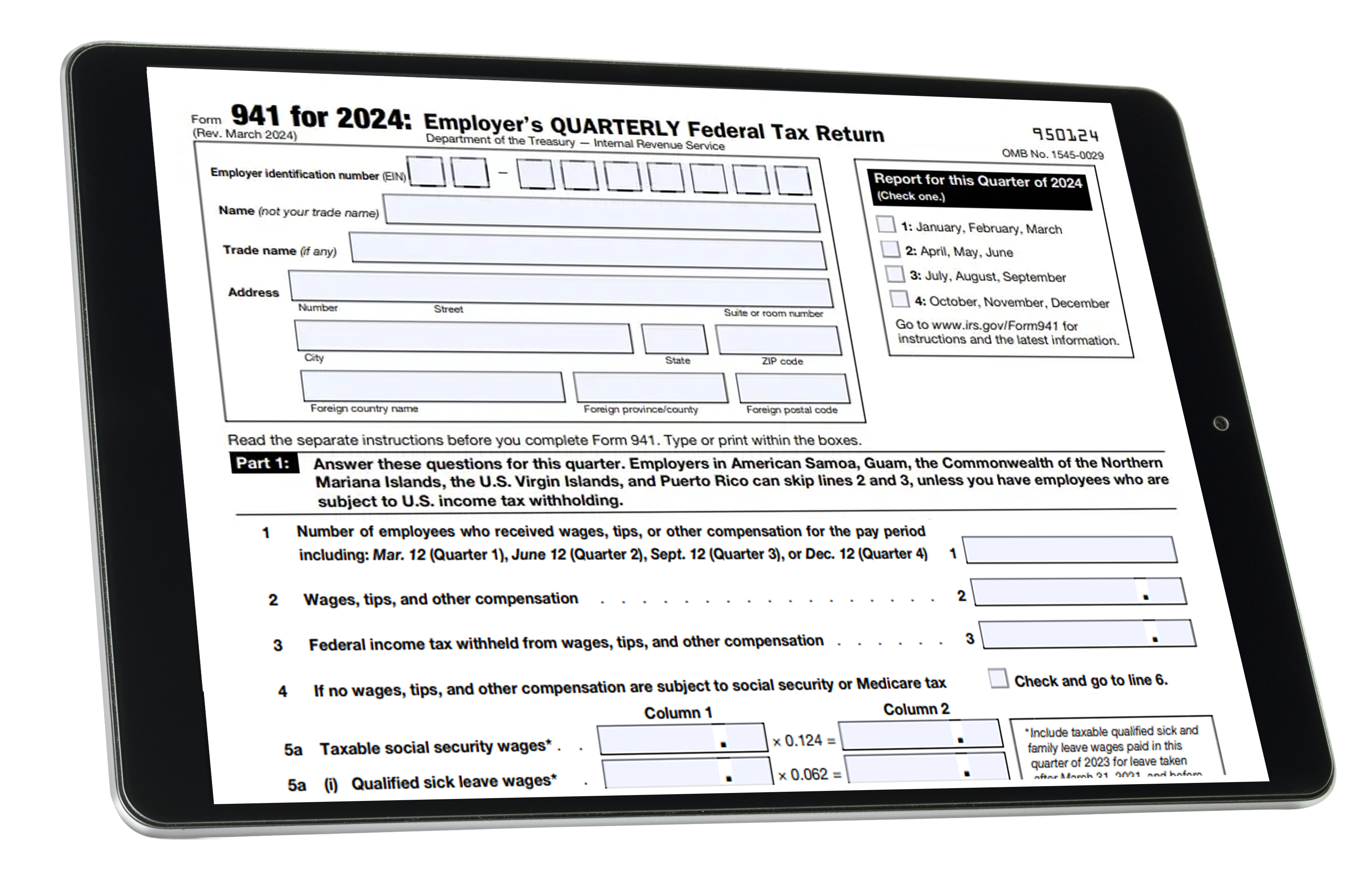
This comprehensive guide delves deep into what Form 941 entails, its critical components, filing requirements, and best practices. We will demystify this essential financial document, providing clarity for business owners, payroll managers, and financial professionals alike, ensuring you have the insights needed to manage your quarterly payroll tax responsibilities effectively.
The Core Purpose of Form 941: A Pillar of Payroll Compliance
At its heart, Form 941 serves as the Internal Revenue Service’s primary mechanism for tracking and collecting payroll taxes from employers. These aren’t just any taxes; they are the lifeblood of critical federal programs, including Social Security and Medicare, as well as federal income tax withholding. For businesses, Form 941 represents a quarterly reconciliation of these financial responsibilities, a declaration of what has been withheld, what is owed, and what has been paid.
Who Needs to File? Understanding the Employer Mandate
Virtually every employer who pays wages subject to federal income tax withholding, social security tax, or Medicare tax must file Form 941. This mandate applies whether your business is a sole proprietorship, partnership, corporation, or LLC. The only exceptions are specific agricultural employers (who use Form 943), household employers (who use Schedule H, Form 1040), and employers of certain non-profit organizations or government entities with unique tax situations. Even if you have no employees in a particular quarter but have a filing history, you might still need to file a “zero return” or indicate that you are no longer liable for filing. This broad scope underscores the form’s universal importance in the financial landscape of employment.
What Information Does it Report? A Snapshot of Your Payroll
Form 941 is a detailed summary of your business’s payroll activity for a given quarter. It requires employers to report:
- Wages, Tips, and Other Compensation: The total amount of taxable wages paid to all employees.
- Federal Income Tax Withheld: The aggregate amount of federal income tax deducted from employee paychecks.
- Social Security and Medicare Taxes (FICA Taxes): Both the employee’s portion (withheld from their wages) and the employer’s matching portion. Social Security tax generally applies up to an annual wage base limit, while Medicare tax has no wage limit.
- Adjustments for Fractions of Cents, Sick Pay, Tips, and Group-Term Life Insurance: Specific adjustments that ensure precise calculations.
- Total Tax Liability: The sum of all taxes due for the quarter, reflecting both withheld amounts and the employer’s share.
- Total Deposits Made: The amounts remitted to the IRS throughout the quarter to cover these liabilities.
This comprehensive reporting ensures that the government has a clear picture of what taxes are being collected and how much is due, acting as a crucial financial control for both the employer and the federal system.
The Role of Payroll Taxes: Funding Essential Services
The taxes reported on Form 941 – Social Security, Medicare, and federal income tax withholding – are not just arbitrary deductions. They are the funding mechanisms for vital social programs and government operations. Social Security provides retirement, disability, and survivor benefits, while Medicare funds health insurance for seniors and certain disabled individuals. Federal income tax withholding contributes to the general revenue that supports a wide array of government services, from national defense to infrastructure. For businesses, accurately managing these payroll taxes is therefore a direct contribution to societal well-being and a fundamental aspect of corporate social responsibility.
Key Components and Sections of Form 941: A Guided Tour
Form 941 is structured logically to guide employers through the reporting process. It comprises several parts, each dedicated to a specific aspect of the quarterly tax reconciliation. Understanding these sections is key to accurate financial reporting and avoiding common errors.
Part 1: Employer and Tax Liability – The Core Calculation
Part 1 is where the bulk of the financial data is reported. It begins by identifying the employer and then moves into calculating the total tax liability. This includes:
- Line 1 & 2: Number of employees and total wages subject to withholding.
- Lines 3-5: Total federal income tax withheld, and the calculation of social security and Medicare taxes, differentiating between taxable amounts and calculating the employer and employee portions.
- Line 6: The sum of all these taxes, representing your total tax before any adjustments.
- Line 7-9: Various adjustments for fractions of cents, sick pay, tips, and other specific situations.
- Line 10: The total tax liability after all adjustments.
- Line 11-15: This section is crucial for reconciling your total tax liability with the deposits you’ve already made throughout the quarter. It determines if you have an overpayment, underpayment, or if your deposits perfectly matched your liability.
Accuracy in Part 1 is paramount, as any discrepancies here will lead to issues with the IRS, potentially resulting in penalties or notices.
Part 2: Deposit Schedule and Tax Adjustments – Detailing Your Payments
Part 2 focuses on how and when you deposited your payroll taxes. This section is specifically for employers whose total tax liability for the quarter (Line 10) is $2,500 or more, or if your previous quarter’s liability exceeded certain thresholds, requiring you to detail your deposit schedule.
- Line 16: This asks about your deposit schedule – whether you are a monthly or semi-weekly depositor. This classification is determined by your total tax liability during a lookback period. Monthly depositors remit taxes by the 15th of the next month, while semi-weekly depositors have more complex rules (Wednesday for payroll paid on Wednesday, Thursday, Friday; Friday for payroll paid on Saturday, Sunday, Monday, Tuesday).
- Line 17: Requires a detailed breakdown of your tax liability for each day of the quarter, even if you are a monthly depositor. This is especially important for semi-weekly depositors who need to match their deposits precisely to their liability accumulated on specific dates. This section is a critical financial control, demonstrating your adherence to IRS payment schedules.
Part 3: Business Information and Changes – Maintaining Up-to-Date Records
This section is less about numbers and more about administrative details that help the IRS maintain accurate records for your business.
- Line 18: Asks if you are a seasonal employer, meaning you typically do not pay wages in every quarter. This helps the IRS understand why you might not file for certain periods.
- Line 19: If you stopped paying wages and no longer have employees, this line allows you to indicate that this is your final return. This is crucial for formally closing your payroll tax account with the IRS.
- Line 20: Allows you to indicate if your business is related to specific types of employment, such as those subject to the American Samoa Economic Development Credit.
Accurate completion of Part 3 ensures the IRS has the most current information about your business’s employment status.
Part 4 & 5: Third-Party Designee & Signatures – Authorization and Attestation
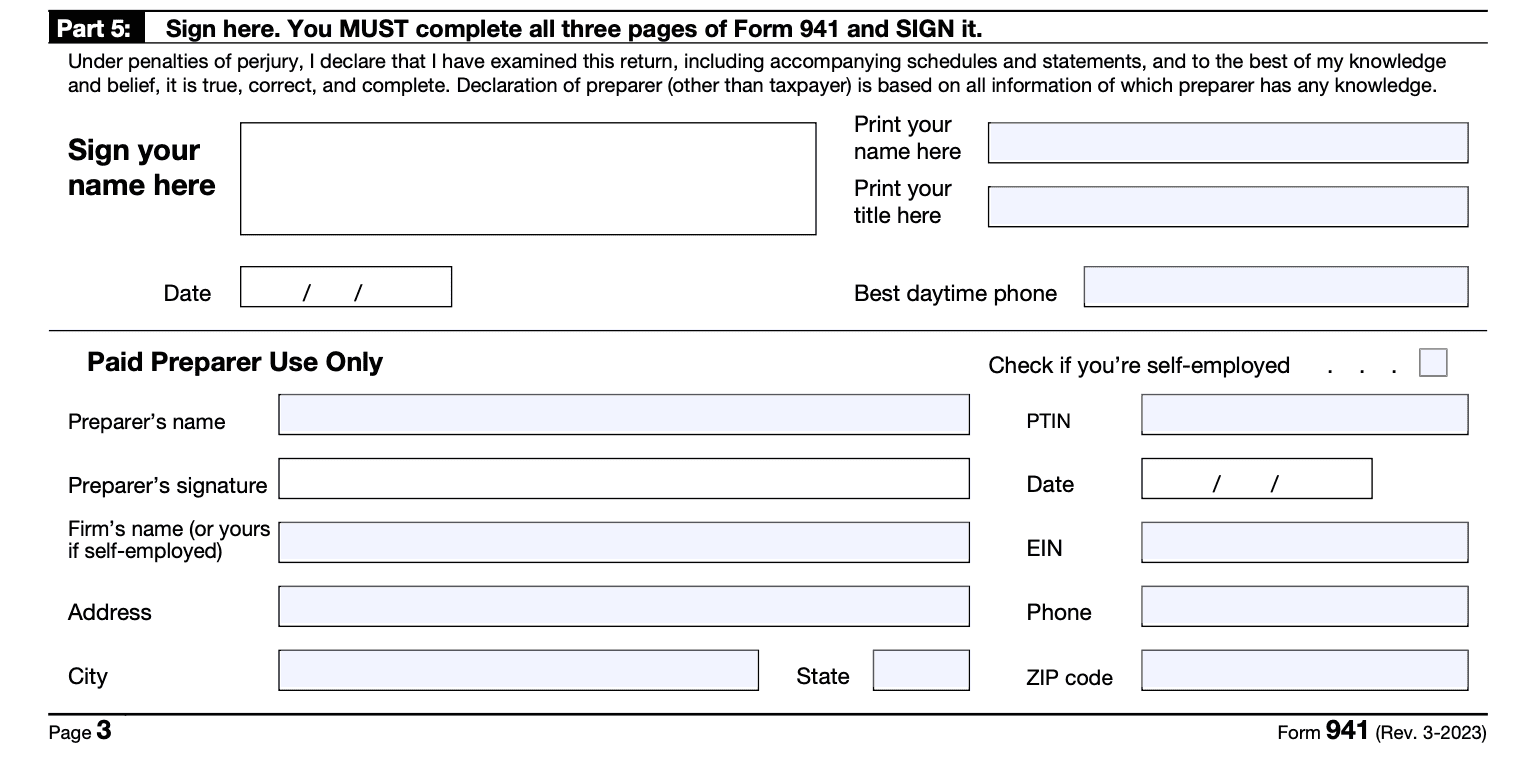
- Part 4 (Third-Party Designee): This optional section allows you to authorize an employee, accountant, or other third party to discuss your Form 941 with the IRS. This can be invaluable for resolving issues or clarifying details without requiring the business owner’s direct involvement every time. It’s a testament to delegating financial responsibilities appropriately.
- Part 5 (Signature): This is where the authorized individual (owner, officer, or partner) signs and dates the form, attesting under penalties of perjury that the information provided is true, correct, and complete. This signature carries significant legal and financial weight.
Filing Deadlines and Payment Requirements: Timeliness is Key
Failing to meet deadlines or incorrectly calculating payments can lead to significant financial penalties. Form 941 operates on a quarterly cycle, with specific deadlines for both filing and depositing taxes.
Quarterly Reporting Schedule: Marking Your Calendar
Form 941 must be filed four times a year, typically by the last day of the month following the end of the quarter:
- Quarter 1 (January 1 – March 31): Due April 30
- Quarter 2 (April 1 – June 30): Due July 31
- Quarter 3 (July 1 – September 30): Due October 31
- Quarter 4 (October 1 – December 31): Due January 31 of the next year
If any of these due dates fall on a weekend or holiday, the deadline shifts to the next business day. There’s also a grace period: if you’ve deposited all your taxes when due, you get an extra 10 calendar days to file the form. This financial rhythm demands consistent attention and planning from businesses.
Understanding Your Deposit Schedule: Monthly vs. Semi-Weekly
The IRS dictates how frequently you must deposit your payroll taxes, not just when you file the Form 941. This “deposit schedule” is based on your total tax liability during a “lookback period.”
- Monthly Depositor: If your total tax liability during the lookback period was $50,000 or less, you are a monthly depositor. This means you must deposit your taxes by the 15th day of the month following the month in which the wages were paid.
- Semi-Weekly Depositor: If your total tax liability during the lookback period was more than $50,000, you are a semi-weekly depositor. This requires more frequent deposits:
- For payments made on Wednesday, Thursday, or Friday, deposit by the following Wednesday.
- For payments made on Saturday, Sunday, Monday, or Tuesday, deposit by the following Friday.
There’s also a “Next-Day Deposit Rule” for employers who accumulate $100,000 or more in tax liability on any single day, requiring deposit by the next business day. All deposits must be made electronically through the Electronic Federal Tax Payment System (EFTPS). Correctly identifying and adhering to your deposit schedule is paramount to avoiding underpayment penalties, which can quickly erode a business’s financial gains.
Penalties for Non-Compliance: The Cost of Errors
The IRS takes non-compliance with payroll tax obligations seriously. Penalties can be assessed for:
- Failure to file: A percentage of the unpaid tax for each month or part of a month the return is late.
- Failure to pay: A percentage of the unpaid tax for each month or part of a month the tax is not paid.
- Failure to deposit: Penalties based on the length of time the deposit is late, ranging from 2% to 15% of the underpayment.
- Incorrect information: Penalties can also apply for providing inaccurate or incomplete data.
These penalties, along with potential interest charges, highlight the financial risk associated with neglecting Form 941 responsibilities. For a business, this can translate into unexpected costs that impact profitability and cash flow.
Common Scenarios and Related Forms: A Broader Financial Context
While Form 941 is central, businesses encounter various situations that require additional considerations or related forms, offering a holistic view of financial compliance.
When Employment Changes Occur (Form 941-X): Correcting Past Mistakes
Mistakes happen, even with the most diligent record-keeping. If you discover an error on a previously filed Form 941, you must correct it using Form 941-X, Adjusted Employer’s Quarterly Federal Tax Return or Claim for Refund. This form allows you to correct underreported or overreported taxes (and claims for refund or abatement) for prior quarters. Filing Form 941-X promptly is crucial for financial reconciliation, especially if it involves overpayments, as there are strict time limits for claiming refunds.
Seasonal Employers and Final Returns: Managing Business Cycles
For businesses with seasonal workforces (e.g., landscaping, tourism), marking yourself as a “seasonal employer” in Part 3 of Form 941 is important. This signals to the IRS that you won’t be filing for every quarter, preventing unnecessary inquiries. If a business ceases operations or stops paying wages, filing a “final return” on Form 941 (by checking Line 19) is a critical step to formally close your payroll tax account and avoid future filing obligations and potential penalties. This ensures a clean financial exit from employer responsibilities.
Distinctions from Other Payroll Tax Forms (e.g., Form 940, W-2/W-3): A Complementary Suite
It’s important not to confuse Form 941 with other related payroll tax documents:
- Form 940 (Employer’s Annual Federal Unemployment (FUTA) Tax Return): This form is filed annually and reports the federal unemployment tax. While both deal with employment taxes, FUTA is separate from the FICA and income taxes reported on Form 941.
- Forms W-2 (Wage and Tax Statement) and W-3 (Transmittal of Wage and Tax Statements): These are annual forms provided to employees and the Social Security Administration, respectively. W-2s report individual employee wages and taxes withheld, and W-3 summarizes all W-2s. The information on Form 941 should reconcile with the totals reported on your W-2s and W-3 for the entire year. These forms together paint a complete financial picture of an employee’s earnings and contributions.
Navigating Form 941: Best Practices and Digital Solutions
Effective management of Form 941 responsibilities requires diligent practices and can be significantly enhanced by modern financial tools.
Accuracy and Record-Keeping: The Foundation of Compliance
The cornerstone of successful Form 941 management is meticulous record-keeping. Maintain detailed, organized records of:
- Employee names, addresses, and Social Security numbers.
- Dates and amounts of all wage payments.
- Amounts of federal income tax, Social Security tax, and Medicare tax withheld from each employee.
- Dates and amounts of all tax deposits made.
- Copies of all filed Forms 941 and 941-X.
These records are indispensable for accurately completing the form, reconciling discrepancies, and providing documentation during an IRS audit. They are the financial backbone of your payroll operations.
Leveraging Payroll Software: Streamlining Financial Processes
Modern payroll software solutions (e.g., QuickBooks Payroll, ADP, Gusto) have revolutionized the way businesses manage Form 941. These tools can:
- Automatically calculate federal income, Social Security, and Medicare tax withholdings.
- Track year-to-date totals for wages and taxes.
- Generate Form 941 pre-filled with your data.
- Facilitate electronic filing directly with the IRS.
- Remind you of deposit due dates and even automate deposits via EFTPS.
By automating these complex calculations and administrative tasks, payroll software significantly reduces the risk of errors, saves time, and ensures timely compliance, thus optimizing a critical financial process.

Seeking Professional Guidance: Expert Financial Navigation
For businesses with complex payroll structures, multiple employees, or those simply seeking peace of mind, consulting with a qualified tax professional or certified public accountant (CPA) is a wise financial investment. A professional can:
- Ensure accurate calculations and correct completion of forms.
- Help you understand your specific deposit schedule and obligations.
- Advise on compliance changes and tax law updates.
- Assist in resolving IRS notices or audits.
Their expertise can prevent costly mistakes and allow business owners to focus on core operations, confident that their payroll tax responsibilities are handled correctly.
In conclusion, Form 941 is more than just another IRS document; it’s a critical financial instrument that underpins employer responsibilities, ensures social program funding, and defines a business’s financial integrity. By understanding its purpose, components, deadlines, and leveraging best practices and modern tools, businesses can confidently navigate their quarterly federal tax obligations, contributing to both their own financial health and the broader economy.
aViewFromTheCave is a participant in the Amazon Services LLC Associates Program, an affiliate advertising program designed to provide a means for sites to earn advertising fees by advertising and linking to Amazon.com. Amazon, the Amazon logo, AmazonSupply, and the AmazonSupply logo are trademarks of Amazon.com, Inc. or its affiliates. As an Amazon Associate we earn affiliate commissions from qualifying purchases.