
In the fast-evolving landscape of modern healthcare, the integration of advanced technology has become the backbone of clinical efficiency. As hospitals and private practices shift toward digitized workflows, the language used to document patient data—medical terminology—serves as the primary software interface for the entire medical ecosystem. Understanding the precision of this specialized language is not merely an academic exercise; it is a fundamental requirement for any professional operating within the health-tech sector. When systems talk to each other, they require a universal syntax that leaves no room for ambiguity.

The importance of standardized medical nomenclature transcends the doctor’s office. It impacts how artificial intelligence algorithms process data, how electronic health records (EHR) exchange information, and how software developers build the next generation of diagnostic tools. For stakeholders in the technology space, grasping these three key reasons for the importance of medical terminology is essential for bridging the gap between clinical reality and digital innovation.
1. Ensuring Seamless Interoperability in Health-Tech Systems
Interoperability is the holy grail of digital healthcare. It is the ability of different information systems, devices, and applications to access, exchange, integrate, and cooperatively use data in a coordinated manner. Without a rigid, standardized set of medical terms, the architecture of modern healthcare software would crumble under the weight of semantic inconsistencies.
The Problem of Semantic Ambiguity
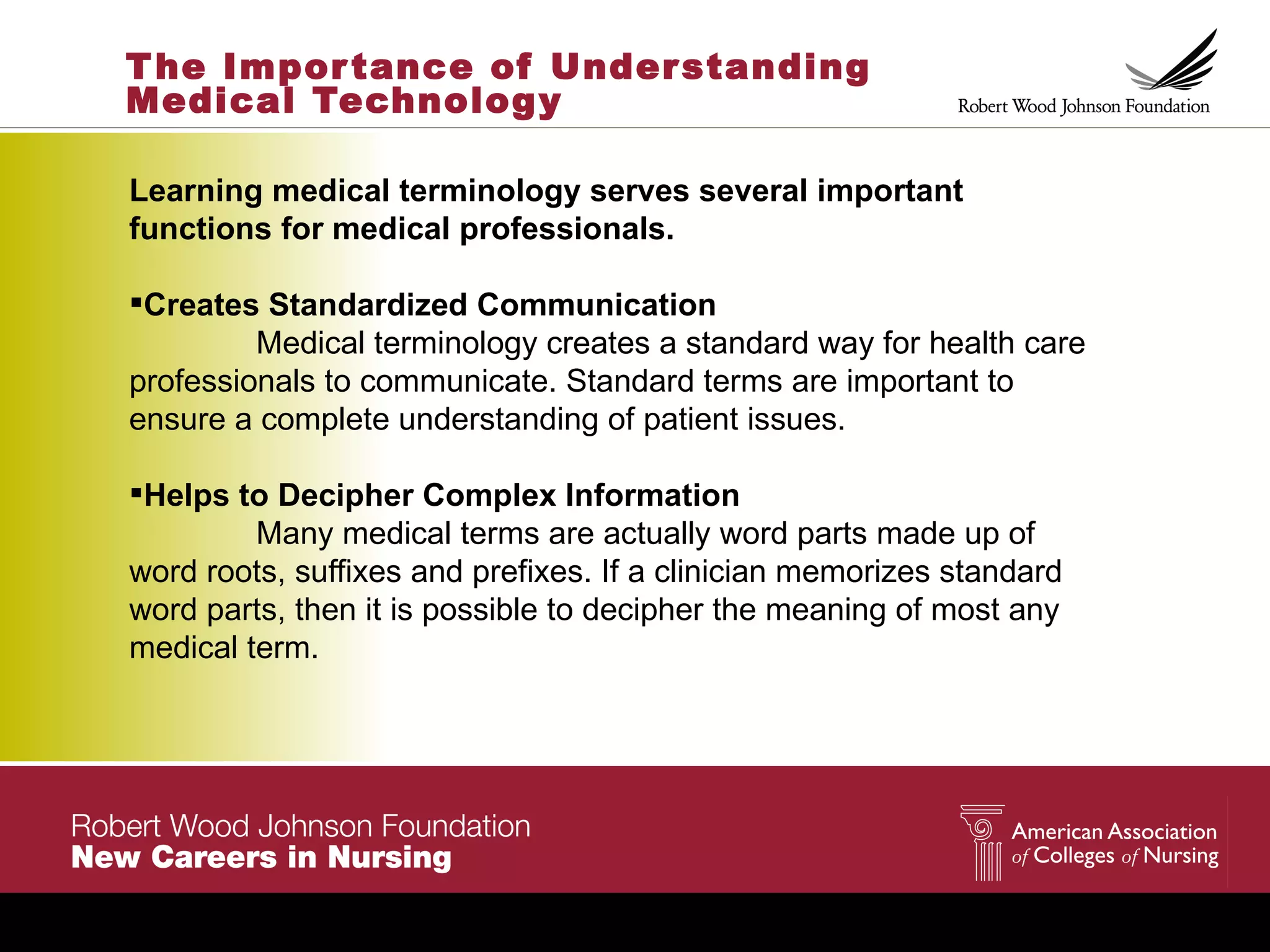
In the world of software development, a variable must be defined with absolute precision to function correctly. If one hospital system uses the term “myocardial infarction” while another uses “heart attack” or “acute MI,” an integrated database will struggle to aggregate this data effectively. Standardized terminology—such as SNOMED CT (Systematized Nomenclature of Medicine—Clinical Terms) or ICD-10 (International Classification of Diseases)—acts as a coding standard. When clinical data is tagged with these standardized codes, software systems can reliably “read” and categorize patient histories, regardless of the user interface or the location of the care facility.
Facilitating API Integration and Data Exchange
Modern healthcare relies on APIs (Application Programming Interfaces) to pull data from various sources, such as wearable devices, laboratory information systems, and imaging databases. If the terminology is inconsistent, the data parsed through these APIs becomes “noise” rather than actionable insight. Developers must prioritize standardized terminology to ensure that the data flowing through a platform remains structured and machine-readable. By adhering to these naming conventions, tech teams ensure that an EHR system can communicate with a billing system, a laboratory platform, and a patient portal without data corruption or loss.
2. Optimizing Machine Learning and Artificial Intelligence Development
Artificial Intelligence (AI) is only as good as the datasets used to train it. In the realm of healthcare, AI models are designed to identify patterns in patient outcomes, predict disease progression, and assist in diagnostic imaging. The accuracy of these models depends entirely on the precision and consistency of the medical terminology contained within the training data.
Enhancing Predictive Accuracy
When developers train an AI model to identify symptoms of a specific condition, the algorithm scans thousands of medical records for keyword triggers. If the medical terminology is poorly structured or inconsistent, the AI may fail to identify critical correlations. For instance, if an algorithm is trained on data where “chronic hypertension” is labeled in ten different ways, the AI might miss the connection between that patient history and a recent cardiovascular event. Using standardized medical terminology ensures that the features fed into an AI model are consistent, high-quality, and structurally sound.
Enabling Natural Language Processing (NLP)
Natural Language Processing is a subset of AI that allows computers to understand, interpret, and manipulate human language. In clinical documentation, doctors often dictate notes that are transcribed into text. To turn this unstructured text into structured insights, NLP engines must be trained to recognize the standard medical nomenclature embedded within the speech. By utilizing robust medical terminology, software developers can build NLP tools that accurately extract relevant clinical data from physician notes, transforming handwritten narratives into structured, analyzable digital logs. This not only speeds up the administrative process but also creates a richer, more reliable data foundation for medical research and clinical decision-making.
3. Enhancing Clinical Decision Support Systems (CDSS)
Clinical Decision Support Systems are digital tools designed to provide clinicians with knowledge and person-specific information, intelligently filtered and presented at appropriate times, to enhance health and health care. These systems essentially act as a “safety net” for medical professionals, catching potential errors before they occur. The effectiveness of these digital safety nets is entirely dependent on the underlying medical terminology.
Reducing Medical Errors Through Digital Safeguards
A primary function of CDSS is to trigger alerts for drug-drug interactions or contraindications. If a patient is prescribed a new medication, the CDSS scans their EHR to ensure the drug won’t conflict with existing conditions or medications. If the medical terminology in the system is not standardized—for example, if the system cannot recognize that “ASA” is a synonym for “aspirin”—the warning might not trigger, leading to a potentially life-threatening medical error. Precision in terminology allows the software to cross-reference databases with clinical accuracy, ensuring that digital alerts are both timely and accurate.
Improving Automated Billing and Compliance
Beyond clinical support, the same technology is vital for administrative efficiency. Modern revenue cycle management systems rely on medical terminology to automate coding and billing processes. When a physician enters a diagnosis, the software uses the standardized term to assign the correct billing code. If the terminology is vague or imprecise, it leads to rejected claims, administrative delays, and audit risks. By integrating a sophisticated understanding of medical language into the back-end of clinical platforms, developers can minimize human error and ensure that financial workflows remain as efficient as the clinical ones.

The Future of Digital Health Hinges on Linguistic Precision
As the healthcare industry continues its digital transformation, the importance of medical terminology cannot be overstated. It is the language of the machine as much as it is the language of the clinician. Whether it is through the development of intuitive mobile health apps, the scaling of complex hospital networks, or the engineering of autonomous diagnostic tools, developers and stakeholders must treat medical terminology as a critical technical asset.
The marriage of medical science and software engineering requires a shared vernacular. When systems are built upon the foundation of standardized clinical terms, the result is a more resilient, efficient, and intelligent healthcare infrastructure. As we look toward the future, the ability to bridge the gap between clinical narratives and structured data will define the winners in the health-tech space. By mastering the nuances of medical terminology, technology companies can ensure that their products not only serve the needs of the present but are capable of scaling to meet the complex, data-driven demands of tomorrow. Precision in language, after all, is the ultimate key to precision in practice.
aViewFromTheCave is a participant in the Amazon Services LLC Associates Program, an affiliate advertising program designed to provide a means for sites to earn advertising fees by advertising and linking to Amazon.com. Amazon, the Amazon logo, AmazonSupply, and the AmazonSupply logo are trademarks of Amazon.com, Inc. or its affiliates. As an Amazon Associate we earn affiliate commissions from qualifying purchases.