
The rise of peer-to-peer (P2P) payment platforms has revolutionized the way we handle money. Whether you are splitting a dinner bill with friends, paying a landlord, or running a burgeoning side hustle, apps like Cash App have become indispensable tools in the modern financial toolkit. However, as these digital wallets become more integrated into our daily lives, they have also caught the attention of the Internal Revenue Service (IRS).
For many users, the primary concern is transparency: What exactly is being reported to the government? Understanding the reporting thresholds and how Cash App distinguishes between a casual gift and taxable income is essential for maintaining financial health and avoiding unexpected tax liabilities.
Understanding the Thresholds for IRS Reporting
The landscape of digital payment reporting has undergone significant shifts over the last few years, leading to a fair amount of confusion among taxpayers. To understand what Cash App reports, one must first understand the mechanism of the Form 1099-K.
The 1099-K Form Explained
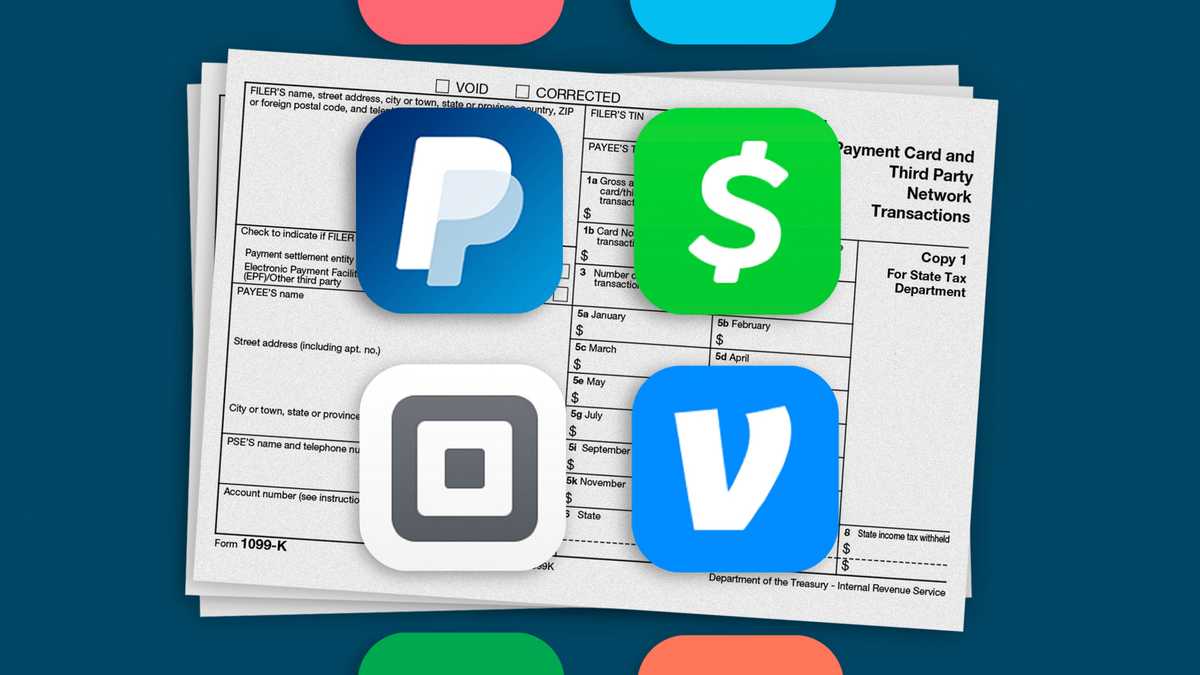
Form 1099-K, titled “Payment Card and Third Party Network Transactions,” is the document used by payment settlement entities—including Cash App, PayPal, and Venmo—to report the gross amount of reportable payment transactions for a calendar year. Historically, the IRS only required these platforms to issue a 1099-K if a user exceeded $20,000 in gross payments and 200 transactions in a single year.
The $600 Reporting Threshold and IRS Delays
Under the American Rescue Plan Act of 2021, the reporting threshold was drastically lowered to just $600 in aggregate annual payments, regardless of the number of transactions. This change was designed to close the “tax gap” by ensuring that freelancers and small business owners accurately report their income.
However, the implementation of this $600 threshold has seen multiple delays. For the most recent tax years, the IRS has treated these as “transition years,” keeping the older, higher thresholds in place while preparing for a phased-in approach. For the 2024 tax year, the IRS has suggested a “threshold of $5,000” as part of a phase-in toward the eventual $600 limit. Users should stay vigilant, as Cash App will report any amount that meets the current federal or specific state-level requirements.
Federal vs. State Requirements
It is a common misconception that federal law is the only factor. Several states—including Massachusetts, Vermont, Maryland, and Virginia—have established their own lower reporting thresholds that predate the federal changes. If you live in one of these states, Cash App may be required to report your earnings to the state tax agency (and subsequently the IRS) even if you do not hit the federal limit.
How Cash App Determines What to Report
One of the most frequent questions from Cash App users is how the app knows the difference between a birthday gift and a payment for a freelance gig. The answer lies in the account type and the “tagging” of transactions.
Identifying “Goods and Services” Transactions
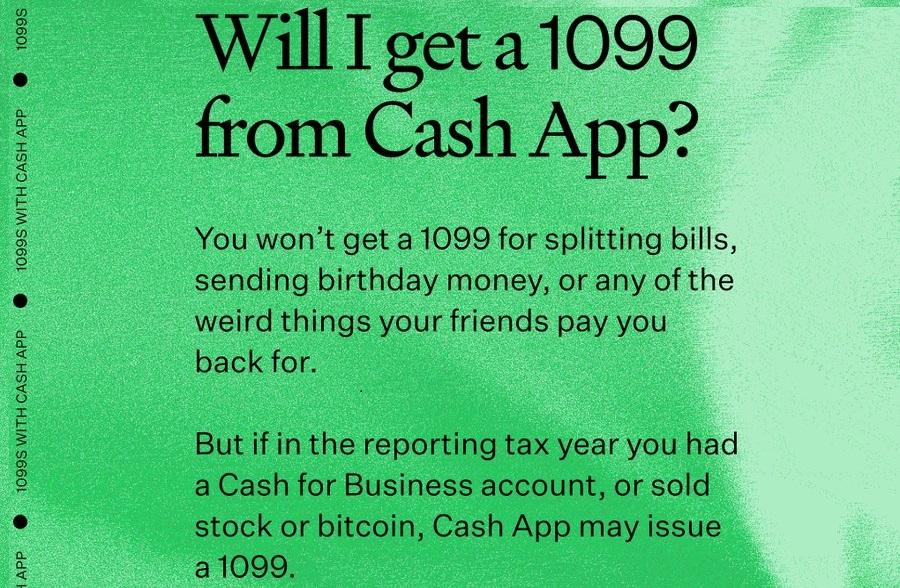
Cash App is designed to distinguish between personal and commercial activity. When a user sends money, they often have the option to designate a payment for “goods and services.” If a payment is flagged as commercial, it counts toward the IRS reporting threshold. If it is marked as a personal payment (friends and family), it generally does not.
The Role of the Cash for Business Profile
If you have a “Cash for Business” account, the reporting rules are more stringent. Cash App presumes that all funds flowing into a business account are taxable revenue. Consequently, the platform tracks the cumulative total of these payments. Once the business account hits the applicable reporting threshold (currently transitioning from $20,000 toward $600), Cash App is legally obligated to generate a 1099-K.
Why Friends and Family Payments Are Usually Safe
The IRS is not interested in the $50 you sent your brother for a holiday gift or the $20 your roommate sent you for half of the pizza. These are considered personal gifts or reimbursements and are not considered taxable income. Cash App’s reporting algorithm is specifically programmed to exclude these personal, non-commercial transactions from the 1099-K calculation, provided the account is a personal one and the transactions are not marked as business-related.
Tax Implications for Different User Types
The financial impact of Cash App reporting depends entirely on how you use the platform. Not all “reported” money is “taxable” money, but the IRS will expect an explanation if the numbers on your tax return do not match the 1099-K forms they receive.
Side Hustlers and Freelancers
If you use Cash App to accept payments for dog walking, tutoring, or selling handmade goods on Etsy, you are considered a sole proprietor in the eyes of the IRS. Even if you do not receive a 1099-K (because you earned, for example, only $500), you are still legally required to report that income on your Schedule C. The reporting threshold only dictates what the platform must report; it does not change your personal obligation to report all income.
Small Business Owners
For established small businesses using Cash App as a primary point-of-sale tool, the 1099-K is a vital piece of documentation. It is important to remember that the 1099-K reports gross payments. It does not account for refunds, credits, or—most importantly—your business expenses. If Cash App reports $10,000 in revenue, you will still need to deduct your costs of goods sold and operating expenses to determine your actual taxable profit.
Casual Users and “The Split-Bill Scenario”
Casual users often fear that receiving a large sum from a friend—perhaps for a group vacation or a shared wedding gift—will trigger a tax audit. Since these are not payments for goods or services, they are not reportable. However, if you are receiving thousands of dollars in “reimbursements” every month, it may trigger an internal review or a request for information from Cash App to ensure the account is not being used for an unregistered business.
Best Practices for Financial Record Keeping
To navigate the complexities of digital payments and IRS scrutiny, proactive organization is the best defense. Relying on an app to do your bookkeeping for you is a risky strategy.
Exporting and Reviewing Transaction History
Cash App allows users to download their transaction history in CSV format via their website. It is a professional best practice to do this monthly or quarterly. By reviewing these logs, you can catch errors where a personal payment might have been incorrectly flagged as business income, or vice versa. Correcting these discrepancies early is much easier than trying to fix them during tax season.
Separating Personal and Business Finances
The most effective way to avoid tax-time headaches is to maintain strict boundaries between your personal and professional life. If you run a business, create a dedicated Cash App for Business account and link it to a business-specific bank account. Do not use your business account to receive personal gifts. This clear “paper trail” makes it much easier to justify your income and deductions if you are ever audited.
Working with Tax Professionals
Tax laws surrounding the “Gig Economy” and P2P apps are in a state of flux. While software can help, consulting with a Certified Public Accountant (CPA) or a tax professional is invaluable. They can help you understand how your Cash App 1099-K interacts with other forms, such as the 1099-NEC (Non-Employee Compensation), and ensure you are taking advantage of all eligible deductions to lower your taxable income.

Conclusion: Compliance and Peace of Mind
The digital economy moves fast, but the fundamental principles of taxation remain the same: income is income, regardless of the platform used to receive it. While the specific amount Cash App reports to the IRS may vary based on evolving federal thresholds and state laws, the trend is toward greater transparency.
By understanding that the $600 threshold is the eventual goal of the IRS, users can prepare themselves today by keeping meticulous records and separating their personal “friends and family” payments from their commercial endeavors. Whether you are a casual user or a full-time entrepreneur, staying informed about these reporting requirements ensures that you can continue to enjoy the convenience of Cash App without the fear of an unexpected tax bill. Managing your digital finances with professional rigor is not just about staying compliant—it is about building a sustainable financial future in an increasingly digital world.
aViewFromTheCave is a participant in the Amazon Services LLC Associates Program, an affiliate advertising program designed to provide a means for sites to earn advertising fees by advertising and linking to Amazon.com. Amazon, the Amazon logo, AmazonSupply, and the AmazonSupply logo are trademarks of Amazon.com, Inc. or its affiliates. As an Amazon Associate we earn affiliate commissions from qualifying purchases.