
In the contemporary digital landscape, we often take for granted the symbols that flicker across our screens. From the code powering the world’s most sophisticated AI models to the simple text messages we send daily, the fundamental building blocks of digital communication remain a set of ancient symbols. To answer the question “what alphabet does English use” from a technological perspective, we must look beyond the 26 letters taught in primary school and explore how the Latin script became the backbone of global computing, data encoding, and software development.
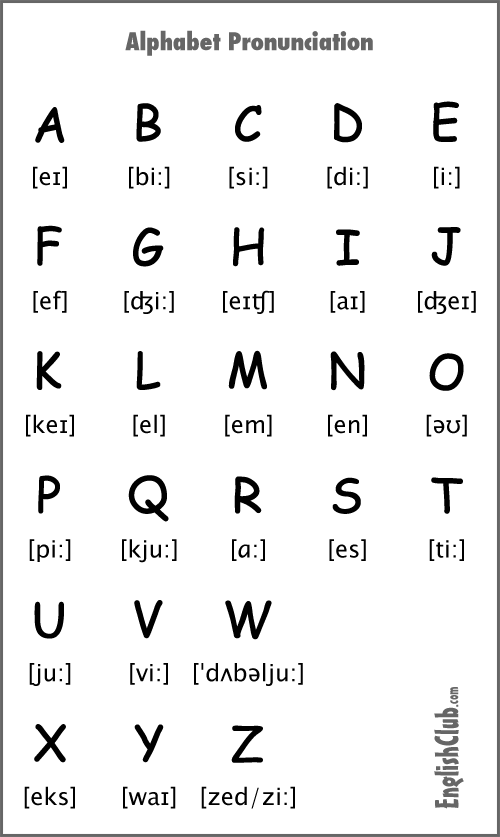
English uses the Latin alphabet, specifically the ISO basic Latin alphabet, consisting of 26 letters. While this script has its roots in Roman antiquity, its integration into technology has transformed it from a mere writing system into a standardized protocol for information exchange. Understanding this transition is essential for anyone navigating the realms of software engineering, digital security, or data science.
The Latin Script and the Architecture of Modern Computing
The English language utilizes the Latin script, a phonetic writing system that evolved over millennia. However, in the tech sector, this alphabet is more than a linguistic tool; it is a structural framework. The simplicity of the 26-letter English alphabet—lacking the complex diacritics of French or the thousands of logograms found in Mandarin—made it the ideal candidate for early computer architecture.
From Ancient Glyphs to Binary Code
At its core, a computer does not understand “letters.” It understands electrical states: on or off, 1 or 0. The challenge for early computer scientists was to map the English alphabet onto these binary sequences. Because the English version of the Latin alphabet is relatively small (26 uppercase and 26 lowercase letters, plus numbers and basic punctuation), it required very little memory to store. This efficiency allowed early hardware designers to create systems that could process text quickly, cementing the Latin script’s dominance in the technological era.
Why the 26-Letter Standard Defined Tech Evolution
The 26 letters of the English alphabet provided a level of standardization that fueled the rapid growth of the internet. During the mid-20th century, as the United States led the charge in semiconductor and software development, the English alphabet became the default “operating system” for human-machine interaction. This led to the creation of the American Standard Code for Information Interchange (ASCII), which specifically prioritized the English alphabet, effectively making it the universal language of hardware.
Character Encoding: The Bridge Between the Alphabet and Hardware
To understand how the English alphabet functions within technology, one must look at character encoding. This is the process of assigning a unique numerical value to each letter. Without these standards, a “B” sent from one computer might appear as a “%” on another.
The Legacy of ASCII and the 7-Bit Constraint
The most significant milestone in the digitalization of the English alphabet was the development of ASCII in 1963. ASCII used a 7-bit encoding system to represent 128 characters. This included the 26 letters of the English alphabet (both cases), numbers 0-9, and various control characters.
For decades, this 7-bit “alphabet” was the ceiling for computing. It was efficient and robust, but it was also exclusionary. Because it was designed specifically for the English alphabet, it lacked the capacity to represent the accents of European languages or the characters of Asian scripts. This technical limitation meant that for the first forty years of the digital revolution, the English alphabet was the only “true” citizen of the digital world, forcing other languages to adapt or be left behind.
Transitioning to Unicode: Expanding the English Alphabet’s Digital Reach
As technology became a global commodity, the limitations of ASCII became a barrier to progress. This led to the creation of Unicode, specifically the UTF-8 encoding standard. While Unicode can represent over 140,000 characters from every language on earth, it was designed to be “backward compatible” with the English ASCII set.
In modern web development and digital security, the English alphabet occupies the first 128 slots of the Unicode table. This means that while we now live in a multilingual digital age, the 26 letters of the English alphabet remain the most stable and “low-cost” characters to process. From a tech standpoint, the English alphabet is the “baseline” upon which all other digital scripts are built.
Input Systems and Human-Computer Interaction
The alphabet English uses is not just defined by how it is stored, but by how it is entered into a system. The physical and virtual interfaces we use today are optimized specifically for the 26-letter Latin script.
The QWERTY Legacy and Modern Keyboard Mapping
The QWERTY keyboard layout is perhaps the most visible tech artifact of the English alphabet. Originally designed for mechanical typewriters to prevent key jams, it has been digitized and remains the standard for almost all English-language devices. In software engineering, “key-mapping” is the process by which a physical keystroke is converted into a digital character.

Because the English alphabet is relatively small, it fits comfortably on a standard handheld device. This spatial efficiency is a major reason why mobile technology proliferated so quickly in English-speaking markets. Comparing the ease of typing the English alphabet to the complex “Input Method Editors” (IMEs) required for logographic scripts highlights the technical advantage of the Latin alphabet’s simplicity.
Voice Recognition and the Phonetic Alphabet in AI
As we move toward “zero-interface” technology, the alphabet is evolving again. Natural Language Processing (NLP) and voice assistants like Alexa or Siri rely on the International Phonetic Alphabet (IPA) to translate the spoken English alphabet into digital commands.
In this context, the “alphabet” becomes a series of phonemes. For a tech system to understand a user, it must break down the 26 letters into their constituent sounds. This represents a leap in digital security and accessibility, where “biometric” voice prints use the unique way an individual pronounces the English alphabet as a form of identification.
The Role of the English Alphabet in Programming and Code
Perhaps the most profound impact of the English alphabet in tech is its role as the primary medium for computer programming. Almost every major programming language—Python, Java, C++, JavaScript—is written using the English alphabet.
Syntax, Semantics, and English-Centric Languages
When a developer writes a “variable,” an “if-else” statement, or a “function,” they are using the English alphabet to communicate with a compiler. This has created a technical environment where the English alphabet is the “source code” of the world’s infrastructure.
While a developer in Tokyo or Berlin might write comments in their native tongue, the actual commands (the syntax) remain tethered to English. This has created a global tech culture where the English alphabet serves as a bridge, allowing developers from different backgrounds to collaborate on open-source projects using a shared set of Latin-based symbols.
Global Accessibility and the Challenges of Non-Latin Development
The reliance on the English alphabet in coding has sparked a debate within the tech community regarding “digital colonialism.” Because the foundational tools of the internet were built using the 26-letter English set, developers who use non-Latin scripts (like Cyrillic, Arabic, or Devanagari) often face higher barriers to entry.
In recent years, we have seen a rise in “Non-English Programming Languages,” but they struggle to gain traction because the existing hardware and cloud infrastructure are optimized for the Latin script. The English alphabet, therefore, isn’t just a choice; it is a legacy system that defines how software is built and maintained.
The Future of the Alphabet in the Age of Generative AI
With the rise of Large Language Models (LLMs) like GPT-4, the way technology “perceives” the English alphabet is changing. AI does not look at letters; it looks at “tokens.”
Tokenization: How LLMs “See” the English Alphabet
In the world of Generative AI, the 26 letters of the English alphabet are broken down into tokens—fragments of words or characters. For instance, the word “alphabet” might be one token, or it might be split into “alpha” and “bet.”
The efficiency of these models is often tied to how well they can tokenize the English alphabet. Because the training data for these models is overwhelmingly English-based, the AI’s “understanding” of the Latin script is far more nuanced than its understanding of other scripts. This ensures that the English alphabet will remain the primary interface for AI-driven innovation for the foreseeable future.
Beyond Text: Multimodal Inputs and Digital Literacy
As we look toward the future, the English alphabet is being integrated into multimodal systems. These are AI tools that can read text from an image (OCR), convert it to speech, or even generate code from a handwritten note.
In this tech-driven future, the question is no longer just “what alphabet does English use?” but rather “how does technology interpret that alphabet?” The 26 letters of the Latin script have transitioned from ink on parchment to pixels on a screen, and finally to multidimensional vectors in a machine-learning model.

Conclusion
The English alphabet—the 26 letters of the Latin script—is the unsung hero of the digital revolution. Its structural simplicity allowed for the creation of ASCII, its flexibility paved the way for Unicode, and its global adoption made it the universal language of programming. As we continue to push the boundaries of AI and digital communication, the English alphabet remains the most resilient and efficient protocol we have for turning human thought into digital reality. Whether you are a software developer, a digital security expert, or a casual user, the Latin script is the code that powers your world.
aViewFromTheCave is a participant in the Amazon Services LLC Associates Program, an affiliate advertising program designed to provide a means for sites to earn advertising fees by advertising and linking to Amazon.com. Amazon, the Amazon logo, AmazonSupply, and the AmazonSupply logo are trademarks of Amazon.com, Inc. or its affiliates. As an Amazon Associate we earn affiliate commissions from qualifying purchases.