
The annual ritual of filing taxes can often feel like navigating a complex maze, fraught with deadlines, intricate forms, and the ever-present desire to ensure accuracy while maximizing any potential refunds or minimizing liabilities. For many, the most significant hurdle isn’t the calculation itself, but rather the initial question: “What documents and information do I actually need to get started?”
This comprehensive guide aims to demystify the tax filing process by detailing every piece of information and documentation required. Whether you’re a first-time filer, have simple W-2 income, or manage a more complex financial portfolio, understanding and gathering these essentials beforehand is the cornerstone of a smooth, accurate, and stress-free tax season. Proper preparation minimizes errors, saves time, and empowers you to approach your tax obligations with confidence.
The Foundation: Essential Personal Information and Identification
Before delving into income and expenses, every tax return begins with the fundamental details that identify you and anyone else included on your return. This foundational information is crucial for the IRS to correctly process your filing and communicate with you.
Personal Identifiers
The accuracy of these basic details is paramount. Errors here can lead to significant delays or rejections of your return.
- Your Social Security Number (SSN) or Individual Taxpayer Identification Number (ITIN): This is your primary identifier for tax purposes. Ensure it is correct and matches the name on your social security card or ITIN documentation.
- Spouse’s SSN/ITIN: If you are filing a joint return, your spouse’s SSN or ITIN is equally critical.
- Dependent’s SSN/ITIN and Birth Dates: For each dependent you plan to claim, you’ll need their full legal name, SSN or ITIN, and their date of birth. The age of your dependents can impact eligibility for certain credits, such as the Child Tax Credit or the Credit for Other Dependents.
- Full Legal Names and Current Addresses: Provide the current legal names and mailing addresses for yourself, your spouse (if filing jointly), and any dependents. This ensures that the IRS can send you any necessary correspondence.
- Previous Year’s Adjusted Gross Income (AGI): If you are filing electronically, you will often need your prior year’s Adjusted Gross Income (AGI) to verify your identity. Keep a copy of your previous year’s tax return readily accessible for this purpose.
Bank Account Information for Refunds or Payments
While not strictly required for the filing itself, having your banking details ready is essential for efficiently receiving any refund you’re due or making any payment you owe.
- Routing Number and Account Number: For direct deposit of refunds or direct debit of payments, you’ll need the routing number and account number of your checking or savings account. Direct deposit is generally the fastest and most secure way to receive your refund. Conversely, direct debit simplifies paying any tax owed without the hassle of mailing a check.
Income Documentation: Showing What You Earned
The core of any tax return involves reporting all your income sources. This typically comes in the form of official statements from employers, financial institutions, and other entities that have paid you throughout the year. Each type of income has a specific form associated with it, making it easier to categorize and report.
Employment Income
For most employed individuals, the W-2 is the most familiar income document.
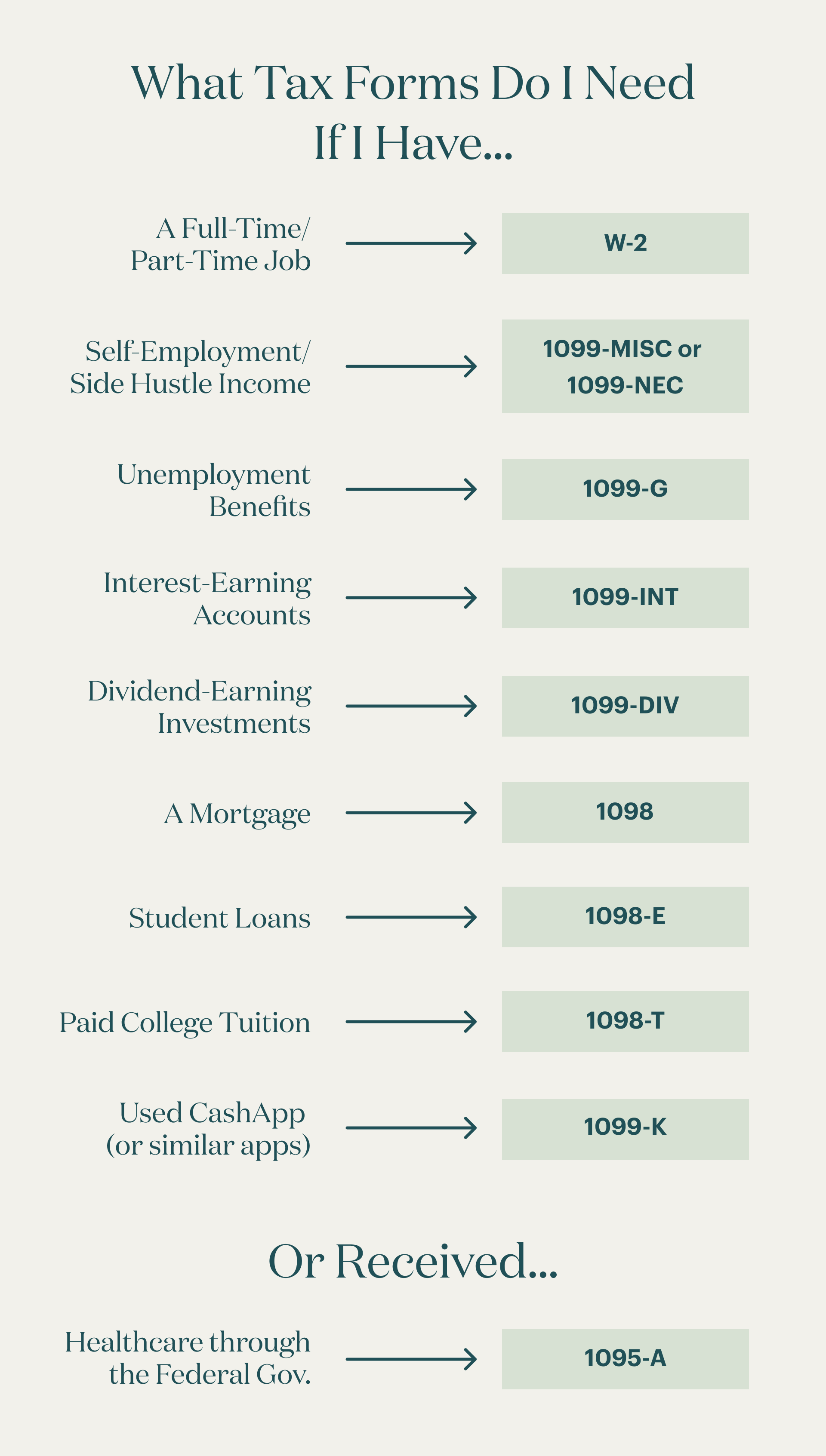
- Form W-2, Wage and Tax Statement: You should receive a W-2 from each employer you worked for during the tax year. This form reports your total wages, tips, and other compensation, as well as the amount of federal, state, and local taxes withheld from your pay. Pay careful attention to boxes 1-17, as each provides crucial information for different parts of your tax return.
Other Taxable Income
Beyond traditional employment, income can derive from numerous other sources, each requiring specific documentation.
- 1099 Forms (Various Types): These forms report different types of non-wage income.
- Form 1099-INT: Reports interest income earned from banks, credit unions, and other financial institutions.
- Form 1099-DIV: Reports dividend income from stocks, mutual funds, and other investments.
- Form 1099-B: Reports proceeds from broker and barter exchange transactions, primarily for sales of stocks, bonds, and other securities. You’ll need this to calculate capital gains or losses.
- Form 1099-R: Reports distributions from pensions, annuities, retirement or profit-sharing plans, IRAs, and insurance contracts.
- Form 1099-NEC: Reports nonemployee compensation, primarily for independent contractors or freelancers. This form replaced Box 7 of Form 1099-MISC for reporting independent contractor payments.
- Form 1099-G: Reports certain government payments, such as unemployment compensation or state and local tax refunds.
- Form 1099-K: Reports payment card and third-party network transactions. This is often relevant for online sellers, gig economy workers, and small businesses that accept payments through services like PayPal, Stripe, or Square.
- Schedule K-1: If you are an owner or beneficiary of a partnership, S corporation, or trust, you’ll receive a Schedule K-1 detailing your share of the entity’s income, deductions, credits, etc.
- Rental Income & Royalties: If you own rental properties or receive royalties, you’ll need detailed records of all income received and expenses paid related to these activities.
- Alimony Received: For divorce or separation agreements executed before January 1, 2019, alimony received is taxable income. You’ll need records of these payments.
- Gambling Winnings: If you had significant gambling winnings, you might receive a Form W-2G. Regardless, all gambling winnings are taxable and should be reported.
- Miscellaneous Income: Any other income not covered by specific forms, such as prize money, awards, jury duty pay, or certain types of tips not reported on a W-2, must also be reported. Maintaining a personal ledger of these smaller income streams is good practice.
Expense and Deduction Documentation: Lowering Your Taxable Income
Once your income is accounted for, the next step is to identify deductions that can reduce your taxable income. These deductions can significantly lower your overall tax bill. You’ll need meticulous records to substantiate any claims.
Itemized Deductions (Schedule A)
While many taxpayers opt for the standard deduction, itemizing can lead to greater savings if your qualifying expenses exceed the standard amount.
- Medical Expenses: Gather receipts for out-of-pocket medical, dental, and vision care expenses that exceed 7.5% of your Adjusted Gross Income (AGI). This includes doctor and hospital bills, prescription costs, insurance premiums not already deducted pre-tax from your paycheck, and mileage for medical travel.
- State and Local Taxes (SALT): This includes property tax statements, state income tax paid, and sales tax receipts. The deduction for state and local taxes is capped at $10,000 per household ($5,000 for married filing separately).
- Mortgage Interest and Points: If you own a home and have a mortgage, you’ll receive Form 1098, Mortgage Interest Statement, from your lender, showing the interest paid during the year. This form also typically reports real estate taxes paid and mortgage insurance premiums.
- Charitable Contributions: Keep records of all cash and non-cash donations to qualified charitable organizations. For cash donations, you need bank records or written acknowledgments. For non-cash donations, especially larger ones, you may need an appraisal.
- Casualty and Theft Losses: While largely repealed, this deduction is still available for losses incurred in federally declared disaster areas. You’ll need documentation of the loss and the disaster declaration.
Above-the-Line Deductions (Adjustments to Income)
These deductions are subtracted from your gross income before calculating your AGI, regardless of whether you itemize or take the standard deduction.
- IRA Contributions: Documentation of contributions made to a traditional IRA.
- Student Loan Interest: If you paid interest on a qualified student loan, you’ll typically receive Form 1098-E, Student Loan Interest Statement.
- Health Savings Account (HSA) Contributions: Records of contributions made to your HSA. You might receive Form 5498-SA.
- Self-Employment Tax: If you’re self-employed, you can deduct one-half of your self-employment taxes.
- Educator Expenses: Qualified K-12 educators can deduct up to a certain amount for unreimbursed classroom expenses. Keep receipts for supplies purchased.
- Alimony Paid: For divorce or separation agreements executed before January 1, 2019, alimony paid is deductible. You’ll need records of these payments and your ex-spouse’s SSN.

Credits and Other Supporting Documents: Reducing Your Tax Bill
Tax credits are particularly valuable because they directly reduce the amount of tax you owe, dollar for dollar, unlike deductions which only reduce your taxable income. Many credits also require specific forms and documentation.
Education Credits
If you or your dependents are pursuing higher education, several credits can help offset costs.
- Form 1098-T, Tuition Statement: This form reports tuition and related expenses paid to eligible educational institutions, essential for claiming the American Opportunity Tax Credit or the Lifetime Learning Credit.
- Receipts for Books and Supplies: While 1098-T covers tuition, you’ll need separate receipts for course-related books, supplies, and equipment not included in the tuition statement.
Child-Related Credits
Families with children can often benefit from significant tax relief.
- Child and Dependent Care Expenses: If you paid for childcare for a dependent under age 13 (or a disabled dependent/spouse) to work or look for work, gather receipts for daycare, after-school care, or summer day camp. You’ll also need the care provider’s name, address, and Employer Identification Number (EIN) or Social Security Number (SSN).
- Child Tax Credit: This credit is based on the number and age of qualifying children. Ensure you have their SSN or ITIN.
Retirement Savings Contributions Credit (Saver’s Credit)
This credit helps low- and moderate-income taxpayers who save for retirement.
- Records of IRA or Employer-Sponsored Retirement Plan Contributions: Documentation of contributions to a 401(k), 403(b), IRA, or other eligible retirement plans.
Health Insurance Related Documents
The Affordable Care Act (ACA) introduced specific forms related to health coverage.
- Form 1095-A, Health Insurance Marketplace Statement: If you purchased health insurance through a state or federal marketplace, this form is crucial for claiming the Premium Tax Credit.
- Form 1095-B or 1095-C: These forms confirm that you (and your family) had minimum essential health coverage for the year. While often not required for filing, they can be helpful for your records.
Other Relevant Forms and Documents
- Prior Year’s Tax Return: As mentioned, useful for AGI verification and for carrying over losses or other calculations that span multiple tax years.
- Foreign Tax Information: If you paid taxes to a foreign country, you might need documents to claim a foreign tax credit.
- Energy-Efficient Home Improvements: Receipts and manufacturer’s certifications for qualifying energy-efficient upgrades to your home.
Strategic Preparation: Organizing for Success
Gathering documents is only half the battle. Strategic organization and a methodical approach can transform a potentially stressful task into a manageable process.
The Power of Organization
Proactive organization throughout the year is your best defense against tax season chaos.
- Create a Dedicated Tax Folder: Establish a physical or digital folder specifically for tax documents. As W-2s, 1099s, and other statements arrive in January and February, place them directly into this folder.
- Categorize Documents: Within your folder, consider creating sub-sections for “Income,” “Expenses/Deductions,” and “Credits.” This makes it easy to quickly locate specific information when you begin preparing your return.
- Maintain Clear Records of Estimated Tax Payments: If you are self-employed or have significant income not subject to withholding, you likely make quarterly estimated tax payments. Keep accurate records of the dates and amounts of these payments.
Review and Verify
Before submitting your return, take the time to meticulously review all your collected documents and the information you’ve entered.
- Cross-Check Forms Against Personal Records: Compare the figures on your official tax documents (W-2s, 1099s) with your pay stubs, bank statements, or personal ledgers.
- Ensure SSNs/ITINs Are Correct: A common error is a transposed digit in a Social Security Number. Double-check all identifiers.
- Look for Discrepancies: If you find any discrepancies between your records and the official forms, contact the issuer (employer, bank, broker) immediately to request a corrected document. Filing with incorrect information can lead to processing delays or audit triggers.
When to Seek Professional Help
While many taxpayers can successfully file their own returns using software, certain situations warrant the expertise of a qualified tax professional.
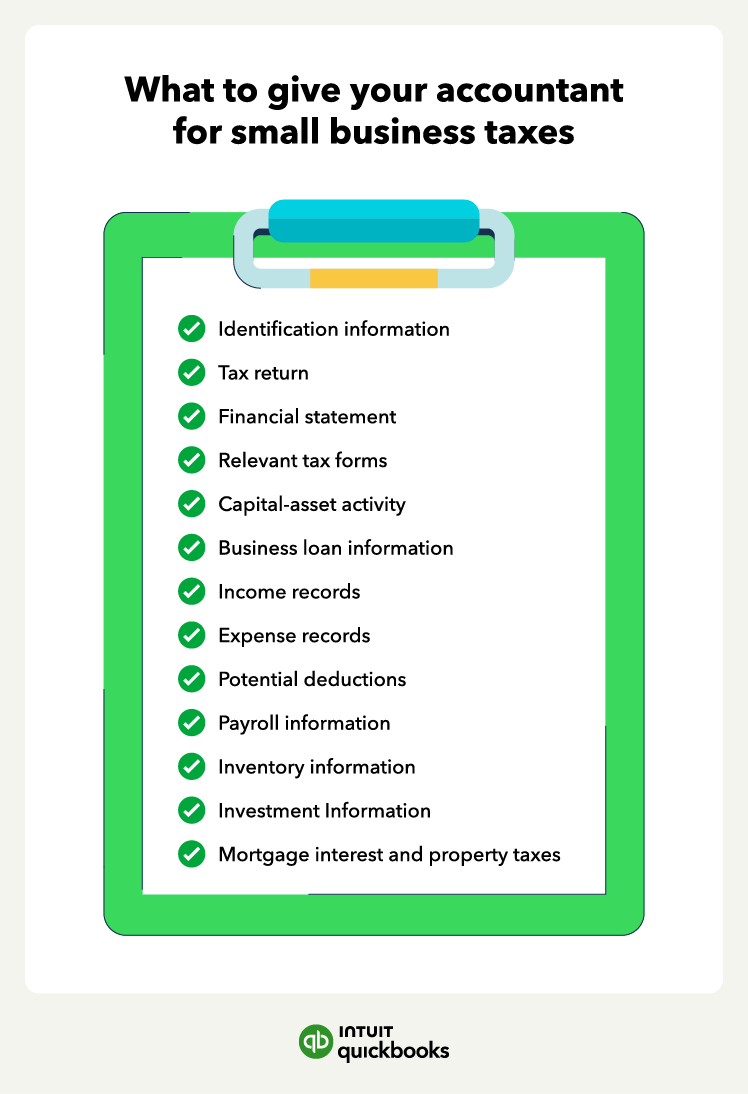
- Complex Financial Situations: This includes significant self-employment income, extensive investments (especially with various capital gains/losses), foreign income, or complex real estate transactions.
- Major Life Changes: Events such as marriage, divorce, the birth of a child, purchasing a home, or starting a business can significantly alter your tax situation and benefit from professional guidance.
- Uncertainty About Specific Deductions or Credits: Tax laws are constantly changing. A professional can ensure you claim all eligible deductions and credits correctly.
- Audit Concerns: If you’ve received a notice from the IRS or fear an audit, a tax professional can represent you and guide you through the process.
- Time Constraints: If you lack the time or confidence to prepare your own return accurately, outsourcing to a professional can save you stress and potential errors.
In conclusion, compiling the necessary documents to file your taxes doesn’t have to be a bewildering ordeal. By understanding the categories of information required—personal identifiers, various income statements, receipts for deductions, and forms for credits—you can systematically gather everything you need. Starting early, maintaining organized records throughout the year, and carefully reviewing all details are the hallmarks of a successful tax filing experience. Remember, being prepared not only ensures accuracy but also instills peace of mind, allowing you to fulfill your tax obligations efficiently and confidently.
aViewFromTheCave is a participant in the Amazon Services LLC Associates Program, an affiliate advertising program designed to provide a means for sites to earn advertising fees by advertising and linking to Amazon.com. Amazon, the Amazon logo, AmazonSupply, and the AmazonSupply logo are trademarks of Amazon.com, Inc. or its affiliates. As an Amazon Associate we earn affiliate commissions from qualifying purchases.