
The academic and professional worlds are undergoing a profound transformation, driven by the rapid evolution of artificial intelligence. Tools like ChatGPT, Bard, and other sophisticated large language models (LLMs) have blurred the lines of authorship, making it increasingly challenging to discern human-created content from machine-generated text. For decades, Turnitin has stood as the undisputed benchmark for plagiarism detection, a critical tool in upholding academic integrity across educational institutions globally. However, the advent of AI-generated content presents a new paradigm, one that traditional plagiarism checkers were not initially designed to address. This shift has created an urgent demand for AI detection tools that can operate with the same level of accuracy, integration, and reliability as Turnitin, prompting a fervent search for what AI detector is most similar to its revered predecessor.
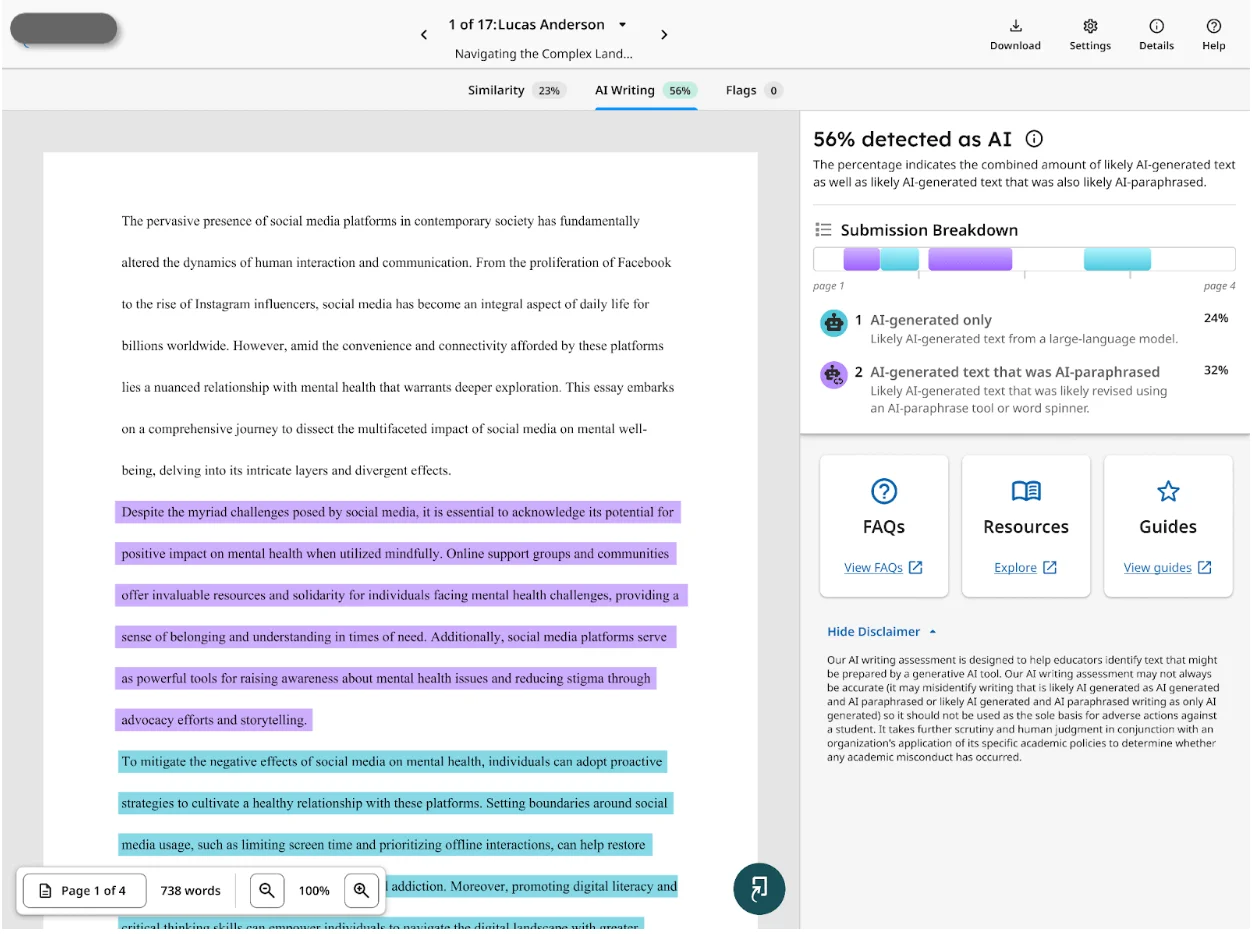
This article delves into the burgeoning landscape of AI detection, exploring tools that are attempting to emulate Turnitin’s comprehensive approach while tackling the unique challenges posed by artificial intelligence. We will examine their methodologies, evaluate their strengths and weaknesses, and consider their implications for technology trends, digital security, educational practices, and even the broader brand reputation of institutions and individuals. Our goal is to provide a comprehensive guide for educators, institutions, and professionals seeking to navigate this complex environment, identifying the most promising contenders in the race to maintain originality and ethical standards in the age of AI.
Understanding Turnitin’s Legacy and Why Similarity Matters
Turnitin’s dominance in academic integrity is not merely accidental; it’s the result of decades of development, extensive integration into learning management systems (LMS), and a deep understanding of educational needs. Its long-standing presence has established it as the gold standard for identifying textual similarity and potential plagiarism. To understand which AI detectors are “most similar,” we must first appreciate the multifaceted nature of Turnitin’s impact and the specific features that have cemented its reputation.
More Than Just Plagiarism: The Evolution of Academic Integrity
When Turnitin first emerged, its primary function was to compare student submissions against a vast database of web pages, academic journals, and previously submitted papers. Its “Similarity Report” became an indispensable tool for educators, highlighting potential instances of plagiarism and fostering a culture of original thought. The system effectively educated students on proper citation and avoided unintentional plagiarism, while also deterring more deliberate attempts to pass off others’ work as their own. This holistic approach, encompassing both detection and pedagogical feedback, made Turnitin an integral part of the academic workflow.
However, AI-generated content introduces a distinct challenge. While using an LLM to produce an essay might be academically dishonest, it doesn’t necessarily constitute “plagiarism” in the traditional sense, as it’s not directly copying another human’s words without attribution. Instead, it’s a form of academic misconduct that undermines learning objectives and the development of critical thinking skills. Institutions are now tasked with updating their academic integrity policies to explicitly address AI use, and they need tools that can effectively identify such instances, much like Turnitin identified plagiarism. The similarity sought in AI detectors is not just in what they detect, but in how comprehensively and how seamlessly they integrate into the educational ecosystem, offering actionable insights rather than just raw data.
Key Features Defining a Benchmark Detector
A tool aspiring to be “similar to Turnitin” in the AI detection space must possess a comparable suite of features and capabilities. These include:
- Comprehensive Database & Analysis: Turnitin boasts an enormous repository of academic works and web content. An effective AI detector needs access to a similarly vast and continuously updated dataset of both human-written and AI-generated texts to accurately train its algorithms.
- Granular Reporting & Insights: Turnitin’s Similarity Report doesn’t just flag plagiarism; it provides detailed breakdowns, highlighting specific passages, identifying sources, and offering a percentage score. An AI detector needs to offer equally granular reports, explaining why a text is flagged as AI, providing confidence scores, and allowing educators to investigate further.
- Seamless LMS Integration: One of Turnitin’s greatest strengths is its deep integration with popular LMS platforms like Canvas, Moodle, and Blackboard. This allows for effortless submission, grading, and feedback workflows. Any AI detector hoping to achieve similar institutional adoption must offer comparable integration capabilities, minimizing friction for both students and educators.
- User-Friendly Interface: Educators are busy professionals. A tool must be intuitive, easy to navigate, and provide clear, actionable information without requiring extensive training.
- Focus on Pedagogical Support: Beyond mere detection, Turnitin has evolved to include features that support writing development and feedback. While direct parallels for AI detection are still emerging, the ideal AI detector should similarly aim to help educators guide students in the ethical and responsible use of AI, rather than just acting as a punitive measure.
- High Accuracy and Low False Positives: Crucially, any detection tool must be highly accurate and minimize false positives – instances where human-written text is mistakenly flagged as AI. The reputational and academic consequences of false accusations are severe, underscoring the need for reliability.
Top AI Detectors Vying for Similarity with Turnitin
The market for AI detection tools is dynamic, with new entrants emerging frequently and established platforms adapting their offerings. While no single tool has yet replicated Turnitin’s market saturation or its comprehensive feature set for all forms of originality checking, several are making significant strides in AI detection, aiming for a similar level of reliability and integration.
Dedicated AI Detection Platforms
These platforms have been purpose-built with AI detection as their primary focus, often leveraging advanced machine learning models to identify patterns indicative of LLM generation.
- GPTZero: Arguably one of the most well-known dedicated AI detectors, GPTZero gained prominence rapidly due to its origin as a student project by Edward Tian from Princeton University. It focuses on analyzing two key metrics: “perplexity” (how complex or unpredictable the text is) and “burstiness” (the variation in sentence length and structure). Human writing typically exhibits higher burstiness and often lower perplexity than AI, which tends to be more uniform and predictable. GPTZero is particularly aimed at educators, offering a simple interface to check individual documents or batches of files. While it boasts a user-friendly design and a strong pedagogical focus, its accuracy can vary, especially with shorter texts or highly edited AI output. It aims for LMS integration, recognizing that this is crucial for institutional adoption, much like Turnitin. The brand of GPTZero is built around transparency and an academic origin, which resonates well with educational institutions.
- Originality.ai: This tool distinguishes itself by offering both AI detection and plagiarism detection, positioning itself as a comprehensive content integrity solution. Originality.ai targets a broader audience, including content marketers, web publishers, and SEO professionals, in addition to educators. Its models are continuously updated, often boasting higher accuracy rates for various LLMs. It provides a detailed originality score and highlights suspected AI-generated passages. Unlike some free tools, Originality.ai operates on a credit-based pricing model, implying a professional-grade service with dedicated support and development. Its similarity to Turnitin lies in its dual-purpose detection capabilities and its ambition to serve as a reliable gatekeeper for digital content, ensuring that the “brand” of content creators remains authentic.
- ZeroGPT: Positioned as a widely used, free AI content detector, ZeroGPT appeals to a broad audience, from students and freelancers to educators seeking a quick check. It claims a high percentage of accuracy and highlights sentences it deems AI-generated. While its user interface is straightforward, its methodology is often less transparent than commercial counterparts, and as with many free tools, its enterprise-level integration and robust support might be limited compared to Turnitin. Its popularity stems from accessibility, making it a good initial screening tool, but perhaps not a definitive institutional solution. The “money” aspect here is its free nature, which impacts its sustainability model and potentially its long-term development compared to subscription-based services.
Plagiarism Tools Expanding into AI Detection
Recognizing the evolving landscape, many established plagiarism detection services are now integrating AI detection capabilities into their existing platforms, leveraging their existing user bases and infrastructure.
- Turnitin’s Own AI Detection Feature: It’s imperative to acknowledge that Turnitin itself has integrated AI writing detection capabilities directly into its flagship product. Launched in early 2023, this feature is perhaps the most similar to Turnitin’s original plagiarism detection, simply because it is Turnitin. It leverages years of data science and pedagogical insights, seamlessly integrating AI detection scores into the existing Similarity Report. For institutions already using Turnitin, this means a unified platform for both traditional plagiarism and AI-generated content detection, minimizing the need for new software or workflows. This move solidifies Turnitin’s brand as a comprehensive academic integrity solution provider and reduces the learning curve for educators. It’s a prime example of an established “tech” solution evolving to meet new challenges.
- QuillBot (via integrated AI detection): Known primarily as a paraphrasing and grammar tool, QuillBot has, like many writing assistance platforms, recognized the need for content originality checks. While its primary function isn’t detection, its connection to the writing process makes it a natural fit for integrating AI and plagiarism checkers. Often, such tools partner with or acquire AI detection engines to offer a combined service. Their existing user base (students, writers) makes them accessible, and their focus on improving writing often goes hand-in-hand with ensuring originality.
- Copyscape (and similar web content checkers): Traditionally used by webmasters and content creators to prevent duplicate content, tools like Copyscape are also feeling the pressure to identify AI-generated text. While their initial focus was on detecting direct copies across the internet (which could also apply to AI-generated text if it’s copied from another source), they are adapting their algorithms to identify the stylistic patterns of LLMs. These tools are often more relevant for “brand” protection in the digital marketing sphere, ensuring unique content for SEO and online reputation. Their similarity to Turnitin lies in their role as guardians of content originality, albeit in a different domain.
Beyond Detection: The Broader Implications for Tech and Education
The pursuit of effective AI detection extends far beyond merely identifying whether a text was written by a human or a machine. It touches upon profound ethical considerations, pedagogical approaches, and the very future of how we interact with technology in learning and professional contexts.
Accuracy, False Positives, and the Ethics of AI Detection
The fundamental challenge with AI detection lies in its inherent probabilistic nature. Unlike traditional plagiarism, which can often be definitively proven by direct source matching, AI detection relies on statistical analysis and pattern recognition. This leads to the critical issue of false positives, where genuinely human-written content is mistakenly flagged as AI-generated. The ethical ramifications of such errors are immense, potentially leading to accusations of academic dishonesty, damaged student reputations, and a breakdown of trust between educators and learners.
This problem highlights a key “tech” challenge: the “arms race” between generative AI and detection AI. As LLMs become more sophisticated and adept at mimicking human writing styles (including “burstiness” and “perplexity”), detection tools must continuously evolve. This constant adaptation demands significant investment in R&D, advanced machine learning, and vast datasets. For educators and institutions, it means that no AI detector can be considered 100% foolproof. Human judgment remains paramount. The ethical framework must therefore shift from absolute detection to informed evaluation, using detection tools as one piece of evidence among many, rather than a definitive verdict. Establishing clear institutional policies and providing avenues for appeal are crucial for maintaining fairness and academic integrity in this new era.
The Impact on Learning, Creativity, and Critical Thinking
The prevalence of AI writing tools forces a reevaluation of learning objectives and assessment methods. If students can easily outsource their writing tasks to an AI, what does that mean for the development of their critical thinking, analytical, and communication skills? The “brand” of an educational institution is intrinsically linked to the quality of its graduates and their ability to think independently. If AI use undermines these core competencies, it directly impacts the value proposition of education itself.
Instead of outright banning AI, many educators are exploring ways to integrate it ethically into the curriculum, teaching students how to use AI as a tool for brainstorming, research, and refinement, while still requiring them to demonstrate original thought and critical analysis. This shift necessitates new pedagogical approaches, perhaps focusing more on in-class assignments, oral examinations, or projects that demand unique problem-solving skills that AI cannot yet fully replicate. The “money” aspect also comes into play here: institutions invest heavily in educational infrastructure, and if the output quality is compromised by uncritical AI reliance, the return on that investment diminishes. Conversely, learning to leverage AI effectively and ethically could become a crucial skill for future careers, impacting personal branding and employability.
Choosing the Right Tool: Factors for Educators and Institutions
Selecting an AI detection tool that aligns with Turnitin’s reliability and comprehensive approach requires careful consideration of various factors, moving beyond mere technological capabilities to encompass institutional policies, financial implications, and user experience.
Key Considerations for Implementation
Institutions looking for an AI detector “most similar to Turnitin” should evaluate potential solutions based on a holistic set of criteria:
- Integration with Existing Systems: Paramount is seamless integration with Learning Management Systems (LMS) like Canvas, Moodle, Blackboard, or other institutional platforms. Turnitin’s success is partly due to its deep embedment in these workflows. Any new AI detector must offer comparable APIs and integration options to minimize administrative overhead and ensure a smooth user experience for both faculty and students. This is a core “tech” requirement that ensures productivity.
- Accuracy and Reliability Metrics: Demand transparent data on accuracy rates, particularly concerning false positives. Institutions need tools that are rigorously tested against diverse datasets of human and AI-generated content. Pilot programs and internal testing can help evaluate real-world performance with institutional assignments. The “brand” of an institution depends on fair and accurate assessments.
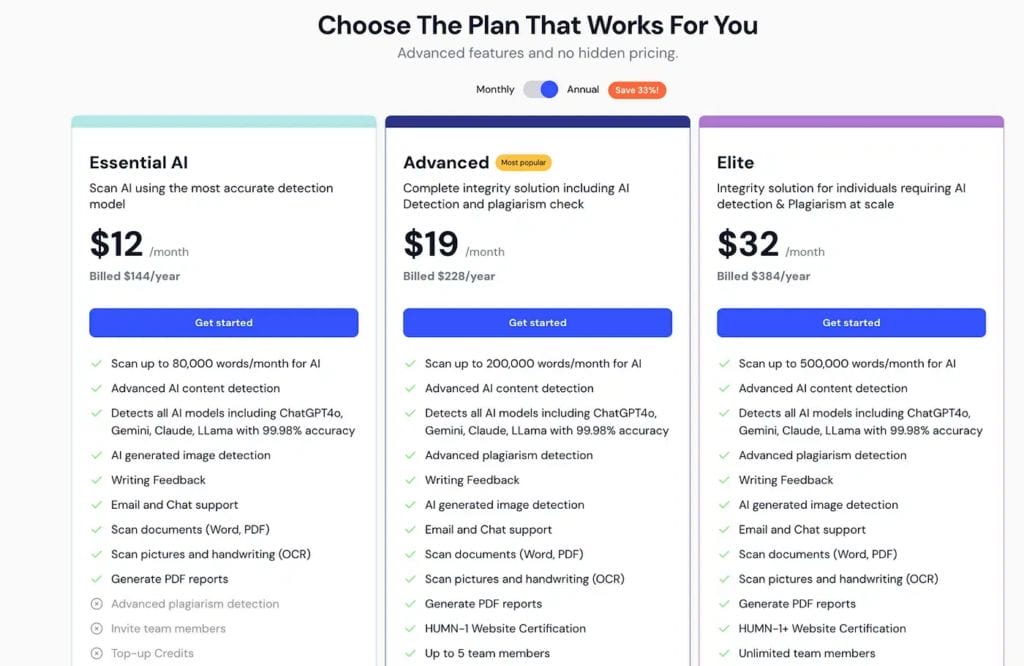
- Scalability and Pricing Models: Institutions operate at scale, with thousands of students and submissions. The chosen AI detector must be able to handle this volume without performance issues. Pricing models (per submission, per user, site license) must be clear, predictable, and financially sustainable. This directly relates to “money” and business finance for the institution.
- User Experience (UX) and Support: Educators need tools that are intuitive, require minimal training, and provide clear, actionable reports. Robust customer support and comprehensive documentation are also critical for successful long-term implementation and troubleshooting. Good UX is a critical “tech” feature for productivity.
- Data Privacy and Security: Student data is highly sensitive. The AI detection tool must comply with all relevant data protection regulations (e.g., GDPR, FERPA) and have strong security protocols in place to protect student privacy and institutional data. This falls under “digital security” in the tech category.
- Alignment with Institutional Policies: The tool should support, not dictate, academic integrity policies. Its features and reporting should allow for nuanced interpretation and support existing disciplinary processes. This reinforces the “brand strategy” and corporate identity of the institution.
The Future of AI Detection: An Evolving Landscape
The field of AI detection is in its infancy compared to the decades-long evolution of plagiarism detection. Both generative AI and AI detection technologies are advancing at an unprecedented pace, creating a dynamic “arms race.” What is accurate today may be outdated tomorrow. Therefore, institutions must choose partners who demonstrate a commitment to continuous research, development, and adaptation.
Ultimately, the most effective approach will likely involve a combination of sophisticated detection technologies, updated academic policies, and renewed emphasis on pedagogical strategies that foster original thought and ethical engagement with AI. The goal isn’t merely to detect, but to educate and empower students to become responsible digital citizens and creative thinkers in an AI-driven world. The “money” invested in these tools must yield a return in improved learning outcomes and strengthened academic integrity, bolstering the “brand” of education for future generations.
Conclusion
The question of “what AI detector is most similar to Turnitin” doesn’t have a single, simple answer because Turnitin’s legacy encompasses more than just raw detection; it includes deep integration, pedagogical support, and institutional trust built over decades. While Turnitin itself has now integrated AI detection into its offerings, numerous other dedicated platforms like GPTZero and Originality.ai are rapidly developing sophisticated AI detection capabilities, each with their unique strengths and target audiences. These tools strive to replicate Turnitin’s impact by focusing on accuracy, detailed reporting, and potential LMS integration.
However, the challenge of AI detection is fundamentally different from plagiarism detection. It involves grappling with the nuances of machine-generated text, managing the risk of false positives, and continuously adapting to ever-evolving AI models. The ultimate solution for academic integrity in the age of AI will not solely rely on technology. It will require a multi-faceted approach that combines advanced detection tools, clear institutional policies, ethical guidelines for AI use, and a renewed emphasis on educational practices that cultivate critical thinking, originality, and responsible engagement with technology. As the digital landscape continues to evolve, so too must our strategies for upholding the integrity of human thought and creation, ensuring that the “brand” of education remains synonymous with intellectual honesty and excellence.
aViewFromTheCave is a participant in the Amazon Services LLC Associates Program, an affiliate advertising program designed to provide a means for sites to earn advertising fees by advertising and linking to Amazon.com. Amazon, the Amazon logo, AmazonSupply, and the AmazonSupply logo are trademarks of Amazon.com, Inc. or its affiliates. As an Amazon Associate we earn affiliate commissions from qualifying purchases.