
In the rapidly evolving landscape of artificial intelligence, the line between human originality and machine generation has become increasingly blurred, particularly within academic settings. As AI writing tools like ChatGPT become more sophisticated and accessible, educational institutions face unprecedented challenges in maintaining academic integrity. At the forefront of this battle is Turnitin, a name synonymous with plagiarism detection for decades. But as the nature of “plagiarism” evolves to include AI-generated content, a critical question arises: what AI checker does Turnitin use, and how effectively does it navigate this complex new frontier?
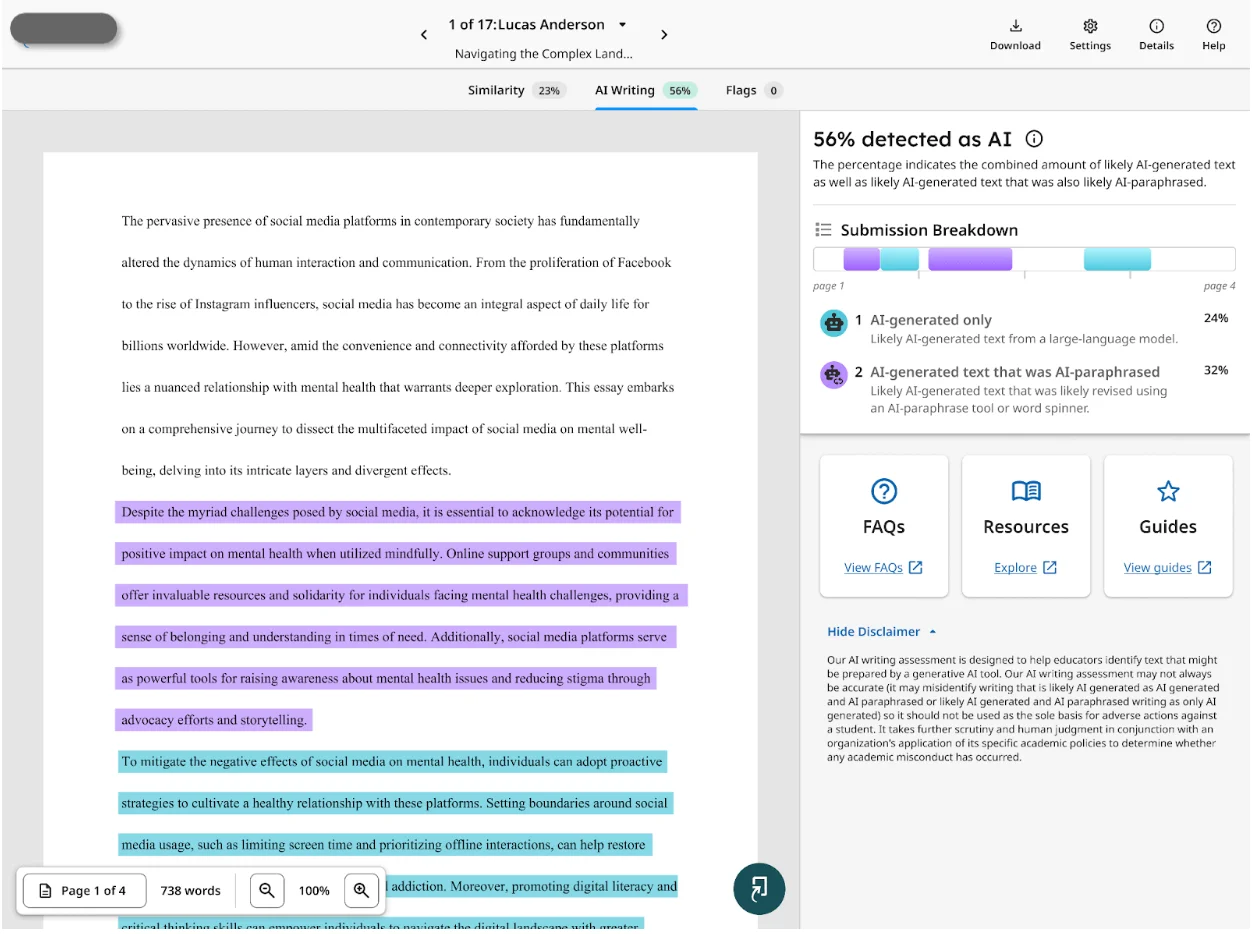
Turnitin doesn’t rely on a single, static “AI checker” in the traditional sense. Instead, it has developed and continuously refines its own proprietary AI detection technology, deeply integrated into its existing platform. This sophisticated system leverages advanced machine learning models, natural language processing (NLP), and extensive datasets to identify patterns and characteristics indicative of AI-generated text. It’s a dynamic, evolving solution designed to keep pace with the exponential growth and refinement of generative AI tools themselves.
Unveiling Turnitin’s Approach to AI Detection
The surge in generative AI tools has sent ripples through the academic world, prompting an urgent need for robust detection mechanisms. Turnitin, recognizing this paradigm shift, has adapted its offerings to meet this demand, positioning itself as a key player in safeguarding academic honesty.
The Need for AI Detection in Academia
The proliferation of AI writing assistants marks a pivotal moment in education. Tools like OpenAI’s ChatGPT, Google’s Bard (now Gemini), and other large language models (LLMs) can produce coherent, contextually relevant, and often impressive text in mere seconds. While these tools offer immense potential for legitimate uses like brainstorming or drafting, their misuse presents a significant threat to academic integrity. Students can easily generate essays, reports, and assignments, passing them off as their original work, thereby circumventing the learning process and undermining the very purpose of education. This scenario necessitates sophisticated AI detection systems that can differentiate between human ingenuity and machine mimicry.
Turnitin’s Integrated Solution
Turnitin’s response to this challenge hasn’t been to simply bolt on an external “AI checker.” Instead, it has meticulously integrated its AI writing detection capabilities directly into its established plagiarism detection platform. This means that when an instructor submits a paper to Turnitin, the system doesn’t just scan for copied phrases from other sources or databases; it simultaneously analyzes the text for indicators of AI generation. This integrated approach offers a seamless experience for educators, providing a comprehensive assessment of a submission’s originality, whether from traditional plagiarism or AI authorship. It moves beyond simple text matching to a more profound analysis of writing style, complexity, and predictability, which are hallmarks of AI-produced content.
Focus on Probabilistic Assessment
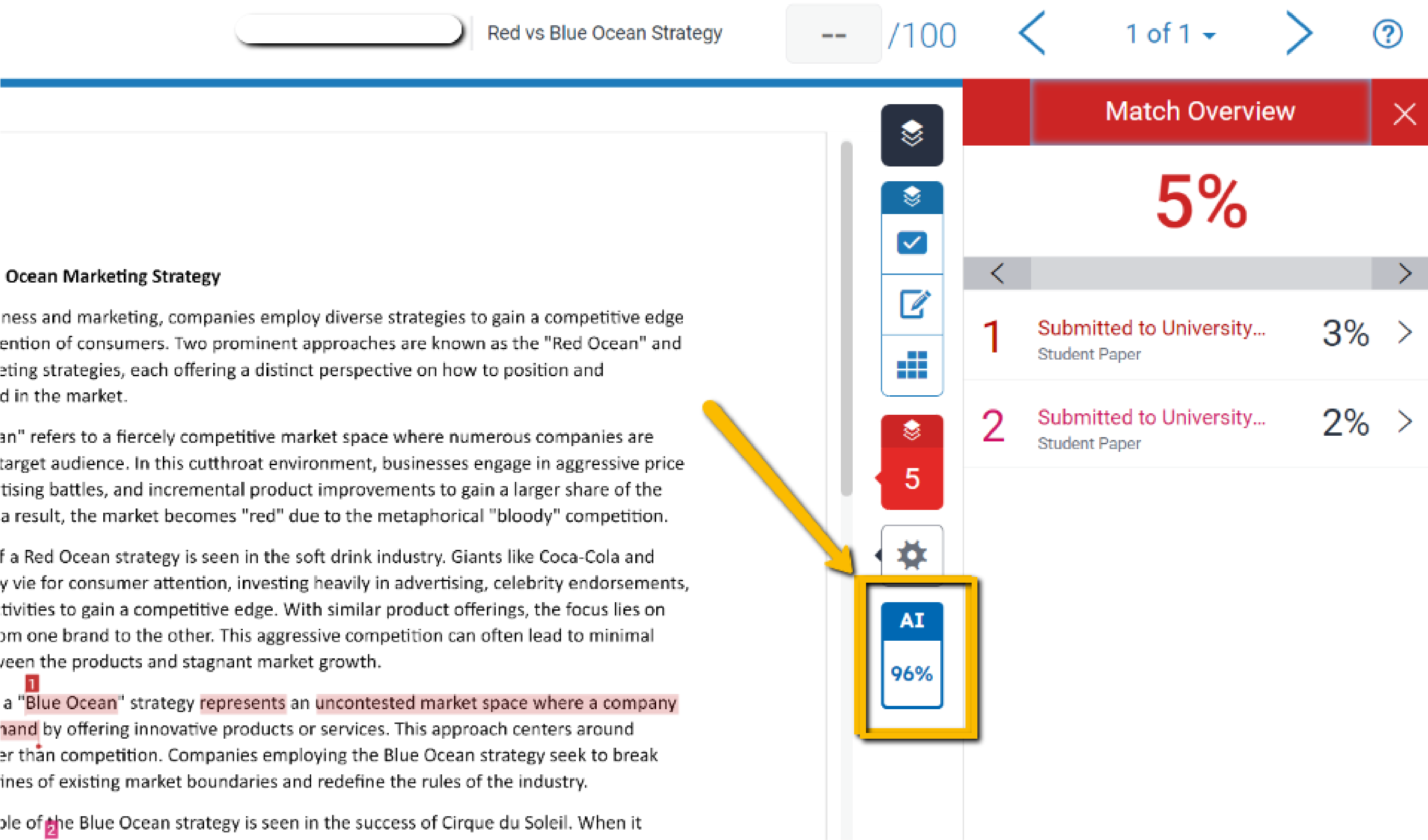
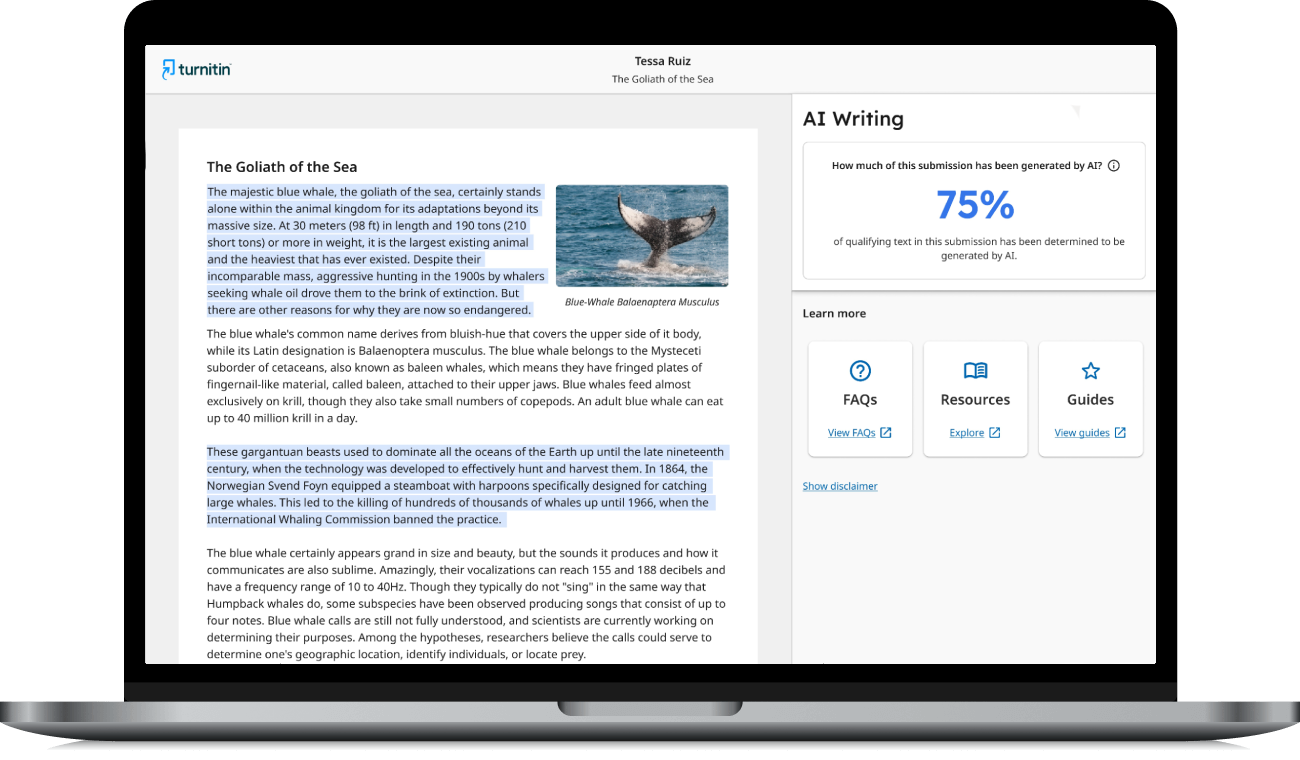
It’s crucial to understand that Turnitin’s AI detection, like many similar tools, operates on a probabilistic assessment rather than offering a definitive “yes/no” answer. When Turnitin analyzes a submission, it provides an “AI writing score” which is an indicator of the likelihood that parts of the text were AI-generated. This score, typically presented as a percentage, reflects the system’s confidence based on its algorithmic analysis. Turnitin explicitly states that its tool is designed to be a starting point for conversation and further investigation, not a final judgment. This nuanced approach acknowledges the inherent complexities and potential for error in distinguishing between human and machine output, especially as AI models become more adept at mimicking human writing.
The Core Technology Powering Turnitin’s AI Detection
Behind Turnitin’s AI writing detection lies a sophisticated architecture built upon advanced technological principles. It’s a testament to the power of computational linguistics and machine learning that such nuanced analysis is even possible.
Machine Learning and Natural Language Processing (NLP)
At the heart of Turnitin’s AI detection capabilities are advanced machine learning (ML) algorithms, particularly those specialized in Natural Language Processing (NLP). These algorithms are trained on vast datasets comprising millions of texts—both human-written content and a diverse array of AI-generated samples from various large language models. Through this rigorous training, the ML models learn to identify subtle patterns, stylistic nuances, and linguistic characteristics that differentiate human prose from machine-generated text. NLP techniques allow the system to understand, interpret, and generate human language in a way that goes beyond simple keyword matching, enabling a deeper semantic and structural analysis of the submitted work.
Key Indicators and Features Analyzed
Turnitin’s AI detection models analyze a multitude of linguistic features to make their probabilistic assessment. These features often include:
-
Perplexity: In the context of language models, perplexity measures how “surprised” a model is by a sequence of words. Human writing often exhibits higher perplexity due to its inherent creativity, unexpected phrasing, and varied sentence structures. AI-generated text, especially from earlier or less sophisticated models, tends to have lower perplexity because it often chooses the most statistically probable next word, resulting in more predictable and uniform language.
-
Burstiness: This refers to the variation in sentence length and structure within a given text. Human writers typically display significant burstiness, with a mix of short, punchy sentences and longer, more complex ones. AI models, conversely, can sometimes produce text with a more consistent sentence length and less varied structure, making it seem unnaturally smooth or uniform.
-
Predictability/Pattern Recognition: AI models are designed to generate text based on statistical probabilities learned from their training data. This can sometimes lead to subtle, repeatable patterns in word choice, sentence construction, or rhetorical devices that might not be consciously noticeable to a human reader but are detectable by a trained algorithm. The absence of typical human errors, unique stylistic quirks, or highly original thought processes can also be indicators.
-
Semantic Analysis: Beyond surface-level features, Turnitin’s system likely employs semantic analysis to understand the meaning and logical flow of the text. This allows it to gauge whether the ideas are truly synthesized and developed or merely assembled from common knowledge and pre-existing textual patterns, a common characteristic of AI “parroting” rather than genuine intellectual contribution.
Continuous Model Training and Adaptation
The AI landscape is not static; it’s a rapidly accelerating field. New and more powerful large language models are released frequently, each capable of generating more human-like and nuanced text than its predecessors. This constant evolution poses a significant challenge for detection systems. Turnitin addresses this by engaging in continuous model training and adaptation. Its AI detection algorithms are regularly updated and retrained on fresh datasets that include samples from the latest generative AI tools. This iterative process is crucial for maintaining the system’s accuracy and relevance, ensuring it can detect content generated by the most current AI technologies. It’s an ongoing “arms race” where detection technology must constantly evolve to keep pace with generation capabilities.
Accuracy, Challenges, and Ethical Considerations
While Turnitin’s AI detection technology is cutting-edge, it operates within a complex domain fraught with challenges, making it imperative to understand its accuracy, limitations, and the profound ethical implications of its use.
Understanding Turnitin’s Accuracy Claims
Turnitin has publicly shared details regarding its AI detection accuracy, often citing a high success rate (e.g., 98%) in correctly identifying AI-generated content from popular LLMs like ChatGPT. However, these figures come with crucial caveats. The accuracy is often reported under specific conditions, such as when a submission is entirely AI-generated or has undergone minimal human editing. When human editing is introduced, or if the AI is used merely as a drafting tool for portions of a text, the detection accuracy can fluctuate. It’s also important to note that accuracy can vary based on the AI model used, the complexity of the prompt, and the linguistic style of the generated output. Therefore, while impressive, these claims represent an optimized scenario, and real-world application can be more nuanced.
The Problem of False Positives and False Negatives
The inherent complexity of AI detection gives rise to two critical issues: false positives and false negatives.
-
False Positives: This occurs when human-written text is incorrectly flagged as AI-generated. Several factors can contribute to this:
-
Formulaic Writing: Texts that adhere strictly to templates or highly structured formats (e.g., scientific reports, legal documents, certain journalistic styles) might exhibit patterns that mimic AI generation.
-
Non-Native English Speakers: Students for whom English is not a first language might write in a more simplistic, direct, or less “bursty” style, or rely on common phrases, which could be misinterpreted by algorithms.
-
Over-editing/Rephrasing Tools: Students using legitimate rephrasing tools or heavily editing their own work to improve clarity might inadvertently strip away stylistic nuances that signal human authorship.
-
-
False Negatives: Conversely, a false negative occurs when AI-generated text goes undetected. This can happen when:
-
Sophisticated AI Prompts: Users learn to craft prompts that encourage AI to generate more diverse, complex, or “human-like” text.
-
Extensive Human Editing: If a student extensively edits, modifies, or integrates AI-generated content with their own original work, they can effectively obscure the AI’s footprint.
-
New or Undetected AI Models: The rapid pace of AI development means new LLMs might emerge whose output patterns are not yet sufficiently represented in Turnitin’s training data.
-
The “Gray Areas” and Interpretation
Given the potential for false positives and negatives, Turnitin emphasizes that its AI writing score is a diagnostic tool, not a definitive judgment. The score exists in a “gray area” where human discretion is paramount. An instructor might receive a high AI writing score for a student’s submission, but this doesn’t automatically equate to academic misconduct. It serves as an alert, prompting the educator to engage in further investigation, which might include reviewing the student’s previous work, discussing their writing process, or requiring a timed, in-class writing sample. Relying solely on the AI score without critical human review can lead to unjust accusations and significant distress for students.
Ethical Use and Potential for Misuse
The ethical implications of AI detection tools are profound. While intended to uphold academic integrity, their misuse or misinterpretation can have severe consequences.
Concerns include:
-
Undue Accusation: Students wrongly accused of using AI can face disciplinary action, academic penalties, and significant emotional distress, potentially damaging their academic careers and mental well-being.
-
Bias: There’s ongoing debate and research into whether AI detection tools might disproportionately flag content from certain demographic groups (e.g., non-native speakers, neurodivergent students) due to stylistic differences.
-
Privacy: The collection and analysis of student writing data, even for noble purposes, raise questions about data privacy and how such information is stored and used.
-
Chilling Effect: Over-reliance on detection tools might create a “chilling effect” where students become overly cautious about using legitimate writing aids or expressing themselves authentically, fearing misidentification.
Therefore, the deployment of such powerful tools demands clear institutional policies, comprehensive training for educators, and transparent communication with students about their capabilities and limitations.
Navigating the Evolving Landscape of AI in Education
The advent of AI has irrevocably altered the educational landscape, presenting both formidable challenges and exciting opportunities. Turnitin’s AI detection is one piece of the puzzle; the broader academic community must engage in a more holistic adaptation.
Beyond Detection: Adapting Pedagogy
The immediate instinct might be to focus solely on detecting AI misuse, but a more sustainable approach involves adapting pedagogical strategies. Educators are increasingly exploring ways to design assignments that are “AI-resistant” or “AI-proof.” This means moving away from generic essays or factual recall tasks that AI excels at, towards assignments that demand critical thinking, personal reflection, original research, and the synthesis of unique perspectives. Examples include:
-
Process-Oriented Assignments: Requiring students to submit drafts, outlines, annotated bibliographies, or reflective journals on their writing process.
-
Personalization: Tasks that connect directly to students’ lived experiences, opinions, or specific local contexts that AI cannot easily replicate.
-
Oral Presentations and Debates: Emphasizing verbal communication and impromptu responses.
-
In-Class Writing: Timed, handwritten or computer-based writing under supervision.
-
AI as a Tool: Teaching students how to use AI ethically as a research assistant, brainstorming partner, or editing tool, while still demanding their original intellectual contribution.
The Role of AI in Learning
It’s crucial to acknowledge that AI isn’t solely a cheating tool; it can be a powerful educational asset. When used responsibly, AI can:
-
Personalize Learning: Provide tailored feedback and adaptive learning pathways.
-
Enhance Research: Help students identify relevant sources or summarize complex information.
-
Improve Writing Skills: Offer suggestions for grammar, style, and clarity, acting as a sophisticated proofreader.
-
Foster Creativity: Serve as a brainstorming partner to generate ideas or overcome writer’s block.
The challenge lies in educating students on how to leverage these benefits ethically, distinguishing between using AI as a cognitive enhancer versus outsourcing their thinking entirely.
Policy Development and Institutional Responses
Institutions must develop clear, comprehensive, and evolving policies regarding AI use in academic work. These policies should:
-
Define Permissible Use: Clearly state when and how AI tools are allowed or prohibited for various assignments.
-
Educate Stakeholders: Ensure both faculty and students understand the policies, the capabilities of detection tools, and the consequences of misuse.
-
Promote Transparency: Encourage students to cite AI tools when used, if permitted, fostering a culture of honesty and proper attribution.
-
Provide Support: Offer resources for both faculty (training on AI-aware pedagogy) and students (guidance on ethical AI use, academic support).
These policies should be reviewed regularly to keep pace with technological advancements and evolving best practices.
The Future of Academic Integrity
The ongoing “arms race” between AI generation and detection is likely to continue. The future of academic integrity will not rely solely on ever-improving detection tools, but on a more holistic and adaptive approach. This includes a renewed focus on the process of learning, the development of critical thinking skills that transcend mere information regurgitation, and a cultural shift where students understand the intrinsic value of original thought and genuine intellectual effort. Academic institutions must embrace AI not as an enemy, but as a disruptive technology that necessitates a re-evaluation of how learning outcomes are assessed and how academic honesty is defined and upheld.
Best Practices for Educators and Students in the AI Era
Navigating the complexities of AI in education requires a collaborative effort. Both educators and students have crucial roles to play in fostering an environment of academic integrity and responsible technology use.
For Educators:
-
Communicate AI Policies Clearly: Before any assignment, clearly state your expectations regarding AI tool use. Specify if AI is prohibited, allowed as a brainstorming tool, or permissible for drafting with proper citation. Ambiguity only creates confusion and potential for misuse.
-
Design AI-Resistant Assignments: Move beyond tasks that can be easily outsourced to AI. Focus on assignments requiring critical analysis, personal reflection, unique insights, original research synthesis, fieldwork, or in-class execution. Emphasize the process of learning, not just the final product.
-
Use AI Detection as a Conversation Starter, Not a Sole Arbiter: If Turnitin flags a submission, use it as an opportunity for dialogue. Discuss the flagged sections with the student, inquire about their writing process, and ask for evidence of their work (e.g., drafts, research notes). Avoid making definitive accusations based solely on a detection score.
-
Educate Students on Responsible AI Use: Don’t just forbid AI; teach students how to use it ethically and effectively as a learning tool (e.g., for brainstorming, outlining, grammar checks), while emphasizing the importance of their own critical thinking and original voice.
-
Stay Informed and Adapt: The AI landscape changes rapidly. Keep abreast of new tools, detection capabilities, and best practices in AI-aware pedagogy.
For Students:
-
Understand Academic Integrity Policies: Familiarize yourself with your institution’s and individual instructor’s policies on AI use. When in doubt, always ask for clarification.
-
Cite Sources Properly, Including AI Tools (if allowed): If you are permitted to use AI tools for certain aspects of your work, learn how to cite them correctly according to your discipline’s guidelines. Transparency is key to academic honesty.
-
Develop Critical Thinking and Original Writing Skills: AI tools can be tempting shortcuts, but they cannot replace the intellectual growth that comes from wrestling with complex ideas and articulating them in your own voice. Prioritize developing your own critical thinking, research, and writing abilities.
-
Engage with AI Tools Ethically and Transparently: If using AI for permitted tasks like brainstorming or grammar checks, view it as a sophisticated assistant, not a replacement for your own intellect. Ensure that the final product genuinely reflects your understanding and effort.
-
Be Prepared to Discuss Your Work: If your work is flagged by an AI detection tool, be prepared to explain your writing process, demonstrate your understanding of the material, and provide evidence of your work.
Turnitin’s AI detection capability represents a significant technological advancement in the ongoing effort to uphold academic integrity. By leveraging sophisticated machine learning and natural language processing, it provides educators with a powerful tool to identify potential instances of AI-generated content. However, its effectiveness is contingent upon a nuanced understanding of its capabilities, limitations, and ethical implications. The “AI checker” Turnitin uses is not a simple on/off switch, but a probabilistic indicator that demands human judgment and pedagogical wisdom.
Ultimately, navigating the AI era in education requires more than just detection technology. It calls for a fundamental reassessment of assignment design, a clear articulation of academic policies, and a collaborative commitment from both educators and students to prioritize authentic learning and intellectual honesty. Turnitin’s technology is a vital component, but it is within the broader framework of responsible education and ethical conduct that the true integrity of academic institutions will be preserved.
aViewFromTheCave is a participant in the Amazon Services LLC Associates Program, an affiliate advertising program designed to provide a means for sites to earn advertising fees by advertising and linking to Amazon.com. Amazon, the Amazon logo, AmazonSupply, and the AmazonSupply logo are trademarks of Amazon.com, Inc. or its affiliates. As an Amazon Associate we earn affiliate commissions from qualifying purchases.