
Traveling to Italy, a land steeped in history, art, and unparalleled culinary delights, is an exciting prospect. As you meticulously plan your itinerary, from booking flights and accommodation to packing your wardrobe, one crucial detail often slips through the cracks: ensuring your essential electronic devices can be powered up. The seemingly simple question of “what adapter do I need for Italy?” opens a gateway to understanding a fundamental aspect of international travel technology. This article delves into the intricacies of Italy’s electrical system, the types of plugs and sockets you’ll encounter, and how to ensure seamless power for your gadgets, from smartphones and laptops to cameras and hair dryers.
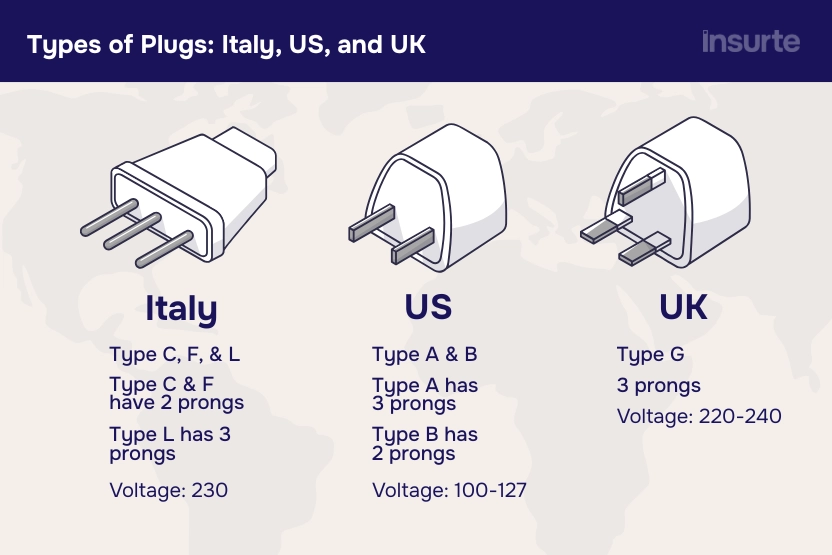
Understanding Italy’s Electrical System: A Foundation for Power
Before you even consider purchasing an adapter, it’s essential to grasp the basics of Italy’s electrical infrastructure. This knowledge will not only help you choose the right adapter but also prevent potential damage to your devices.
Voltage and Frequency: The Unseen Forces
Italy, like most of continental Europe, operates on a 220-240 volt (V) electrical system. This is significantly higher than the 110-120V used in North America (USA and Canada) and some other regions. This difference is paramount. Plugging a 110V device into a 220V outlet without a voltage converter can result in immediate and irreversible damage to your electronics, often accompanied by a puff of smoke and an unpleasant odor.
The frequency in Italy is 50 Hertz (Hz), compared to 60Hz in North America. While this difference is less critical for most modern electronics (which are often designed to handle a range of frequencies), it’s still a factor to be aware of, especially for older or specialized equipment like some electric motors or audio-visual devices.
Dual Voltage Devices: Your Built-in Travel Companion
Fortunately, many modern electronic devices are manufactured with dual voltage capabilities. This means they can automatically adjust to different voltage inputs, typically ranging from 100V to 240V. You can usually identify a dual voltage device by checking its power adapter or charger. Look for a label that states “INPUT: 100-240V ~ 50/60Hz”.
If all your essential travel gadgets – smartphones, tablets, laptops, camera chargers – are dual voltage, then your primary concern will be the physical plug adapter to fit the Italian sockets. However, if you plan to bring appliances not typically designed for international travel, such as certain hair dryers, curling irons, or electric shavers, you will need to pay close attention to voltage compatibility.
Voltage Converters vs. Voltage Transformers: When You Need More Than Just a Plug
When your devices are not dual voltage, a voltage converter or transformer becomes indispensable. It’s important to understand the distinction:
-
Voltage Converters: These are simpler devices that essentially “chop” the incoming voltage to a lower level. They are generally suitable for heating appliances like hair dryers or straighteners that have simple heating elements and do not contain complex electronics. However, they are not suitable for electronic devices that have sensitive circuitry, as the converted voltage can be unstable and damage them. Converters are typically heavier and bulkier than transformers.
-
Voltage Transformers: These are more sophisticated devices that actively transform the voltage to a stable output. They are essential for electronic devices like laptops, phone chargers, and camera chargers that have intricate circuitry. Transformers are usually lighter and more compact than converters but are also more expensive.
Crucially, always check the wattage (W) rating of your appliance. Voltage converters and transformers have a maximum wattage they can handle. Ensure the converter or transformer you choose has a higher wattage rating than your appliance to avoid overheating and damage. For high-wattage appliances like hair dryers, you might need a heavy-duty converter or transformer.
Identifying Italian Plugs and Sockets: The Physical Interface
Now that you understand the electrical system, let’s focus on the physical connectors. Italy uses a specific type of plug and socket system that can be a source of confusion for travelers.
The Domination of Type F (Schuko) and Type L Plugs
The most common plug and socket types you’ll encounter in Italy are:
- Type F (Schuko): This is a round plug with two round pins and two grounding clips on the sides. It’s a very common standard across much of Europe. You’ll find Schuko sockets in most homes, hotels, and public places.
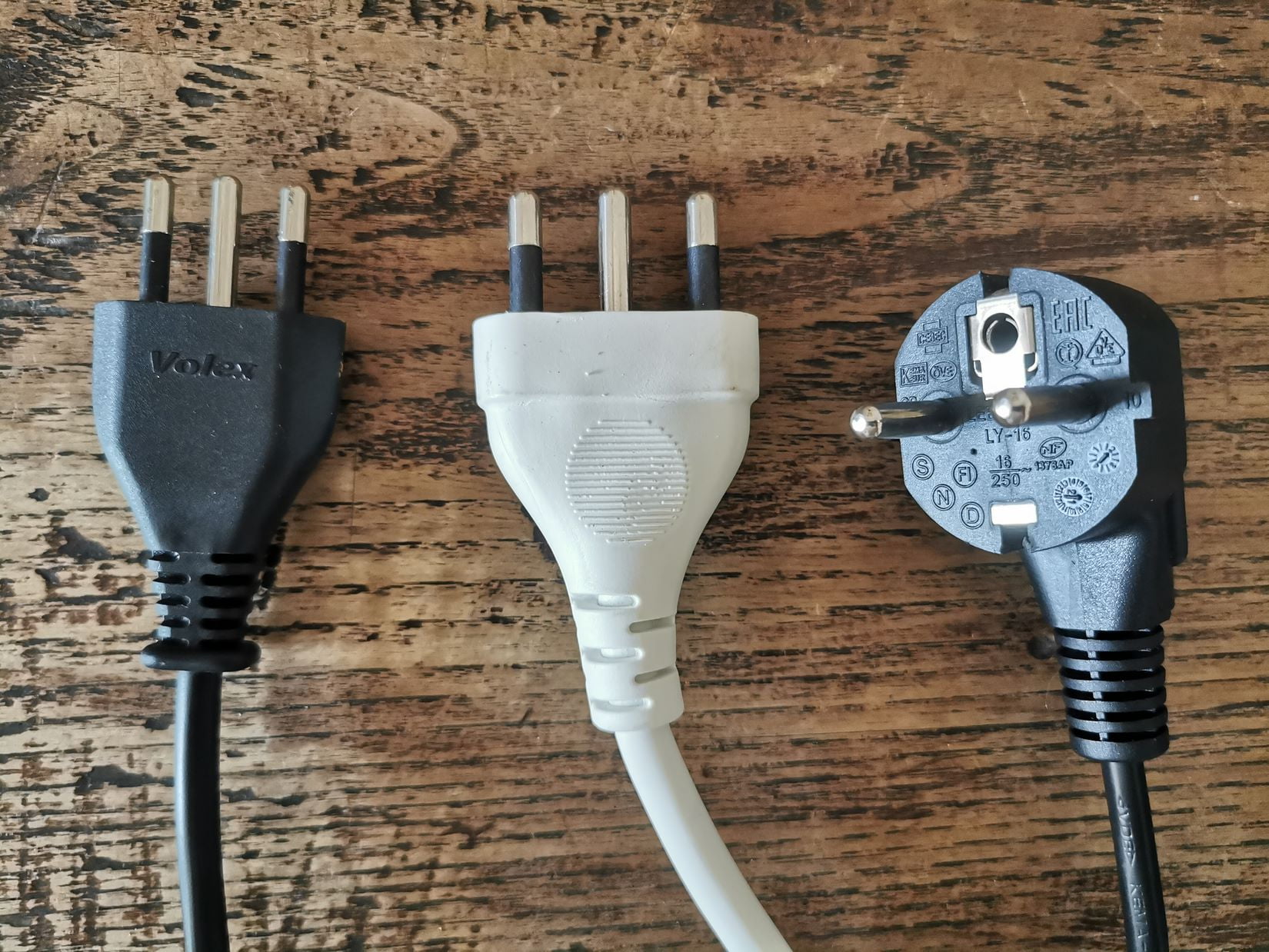
- Type L: This is a less common but still prevalent type in Italy. It features three round pins arranged in a straight line. There are two variations of the Type L plug:
- L1: With a 4mm pin diameter.
- L2: With a 4.5mm pin diameter.
- L3: A variant with slightly different spacing, less common.
Many Italian sockets are designed to accommodate both Type F and Type L plugs, featuring slots that accept the two round pins of Type F and the three pins of Type L (though sometimes with a slight wiggle). Some older establishments might have sockets specifically for Type L.
What About Type C Plugs?
You might also encounter Type C plugs, also known as the Europlug. This is a ungrounded plug with two round pins. It is designed to fit into Type F and Type L sockets. Type C plugs are typically used for low-power devices that don’t require grounding, such as small phone chargers, shavers, and some small appliances. If your device has a Type C plug, it will likely work in Italy without issue.
The Absence of Type A and Type B Plugs
It’s important to note that Type A (two flat parallel pins) and Type B (two flat parallel pins with a round grounding pin) plugs, commonly used in North America, are not compatible with Italian sockets. This is where your adapter truly becomes essential.
Choosing the Right Adapter for Your Italian Adventure
With the understanding of voltage, frequency, and plug types, you’re ready to select the appropriate adapter. The goal is to ensure a safe and functional connection for all your devices.
Universal Travel Adapters: The All-in-One Solution
For the modern traveler, a universal travel adapter is often the most convenient and cost-effective solution. These compact devices typically feature a set of interchangeable pins that slide or twist out, allowing you to connect to various socket types found around the world.
When choosing a universal adapter for Italy, ensure it explicitly supports the Type F (Schuko) and ideally the Type L sockets. Look for adapters that have:
- Built-in surge protection: This adds an extra layer of safety for your valuable electronics.
- Multiple USB ports: Many universal adapters now come with USB ports, allowing you to charge multiple devices simultaneously without needing separate USB wall chargers. This is incredibly convenient for modern travelers who carry multiple gadgets.
- Compact and durable design: You want an adapter that is easy to pack and can withstand the rigors of travel.
Read reviews and check product specifications carefully to confirm compatibility with Italian outlets and the presence of desired features.
Simple Plug Adapters: For Specific Needs
If you have a simpler set of devices and are confident about your voltage needs, a simple plug adapter can suffice. This would be a small, passive adapter that simply changes the physical shape of your plug to fit the Italian socket.
For example, if all your devices are dual voltage and have Type C plugs (or Type F, which is common in many countries, including Germany, France, and Spain, which also use Type F), you might only need an adapter that converts your plug to the Italian Type F or Type L. However, given the prevalence of dual voltage devices and the need for USB charging, a universal adapter often offers more versatility.

What to Pack in Your Tech Bag: A Checklist
To ensure you’re fully prepared, consider this checklist:
- Dual Voltage Devices: Prioritize bringing devices that are already dual voltage.
- Voltage Converter/Transformer (if needed): Only if you’re bringing non-dual voltage appliances.
- Universal Travel Adapter: With support for Type F and Type L sockets and USB ports.
- Portable Power Bank: For charging devices on the go when an outlet isn’t readily available.
- Extra Charging Cables: Always a good idea to have backups for your essential devices.
By understanding the nuances of Italy’s electrical system and the types of connectors you’ll encounter, you can confidently select the right adapter. This small but vital piece of equipment will ensure your electronic companions remain powered throughout your Italian sojourn, allowing you to capture memories, stay connected, and enjoy every moment without interruption. So, pack smart, power up with confidence, and embark on your unforgettable Italian adventure!
aViewFromTheCave is a participant in the Amazon Services LLC Associates Program, an affiliate advertising program designed to provide a means for sites to earn advertising fees by advertising and linking to Amazon.com. Amazon, the Amazon logo, AmazonSupply, and the AmazonSupply logo are trademarks of Amazon.com, Inc. or its affiliates. As an Amazon Associate we earn affiliate commissions from qualifying purchases.