
For decades, the question “What actress do I look like?” was a matter of subjective opinion, often debated among friends or family members over a dinner table. However, the rise of the digital age has transformed this social curiosity into a sophisticated computational challenge. Today, when a user uploads a selfie to a “celebrity look-alike” app, they aren’t just engaging in a fun pastime; they are interacting with some of the most advanced developments in artificial intelligence, computer vision, and machine learning.
Behind the simple interface of these applications lies a complex ecosystem of algorithms designed to map human features with mathematical precision. Understanding the technology that fuels these comparisons provides a fascinating look into how machines learn to perceive human identity and how developers are refining the bridge between human aesthetics and digital data.

The Evolution of Facial Recognition and Comparison Technology
The journey from basic pattern recognition to the high-fidelity celebrity matching we see today is a testament to the rapid acceleration of software engineering. To understand how an app decides you look like Natalie Portman or Zendaya, we must first look at the underlying architecture of facial analysis.
From Pattern Matching to Neural Networks
In the early days of computer vision, facial recognition relied on “Eigenfaces”—a set of eigenvectors used in the computer vision problem of human face recognition. This method was limited; it required consistent lighting and specific head orientations to work effectively. If a user tilted their head slightly, the system would fail.
Modern “What actress do I look like?” tools have moved far beyond these constraints by utilizing Convolutional Neural Networks (CNNs). These are a class of deep neural networks, most commonly applied to analyzing visual imagery. Unlike older methods, CNNs can recognize patterns and features regardless of the angle or lighting. They “learn” by being fed millions of images of celebrities, eventually identifying the specific markers that make a face unique.
How Deep Learning Analyzes Facial Geometry
Deep learning is the engine that drives the accuracy of modern celebrity matching. When you upload a photo, the software doesn’t “see” a face in the way humans do. Instead, it converts the image into a multi-dimensional vector—a string of numbers that represents the unique geometry of your face. By comparing your vector to a pre-indexed database of celebrity vectors, the AI identifies the closest mathematical match. This process, often referred to as “vector space mapping,” allows for near-instantaneous results across databases containing thousands of high-resolution images.
Top AI Tools and Modern Architectures for Face Matching
The market is saturated with applications claiming to find your celebrity doppelgänger, but not all are created equal. The difference between a “glitchy” app and a seamless experience lies in the backend infrastructure and the specific AI models utilized by the developers.
Computer Vision in Mobile Applications
Mobile-first tools like Gradient or StarByFace utilize mobile-optimized versions of computer vision libraries, such as TensorFlow Lite or Core ML. These frameworks allow the intensive calculations required for facial analysis to happen locally on the smartphone’s processor (NPU) rather than relying entirely on a cloud server. This reduces latency, ensuring that the transition from your selfie to the actress’s headshot happens in seconds.
The software begins by performing “face detection”—simply identifying that a human face exists within the frame. Once detected, it moves to “alignment,” where it rotates and scales the image so the eyes and mouth are in a standardized position. This standardization is crucial for the AI to make an “apples-to-apples” comparison between a casual selfie and a professional red-carpet photo.
The Role of Generative Adversarial Networks (GANs)
Some of the more visually impressive apps use Generative Adversarial Networks (GANs) to create a “morph” effect. A GAN consists of two parts: a generator that creates images and a discriminator that evaluates them. In the context of “Who do I look like?”, GANs are used to generate the intermediate frames that show your face slowly transforming into the actress’s face. This isn’t just a simple fade-out; the AI is actually synthesizing new imagery that blends the two facial structures together, providing a more engaging user experience while demonstrating the power of generative AI.
The Mechanics of Feature Mapping and Landmarks
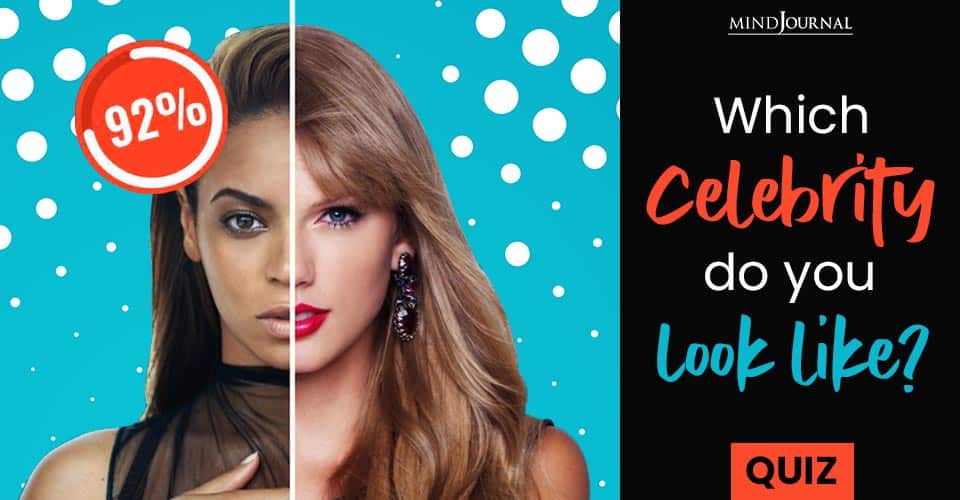
To provide a convincing answer to the question of celebrity resemblance, the software must break the human face down into its constituent parts. This is achieved through a process called facial landmarking.
Geometric vs. Photometric Approaches
There are two primary ways an algorithm analyzes your face: geometric and photometric. The geometric approach focuses on the distance between landmarks—the width of the nose, the distance between the pupils, and the shape of the jawline. These are fixed points that generally do not change regardless of expression.
The photometric approach, on the other hand, looks at the “texture” of the face—the skin tone, the shadows created by the brow bone, and the specific contours of the lips. High-end “look-alike” software combines both approaches. By utilizing a hybrid model, the AI can account for both your structural bone density and your superficial features, leading to a much more accurate actress match.
Understanding Euclidean Distance in Face Matching
When the AI presents you with a percentage of similarity (e.g., “You look 85% like Margot Robbie”), it is calculating what is known as Euclidean distance. In a high-dimensional feature space, your face is represented as a single point. Every actress in the database is also a point.
The software calculates the physical “distance” between your point and others. The shorter the distance, the higher the similarity percentage. This mathematical approach removes human bias from the equation. While a friend might think you look like a certain actress because of your hair color, the AI might disagree because your Euclidean distance is much closer to someone with a completely different hair color but identical bone structure.
Data Privacy and Security in Look-Alike Apps
As with any technology that involves biometric data, the “What actress do I look like?” trend brings significant security considerations to the forefront. When a user provides a high-resolution image of their face, they are handing over a piece of sensitive biometric information.
Where Does Your Biometric Data Go?
A critical concern for tech-savvy users is whether their facial data is stored, sold, or used to train other AI models. Reputable apps often process the image in “volatile memory” (RAM) and delete it immediately after the session ends. However, less scrupulous developers may store these images to improve their facial recognition algorithms or, in worse cases, sell the metadata to third-party advertising networks.
From a technical security standpoint, users should look for apps that offer “on-device processing.” This means the biometric analysis never leaves the phone. If an app requires you to upload your photo to a cloud server, it increases the “attack surface”—the number of points where a hacker could potentially intercept your data.
Mitigating Risks in Consumer-Facing AI
Encryption is the primary line of defense in protecting facial data. High-quality apps use end-to-end encryption (E2EE) for any data transmitted to the cloud. Furthermore, developers are increasingly adopting “differential privacy” techniques. This involves adding mathematical “noise” to the data so that while the AI can still find your actress match, it cannot reconstruct your exact face from the data stored on the server. As facial recognition becomes more integral to banking and device security, the ethics of “look-alike” apps will continue to be a major talking point in the tech industry.
The Future of Virtual Identity and Digital Avatars
The technology behind finding your celebrity twin is just the tip of the iceberg. As computer vision and AI continue to evolve, the applications of this technology are moving into the realm of virtual identity and the “Metaverse.”
Beyond Actresses: Synthesizing Digital Twins
The same algorithms used to identify which actress you look like are now being used to create high-fidelity digital avatars. By mapping the landmarks of your face, software can create a 3D model that moves and emotes exactly like you do. This has massive implications for the film industry—where digital doubles are used for stunts—and for gaming, where players can see their own likeness reflected in a protagonist.

The Convergence of AR and Facial Analysis
We are also seeing a convergence of facial matching and Augmented Reality (AR). Imagine wearing AR glasses that can analyze your features in real-time and suggest makeup styles or hairstyles based on the actresses you most closely resemble. This isn’t just about curiosity anymore; it’s about using AI to personalize the human experience.
In conclusion, the question “What actress do I look like?” serves as a gateway into the complex and rapidly evolving world of facial recognition technology. From the initial mapping of facial landmarks to the sophisticated use of GANs and Euclidean distances, the process is a marvel of modern software engineering. As we move forward, the balance between this technological innovation and the necessity of data privacy will define the next generation of consumer AI. Whether for fun or for functional identity, our digital doppelgängers are closer than ever before, rendered in code and calculated with breathtaking precision.
aViewFromTheCave is a participant in the Amazon Services LLC Associates Program, an affiliate advertising program designed to provide a means for sites to earn advertising fees by advertising and linking to Amazon.com. Amazon, the Amazon logo, AmazonSupply, and the AmazonSupply logo are trademarks of Amazon.com, Inc. or its affiliates. As an Amazon Associate we earn affiliate commissions from qualifying purchases.