
For decades, the question “What actress do I look like?” was relegated to subjective opinions shared over coffee or debated in the comments sections of social media. Friends might point to a shared jawline with Angelina Jolie or the expressive eyes of Anne Hathaway. However, the advent of sophisticated Artificial Intelligence (AI) and computer vision has transformed this casual curiosity into a precise technical exercise. Today, determining a celebrity doppelgänger is no longer a matter of opinion—it is a matter of biometric data, algorithmic processing, and neural network mapping.

Understanding the technology behind look-alike applications requires a deep dive into the evolution of facial recognition and the complex software architectures that allow a machine to “see” and compare human features with incredible accuracy.
The Evolution of Facial Recognition Technology
The journey from rudimentary pattern matching to the lightning-fast recognition we see in modern smartphones has been one of the most significant leaps in the tech sector. To understand how an app identifies your Hollywood counterpart, one must first understand the foundation of facial analysis.
From Manual Mapping to Deep Learning
In the early days of computer vision, researchers relied on manual “landmark” identification. Engineers would plot specific points on a face—the corners of the mouth, the center of the pupils, the tip of the nose—and calculate the distances between them. This geometric approach was limited; it struggled with changes in lighting, head tilt, or aging.
The breakthrough came with the transition to Deep Learning. Modern AI utilizes Convolutional Neural Networks (CNNs), which mimic the human brain’s visual cortex. Instead of looking for a specific distance between eyes, these networks process layers of data. The first layer might detect edges and shadows, the second identifies shapes like nostrils or eyelids, and the final layers synthesize this information to recognize a unique facial “fingerprint.”
The Role of Neural Networks in Comparative Analysis
When you upload a photo to a “celebrity look-alike” tool, the AI does not simply overlay your photo onto a picture of Meryl Streep. Instead, it converts your facial features into a mathematical vector—a string of numbers representing the unique geometry of your face.
The software then performs a “nearest neighbor” search within a massive database of actress vectors. By calculating the “Euclidean distance” between your vector and thousands of others, the AI identifies which celebrity vector is mathematically closest to your own. This is why the results are often surprisingly accurate; the machine is looking at structural data that the human eye might overlook.
Decoding the Algorithms: How Look-Alike Apps Work
The consumer-facing apps that answer the “celebrity twin” question are the tip of a very complex technological iceberg. These tools leverage several specific sub-processes within computer vision to provide a seamless user experience.
Landmark Detection and Geometric Analysis
The first step in any look-alike algorithm is “face alignment.” Before the AI can compare you to an actress, it must normalize your image. If your head is tilted at a 15-degree angle, the AI uses landmark detection to rotate the digital representation of your face to a “frontal” view.
Key points—often numbering between 68 and 128—are identified. These include the contours of the chin, the arch of the eyebrows, and the width of the nose bridge. This geometric data is lighting-invariant, meaning the tech can identify your structural match even if your photo was taken in a dark room while the actress was photographed on a bright red carpet.
Feature Extraction and Database Cross-Referencing
Once the face is aligned, the “feature extraction” phase begins. This is where the AI identifies the most distinguishing parts of a face. For some, it may be the specific ratio of the forehead to the rest of the face; for others, it might be the “interocular distance” (the space between the eyes).
These features are cross-referenced against high-resolution databases. Tech companies often scrape public data or use licensed image libraries containing tens of thousands of professional photographs of actresses. The algorithm filters these results based on gender, age, and ethnicity to narrow down the closest visual matches in milliseconds.
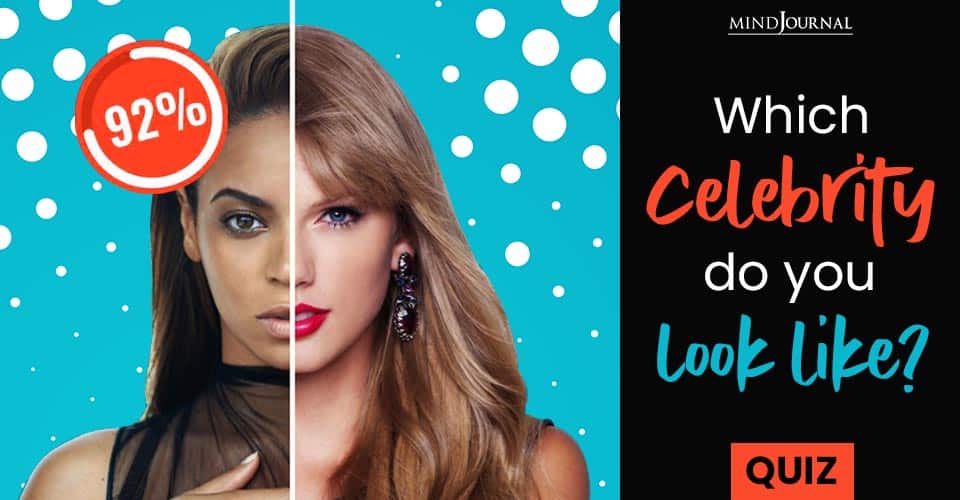
Leading AI Tools and Platforms for Celebrity Identification
While many users interact with these tools via viral filters on TikTok or Instagram, the underlying tech is often powered by industry-leading AI platforms. These platforms provide the APIs (Application Programming Interfaces) that allow developers to integrate facial recognition into their software.
Mobile Applications and Real-Time Processing
Mobile-first applications like “StarByFace” or “Gradient” utilize optimized versions of facial recognition models. Because mobile hardware (specifically the Neural Engine in iPhones or the NPU in Android devices) has become so powerful, much of this processing can now happen “on-device.” This means your facial data is analyzed locally rather than being sent to a cloud server, which reduces latency and provides an instant answer to the look-alike query.
Professional-Grade Computer Vision APIs
Behind the scenes, many “Which actress do I look like?” websites use enterprise-level tools like Amazon Rekognition, Google Vision AI, or Microsoft Azure Face API. These are the same tools used by law enforcement and cybersecurity firms.
Amazon Rekognition, for instance, can detect “celebrities” specifically. It is trained on a vast library of public figures, allowing it to return a confidence score (e.g., “98% match to Gal Gadot”). For developers, these APIs provide a robust, scalable way to process millions of images without having to build their own neural networks from scratch.
Privacy, Security, and the Ethics of Biometric Data
While finding your celebrity twin is an entertaining use of technology, it raises significant questions regarding digital security and the handling of biometric data. Your face is a unique identifier, much like a fingerprint, and its digital representation is highly sensitive.
Where Does Your Face Data Go?
The primary concern with look-alike apps is data retention. When you upload a photo to a free app, you are often consenting to their Terms of Service, which may grant the company the right to use your image to train their future AI models.
In the tech industry, data is the new oil. Large sets of human faces are incredibly valuable for improving facial recognition accuracy across different demographics. Users must be cautious: is the app “de-identifying” the data (stripping your name and metadata) or are they storing a permanent map of your face linked to your IP address and social media profile?
The Risks of “Fun” AI Tools
Cybersecurity experts often warn that “fun” AI tools can be used as “data sinks.” A developer might create a viral look-alike tool specifically to harvest biometric data. This data can then be sold to third-party marketing firms or, in worse cases, used to refine “spoofing” technologies that attempt to bypass facial-recognition-based security systems.
To mitigate these risks, users should look for apps that offer “edge processing” (local analysis) and clear “data deletion” policies. The most reputable tech companies are moving toward “privacy-by-design,” where the image is deleted immediately after the vector is generated.
Future Trends: Beyond Simple Resemblance
The technology that identifies which actress you look like is just the beginning. As AI continues to evolve, the applications for this type of facial analysis are becoming more sophisticated and integrated into our daily digital lives.
Generative AI and Deepfakes
We are moving from “look-alike” detection to “look-alike” creation. Generative Adversarial Networks (GANs) can now take your facial features and merge them with those of a celebrity to create a realistic hybrid. This is the technology behind “Deepfakes.” While it allows for fun “face-swapping” in movies or memes, it also presents a significant challenge for digital authenticity and the tech industry’s efforts to combat misinformation.

Personalization in Virtual Reality and Gaming
In the world of gaming and the Metaverse, facial recognition is being used to create hyper-realistic avatars. Instead of selecting a pre-made character that looks like a famous actress, you can use AI to scan your own face and generate an in-game character that maintains your likeness. The same algorithms that tell you that you look like Scarlett Johansson are now being used to ensure your digital twin in a virtual world moves, smiles, and reacts exactly as you do in real life.
As we look to the future, the question “What actress do I look like?” will likely evolve into “How can I use my facial data to interact with the digital world?” Whether it is for entertainment, security, or personal expression, the technology of facial similarity is a cornerstone of the modern technological landscape, blending the boundaries between our physical selves and our digital identities.
aViewFromTheCave is a participant in the Amazon Services LLC Associates Program, an affiliate advertising program designed to provide a means for sites to earn advertising fees by advertising and linking to Amazon.com. Amazon, the Amazon logo, AmazonSupply, and the AmazonSupply logo are trademarks of Amazon.com, Inc. or its affiliates. As an Amazon Associate we earn affiliate commissions from qualifying purchases.