
Purchasing a used car is one of the most significant financial decisions many individuals make, second only perhaps to buying a home. Unlike a new car, which comes with the certainty of a clean slate, a used car introduces variables that directly impact its long-term financial viability. Among these variables, mileage stands out as a paramount consideration, frequently sparking debates and anxieties among prospective buyers. Defining “good mileage” isn’t a simple numerical answer; instead, it’s a nuanced financial assessment that balances initial cost, anticipated maintenance, projected longevity, and future resale value, all within the context of your personal financial plan and driving needs.
Understanding Mileage Beyond Just the Number
Mileage is often seen as a direct proxy for wear and tear, and while there’s truth to this, it’s an oversimplification that can lead to misinformed financial decisions. A car’s total mileage tells only part of its story; a deeper dive into how those miles were accumulated, the car’s age, and its maintenance history provides a far more accurate financial risk profile.
The “Average” Mileage Myth
A common benchmark suggests that a car accumulates roughly 12,000 to 15,000 miles per year. While useful for a quick estimate, this “average” can be misleading. A five-year-old car with 75,000 miles (average) might be a better financial bet than a three-year-old car with the same mileage (high for its age). The rapid accumulation of miles in a shorter period can indicate harder use, potentially leading to accelerated wear on components typically designed for more gradual degradation. Conversely, a ten-year-old car with only 50,000 miles, while seemingly low, might have suffered from prolonged periods of inactivity, leading to issues like dry-rotted seals, rusted components, or battery degradation – all of which translate into unexpected repair costs. The financial sweet spot often lies in cars that have been driven consistently but not excessively, ensuring components stay lubricated and operational without premature exhaustion.
Age vs. Mileage: A Critical Balance
When evaluating a used car, age and mileage must be considered as intertwined financial factors. A newer car with higher mileage might still be a better investment than an older car with very low mileage. Newer cars benefit from more recent engineering, safety features, and often have more sophisticated diagnostic systems. Furthermore, newer vehicles are likely to have a longer remaining lifespan for certain components (like advanced infotainment systems or specific engine sensors) that degrade more with age and environmental exposure than with pure mileage. However, the high mileage on a newer car means that standard wear items (brakes, tires, suspension components) might need replacement sooner than expected for its age, which impacts immediate post-purchase expenses.
Conversely, an older car with low mileage can present a deceptive bargain. While the engine might have fewer operational hours, rubber and plastic components, wiring, and even body panels can deteriorate over time regardless of use. Replacing these age-related items can be just as costly, if not more so, than addressing mileage-related wear. The financially savvy approach is to seek a balance, where the age and mileage align reasonably, suggesting consistent and moderate use over its lifespan. For instance, a 3-5 year old car with 40,000 to 70,000 miles often represents an excellent balance of depreciation savings, modern features, and remaining operational life.
The Impact of Driving Style and Environment
The nature of the miles driven profoundly impacts a car’s financial health. Highway miles, characterized by steady speeds and fewer stops and starts, generally put less stress on a vehicle’s engine, transmission, and braking system compared to city miles. Stop-and-go city driving leads to more frequent gear changes, heavier brake usage, and greater strain on the engine due to constant acceleration and deceleration. Therefore, a car with 100,000 highway miles might be in better mechanical condition and require less immediate maintenance than a car with 70,000 purely city miles.
Likewise, the environment plays a role. Cars regularly exposed to harsh climates (extreme cold, heavy road salt, intense sun) or rough terrain will likely incur higher maintenance costs over their lifespan, regardless of mileage. A car from a mild climate driven mostly on well-maintained roads often presents a lower financial risk. Understanding these nuances allows buyers to look beyond the odometer reading and evaluate the true financial implications of a car’s history.
Financial Implications of High vs. Low Mileage
The mileage on a used car directly influences its price, but the cost savings at purchase must be weighed against potential future expenses and long-term value retention. This requires a comprehensive financial perspective, not just a focus on the upfront sticker price.
Initial Purchase Price Savings
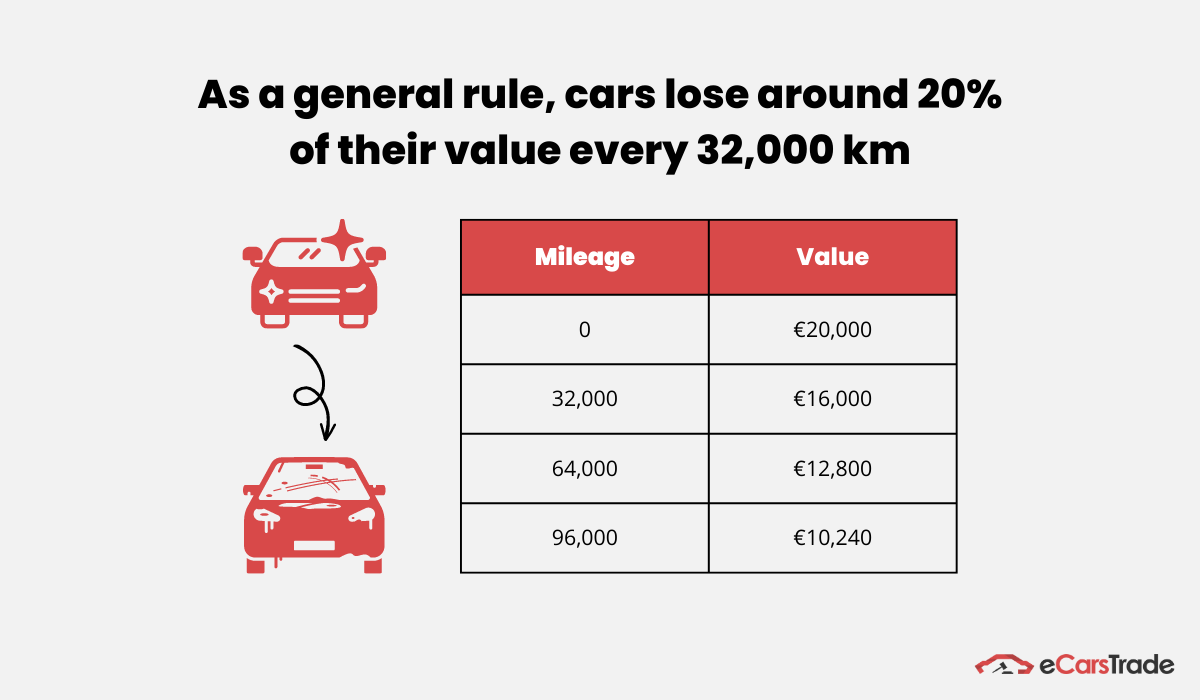
The most obvious financial advantage of higher mileage cars is their lower initial purchase price. Depreciation is a car owner’s most significant expense, and buying a car that has already absorbed a substantial portion of its depreciation curve can be a smart financial move. As mileage increases, the rate of depreciation typically slows, meaning the financial hit of future depreciation will be less severe for the buyer. This allows buyers to access more premium models or newer vehicles within their budget, effectively getting “more car for their money.” For buyers with strict budget constraints, higher mileage vehicles can provide access to reliable transportation that would otherwise be out of reach.
Maintenance and Repair Costs
While the initial savings are attractive, higher mileage almost invariably translates into higher anticipated maintenance and repair costs over the course of ownership. Components such as suspension bushings, ball joints, wheel bearings, alternators, water pumps, timing belts, and various sensors are designed with a finite lifespan, often correlating with mileage. A car with 100,000 miles will statistically require more significant maintenance sooner than one with 50,000 miles. Buyers must factor these predictable expenses into their financial planning. It’s prudent to set aside a larger emergency fund or incorporate a higher monthly allocation for maintenance when opting for a higher mileage vehicle. Overlooking these costs can quickly negate any initial purchase price savings and create financial strain.
Resale Value Depreciation
The mileage at which you purchase a car also influences its future resale value. While you benefit from past depreciation, you also inherit a vehicle that is further along its depreciation curve based on mileage. When it comes time to sell or trade in, a car that started with 100,000 miles will naturally fetch a lower price than one that started with 50,000, assuming similar subsequent use. This is a critical factor for those who plan to own a car for only a few years before upgrading. The total cost of ownership, which includes purchase price, maintenance, insurance, fuel, and depreciation, is a more accurate financial metric than just the purchase price alone. A seemingly cheap high-mileage car might offer poor long-term value if its rapid decline in market value outstrips the initial savings.
The Sweet Spot: Finding the Best Value for Your Dollar

The ultimate goal for a financially savvy used car buyer is to find the “sweet spot” – a vehicle that offers an optimal balance of affordability, reliability, and reasonable future costs. This involves diligent research and a thorough inspection process.
Researching Specific Makes and Models
Not all cars are created equal, especially when it comes to mileage. Some manufacturers are renowned for producing vehicles that reliably last well beyond 150,000 or even 200,000 miles with proper maintenance. Brands like Toyota, Honda, and certain Subaru models often retain their value and mechanical integrity over long periods. Researching the typical longevity and common high-mileage issues for specific makes and models can inform your financial decision-making. Online forums, consumer reliability reports (e.g., Consumer Reports, J.D. Power), and mechanic reviews can provide invaluable insights into what mileage specific vehicles start to incur major expenses. This allows you to differentiate between a “good” 100,000 miles on a Toyota Camry and a potentially problematic 100,000 miles on a less reliable model.
The Role of Service Records and Vehicle History
The adage “buy the owner, not the car” holds significant financial weight in the used car market. A comprehensive service history is a goldmine, providing a clear picture of how diligently the previous owner maintained the vehicle. Regular oil changes, timely fluid flushes, scheduled component replacements (like timing belts or spark plugs), and documentation of previous repairs can significantly mitigate the financial risks associated with mileage. A car with 120,000 miles that has been meticulously maintained with a full service history is often a far better financial bet than a car with 80,000 miles and no maintenance records. Vehicle history reports (e.g., CarFax, AutoCheck) also offer crucial insights into past accidents, title issues, and reported mileage discrepancies, all of which directly affect a car’s value and potential future costs. Skipping this step is a major financial oversight.
Pre-Purchase Inspections: A Non-Negotiable Investment
Regardless of mileage, a pre-purchase inspection (PPI) by an independent, trusted mechanic is arguably the best money you can spend on a used car. For a relatively small fee (typically $100-$200), a professional can identify existing problems, potential future issues, and confirm the car’s overall condition, uncovering problems that might cost thousands to repair later. This inspection allows you to make an informed financial decision. It provides leverage for negotiation if issues are found, or helps you walk away from a financially unsound purchase. A PPI shifts the financial risk from you to an expert, ensuring that the mileage you see aligns with the car’s actual mechanical health.
Calculating Your Own “Good Mileage” Threshold
There’s no universal “good mileage” number because it heavily depends on your personal financial situation, driving habits, and ownership expectations. Tailoring your mileage threshold to your specific circumstances is key to a financially sound purchase.
Budgetary Considerations
Your budget dictates not just the purchase price, but also your capacity to absorb unexpected maintenance costs. If your budget is tight, opting for a lower mileage car might seem more expensive initially but could save you from prohibitive repair bills down the line. Conversely, if you have a robust emergency fund or are mechanically inclined and can handle minor repairs yourself, a higher mileage car might be an attractive value proposition. Factor in not just the sticker price, but also anticipated insurance premiums (which can vary by car age and model), fuel costs, and a realistic estimate for annual maintenance.
Expected Ownership Duration
How long you plan to own the car significantly influences what mileage is “good” for you. If you need a reliable vehicle for only 2-3 years, a car with 80,000-100,000 miles could be a financially sound choice, especially if it’s known for longevity. You might reach 120,000-150,000 miles by the time you sell, which is generally still within a manageable range for many dependable vehicles. However, if you intend to keep the car for 7-10 years, starting with a vehicle that has 100,000 miles means it will likely have 170,000-200,000 miles or more by the end of your ownership, pushing it into a higher-risk category for major component failures. For long-term ownership, aiming for lower mileage (e.g., under 60,000-70,000 miles) can provide greater peace of mind and potentially fewer expensive surprises.
Personal Driving Habits
Consider how many miles you typically drive each year. If you commute extensively and put on 20,000+ miles annually, a car that already has high mileage will accumulate even more quickly under your ownership, accelerating its depreciation and the timeline for major maintenance. In such cases, investing in a lower mileage vehicle upfront might yield better long-term financial results. If you drive sparingly, a slightly higher mileage vehicle can serve you well for many years without significantly adding to its total odometer reading, thus spreading out the financial impact of its existing miles.
Financing and Insurance: Integrating Mileage into Your Financial Plan
The mileage of a used car also has direct implications for financing and insurance, two critical components of your overall automotive financial plan.
How Mileage Affects Loan Terms
Lenders view older cars and those with higher mileage as higher risk. This is because such vehicles are generally seen as more prone to mechanical issues and have a higher likelihood of significant depreciation or even total loss, which could leave the lender with insufficient collateral if the borrower defaults. Consequently, you might find it harder to secure financing for very high-mileage vehicles (e.g., over 150,000 miles), or you might be offered less favorable loan terms, such as higher interest rates or shorter loan durations. Higher interest rates translate to higher monthly payments and a greater total cost of the loan over its lifetime. It’s crucial to factor these potential financing challenges and costs into your budget when considering a higher-mileage option.

Insurance Premiums and Risk Assessment
While mileage might not directly impact your car insurance premiums as much as factors like your driving record, location, and the car’s make and model, it can still play a subtle role. Insurers consider the age and value of a vehicle. An older car, which often correlates with higher mileage, might have lower collision and comprehensive premiums because its replacement value is lower. However, if a higher mileage car is perceived as less reliable, insurers might subtly factor that into their risk assessments, especially for extended warranty or breakdown coverage options. Moreover, if a high-mileage car breaks down frequently, it could lead to more claims for towing or roadside assistance, potentially impacting future premium calculations. Understanding these intertwined financial aspects ensures you make a holistic decision about “what a good mileage for used cars” truly means for your personal finances.
aViewFromTheCave is a participant in the Amazon Services LLC Associates Program, an affiliate advertising program designed to provide a means for sites to earn advertising fees by advertising and linking to Amazon.com. Amazon, the Amazon logo, AmazonSupply, and the AmazonSupply logo are trademarks of Amazon.com, Inc. or its affiliates. As an Amazon Associate we earn affiliate commissions from qualifying purchases.