
Starting a business is often romanticized as an exercise in creativity and passion, but from a purely financial perspective, it is the construction of a capital-efficient engine designed to generate a return on investment. The transition from a conceptual framework to a living enterprise requires a rigorous understanding of financial architecture, capital allocation, and risk management. To start a business successfully in today’s economic climate, one must move beyond the “idea” phase and focus on the fiscal mechanics that ensure long-term viability and scalability.
Securing the Initial Capital: Navigating the Funding Landscape
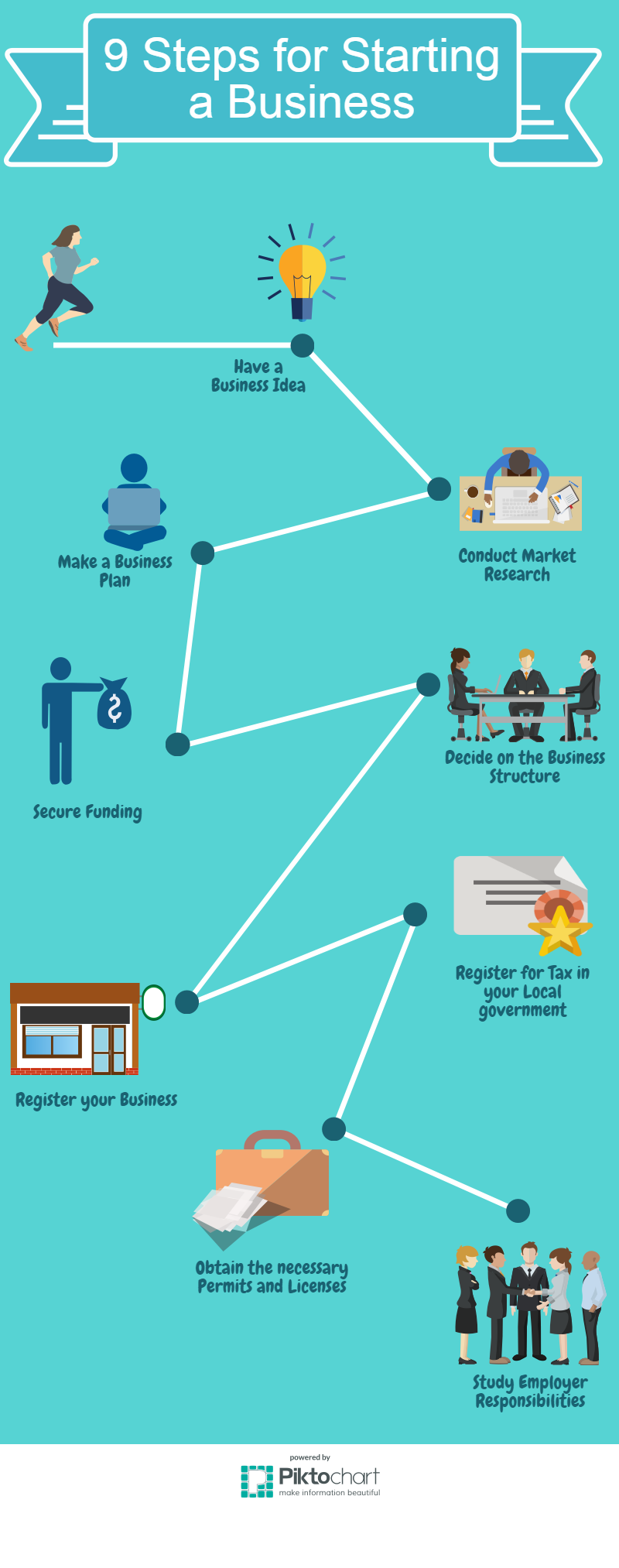
The first hurdle in the lifecycle of any business is the acquisition of seed capital. How you choose to fund your venture dictates your level of control, your growth trajectory, and your ultimate financial obligations. There are three primary avenues for securing the necessary funds to move from a blueprint to an operational entity.

Bootstrapping and Self-Funding
Bootstrapping is the process of starting a company using personal savings and the initial revenue generated by the business. This approach is often the most fiscally disciplined. When you are spending your own capital, every dollar is scrutinized for its potential return. The primary advantage of bootstrapping is the retention of 100% equity and total decision-making power. However, the trade-off is often a slower growth rate, as the business can only expand as fast as its internal cash flow allows. For many service-based businesses or digital products with low overhead, bootstrapping provides a low-risk entry point into the market.
Equity Financing: Angels and Venture Capital
For businesses that require significant upfront investment in infrastructure, inventory, or technology, equity financing is often necessary. This involves selling a portion of the company to investors in exchange for capital. Angel investors typically provide early-stage funding, while Venture Capital (VC) firms enter during the scaling phase. The financial benefit of equity financing is the influx of large sums of cash without the immediate burden of debt repayment. However, the cost is high; you are trading future wealth for current liquidity. Furthermore, bringing on external investors introduces fiduciary responsibilities that can shift the company’s focus toward rapid exit strategies or aggressive growth targets that may not align with a conservative financial philosophy.
Debt Financing and Credit Lines
Traditional bank loans, Small Business Administration (SBA) loans, and lines of credit represent the third pillar of funding. Unlike equity financing, debt allows you to maintain full ownership of the company. The “cost” of this capital is the interest rate and the obligation of regular principal payments. To secure debt financing, a business must demonstrate a clear path to profitability and often provide collateral. This is a viable option for businesses with predictable cash flows or significant physical assets, but it introduces a “break-even” pressure from day one, as the debt must be serviced regardless of the business’s monthly performance.
Building the Financial Infrastructure
Once capital is secured, the focus shifts to creating a robust financial infrastructure. A business is only as strong as its reporting and accounting systems. Without a clear view of where money is moving, an entrepreneur is essentially flying blind.
Establishing the Accounting Ecosystem
The foundation of your financial infrastructure is a sophisticated accounting system. This goes beyond simple bookkeeping; it involves the implementation of accrual-basis accounting to track future obligations and revenues. Modern financial tools and software allow for the automation of accounts payable and receivable, providing real-time data on the company’s health. A professional-grade chart of accounts must be established early to categorize expenses accurately, allowing for detailed tax planning and the identification of wasteful spending before it becomes systemic.
Unit Economics and Margin Analysis
A business cannot scale if its basic unit of sale is not profitable. Understanding unit economics—the direct revenues and costs associated with a single unit of a product or service—is critical. You must calculate your Contribution Margin, which is the selling price minus the variable costs. If the contribution margin is too thin, the business will struggle to cover its fixed costs (rent, salaries, utilities) regardless of how much volume it generates. High-growth businesses prioritize a high Lifetime Value (LTV) of a customer relative to the Customer Acquisition Cost (CAC). A healthy ratio, typically 3:1 or higher, suggests that the business model is financially sustainable.
Tax Strategy and Legal Structuring
The legal structure of the business (LLC, S-Corp, C-Corp) has profound implications for tax liability and personal asset protection. For instance, an S-Corp might allow for savings on self-employment taxes, while a C-Corp might be necessary if the goal is to attract institutional investors or eventually go public. Early-stage financial planning must include a proactive tax strategy. This includes understanding deductible business expenses, R&D tax credits, and the implications of state and federal tax codes. Failing to account for taxes is one of the most common reasons new businesses face liquidity crises in their second or third years.
Developing a Sustainable Revenue Model
Revenue is the lifeblood of a business, but not all revenue is created equal. The method by which a company captures value from the market determines its stability and its attractiveness to future investors or buyers.
Recurring vs. Transactional Revenue
The most resilient businesses are built on recurring revenue models, such as subscriptions or long-term contracts. From a financial management perspective, recurring revenue provides predictability, allowing for more accurate budgeting and lower risk when hiring or investing in new equipment. Transactional models, where a customer makes a one-time purchase, require constant marketing spend to drive new sales. While transactional models can generate high margins, they are more susceptible to market fluctuations and consumer sentiment shifts.
Pricing Strategies for Profitability
Pricing is often treated as a marketing decision, but it is fundamentally a financial one. A “cost-plus” pricing strategy ensures a specific margin above the cost of goods sold, but it may leave money on the table if the market perceives higher value. Conversely, “penetration pricing”—setting low prices to gain market share—can be a dangerous game if the business does not have the capital reserves to sustain losses during the growth phase. Strategic pricing must account for price elasticity and the long-term impact on the brand’s financial positioning.
Diversification of Income Streams
To mitigate financial risk, a business should look to diversify its income streams as early as possible. This does not mean losing focus on the core product, but rather identifying complementary offerings. For example, a software company might offer premium implementation consulting, or a retail business might launch a private-label line with higher margins. Diversification ensures that if one segment of the market slows down, the business remains solvent through other channels.
Managing Cash Flow and Operational Burn
The leading cause of business failure is not a lack of profit, but a lack of cash. Profit is an accounting concept; cash is a physical reality. Managing the gap between these two is the primary job of the business owner.
Monitoring the Burn Rate and Runway
In the early stages, most businesses operate at a loss—this is the “burn rate.” It is the amount of capital the company is spending each month in excess of its income. The “runway” is the amount of time the business can survive at the current burn rate before it runs out of money. Financial discipline requires a constant monitoring of these two metrics. If the runway is shortening too quickly, the business must either increase revenue, decrease expenses, or seek further capital injection.
Optimizing the Cash Conversion Cycle
The Cash Conversion Cycle (CCC) measures how long it takes for a company to convert its investments in inventory and other resources into cash flows from sales. A shorter cycle is always better. If you pay your suppliers in 30 days but your customers take 60 days to pay you, you have a 30-day cash gap that must be financed. Negotiating better payment terms with vendors and incentivizing early payments from customers are essential tactics for maintaining liquidity without needing to borrow funds.
The Role of Emergency Reserves
Financial volatility is a certainty. Whether it is an economic downturn, a supply chain disruption, or a sudden shift in consumer behavior, a business must have a “war chest.” Maintaining a reserve of three to six months of operating expenses provides a buffer that allows the business to pivot or weather a storm without facing insolvency. This reserve should be treated as a non-negotiable fixed cost during the initial growth phases.
Scaling and Long-Term Value Creation
Once a business has achieved a stable financial foundation, the objective shifts to scaling—growing revenue faster than expenses. This requires a transition from operational management to strategic financial engineering.
Capital Reinvestment and ROI
Every dollar of profit generated by the business presents a choice: distribution or reinvestment. To scale, a significant portion of profits must be funneled back into growth-driving assets, such as automated systems, high-performing talent, or expanded marketing efforts. Each reinvestment should be measured by its expected Return on Investment (ROI). If a dollar spent on marketing returns three dollars in gross profit, the business has a green light to scale that specific channel.
Preparing for an Exit or Transition
Even if an entrepreneur intends to run a business for decades, it should be built as if it were to be sold tomorrow. This means maintaining “clean” books, documenting all financial processes, and ensuring that the business’s value is not tied solely to the owner’s personal involvement. A business’s valuation is typically a multiple of its EBITDA (Earnings Before Interest, Taxes, Depreciation, and Amortization). By focusing on increasing EBITDA and reducing financial complexity, the owner maximizes the eventual “payday” or the ability to pass on a healthy, profitable asset to the next generation.
Starting a business is a complex financial endeavor that demands more than just an entrepreneurial spirit; it requires the discipline of a CFO. By prioritizing capital structure, rigorous accounting, sustainable revenue models, and cash flow management, you transform a risky venture into a professional enterprise capable of generating enduring wealth.
aViewFromTheCave is a participant in the Amazon Services LLC Associates Program, an affiliate advertising program designed to provide a means for sites to earn advertising fees by advertising and linking to Amazon.com. Amazon, the Amazon logo, AmazonSupply, and the AmazonSupply logo are trademarks of Amazon.com, Inc. or its affiliates. As an Amazon Associate we earn affiliate commissions from qualifying purchases.