
Tax season is often viewed with a mixture of apprehension and confusion. For many, the complexity of the tax code feels like an insurmountable barrier, leading them to delegate the task to expensive professionals or high-cost software. However, taking control of your own tax preparation is one of the most empowering financial moves you can make. It provides a transparent view of your annual spending, income streams, and the specific mechanisms that the government uses to incentivize certain financial behaviors.
Doing your own taxes is not merely a chore; it is a vital component of personal financial literacy. When you understand the flow of your money from gross income to taxable income, you gain the insights necessary to make better investment, savings, and spending decisions throughout the year. This guide explores the strategic approach to self-filing, ensuring you maximize your returns while maintaining full compliance with current regulations.
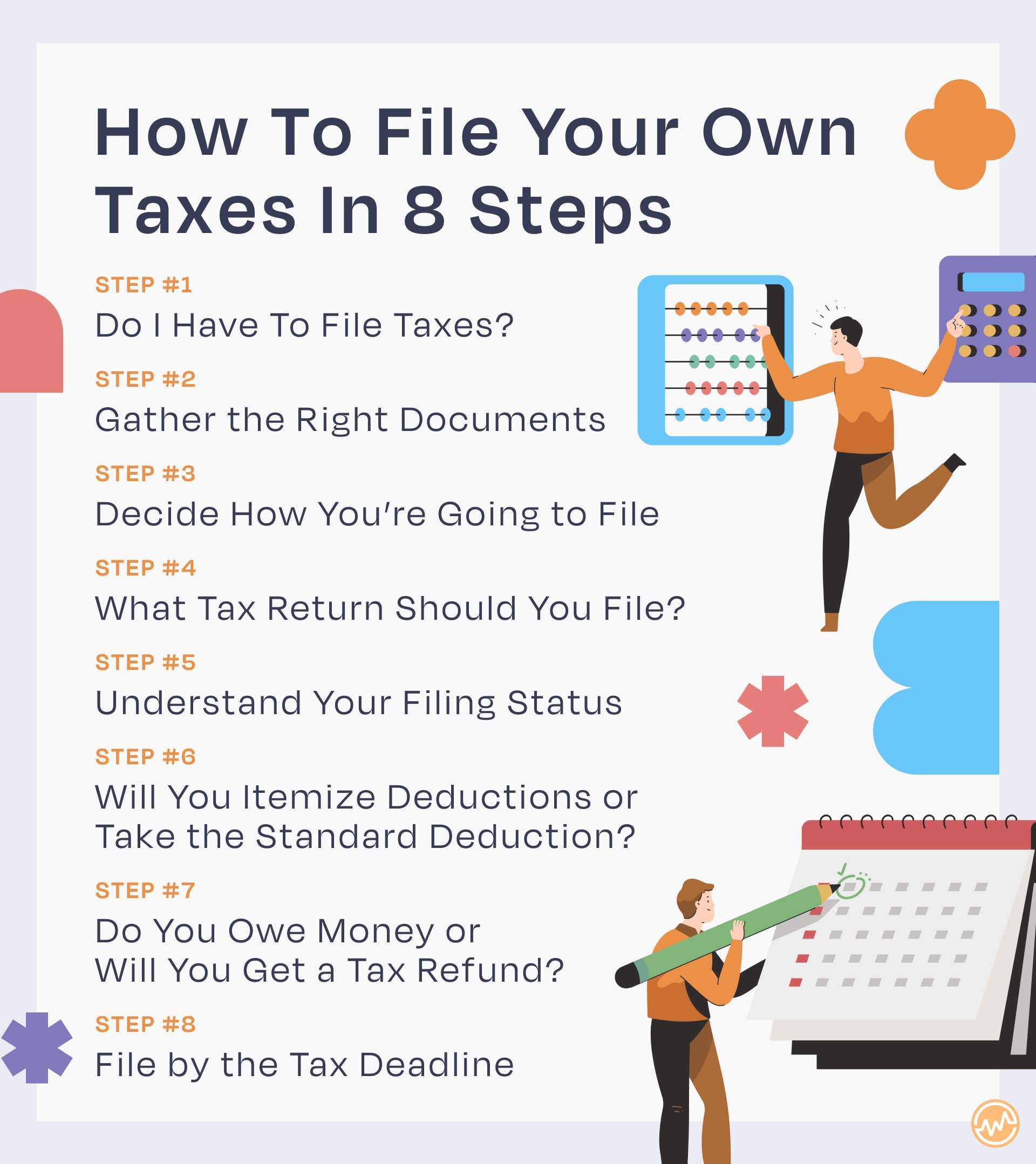
Establishing Your Tax Preparation Infrastructure
Before you input a single digit into a form or software, you must build a solid foundation. Tax preparation is 80% organization and 20% calculation. By establishing a rigorous infrastructure for your financial data, you eliminate the frantic search for documents that often leads to errors and missed opportunities.
Organizing Your Financial Documentation
The first step in doing your own taxes is the aggregation of “information returns.” These are the documents sent to you by employers, banks, and brokerage firms. You should create a digital or physical folder specifically for the following:
- Income Statements: W-2s for salaried employees and 1099-NEC or 1099-MISC for independent contractors.
- Interest and Dividends: 1099-INT and 1099-DIV forms, which report the passive income earned from your savings and investments.
- Investment Transactions: 1099-B forms, which detail the sale of stocks, bonds, or cryptocurrencies.
- Adjustments to Income: Records of student loan interest (1098-E), mortgage interest (1098), and contributions to Health Savings Accounts (HSAs) or traditional IRAs.
Determining Filing Status and Residency
Your filing status is the lens through which the IRS views your household. It dictates your standard deduction and your tax brackets. While “Single” or “Married Filing Jointly” are the most common, individuals who provide a home for a qualifying dependent may benefit from the “Head of Household” status, which offers more favorable tax rates than filing single. Additionally, if you moved between states during the year, you must be prepared to file “part-year resident” returns in multiple jurisdictions, which requires a clear breakdown of income earned in each location.
Strategic Deductions: Reducing Your Taxable Income
The goal of tax preparation is to arrive at your “Taxable Income,” which is often significantly lower than your “Gross Income.” Understanding how to navigate deductions is the most effective way to lower your tax liability and keep more of your hard-earned money.
The Great Debate: Standard vs. Itemized
The most critical decision in the deduction process is choosing between the standard deduction and itemizing. Since the Tax Cuts and Jobs Act of 2017, the standard deduction has nearly doubled, making it the most advantageous choice for the majority of taxpayers.
However, you should consider itemizing on Schedule A if your total deductible expenses—including state and local taxes (up to $10,000), mortgage interest, significant medical expenses, and charitable contributions—exceed the standard deduction threshold. Doing your own taxes allows you to run both scenarios to see which results in a lower tax bill, a transparency that is sometimes lost when a third party rushes through your return.
Leveraging Tax Credits for Maximum Return
While deductions lower the income you are taxed on, credits are even more powerful: they provide a dollar-for-dollar reduction of the tax you actually owe. Understanding the difference is key to personal finance mastery.
- Child Tax Credit (CTC): A significant credit for parents that can drastically reduce or even eliminate a tax bill.
- Earned Income Tax Credit (EITC): A benefit for working people with low to moderate income.
- Education Credits: The American Opportunity Tax Credit (AOTC) and the Lifetime Learning Credit (LLC) can help offset the costs of higher education.
By filing yourself, you can ensure that you are checking every eligibility requirement for these credits, which are frequently updated by legislative changes.
The Modern Toolkit: Leveraging Financial Software and Technology

In the modern era, “doing your own taxes” does not necessarily mean filling out paper forms with a calculator. It means acting as the “Chief Financial Officer” of your household by using the right digital tools to ensure accuracy and efficiency.
Navigating the IRS Free File and Direct File Systems
The IRS offers a “Free File” program for taxpayers whose Adjusted Gross Income (AGI) falls below a certain threshold (typically around $79,000). This program provides free access to name-brand tax software. More recently, the IRS has piloted a “Direct File” system, allowing taxpayers to file directly with the government for free, bypassing third-party corporations. Utilizing these tools is a smart financial move that keeps more money in your pocket by avoiding unnecessary filing fees.
Commercial Software vs. Manual Entry
For those with more complex financial lives—such as those with rental properties or foreign assets—commercial software like TurboTax, H&R Block, or FreeTaxUSA offers a middle ground. These platforms use “interview-style” formats that guide you through your finances. However, the savvy self-filer knows that the software is only as good as the data provided. You must still understand the underlying principles to ensure the software isn’t missing nuances specific to your financial situation.
Financial Considerations for the Modern Worker: Side Hustles and Freelancing
The rise of the gig economy has changed the way we look at taxes. If you earn income outside of a traditional W-2 job, you are effectively running a business in the eyes of the IRS. This adds a layer of complexity but also opens the door to significant financial benefits.
Deciphering the Schedule C and Self-Employment Tax
When you do your own taxes as a freelancer or side-hustler, you must complete Schedule C to report your profit or loss. It is crucial to remember that as a self-employed individual, you are responsible for both the employer and employee portions of Social Security and Medicare taxes, totaling 15.3%. However, you can deduct the “employer” half of this tax when calculating your adjusted gross income, a nuance that many first-time self-filers overlook.
Tracking Business Expenses and Home Office Deductions
One of the greatest perks of self-employment is the ability to deduct “ordinary and necessary” business expenses. This includes everything from marketing costs and software subscriptions to a portion of your home expenses if you have a dedicated office space. By managing your own taxes, you become more disciplined throughout the year in tracking these expenses, turning everyday costs into valuable tax shields that protect your income.
Accuracy and Compliance: Safeguarding Your Financial Future
The final stage of doing your own taxes is the audit of your own work. Accuracy is the best defense against future headaches with the IRS or state tax authorities.
Avoiding Red Flags and Audit Triggers
The IRS uses automated systems to flag returns that deviate significantly from the norm. To avoid these “red flags,” ensure that the numbers you report exactly match the documents the IRS has received from your employers and banks. Common errors include:
- Mathematical Errors: Usually solved by using software, but manual entries should be double-checked.
- Transposed Digits: A simple typo in a Social Security Number or bank account number can delay a refund for months.
- Omitted Income: Forgetting a small 1099 from a short-lived freelance gig or a bank bonus.
Planning for the Future with Year-Round Tax Management
The most successful self-filers don’t think about taxes only in April. They use the process of filing to plan for the next year. If you found yourself owing a large sum, you might decide to increase your 401(k) contributions or adjust your W-4 withholdings. If you received a massive refund, you might realize you are giving the government an interest-free loan and decide to invest that money monthly instead. Doing your own taxes provides the data you need to optimize your wealth-building strategy for the long term.

Conclusion
Taking the initiative to do your own taxes is a cornerstone of financial independence. It strips away the mystery of where your money goes and how the national economy affects your personal bottom line. While the first year of self-filing may require a steep learning curve, the rewards—both in terms of money saved and knowledge gained—are immeasurable. By staying organized, understanding your deductions, and utilizing modern tools, you can transform tax season from a period of stress into a powerful annual review of your financial success.
aViewFromTheCave is a participant in the Amazon Services LLC Associates Program, an affiliate advertising program designed to provide a means for sites to earn advertising fees by advertising and linking to Amazon.com. Amazon, the Amazon logo, AmazonSupply, and the AmazonSupply logo are trademarks of Amazon.com, Inc. or its affiliates. As an Amazon Associate we earn affiliate commissions from qualifying purchases.