
Imagine a financial landscape far removed from today’s sophisticated cryptocurrency exchanges, regulatory frameworks, and mainstream investment vehicles. Step back to 2011, a time when Bitcoin was an obscure digital curiosity, known primarily to a niche group of technologists, libertarians, and early adopters. The question, “How would you buy Bitcoin in 2011?” isn’t just a historical anecdote; it’s a deep dive into the nascent stages of a revolutionary asset, revealing the primitive, often perilous, methods required to acquire a piece of what would become a global financial phenomenon. For anyone looking to understand the journey of digital assets, exploring this era is crucial, illuminating the challenges, risks, and sheer determination involved in early crypto investing.
The Nascent Landscape of Bitcoin in 2011: An Uncharted Financial Territory
In 2011, Bitcoin was barely two years old. Its whitepaper had been published in late 2008, and the network had launched in early 2009. The price of one Bitcoin fluctuated wildly, often valued in mere cents or a few dollars, if it had a discernible value at all. There was no CNBC covering Bitcoin prices, no dedicated financial news sites dissecting its movements, and certainly no institutional investors eyeing it as a legitimate asset class. This was a wild frontier, devoid of the infrastructure and investor protection we now take for granted.
Bitcoin’s Early Economic Footprint
At this stage, Bitcoin’s economic footprint was microscopic. It wasn’t backed by any government or central bank, nor was it widely accepted by merchants. Its utility was largely conceptual, limited to a few online forums, niche marketplaces, and an emerging community that believed in its potential as a decentralized digital currency. The concept of “investing” in Bitcoin was less about traditional portfolio diversification and more about a speculative gamble on an unproven technology. Liquidity was minimal, and transaction volumes were low, meaning any significant buy or sell order could drastically impact the price. This inherent illiquidity, combined with a small market capitalization, made Bitcoin an incredibly volatile asset, capable of experiencing double-digit percentage swings within hours, if not minutes.
The Regulatory Void and Its Implications
Perhaps the most defining characteristic of the 2011 Bitcoin market was the complete absence of regulatory oversight. Governments worldwide were largely unaware of Bitcoin, or if they were, they viewed it with skepticism and indifference, certainly not as a financial instrument requiring regulation. This meant there were no licensed exchanges, no Know Your Customer (KYC) or Anti-Money Laundering (AML) requirements, and no consumer protection laws. While this offered a degree of freedom and anonymity, it also created a breeding ground for scams, hacking, and outright theft with little to no recourse for victims. Investors operated entirely at their own risk, navigating a financial Wild West where trust was paramount and often misplaced. The implications for personal finance were profound: every decision, every transaction, carried an unquantifiable level of risk, making the act of acquiring Bitcoin a truly high-stakes venture.
Navigating the Early Avenues of Acquisition: Scarcity and Ingenuity
Given the lack of formal infrastructure, obtaining Bitcoin in 2011 required creativity, technical savvy, and a significant tolerance for risk. The conventional methods of converting fiat currency into digital assets that we know today simply did not exist. Instead, early adopters relied on a patchwork of nascent services and direct human interaction.
Peer-to-Peer Transactions: The Human Network
One of the most common ways to acquire Bitcoin in 2011 was through direct peer-to-peer (P2P) transactions. This involved finding someone willing to sell Bitcoin in exchange for fiat currency (like USD, EUR, or GBP) and conducting the transaction directly. Online forums, such as Bitcointalk.org, served as virtual marketplaces where individuals would post offers to buy or sell. Trust was built through reputation systems, but scams were rampant. Transactions might involve sending cash via postal mail, using services like PayPal (though often against PayPal’s terms of service and risky due to chargebacks), or even meeting in person for local cash exchanges. These P2P interactions were the bedrock of early Bitcoin liquidity, embodying the decentralized spirit of the currency, but also highlighting its fragility and reliance on individual trust. For a financial instrument aiming for global adoption, this grassroots approach was both its strength and its significant limitation.
Earning Bitcoin for Goods and Services
Beyond direct purchases, another way to acquire Bitcoin was by earning it. A small but growing number of online merchants, primarily catering to the tech-savvy crowd, began accepting Bitcoin as payment for goods and services. Similarly, individuals with technical skills might offer their services (e.g., website design, coding) and request payment in Bitcoin. This method was less about “buying” in the traditional sense and more about exchanging labor or goods for Bitcoin, effectively bypassing the need for a fiat gateway. While it provided an organic way for Bitcoin to circulate and gain utility, it also meant that acquiring substantial amounts of Bitcoin this way required significant effort or specialized skills, making it less accessible for the average person simply looking to invest.
The Miner’s Gambit: Acquiring Through Computation
While not a direct “purchase” with fiat currency, mining was arguably the most fundamental way to acquire new Bitcoin in 2011. Early Bitcoin mining could be done on standard desktop CPUs, and later, more efficiently, with GPUs. Participants would use their computing power to solve cryptographic puzzles, validating transactions and securing the network, and in return, they would be rewarded with newly minted Bitcoin. In 2011, the block reward was 50 BTC. For individuals with the technical know-how and access to affordable electricity, mining presented a viable pathway to accumulate Bitcoin. Subsequently, these mined bitcoins could be sold on P2P networks or early exchanges for fiat, effectively converting computational effort into traditional currency, or held as an investment. This method was a significant economic activity within the early Bitcoin ecosystem, directly linking the acquisition of the asset to its underlying technological process.
The Pioneering Role of Early Exchanges: Fragile Gateways to Digital Wealth
While P2P transactions and mining offered acquisition routes, the emergence of dedicated online exchanges began to professionalize the process, albeit with severe limitations and risks. These platforms were the first attempt to bridge the gap between traditional fiat currencies and the nascent world of Bitcoin, laying the groundwork for the multi-billion dollar industry we see today.
Mt. Gox: The Dominant, Yet Fragile, Gateway
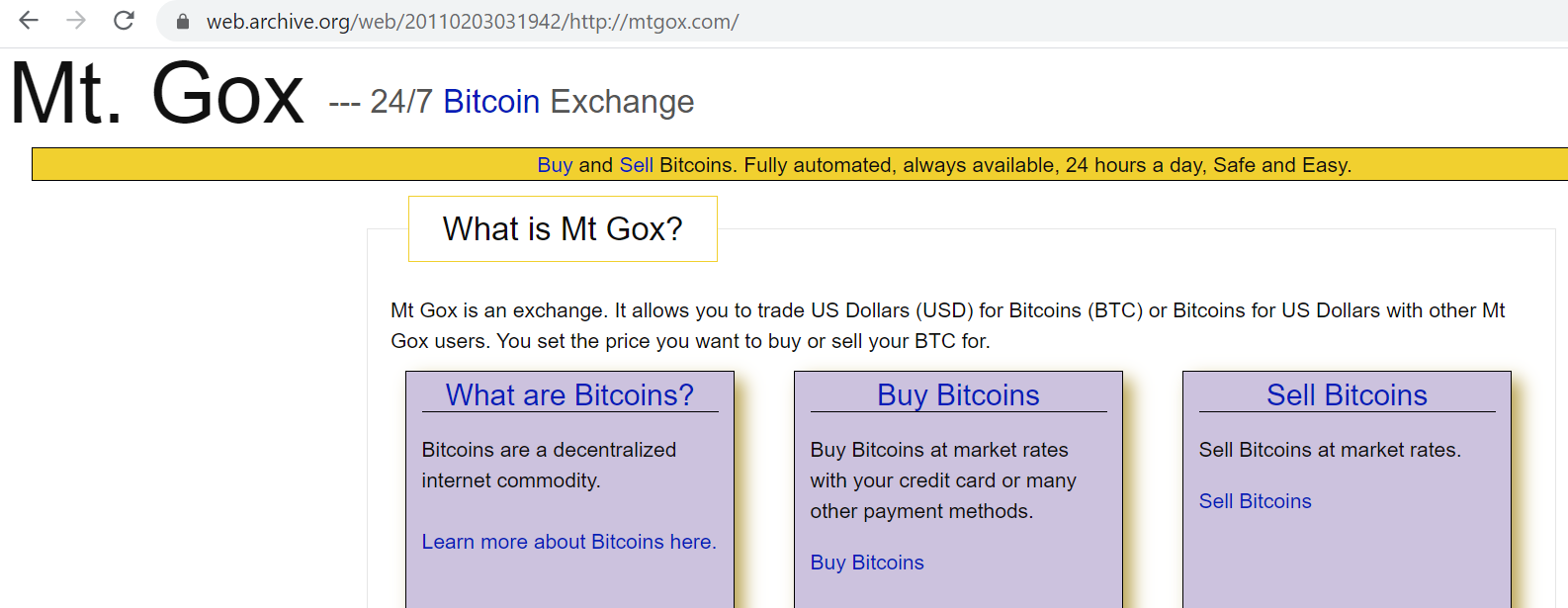
The undisputed king of Bitcoin exchanges in 2011 was Mt. Gox. Originating as a magic card trading website, it quickly pivoted to become the primary platform for exchanging Bitcoin for fiat currencies (mainly USD). At its peak, Mt. Gox handled over 70% of all Bitcoin transactions worldwide. For many, Mt. Gox was Bitcoin trading. However, its dominance was matched only by its vulnerability. The exchange was plagued by security issues, technical glitches, and a lack of robust internal controls. Depositing fiat money often involved slow, cumbersome wire transfers, and withdrawals could take weeks, if they happened at all. The entire operation ran on a shoestring budget with minimal regulatory oversight, making it a high-risk proposition for anyone entrusting their funds. The story of Mt. Gox is a stark reminder of the financial perils inherent in a developing market, culminating in its catastrophic collapse in 2014, which saw hundreds of thousands of Bitcoins lost.
The Mechanics of Fiat-to-Bitcoin Transfers
The process of moving traditional money into an early exchange like Mt. Gox was a far cry from today’s instant bank transfers and credit card deposits. In 2011, users typically had limited options, often relying on slower, less secure methods:
- Bank Wire Transfers: The most common method for larger sums, but these were slow, expensive, and subject to international banking regulations. Users would wire money to a bank account, often in a different country, associated with the exchange.
- Postal Money Orders: Some exchanges, in a desperate bid to facilitate deposits, would accept physical money orders sent through the mail. This was incredibly slow and offered virtually no recourse if the funds were lost or stolen.
- PayPal: While some individuals attempted to use PayPal for P2P transactions, exchanges generally avoided it due to PayPal’s buyer protection policies, which made Bitcoin sellers vulnerable to chargebacks. If a buyer claimed they never received their goods (Bitcoin), PayPal would often side with the buyer, clawing back funds from the seller without a clear way to recover the irreversible Bitcoin transaction.
- Other Digital Payment Processors: A handful of smaller, less-known online payment processors might have been used, but these often carried their own set of risks, including high fees and questionable reliability.
The primitive nature of these fiat on-ramps created significant friction for anyone looking to enter the Bitcoin market, underscoring the early challenges in liquidity and accessibility for nascent investors.
Security and Risk in a Wild West Market: Protecting Your Digital Gold
Acquiring Bitcoin in 2011 was only half the battle; securing it was an equally, if not more, daunting challenge. The unregulated nature of the market, combined with the novelty of the technology, created an environment rife with security vulnerabilities and financial risks that would terrify modern investors.
Safeguarding Digital Assets: Early Wallet Solutions
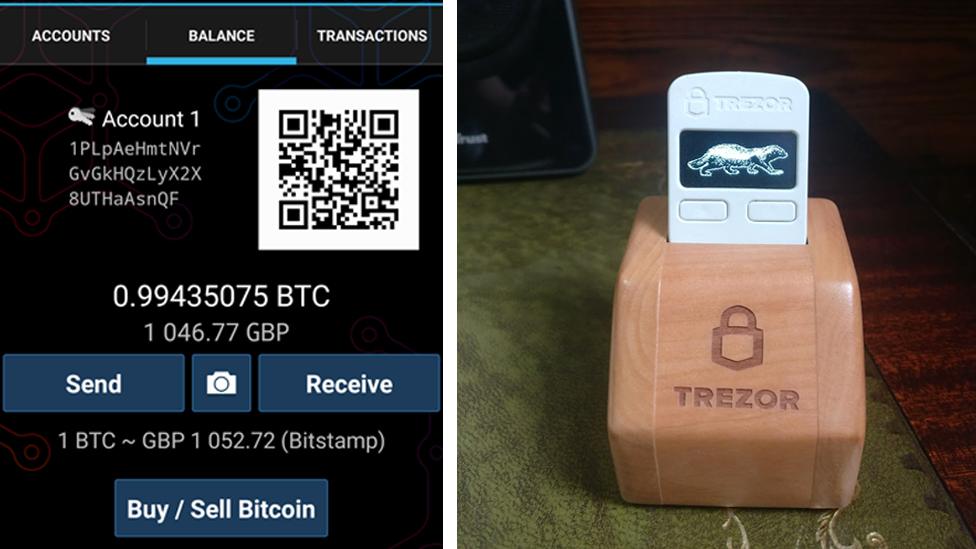
In 2011, personal Bitcoin wallets were rudimentary. Most users relied on software wallets installed directly on their computers (desktop clients), which required constant vigilance against malware, viruses, and hard drive failures. The concept of “cold storage” (keeping Bitcoin offline) was still evolving, often involving printing out private keys on paper (paper wallets) or storing them on encrypted USB drives. Hardware wallets, now a staple for secure cryptocurrency storage, did not exist. This meant that the security of one’s Bitcoin rested squarely on the user’s technical competence and operational security practices. A lost private key meant lost Bitcoin forever, with no central authority to recover funds. This direct responsibility for digital asset security was a radical departure from traditional banking, where institutions manage and protect customer funds.
The Scourge of Scams and Frauds
The absence of regulation and clear legal frameworks made the early Bitcoin market a magnet for scammers. Phishing websites mimicking legitimate services, Ponzi schemes promising unrealistic returns (like “Bitcoin Savings and Trust”), and outright fraudulent exchanges were commonplace. Trusting individuals in P2P transactions or depositing funds into obscure exchanges often resulted in funds vanishing without a trace. The anonymous nature of Bitcoin transactions, while appealing for privacy, also made it incredibly difficult to trace stolen funds or identify perpetrators. For investors, this meant every interaction carried a significant risk of fraud, demanding an almost paranoid level of scrutiny and skepticism. The financial losses incurred by early adopters due to scams were a painful but valuable lesson in due diligence within an unregulated asset class.
Understanding Extreme Volatility
Beyond security and fraud, the inherent volatility of Bitcoin in 2011 was a major financial risk. Prices could swing by tens or even hundreds of percent in a single day, driven by small trading volumes, news events, or even just speculation. An investor who bought Bitcoin at $10 could see its value plummet to $1 or surge to $30 within a short period. This extreme price instability made Bitcoin unsuitable for anyone seeking a stable store of value or a predictable investment. It was purely a speculative asset, and the financial implications were significant: investors needed to be prepared for the possibility of losing their entire investment, or conversely, experiencing life-changing gains. Managing this volatility required a strong stomach and a long-term perspective, distinguishing true believers from those merely chasing quick profits.
The Investment Thesis: What Did It Mean to Buy Bitcoin Then?
Looking back, the decision to buy Bitcoin in 2011 wasn’t just a financial transaction; it was a philosophical statement, a leap of faith into a radically new financial paradigm. The motivations and expectations of those early investors were fundamentally different from today’s sophisticated market participants.
Speculation vs. Long-Term Vision
For many, buying Bitcoin in 2011 was pure speculation. It was an experimental technology, and the financial decision was akin to betting on a startup in its infancy. There was no established valuation model, no analyst reports, and no historical data to guide investment decisions. However, for a smaller, more dedicated group, acquiring Bitcoin was driven by a deep conviction in its underlying principles: decentralization, censorship resistance, and a sound monetary policy unaffected by central banks or governments. They saw Bitcoin not just as a speculative asset but as a potential future currency or a digital form of gold, an independent store of value in an increasingly digital world. This dichotomy between short-term speculation and long-term ideological investment defined the early market, with both camps contributing to its nascent liquidity and price discovery.
The “What If” Factor: A Look Back at Opportunity Cost
The most compelling aspect of “how would you buy Bitcoin in 2011” from a financial perspective is the monumental opportunity cost associated with not doing so. An investment of just $100 in Bitcoin in 2011, when prices hovered around a few dollars or less, could have yielded millions, if not tens of millions, of dollars at its peak. This retrospective “what if” scenario highlights the extraordinary, unprecedented returns offered by early adoption of groundbreaking technologies. It underscores the immense power of foresight, risk-taking, and the willingness to invest in disruptive innovations long before they become mainstream. While impossible to predict at the time, the history of Bitcoin in 2011 serves as a powerful testament to the potential for exponential growth in emerging asset classes, forever shaping the way we view digital finance and the opportunities it presents for the audacious investor. The journey of buying Bitcoin then was fraught with peril, but for the few who succeeded, the financial rewards were truly transformative.
aViewFromTheCave is a participant in the Amazon Services LLC Associates Program, an affiliate advertising program designed to provide a means for sites to earn advertising fees by advertising and linking to Amazon.com. Amazon, the Amazon logo, AmazonSupply, and the AmazonSupply logo are trademarks of Amazon.com, Inc. or its affiliates. As an Amazon Associate we earn affiliate commissions from qualifying purchases.