
The year 2009 stands as a pivotal moment in financial history, largely unbeknownst to the vast majority at the time. It was the year an anonymous entity or group named Satoshi Nakamoto unleashed a whitepaper that would redefine currency, banking, and wealth creation: Bitcoin. Today, the question “how would you buy Bitcoin in 2009?” elicits a smile, a sigh, or perhaps a twinge of regret from anyone who understands its trajectory. Yet, for an aspiring investor operating within the financial landscape of that nascent year, the mechanisms for acquiring this nascent digital asset were far from conventional. This article delves into the hypothetical and practical financial considerations, methods, and mindset required to “invest” in Bitcoin during its infancy, strictly from a personal finance and investment perspective.
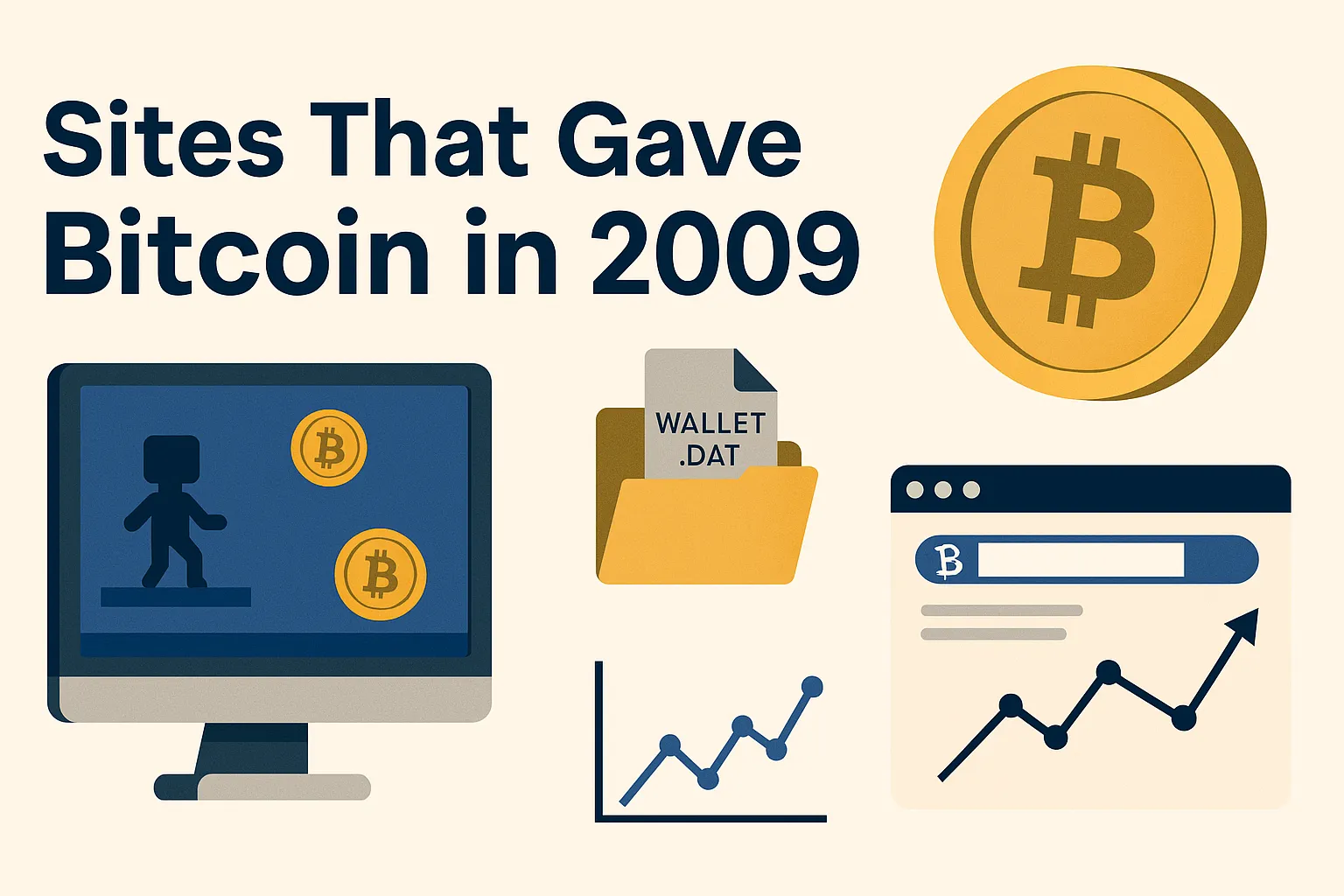
Bitcoin’s Genesis: A Financial Enigma in 2009
In 2009, Bitcoin was not an asset traded on an exchange, nor was it recognized by any financial institution. It was a novel concept, a line of code, and a nascent network. Understanding its financial implications required a leap of faith and a deep dive into cryptographic principles.
The Concept of Digital Scarcity
At its core, Bitcoin introduced the world to true digital scarcity. Unlike traditional digital files that can be infinitely copied, Bitcoin was designed with a fixed supply cap of 21 million units, enforced by cryptographic proof-of-work. From an investment standpoint, this scarcity principle is foundational. In 2009, discerning its long-term financial implications meant recognizing that if this system gained traction, its limited supply could drive significant value, akin to precious metals but in a digital realm. An early investor would have needed to grasp this fundamental economic principle without any historical data or market validation. It was an intellectual investment before it was a monetary one.
The Absence of Market Value and Price Discovery
Perhaps the most striking financial characteristic of Bitcoin in 2009 was its complete lack of a market-determined price. There were no exchanges, no order books, no ticker symbols. Bitcoin had no fiat currency equivalent. Its value was purely theoretical, based on the cost of computing power to mine it or the perceived utility by a tiny group of cypherpunks and early adopters. For an investor, this presented an unprecedented challenge: how do you assess value for an asset that literally has no price? Any “purchase” would have been an agreement based on a completely arbitrary or personally determined rate, making traditional valuation models utterly useless. This wasn’t about finding the best price; it was about defining any price.
Early Belief vs. Speculation
Investing in Bitcoin in 2009 was less about traditional speculation and more about an ideological alignment mixed with a gamble on future utility. Speculation usually involves analyzing market trends, company financials, or economic indicators. With Bitcoin, there were none. Early acquirers were driven by a belief in decentralized finance, a distrust of traditional banking, or simply a fascination with a groundbreaking technological experiment. From a personal finance perspective, committing resources (whether computational or a small amount of fiat in an OTC trade) to Bitcoin at this stage was the ultimate venture capital play – betting on a moonshot concept with zero institutional backing and an infinitesimal user base. It required an investor with an extremely high-risk tolerance and a profound conviction in the underlying vision.
Beyond Exchanges: Hypothetical Acquisition Avenues
Since the conventional financial infrastructure for cryptocurrency didn’t exist, how would a determined individual acquire Bitcoin in 2009? The methods were primitive, direct, and often required a blend of technical prowess and trust.
The Miner’s Gambit: Earning Through Computation
The primary, and arguably only, “acquisition” method in 2009 was mining. This wasn’t buying Bitcoin with fiat currency; it was earning it by dedicating computational resources to secure the network. Miners used their personal computers’ CPUs (GPUs came later) to solve complex cryptographic puzzles. For successfully adding a block of transactions to the blockchain, a miner would receive a block reward – 50 Bitcoins in 2009.
From a financial standpoint, this involved:
- Initial Capital Outlay: The cost of a computer and electricity. While rudimentary by today’s standards, it was still a tangible expense.
- Operational Costs: Ongoing electricity bills.
- Opportunity Cost: The time spent configuring and maintaining the mining rig, which could have been used for other income-generating activities.
- Risk: The risk that the electricity cost would outweigh the future value of the mined Bitcoin, or that the network would fail entirely, rendering the mined coins worthless.
For an individual, “investing” in Bitcoin through mining meant making a direct financial commitment in terms of hardware and energy, hoping the future value of the block reward would justify these expenses. It was a direct, albeit indirect, financial contribution to the network’s security in exchange for its native asset.
Direct Peer-to-Peer Transactions: The Ultimate OTC Market
While official exchanges were non-existent, the very essence of Bitcoin is peer-to-peer. Hypothetically, if one wanted to “buy” Bitcoin without mining, it would have to be through a direct agreement with another individual. This would resemble an over-the-counter (OTC) trade of the most informal kind, likely facilitated through early online forums or direct communication between individuals.
Consider the financial implications:
- Trust: The paramount financial risk was counterparty risk. There were no escrow services, no regulators, and no recourse if one party failed to uphold their end of the bargain. Sending fiat currency (e.g., via PayPal or bank transfer) to an anonymous internet user in exchange for digital tokens required immense trust.
- Valuation Agreement: As mentioned, there was no market price. The “buyer” and “seller” would have to agree on an arbitrary exchange rate. Perhaps a few cents per Bitcoin, or simply trading Bitcoin for a service or a physical good.
- Liquidity: Finding a willing seller (or buyer) would have been exceptionally difficult given the minuscule user base.
These transactions were less about efficient market execution and more about a handshake agreement in the digital ether, fraught with financial and security uncertainties.
The Early Gifting Economy: Faucets and Forums
Though not a direct “purchase” in the traditional sense, early Bitcoin faucets and community giveaways played a role in initial distribution. The first Bitcoin faucet, created by Gavin Andresen in 2010 (a year later than our scope, but indicative of the early community spirit), gave away 5 Bitcoins per visitor. In 2009, similar informal mechanisms or direct “gifts” from those who mined heavily might have existed within niche forums.
From an investment perspective, this was “found money.” The financial cost was zero, making the risk profile incredibly attractive. However, these were not scalable acquisition strategies for a serious investor seeking to build a substantial position. They highlight the community-driven, experimental nature of early Bitcoin distribution rather than a structured financial market.
The True Cost of Early Adoption: Valuing the “Unpurchasable”
In 2009, valuing Bitcoin was a profound challenge. Without a market, without precedent, and without external validation, an “investor” had to quantify costs and risks in entirely new ways.

Opportunity Cost and Resource Allocation
For a financially savvy individual, any decision to acquire Bitcoin, whether through mining or an informal trade, came with significant opportunity costs.
- For Miners: The electricity consumed and the computing power dedicated could have been used for other tasks or simply conserved. The time spent setting up and monitoring mining operations was a non-recoverable resource.
- For Early Buyers: Any fiat currency exchanged for Bitcoin could have been invested in established assets like stocks, bonds, or real estate, which offered predictable returns, albeit lower-risk profiles. The decision to forgo these known investment paths for a purely speculative digital asset was a significant financial calculation.
Resource allocation in 2009 meant diverting scarce resources – time, money, and intellectual effort – into an entirely unproven endeavor.
Risk Premium: Investing in the Unknown
Traditional finance assigns a risk premium to investments with higher uncertainty. In 2009, Bitcoin carried an astronomical risk premium. It was an unproven technology with:
- Regulatory Uncertainty: No legal status, no consumer protection.
- Technical Failure Risk: The network could collapse, be hacked, or prove unscalable.
- Adoption Risk: It might never gain widespread use, remaining a niche curiosity.
- Valuation Risk: The “price” could remain zero forever.
An investor in 2009 was essentially betting on the very survival and future relevance of a concept, demanding an exceptionally high tolerance for financial loss. The “cost” wasn’t just the few dollars or electricity bills; it was the psychological burden of investing in something that could vanish overnight.
The Absence of Fiat On-Ramps
The biggest financial hurdle was the lack of seamless conversion between traditional fiat currency and Bitcoin. Without legitimate exchanges, an investor couldn’t simply transfer funds from their bank account to “buy” Bitcoin. This meant any acquisition was either a direct expenditure (electricity for mining) or a highly risky, unregulated, person-to-person exchange. The financial infrastructure we take for granted today simply did not exist, forcing a radically different approach to capital deployment.
Safeguarding Your Scarcity: Custody and Security in 2009
Once an individual managed to acquire Bitcoin in 2009, the next crucial financial concern was its secure custody. Unlike holding shares in a brokerage account or cash in a bank, early Bitcoin custody was entirely the individual’s responsibility, with rudimentary tools and significant personal risk.
Rudimentary Wallet Solutions and Personal Responsibility
In 2009, Bitcoin wallets were primarily desktop software programs. The original Bitcoin client, Bitcoin-Qt (later Bitcoin Core), was the main option. This meant:
- Self-Custody: Users were solely responsible for managing their private keys, which were essentially the proof of ownership for their Bitcoins.
- Technical Knowledge Required: Setting up and backing up these wallets required a decent level of technical understanding. Mistakes could easily lead to irreversible loss.
- Vulnerability: These early wallets were vulnerable to computer viruses, hard drive failures, and physical theft if the computer was compromised.
From a personal finance perspective, this placed an unprecedented burden of financial security directly onto the individual. There were no institutional custodians, no insurance, no “reset password” options. Loss of a private key meant permanent loss of funds – a risk that remains today but was amplified by the nascent technology and lack of user-friendly interfaces.
The Risks of Loss and Irreversible Transactions
The immutable nature of the blockchain, while a feature, was also a financial risk for early users. If Bitcoin was sent to the wrong address, or if a wallet file was corrupted or deleted without a backup, those funds were irrecoverable. There was no customer support to call, no bank to dispute a transaction with. This reality forced early adopters to develop rigorous personal security protocols, often involving multiple backups on external drives or encrypted storage. The financial cost of a mistake was absolute.
Early Steps in Personal Financial Security
The lessons learned by early Bitcoin holders about self-custody and digital security laid the groundwork for today’s best practices in cryptoasset management. An early “investor” was not just acquiring an asset but also becoming their own bank, their own security expert, and their own IT department. This heightened sense of personal responsibility for one’s digital wealth was a defining characteristic of early Bitcoin ownership and a key financial lesson for those who dared to participate.
The Visionary Investor: A Look at the Early Bitcoin Enthusiast
Who was the individual attempting to “buy” Bitcoin in 2009? They were not your typical institutional investor or even a retail investor looking at a prospectus. They were a unique blend of technologist, contrarian, and financial pioneer.
A Blend of Technical Curiosity and Financial Foresight
The early Bitcoin enthusiast likely had a strong technical background or at least a keen interest in cryptography and computer science. This technical understanding was crucial for navigating the mining process, managing wallets, and comprehending the underlying protocol. However, alongside this technical aptitude, they possessed a remarkable degree of financial foresight. They had to see beyond the current lack of value and envision a future where this digital currency could disrupt traditional finance and become a store of value or a medium of exchange. This was not a short-term trade; it was a long-term strategic bet on a paradigm shift.
The Long-Term HODLers: Unwavering Conviction
The term “HODL” (a misspelling of “hold”) emerged much later, but the sentiment was born in 2009. Those who acquired Bitcoin early and held onto it through its volatile teenage years demonstrated an unwavering conviction. From a financial psychology perspective, this meant resisting the urge to sell when Bitcoin was valued at fractions of a cent, and later, when it saw its first significant price pumps and subsequent corrections. It required an investor temperament capable of weathering extreme volatility and an ability to focus on the long-term vision rather than short-term gains or losses. This was less about active portfolio management and more about steadfast belief.
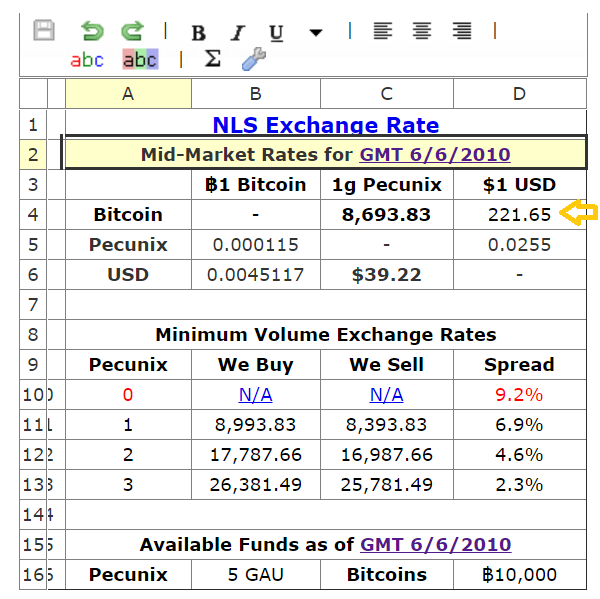
The Power of Retrospection: Lessons for Modern Investing
Looking back at 2009, the hypothetical act of “buying Bitcoin” offers invaluable lessons for modern investing. It underscores the potential rewards of early adoption in groundbreaking technologies, the importance of understanding underlying financial principles (like scarcity), and the critical role of personal responsibility in managing assets outside traditional financial systems. It also highlights the immense risk-reward ratio associated with truly disruptive innovation. While the days of acquiring Bitcoin for pennies or through CPU mining are long gone, the spirit of intellectual curiosity, financial daring, and conviction exhibited by early adopters remains a testament to what it takes to invest in the uncharted.
In essence, “buying Bitcoin in 2009” wasn’t a transaction; it was an act of profound financial speculation, technological embrace, and a quiet, individual declaration of faith in a decentralized future. It laid the groundwork for a financial revolution that continues to unfold today.
aViewFromTheCave is a participant in the Amazon Services LLC Associates Program, an affiliate advertising program designed to provide a means for sites to earn advertising fees by advertising and linking to Amazon.com. Amazon, the Amazon logo, AmazonSupply, and the AmazonSupply logo are trademarks of Amazon.com, Inc. or its affiliates. As an Amazon Associate we earn affiliate commissions from qualifying purchases.