
In the competitive landscape of modern commerce, a well-crafted business proposal is far more than just a formal document; it is a critical financial instrument. It serves as your business’s primary tool for securing lucrative contracts, attracting essential investment, forging profitable partnerships, and ultimately driving sustainable revenue growth. For any entrepreneur, freelancer, or established corporation, mastering the art of proposal writing is indispensable for navigating the complex world of business finance.
This guide will delve into the strategic financial aspects of developing compelling business proposals, framing them not merely as sales pitches but as comprehensive financial blueprints designed to unlock new income streams, mitigate financial risks, and articulate a clear path to mutual financial benefit. Understanding how to align your proposal with the financial objectives of your target audience is the cornerstone of converting prospects into profitable ventures.

Understanding the Financial Imperative of a Business Proposal
At its core, a business proposal is a document with significant financial implications. Every word, every data point, and every solution presented should ultimately tie back to tangible financial outcomes for both your business and the recipient. Ignoring this financial imperative is akin to navigating an ocean without a compass—you might move, but you won’t reach your desired destination efficiently or effectively.
The Proposal as a Revenue Generation Tool
A robust business proposal is arguably one of the most direct pathways to revenue generation. Whether it’s a sales proposal for a new client, a project proposal outlining services, or a partnership proposal envisioning joint ventures, its primary goal is to secure a commitment that translates into income for your business. This section isn’t just about stating your price; it’s about demonstrating how your services or products deliver measurable financial value that justifies the investment.
Successful proposals clearly articulate the return on investment (ROI) for the client. How will your solution save them money, increase their profits, enhance efficiency to reduce costs, or open up new revenue streams for them? Providing clear financial projections—even conservative ones—can be incredibly persuasive. For instance, if you’re proposing a marketing campaign, don’t just promise increased brand awareness; project potential sales uplift and the associated revenue. If you’re offering efficiency consulting, quantify the potential cost savings over a specific period. These projections transform abstract benefits into concrete financial gains, making your offering significantly more attractive. Furthermore, your pricing strategy within the proposal must not only cover your costs and provide a healthy margin but also be perceived as financially advantageous to the client relative to the value they receive. This often involves segmenting pricing based on deliverables, offering tiered packages, or framing costs in terms of long-term financial benefits rather than just upfront expenditure.
Securing Investment and Funding
When your business proposal targets investors, venture capitalists, or lending institutions, its financial imperative shifts dramatically. Here, the proposal becomes an investment prospectus, a detailed argument for why your business represents a sound financial opportunity. The language and focus must pivot to highlight potential returns, scalability, and financial stability.
Investment proposals typically include comprehensive financial models, detailing projected revenue, profit and loss statements, cash flow forecasts, and break-even analyses. Investors are scrutinizing these figures to assess risk and potential ROI. You must clearly articulate how the requested funds will be utilized to generate further revenue or achieve specific growth milestones, demonstrating a clear path to profitability and, ultimately, investor liquidity. Beyond raw numbers, you need to convey a compelling narrative about market opportunity, competitive advantage, and your team’s capability to execute the financial plan. This includes explaining your customer acquisition costs, lifetime customer value, and how your business model is sustainable and scalable. For lenders, emphasis will be placed on collateral, repayment capacity, and debt-to-equity ratios, showcasing your business’s ability to manage and service debt responsibly. A clear and credible exit strategy, whether through acquisition, IPO, or profit distribution, is also paramount for attracting serious investors.
Mitigating Financial Risk
A well-structured business proposal serves as a crucial tool for mitigating financial risks for both your business and the client. By clearly defining the scope of work, deliverables, timelines, and payment terms, it establishes a transparent framework that prevents common pitfalls leading to financial disputes, scope creep, and unexpected costs.
For your business, a detailed proposal minimizes the risk of working beyond the agreed-upon scope without additional compensation. It sets clear boundaries for what is included and, equally important, what is not included. This clarity protects your profit margins by ensuring that all work performed is either covered by the initial agreement or renegotiated. For the client, the proposal provides certainty regarding the investment. They understand exactly what they are paying for, when they can expect deliverables, and what the financial commitment entails. This transparency builds trust and reduces the likelihood of costly misunderstandings or project delays. Furthermore, clear payment schedules and terms within the proposal are vital. These include milestones for payments, acceptable payment methods, and policies for late payments, safeguarding your cash flow and financial stability. By proactively addressing potential areas of financial friction, a strong proposal lays the groundwork for a financially secure and mutually beneficial engagement.
Crafting a Financially Compelling Narrative
The most effective business proposals weave a narrative that isn’t just persuasive but financially undeniable. It’s about translating your solutions into a language of financial gain, cost savings, and strategic investment.
Defining the Financial Problem and Solution
Before you can present your financial solution, you must first expertly define the client’s financial problem. Frame their challenges in monetary terms: Are they experiencing lost revenue due to inefficient processes? Are their current operational costs too high? Are they missing out on market opportunities that could generate significant income? By quantifying the client’s pain points, you create an immediate and tangible context for your proposal.
Once the financial problem is clearly articulated, your solution must be presented as a direct, financially beneficial answer. Don’t just explain what you’ll do; explain how that action will lead to financial improvement. For example, instead of saying, “We will implement new software,” say, “Implementing our new software will reduce operational overhead by 15% annually, saving your company an estimated $50,000 per year.” Every proposed service, product, or strategy should be accompanied by a clear statement of its financial impact, whether it’s increased profit margins, reduced expenditures, faster cash flow, or a higher return on capital. This approach positions your business not just as a service provider but as a strategic financial partner.
Presenting Your Value Proposition with a Financial Edge
Your unique selling proposition (USP) must resonate with the financial priorities of your audience. This means moving beyond generic statements of quality or customer service and instead quantifying the monetary benefits of choosing your business. What financial edge do you offer that competitors do not?
Use data, statistics, and concrete examples to back up your claims. If your solution has helped previous clients achieve significant financial milestones, share those case studies, focusing on the quantifiable results: “Client X saw a 25% increase in online sales and a 10% reduction in marketing spend within six months of implementing our strategy.” This provides credible evidence of your financial impact. Highlight any competitive pricing advantages, superior ROI, faster time-to-value, or unique features that offer long-term financial stability or growth opportunities. For instance, perhaps your offering reduces the total cost of ownership over time, or its scalability allows for future financial growth without significant reinvestment. The goal is to make it abundantly clear that investing in your business is not an expense, but a financially savvy decision that will yield substantial returns.
The Budget and Pricing Strategy
The budget and pricing section is arguably the most scrutinized part of any proposal from a financial perspective. It’s not enough to simply list figures; you must justify every cost, demonstrate transparency, and frame your pricing in a way that underscores its financial value.
Break down your costs clearly and comprehensively. Avoid opaque “all-inclusive” figures. Itemize services, labor, materials, and any recurring fees. This level of detail shows professionalism and allows the client to understand precisely where their investment is going. Justify your pricing by linking it directly back to the value proposition and the financial benefits you outlined earlier. If your price seems higher than a competitor’s, explain why the added investment leads to superior financial outcomes (e.g., higher quality, greater efficiency, longer lifespan, better ROI). Consider offering flexible pricing models, such as tiered packages, hourly rates, project-based fees, or retainer options, to accommodate different budget requirements and perceived values. Clearly state payment terms, including upfront deposits, milestone payments, and final payment schedules. Address potential additional costs for scope changes or unforeseen circumstances, ensuring these are transparently communicated to avoid future financial disputes. The aim is to present a pricing structure that is fair, transparent, and financially appealing, aligning with the client’s budget and financial expectations while securing your business’s profitability.
Structuring Your Proposal for Maximum Financial Impact
The structure of your proposal is key to guiding the reader through your financial argument. Each section should build upon the last, culminating in an undeniable case for investment.
Executive Summary: The Financial Hook
The executive summary is often the only part many busy decision-makers read thoroughly, making it the most critical section for capturing financial attention. It must act as your “financial hook,” immediately summarizing the core financial opportunity or solution you present.
Start with a concise statement of the client’s financial challenge and immediately follow it with the quantifiable financial benefits your business offers. What is the projected ROI? How much money will they save or gain? What strategic financial advantage will they acquire? For investment proposals, highlight the market opportunity and the projected returns for investors. Keep it brief, compelling, and laser-focused on the monetary value you bring. This section should compel the reader to delve deeper into the detailed financial arguments presented in the remainder of the proposal.
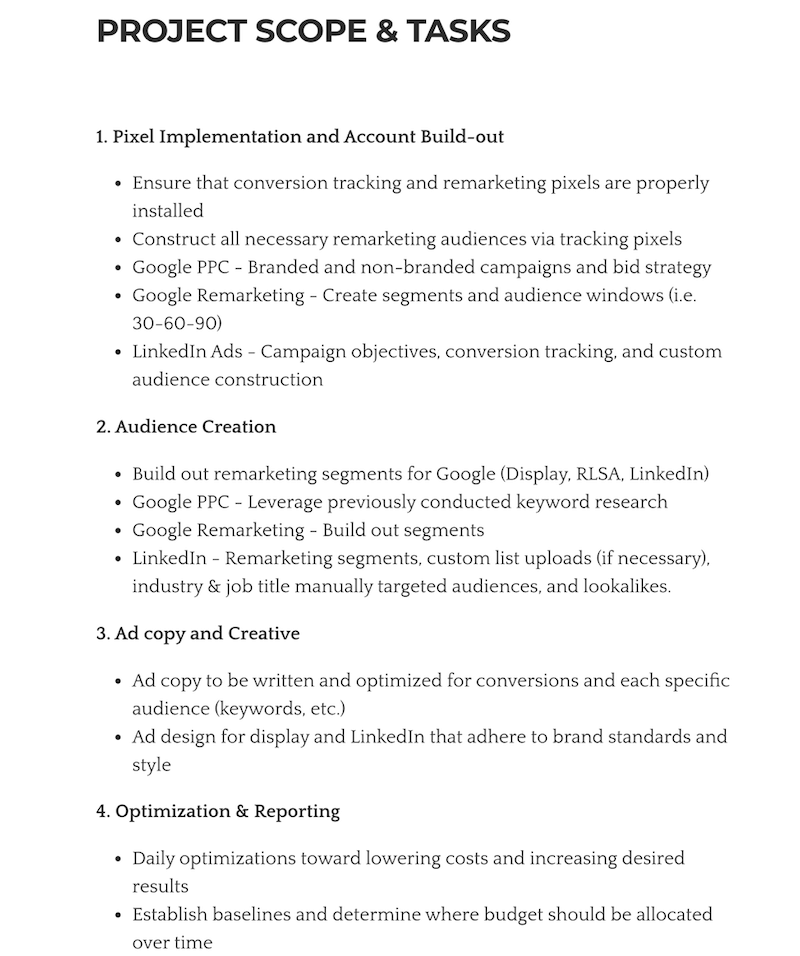
Project Scope & Deliverables (with Financial Implications)
This section details exactly what your business will provide, but crucially, it should also explicitly link each deliverable to its financial purpose and expected outcome. Every task, product, or service itemized must have a clear financial justification.
For instance, if a deliverable is “monthly performance reports,” explain that these reports enable data-driven financial decisions, optimize budget allocation, and identify areas for cost reduction. If you’re delivering a new software system, explain how it will automate processes, reduce labor costs, or improve revenue tracking. Break down complex projects into distinct phases, each with its own set of deliverables and associated financial milestones. This not only clarifies the work but also reinforces the value of each component in terms of financial contribution or risk mitigation. Clear parameters here help prevent scope creep, which can significantly derail project budgets and impact your profitability.
Financial Projections and ROI Analysis
For any proposal, but especially those seeking investment or major contracts, detailed financial projections and a robust ROI analysis are paramount. This is where you lay out the numbers that support your claims of financial benefit.
Provide clear, realistic financial forecasts, including revenue projections, profit and loss statements, cash flow analyses, and potentially balance sheets for multi-year periods. For investors, detail the potential return on their investment, payback periods, and internal rate of return (IRR). For clients, show how your solution will positively impact their bottom line—through cost savings, increased efficiency, or revenue growth—and calculate the time it will take for them to recoup their investment (payback period) and beyond. Use charts and graphs to make complex financial data more digestible and impactful. Explain the assumptions behind your projections and acknowledge any potential risks, demonstrating a thoughtful and credible approach to financial planning. This section should leave no doubt about the positive financial outcome of engaging your business.
Terms, Conditions, and Payment Schedules
This vital section formalizes the financial agreement, protecting both parties and ensuring clarity on all monetary aspects of the engagement.
Clearly state your proposed pricing structure, payment milestones, and the total cost of the project or services. Specify currency, payment methods, and preferred invoicing cycles (e.g., net 30 days). Outline any penalties for late payments or interest charges, as well as provisions for scope changes that may incur additional costs. Detail the terms regarding intellectual property, confidentiality, and dispute resolution, all of which have implicit financial protections. For investment proposals, this section would cover equity stakes, valuation, dividend policies, and specific terms of investment or debt. Ensure all legal and financial jargon is understandable, or that a legal review is recommended. A transparent and well-defined terms and conditions section builds trust and minimizes the likelihood of future financial disagreements, setting the stage for a smooth and profitable working relationship.
Financial Due Diligence and Post-Proposal Follow-up
The process of writing a proposal doesn’t exist in a vacuum. It requires diligent financial research beforehand and strategic financial follow-up afterward to maximize its chances of success.
Researching the Client’s Financial Landscape
Before you even begin writing, conducting thorough financial due diligence on your prospective client or investor is critical. Understanding their financial health, budget constraints, investment priorities, and decision-making processes allows you to tailor your proposal to resonate directly with their monetary concerns.
Investigate their recent financial performance, market position, and any public financial statements. Are they in a growth phase, looking for aggressive ROI? Or are they focused on cost-cutting and efficiency? For B2B clients, identify their typical budget allocation for projects like yours. Knowing this allows you to propose a solution that is not only effective but also financially viable for them. For investors, understand their typical investment thesis, portfolio companies, and expected returns. This research enables you to frame your proposal in terms of their specific financial needs and constraints, making your offer more relevant and appealing.
Negotiation and Closing: Securing the Financial Agreement
Once your proposal is submitted, the negotiation and closing phase is where the final financial agreement is forged. This stage requires a blend of persuasion, flexibility, and a firm grasp of your own financial bottom line.
Be prepared to discuss pricing, scope adjustments, and payment terms. Have a clear understanding of your minimum acceptable profit margin and be ready to justify your figures with data from your proposal. Focus on articulating the financial value of any requested changes or concessions. If a client asks for a discount, articulate how a reduced scope or adjusted timeline might achieve a similar financial outcome at a lower cost, rather than simply devaluing your work. Guide the conversation back to the ROI and long-term financial benefits you offer. When closing, ensure all agreed-upon financial terms are meticulously documented in a formal agreement or contract, explicitly linking back to the proposal. This legally binding document solidifies the financial understanding and protects both parties.
Tracking Financial Performance Post-Award
The financial journey doesn’t end when the proposal is accepted. In fact, that’s where the true financial management begins. A well-written proposal sets the stage for accurate project accounting, financial reporting, and future opportunities.
Once the contract is awarded, use the detailed budget and scope outlined in your proposal as the foundation for your project’s financial management. Track all revenues and expenses against the proposal’s projections. Monitor cash flow to ensure you meet payment milestones and manage project profitability. Regular financial reporting, aligned with the metrics presented in your proposal, allows you to demonstrate to the client (or investors) that the promised financial benefits are being realized. This not only builds trust but also positions your business for repeat business, referrals, and further investment, directly contributing to your long-term financial growth and stability. Proving the financial success of one project is the strongest proposal for the next.

Conclusion
A business proposal is far more than a request for engagement; it is a strategic financial document that underpins the growth, stability, and profitability of any enterprise. By understanding its role as a revenue generator, an investment magnet, and a risk mitigator, businesses can craft proposals that resonate deeply with the financial objectives of their audience. From meticulously defining the financial problem to presenting compelling ROI analyses and solidifying terms, every element must be geared towards demonstrating quantifiable value.
Mastering the art of writing a financially robust proposal is not merely a skill; it is a critical competency for sustained success in today’s money-driven business world. It transforms your offering from a mere service or product into a strategic financial investment, paving the way for lucrative partnerships, secure funding, and a prosperous future.
aViewFromTheCave is a participant in the Amazon Services LLC Associates Program, an affiliate advertising program designed to provide a means for sites to earn advertising fees by advertising and linking to Amazon.com. Amazon, the Amazon logo, AmazonSupply, and the AmazonSupply logo are trademarks of Amazon.com, Inc. or its affiliates. As an Amazon Associate we earn affiliate commissions from qualifying purchases.