
In an increasingly digital financial landscape, where transactions often occur with a tap, swipe, or click, the humble paper check might seem like a relic of a bygone era. Yet, for millions of individuals and businesses, checks remain an indispensable tool for managing finances, making payments, and maintaining a clear record of transactions. For Bank of America account holders, understanding how to properly write a check isn’t just a basic skill; it’s a cornerstone of responsible personal finance, ensuring secure and accurate money management.

This guide will demystify the process of writing a check from your Bank of America account, transforming a potentially daunting task into a straightforward exercise in financial literacy. We’ll explore why checks continue to hold relevance, walk you through a detailed, step-by-step procedure, highlight best practices for security and accuracy, and touch upon how Bank of America’s resources can aid in your check management. Mastering this skill empowers you to navigate various financial situations with confidence, reinforcing your control over your money.
The Enduring Relevance of Checks in Modern Finance
While digital payment methods have proliferated, checks have steadfastly maintained their position as a reliable and often necessary payment instrument. Their unique characteristics make them suitable for scenarios where electronic transfers might not be feasible or preferred. For Bank of America customers, acknowledging the continued utility of checks is a vital part of comprehensive financial management.
Why Checks Still Matter
Despite the convenience of online banking, debit cards, and digital payment apps like Zelle (which Bank of America heavily promotes), there are numerous situations where a physical check is the only, or preferred, method of payment:
-
Rent Payments: Many landlords, especially private ones, still require or prefer paper checks for rent, offering a clear paper trail for both parties.
-
Paying Contractors or Service Providers: For home repairs, landscaping services, or independent contractors, a check provides a documented payment method without requiring you to share banking details directly or set up new digital payment accounts.
-
Gifts and Donations: Gifting money or making a donation to a charity often calls for a check, allowing the recipient to deposit it at their convenience and providing the giver with a record.
-
Situations Without Digital Access: Not everyone has access to or comfort with digital banking. Checks bridge this gap, ensuring that payments can be made and received regardless of technological proficiency.
-
Legal and Official Payments: Certain government agencies, court fees, or escrow accounts may specifically request or mandate payment via check, requiring a physical document for official records.
-
Maintaining a Detailed Paper Trail: Checks inherently create a physical record of the transaction, which can be invaluable for budgeting, tax purposes, or dispute resolution. The carbon copies or check registers provide a tangible history of your spending.
Understanding Your Bank of America Checks
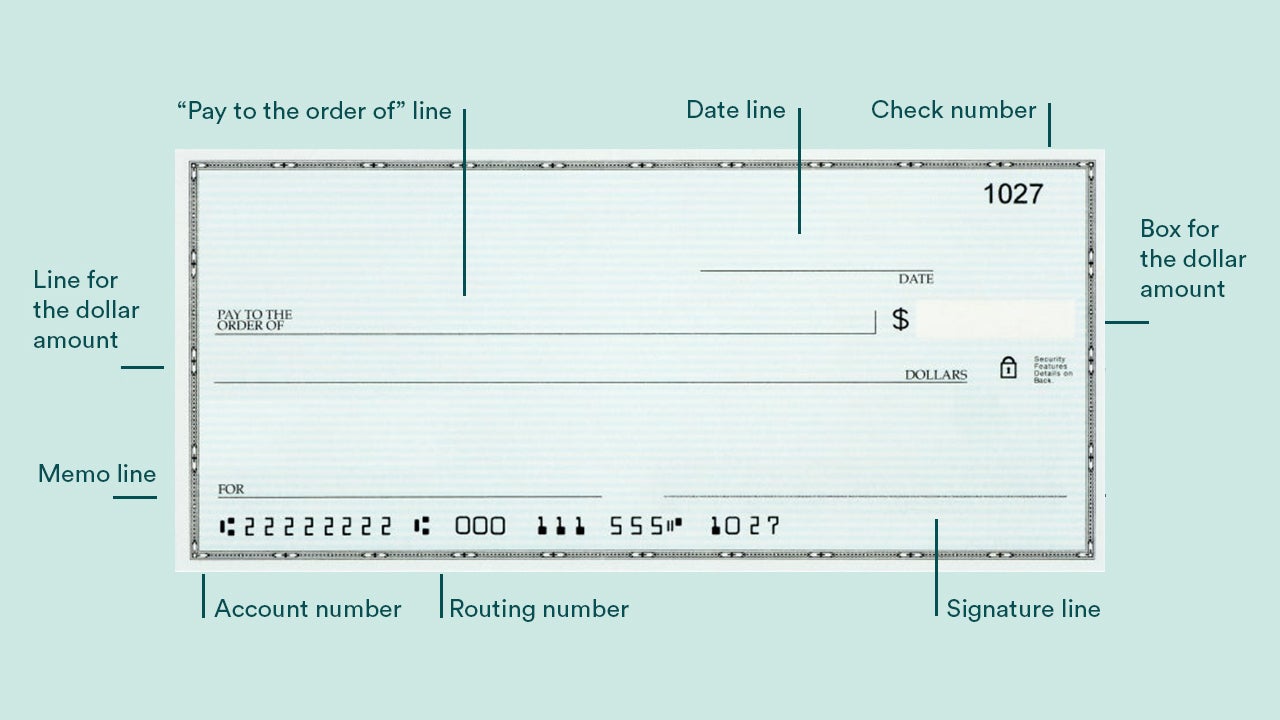
Before you put pen to paper, it’s crucial to understand the anatomy of a check issued by Bank of America (or any bank, for that matter). Each element serves a specific purpose, contributing to the check’s validity and your financial security.
-
Your Information: At the top left, you’ll typically find your name and address. This identifies the account holder.
-
Check Number: Located in the top right corner and often at the bottom, this sequential number helps you track individual checks and reconcile your account.
-
Date Line: The space to write the date the check is written.
-
Payee Line (“Pay to the Order of”): This is where you write the name of the person or entity receiving the money.
-
Numeric Amount Box: A small box next to the payee line where you write the amount of the check in figures (e.g., “$125.50”).
-
Written Amount Line: Below the payee line, where you write out the amount of the check in words (e.g., “One hundred twenty-five and 50/100 Dollars”).
-
Bank of America Information: This includes the bank’s name and sometimes its address, confirming where the funds are drawn from.
-
Memo Line: An optional line usually at the bottom left, used for a brief note about the purpose of the check (e.g., “August Rent,” “Birthday Gift”).
-
Signature Line: The most critical part, where you sign your name to authorize the payment.
-
Routing Number: The nine-digit number at the bottom left of the check, identifying Bank of America as your financial institution.
-
Account Number: The series of numbers next to the routing number, uniquely identifying your specific Bank of America checking account.
Familiarity with these components ensures you accurately complete each field, preventing errors that could lead to delays or financial complications.
Step-by-Step Guide to Writing a Bank of America Check Flawlessly
Writing a check is a precise process that requires attention to detail. Follow these steps meticulously to ensure your Bank of America check is valid, clear, and processed without issue.
1. Date (Top Right Corner)
-
Action: Write the current date in the MM/DD/YYYY format or spell out the month (e.g., “January 15, 2024”).
-
Insight: Always use the current date to indicate when the check was written. Avoid post-dating (writing a future date) unless specifically agreed upon with the payee, as banks may still process it earlier, and it can complicate record-keeping. A stale check (one that is too old, typically 6 months for most banks, including Bank of America) may not be honored.
2. Payee Line (“Pay to the Order of”)
-
Action: Clearly and legibly write the full name of the person or organization you are paying.
-
Insight: Accuracy is key here. If paying an individual, use their full legal name. If paying a company, use its exact corporate name. This prevents the check from being endorsed by the wrong party or being rejected by the bank. Fill the entire line to prevent unauthorized additions.
3. Numeric Amount Box
-
Action: In the small box to the right of the payee line, write the dollar amount in numerical figures.
-
Insight: Be precise. Place the dollar sign ($) directly before the first digit. Use a decimal point to separate dollars and cents. Fill the entire box to prevent alterations (e.g., “$125.50”). If the amount is a whole dollar amount, you can write “$125.00” or just “$125.-“.
4. Written Amount Line
-
Action: On the line below the payee line, write out the dollar amount in words.
-
Insight: This is a crucial security measure. Spell out the dollar amount (e.g., “One hundred twenty-five”). For cents, write “and 50/100” or “and 50 cents.” If there are no cents, write “and 00/100” or “and no/100.” Draw a line from the end of the written amount to the word “Dollars” or to the end of the line to prevent anyone from adding extra words. If there’s a discrepancy between the numeric and written amounts, the written amount is generally considered the legal amount.
5. Memo Line (Optional but Recommended)
-
Action: Briefly note the purpose of the payment in the bottom-left corner.
-
Insight: While optional, the memo line is invaluable for your own record-keeping and for the payee. Use it to specify what the payment is for (e.g., “January Mortgage Payment,” “Electric Bill,” “Car Repair”). This can be incredibly helpful when reconciling your Bank of America statement or for tax purposes.
6. Signature Line
-
Action: Sign your name on the line in the bottom-right corner.
-
Insight: This is your legal authorization for Bank of America to release the funds. Your signature should match the one on file with Bank of America for your account. Without a valid signature, the check is not legitimate and will not be honored.
Best Practices and Common Pitfalls to Avoid

Writing a check correctly is only part of the equation. To truly master check management with Bank of America, you must also adopt best practices for security, record-keeping, and error handling.
Keeping Accurate Records
-
Use Your Check Register: Every checkbook comes with a register. Immediately after writing a check, record the check number, date, payee, and amount. This helps you track your spending and prevents overdrafts.
-
Reconcile Your Bank of America Statement: Regularly compare your check register and Bank of America’s online statement or paper statements. This process helps you identify cleared checks, outstanding checks, and any discrepancies or unauthorized transactions. Bank of America’s online banking portal provides robust tools for viewing transaction history and cleared checks.
-
Retain Copies: If your checkbook provides carbon copies, keep them. Otherwise, consider taking a photo of the completed check before sending it.
Security Measures When Writing Checks
-
Use a Permanent Pen: Always use a pen with blue or black ink. This makes it harder for fraudsters to alter the check.
-
Fill All Lines: Leave no blank spaces that could be filled in by an unauthorized person. Draw lines through unused portions of the payee and written amount lines.
-
Store Checks Securely: Treat blank checks like cash. Keep your checkbook in a safe place, out of sight from potential thieves. Never leave checks lying around.
-
Monitor Your Account: Regularly check your Bank of America account online or through their mobile app to ensure that checks you’ve written clear correctly and no fraudulent checks appear.
-
Shred Old Checks: When you no longer need them, shred voided or old checks that contain your account information to prevent identity theft.
Handling Errors and Voiding Checks
Mistakes happen. If you make an error while writing a check, it’s best to void it rather than try to correct it.
-
How to Void a Check: Write the word “VOID” in large letters across the face of the check, ensuring it covers the date, payee, amount, and signature lines. Do not tear it up immediately.
-
Record the Voided Check: Note the voided check in your check register to maintain a complete record and avoid confusion about missing check numbers.
-
Reasons to Void: Common reasons include writing the wrong amount, misspelling the payee’s name, or needing to provide a voided check for direct deposit setup with an employer or utility company.
Understanding Funds Availability
When you write a check, the funds don’t instantly leave your account. They are usually deducted when the check is presented to Bank of America for payment and clears.
-
Check Clearing Times: While many checks clear quickly due to electronic processing, it can sometimes take a few business days for a check to fully clear, depending on the amount and the banks involved.
-
Available Balance: Always ensure you have sufficient funds in your Bank of America account to cover the check amount. Overdrafts can incur fees and negatively impact your financial standing.
-
Bank of America Policies: Familiarize yourself with Bank of America’s specific policies regarding funds availability and overdraft protection to manage your account effectively.
Beyond the Basics: Advanced Check Management for Bank of America Customers
Bank of America offers various tools and services that can enhance your check management experience, making it easier to order new checks, track transactions, and even explore alternative payment methods.
Ordering New Checks through Bank of America
When your checkbook runs low, Bank of America provides several convenient options to reorder:
-
Online Banking: The easiest method is usually through your Bank of America online banking account. Navigate to the “Order Checks” section, where you can select from various styles and quantities.
-
Mobile App: The Bank of America mobile app also typically offers a feature to reorder checks directly from your smartphone.
-
In-Branch: You can visit any Bank of America financial center, and a representative can assist you with ordering new checks.
-
By Phone: You can call Bank of America’s customer service line to place an order.
Always confirm your shipping address and account details when ordering to ensure accuracy.
Using Bank of America’s Online Tools for Check Management
Bank of America’s robust online banking platform and mobile app are powerful allies in managing your checks:
-
View Cleared Checks: You can easily view digital images of checks that have cleared your account, providing a visual confirmation of payment and aiding in reconciliation.
-
Stop Payments: If you need to stop payment on a check you’ve written (e.g., if it’s lost or stolen, or there’s a dispute), Bank of America’s online banking or customer service can facilitate this process, usually for a fee. Acting quickly is crucial before the check clears.
-
Transaction History: Review your complete transaction history to track all debits and credits, including check payments, which is essential for budgeting and financial planning.
Alternative Payment Methods from Bank of America
While this guide focuses on checks, it’s worth noting that Bank of America champions a range of digital alternatives that may be more suitable for certain transactions:
-
Zelle®: Integrated directly into the Bank of America mobile app, Zelle allows you to send money to friends, family, and others with bank accounts in the U.S. directly from your account, often in minutes, without sharing account numbers.
-
Online Bill Pay: Bank of America’s online bill pay service allows you to schedule and send payments to companies and individuals directly from your account, often electronically or via physical check mailed by the bank, simplifying recurring expenses.
-
Wire Transfers: For larger, time-sensitive international or domestic transfers, wire transfers are available through Bank of America, offering a secure way to move funds, albeit usually with higher fees.
Understanding when to use a check versus a digital alternative is a hallmark of an financially savvy individual.
Conclusion
Mastering the art of writing a check from your Bank of America account is more than just a procedural task; it’s a fundamental aspect of financial literacy that empowers you to manage your money effectively and securely. Even in an era dominated by digital transactions, checks retain their critical role in various personal and business scenarios, providing a reliable paper trail and a universal method of payment.
By diligently following the steps outlined, prioritizing accuracy and security, and leveraging Bank of America’s extensive online tools and customer support, you can confidently navigate the world of check-based transactions. This skill not only protects your financial well-being but also enhances your overall financial confidence, ensuring you are well-equipped to handle all facets of your personal finance journey. Embrace the knowledge, and take control of your monetary future, one precisely written check at a time.
aViewFromTheCave is a participant in the Amazon Services LLC Associates Program, an affiliate advertising program designed to provide a means for sites to earn advertising fees by advertising and linking to Amazon.com. Amazon, the Amazon logo, AmazonSupply, and the AmazonSupply logo are trademarks of Amazon.com, Inc. or its affiliates. As an Amazon Associate we earn affiliate commissions from qualifying purchases.