
In the world of commerce, a business proposal is more than just a document; it is a financial instrument. Whether you are a solopreneur seeking your first major contract or a corporate executive pitching a multi-million dollar merger, the proposal serves as the bridge between a conceptual idea and tangible revenue. At its core, every business proposal is an argument for the allocation of capital. To write one effectively within the “Money” niche, one must move beyond mere descriptions of services and dive deep into the economics of the deal: Return on Investment (ROI), cost-benefit analysis, and financial sustainability.

Writing a winning proposal requires a shift in perspective. You are not just selling a product; you are offering a financial solution that promises to increase the recipient’s wealth, efficiency, or market value. This guide explores the essential components of a business proposal through a strictly financial lens, ensuring that your next pitch is backed by the fiscal rigor required to close high-stakes deals.
The Financial Core: Understanding the Purpose of Your Proposal
Before putting pen to paper, or fingers to keyboard, you must understand the financial psychology of your audience. Every stakeholder—be it a venture capitalist, a bank loan officer, or a corporate procurement department—is asking one fundamental question: “What is the financial upside of saying yes, and what is the fiscal risk of saying no?”
Defining the ROI (Return on Investment)
The most critical element of any money-focused proposal is the ROI. If your proposal cannot clearly demonstrate how it will either save money or generate money, it is unlikely to succeed. When writing, you must quantify the benefits. Instead of saying, “Our service improves efficiency,” say, “Our implementation is projected to reduce operational overhead by 15% within the first fiscal year, resulting in a net savings of $200,000.” This language speaks directly to the bottom line, making the decision-making process easier for the person controlling the budget.
Distinguishing Between Internal and External Funding Proposals
The structure of your proposal changes based on where the money is coming from. An internal proposal—written to a CFO or a department head—focuses on budget reallocation and internal cost-savings. It must align with the company’s current fiscal year goals. Conversely, an external proposal for an investor or a client focuses on market capture and profit margins. Understanding these nuances ensures that your financial projections are tailored to the specific expectations of the capital provider.
Structural Elements of a High-Converting Financial Proposal
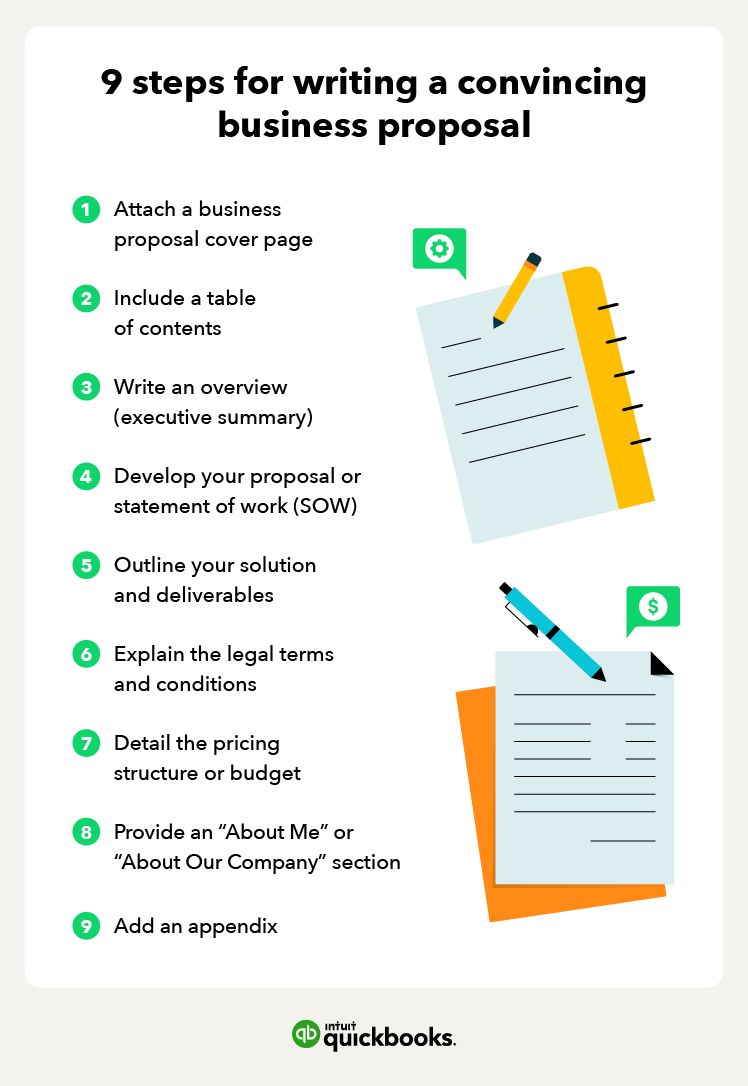
A professional business proposal follows a logical progression. In the context of business finance, this structure acts as a narrative of growth. It starts with the vision and ends with the hard numbers.
The Executive Summary: The Elevator Pitch for Investors
The Executive Summary is arguably the most important section of the document. Many high-level decision-makers will only read this page before deciding whether to pass the proposal to their analysts. In a finance-centric proposal, the summary must highlight the “Value Proposition.” Briefly state the problem, your proposed solution, and—most importantly—the projected financial outcome. It should serve as a high-level map of the fiscal journey you are proposing.
Market Analysis and Competitive Financial Positioning
Money does not exist in a vacuum. To justify your pricing or your request for funding, you must demonstrate a deep understanding of the market. This section should include data on market size, growth trends, and a “Competitor Financial Analysis.” Show how your pricing model compares to the industry standard and why your specific approach offers better value. Are you the low-cost leader, or are you providing a premium service that justifies a higher price point through superior long-term ROI?
The Financial Plan: Projections and Cash Flow Analysis
This is the “engine room” of your proposal. Here, you must provide detailed financial tables and charts. A robust proposal includes a three-year or five-year projection, covering:
- Revenue Streams: How exactly will the money be made?
- Break-even Analysis: At what point does the initial investment pay for itself?
- Cash Flow Statements: How will the money move in and out of the project?
Investors and clients look for realism in this section. Overly optimistic projections without a basis in historical data or market research can undermine your credibility.

Pricing Strategies and Cost-Benefit Justification
The “Price” section is often where proposals fail. To write a successful proposal in the money niche, you must move away from “listing costs” and toward “justifying investments.”
Tiered Pricing Models vs. Fixed Rates
When proposing a side hustle or a professional service, offering a single price point can be a mistake. Instead, use tiered pricing (e.g., Gold, Silver, Bronze). From a psychological and financial standpoint, this anchors the value of your services and gives the client a sense of control over their expenditure. Each tier should clearly delineate the financial benefits associated with the higher cost, such as faster delivery times or higher volume discounts.
Mitigating Financial Risks for the Client
Every financial transaction carries risk. A sophisticated proposal acknowledges this and offers mitigation strategies. This might include a “Money-Back Guarantee,” “Performance-Based Milestones,” or “Escrow Agreements.” By addressing the potential for loss and providing a safety net, you reduce the perceived risk of the investment, making it much easier for the client to authorize the expenditure.
Leveraging Digital Financial Tools for Proposal Accuracy
In the modern era of online income and digital finance, manual calculations are no longer sufficient. To ensure your proposal is airtight, you must leverage technology to provide accurate, real-time data.
Automation in Budgeting and Forecasting
Using financial software to generate your projections adds a layer of professionalism and accuracy. Tools that integrate with accounting software can provide real-time snapshots of current financial health, which can be exported directly into your proposal. When you can show that your projections are based on verified algorithmic models rather than “best guesses,” you instill greater confidence in your financial backers.
Integrating Payment Terms and Escrow Details
The logistics of the money transfer are just as important as the amount itself. Your proposal should clearly outline the “Terms and Conditions” of payment. Will you accept cryptocurrency, wire transfers, or credit cards? Are you using an automated invoicing system like Stripe or PayPal for recurring revenue? In the world of online income and side hustles, specifying these details ensures that there are no financial friction points once the proposal is signed.
Closing the Deal: Negotiation and Financial Commitment
The final section of your proposal is the “Call to Action” (CTA). In a financial context, the CTA is the bridge to the contract. It is the moment where the proposal stops being a suggestion and starts becoming a legal financial commitment.
The Call to Action: Moving from Proposal to Profit
Your conclusion should reiterate the primary financial benefit one last time. End with a clear, unambiguous step for the reader to take. Whether it is “Sign here to release the initial funding” or “Schedule a call to finalize the equity split,” the goal is to move the money.
A business proposal written through the lens of finance is a powerful tool. It demonstrates that you are not just a creative or a technician, but a business-minded individual who understands the value of a dollar. By focusing on ROI, utilizing tiered pricing, leveraging financial tools, and providing clear projections, you transform your proposal from a simple request into an irresistible investment opportunity. In the end, writing a business proposal is about proving one thing: that the capital requested is safer and more productive in your hands than anywhere else.
aViewFromTheCave is a participant in the Amazon Services LLC Associates Program, an affiliate advertising program designed to provide a means for sites to earn advertising fees by advertising and linking to Amazon.com. Amazon, the Amazon logo, AmazonSupply, and the AmazonSupply logo are trademarks of Amazon.com, Inc. or its affiliates. As an Amazon Associate we earn affiliate commissions from qualifying purchases.